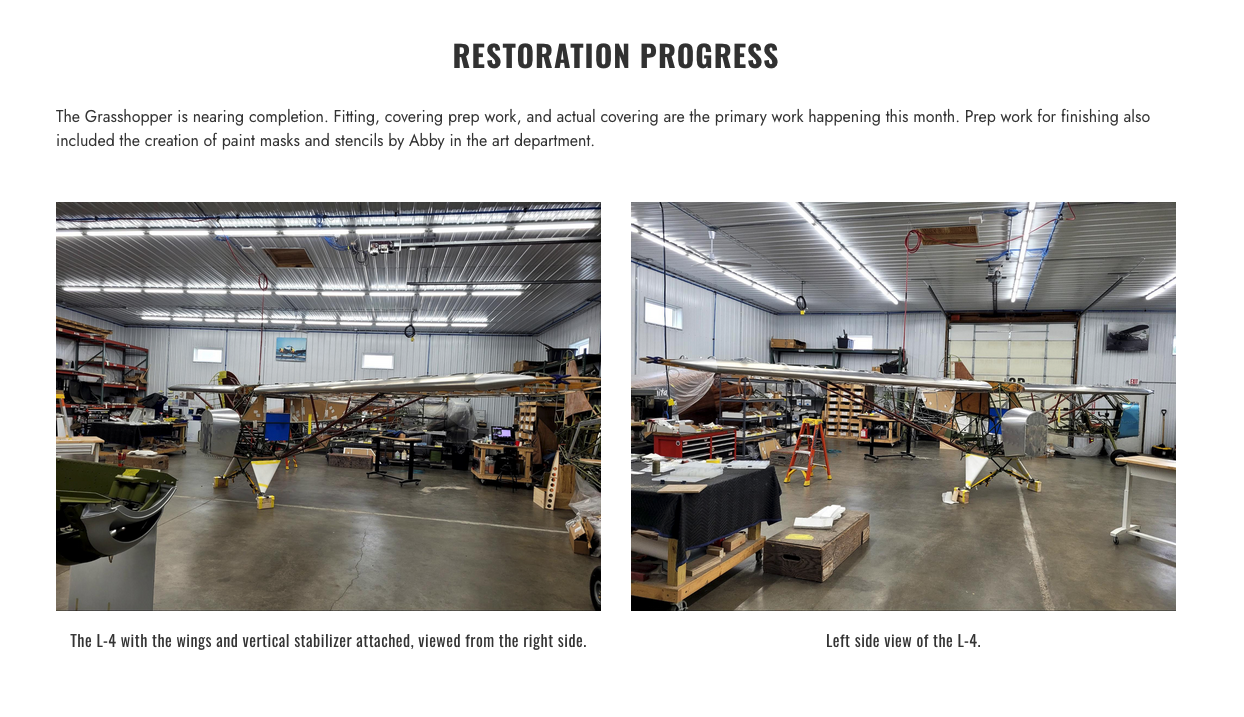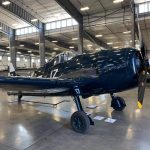
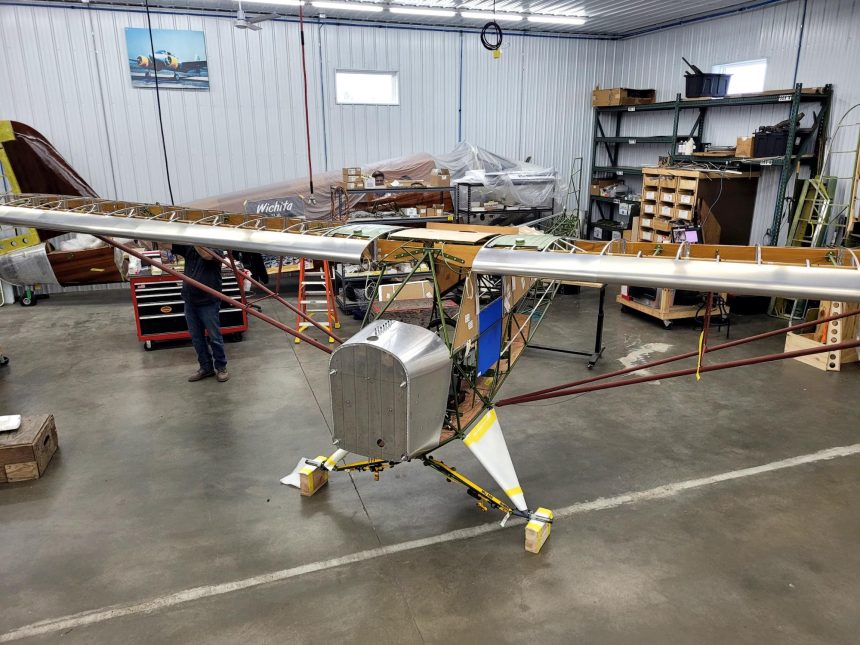

Over the past decade, AirCorps Aviation of Bemidji, Minnesota, has earned an exceptional reputation for world-class warbird restorations. Their portfolio features numerous standout projects—including the P-51 Mustang Thunderbird and the razorback P-47D Bonnie, both Golden Wrench Award winners—as well as the ongoing restoration of a rare Beechcraft AT-10 Wichita. In early 2024, the team turned its attention to a more modest but equally meaningful aircraft: the Piper L-4H Grasshopper. Far simpler than the high-performance fighters AirCorps is best known for, the L-4 nevertheless played a crucial role on the battlefield. And like many of the best stories in aviation preservation, this one began as a true “barn find.” AirCorps partner Eric Trueblood discovered the aircraft during a bike ride in Grand Forks, North Dakota. A quick inspection revealed a data plate first believed to show serial number 44-7879, but after careful cleaning, its true identity emerged: Piper L-4H 44-79780.

Working with liaison-aircraft historian James H. Gray, AirCorps obtained the aircraft’s Individual Aircraft Record Card, confirming that it was built in Lock Haven, Pennsylvania, and accepted by the U.S. Army Air Forces on June 13, 1944. The Grasshopper went on to serve in Europe with the Twelfth Air Force before returning to the United States. Later, while flying with the Civil Air Patrol, it experienced a forced landing—damage that remains visible on the airframe.
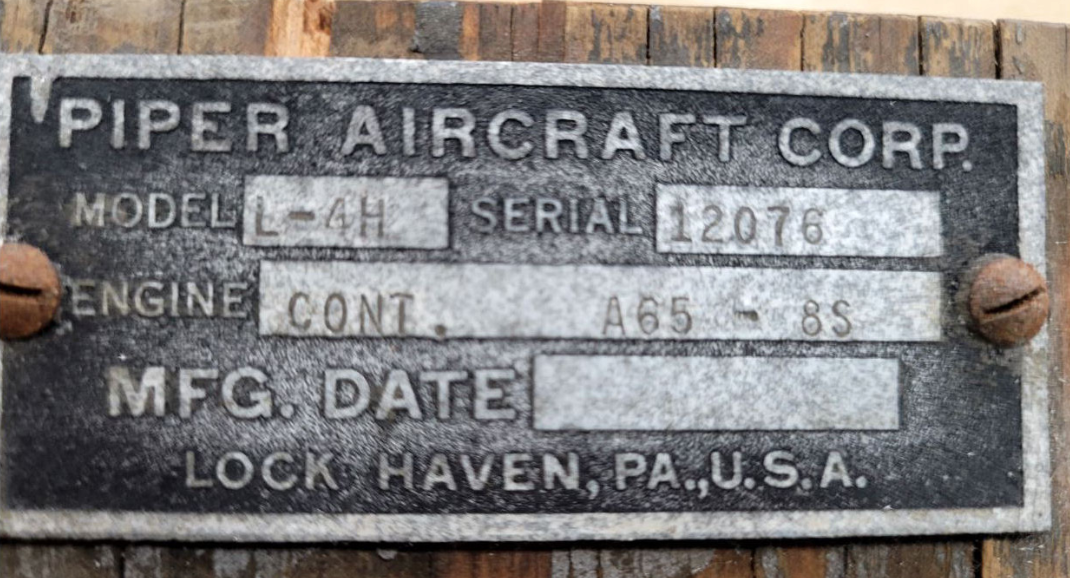
In the winter of 2024, a full restoration effort began. The fuselage has been sent to Javron, Inc. for repair work, the wooden stringers are being evaluated, and the original Continental A-65 (O-170) engine is undergoing a comprehensive overhaul. The wings, currently stored at AirCorps’ Bemidji facility, will require rebuilding as well, including new wooden spars, wingtip bows, and aluminum ribs. Though humble in appearance, the Piper L-4H is one of World War II’s most important liaison aircraft. Grasshoppers flew reconnaissance, artillery spotting, medical evacuation, and short-field missions across the European Theater. Their nickname reportedly came from an Army general who saw one bounce across rough terrain after landing. AirCorps historian Chuck Cravens has provided the detailed progress report (HERE), documenting the extensive work completed on the project through the winter. We hope you enjoy this look behind the scenes.