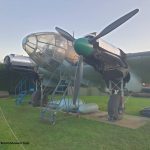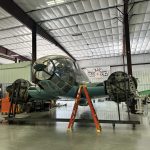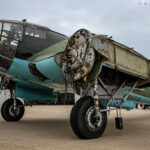

On August 13, 2025, the Cavanaugh Flight Museum transported its 1950-built CASA 2.111E, serial number 155, approximately 170 miles west to Ezell Aviation in Breckenridge, Texas. The move marked the beginning of a multiyear project to return the historic aircraft to flight. CASA restoration project manager Brad Pilgrim visited Ezell Aviation on August 20, 2026, to inspect the work completed during the project’s first year. “I have been around Ezell Aviation since I was a kid,” Pilgrim said. “They have done quite a bit of work for Cavanaugh over the years, and I know them well. I can’t think of anywhere else I would have wanted to send this project.”

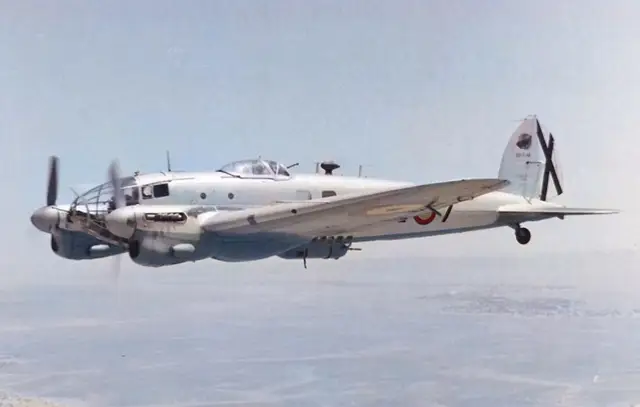
The CASA 2.111 was a Spanish-built, license-produced derivative of the German Heinkel He 111. More than 200 examples were constructed by Construcciones Aeronáuticas S.A. in several configurations. The Cavanaugh Flight Museum’s aircraft was built in 1950 as serial number 155. Because Junkers Jumo 211 inverted V-12 engines were no longer available, the airframe was initially placed in storage while an alternative powerplant was sought. It was eventually equipped with Rolls-Royce Merlin 500-45 engines, along with cowlings and spinners derived from those used on the Avro York transport. The aircraft officially entered service with the Ejército del Aire, or Spanish Air Force, on December 14, 1956, as B2-I-27. It was assigned to the service’s Cartographic Group for aerial photography and mapping duties.
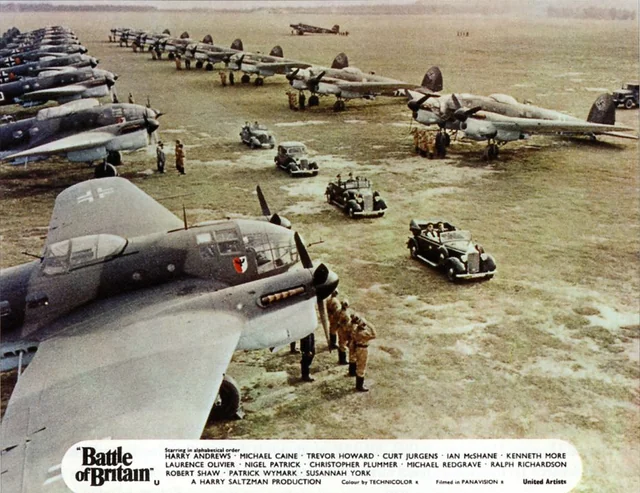
In 1968, B2-I-27 was painted in WWII Luftwaffe markings for the production of Battle of Britain. It was among more than 30 CASA 2.111s used to represent genuine Heinkel He 111s, which were no longer available in sufficient numbers for filming. The aircraft returned to the screen in the 1970 film Patton, appearing in the memorable scene in which George C. Scott, portraying Gen. George S. Patton, fires his pistols at attacking aircraft. B2-I-27 was declared surplus in January 1975 and placed in storage. According to available records, it was the final CASA 2.111 to remain in active Spanish Air Force service.
In October 1977, the aircraft was ferried to the United States for its new owner, Dolph Overton. It was subsequently painted in the markings of Kampfgeschwader 51 “Edelweiss,” a WWII Luftwaffe bomber unit. Overton later loaned the aircraft to the Confederate Air Force—now the Commemorative Air Force—which maintained and operated it for several years before returning it to him. David Tallichet acquired the aircraft in 1983 for display at the Combat Air Museum in Topeka, Kansas. The Cavanaugh Flight Museum purchased it in 1995, and its ferry flight from Topeka to Addison, Texas, in August of that year was its final flight before the current restoration began. It remained on static display at the museum for approximately 30 years.

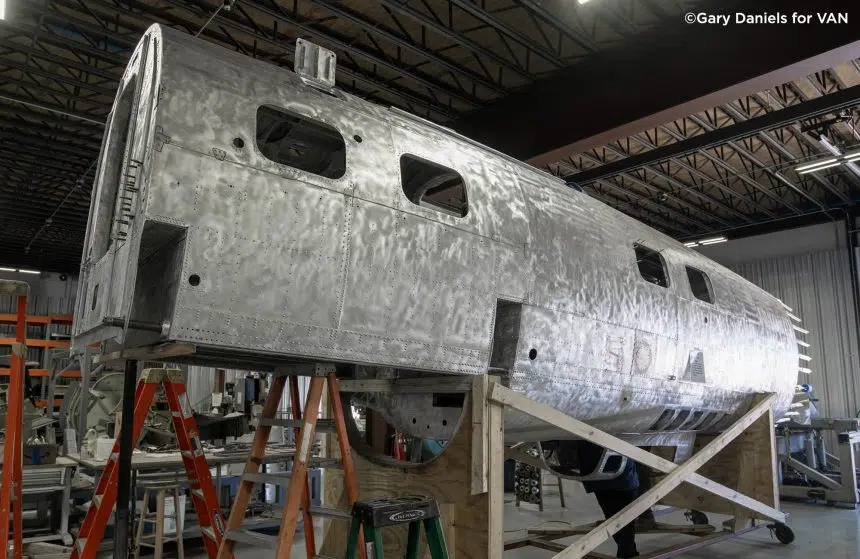
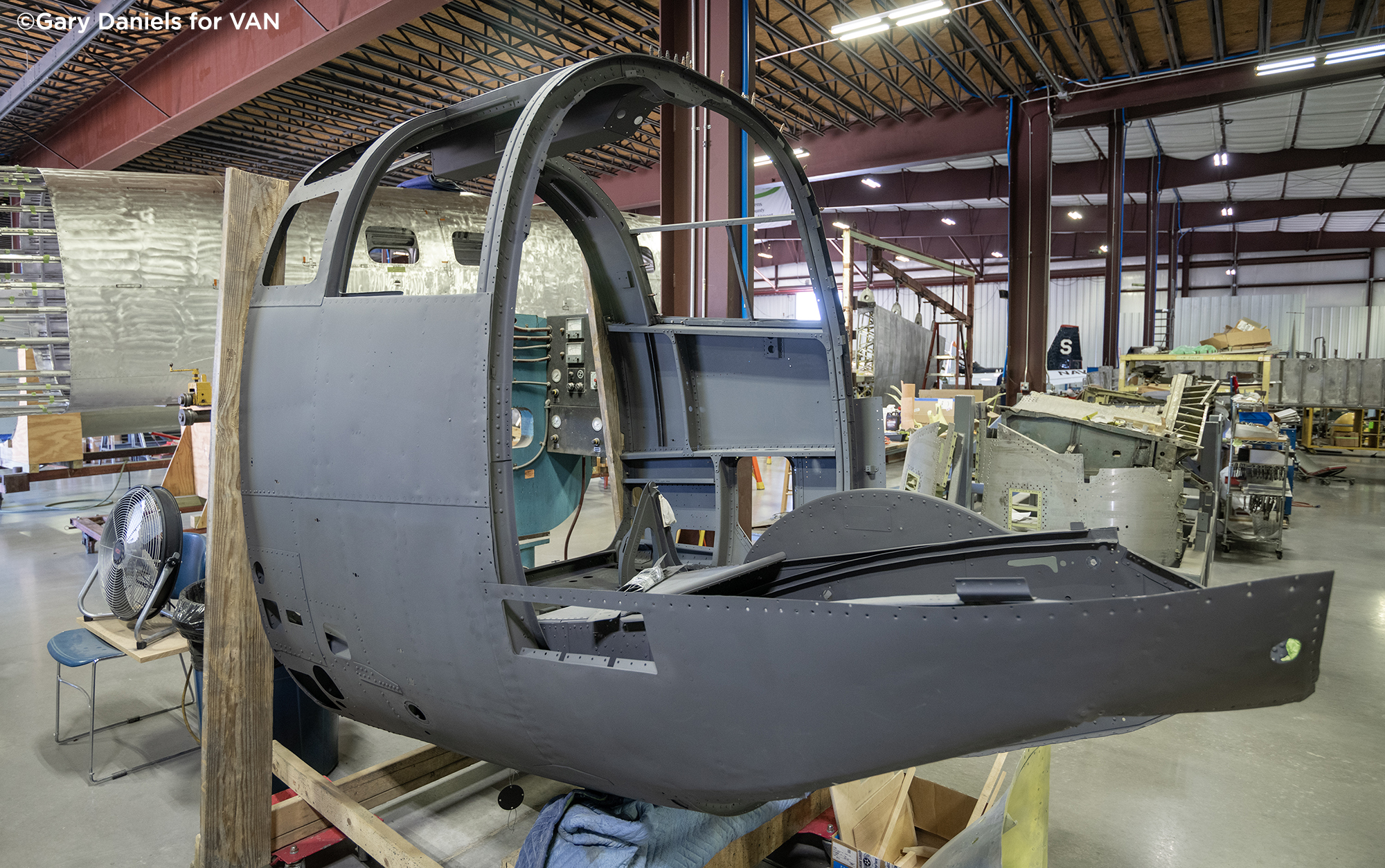
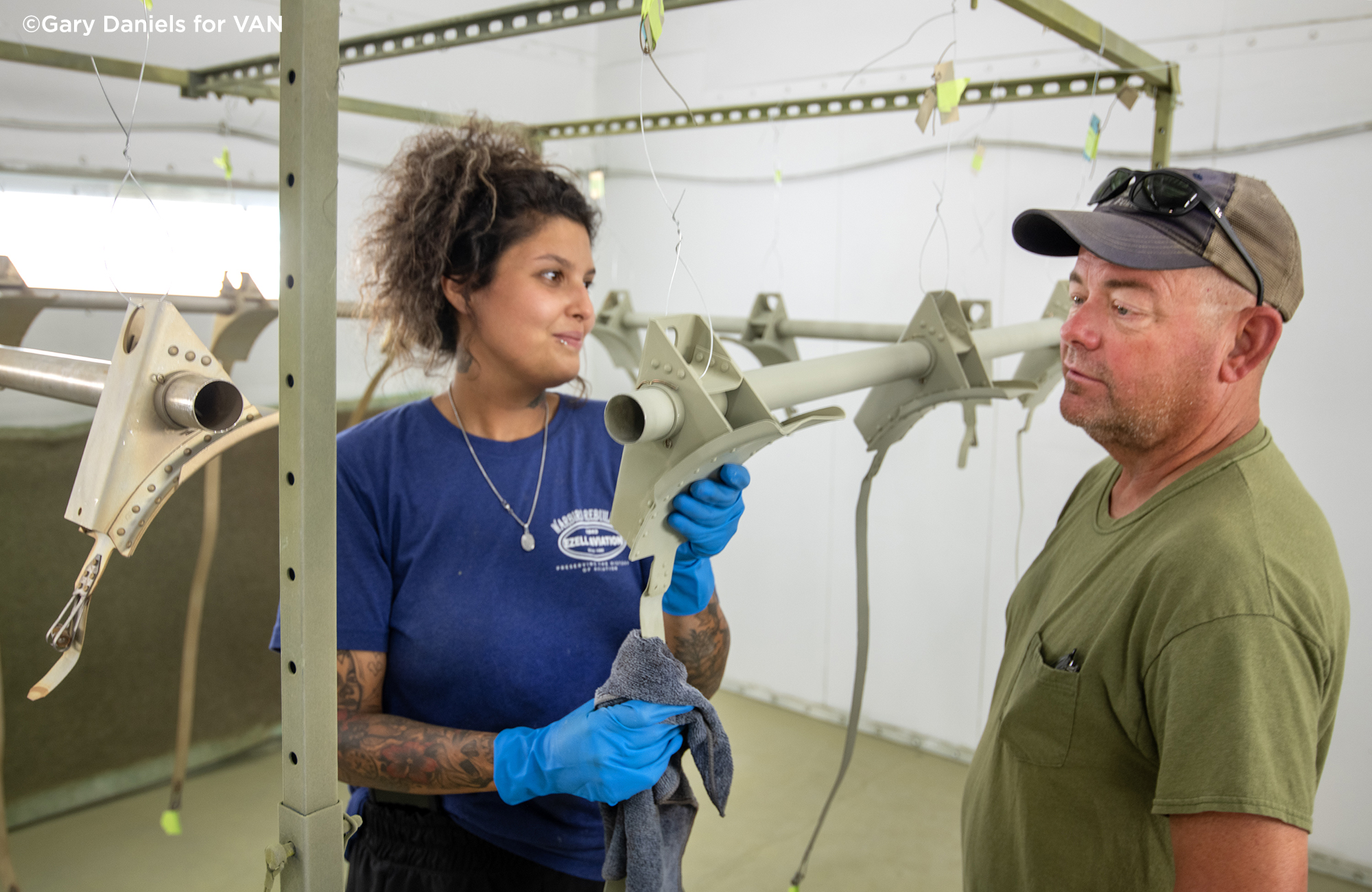
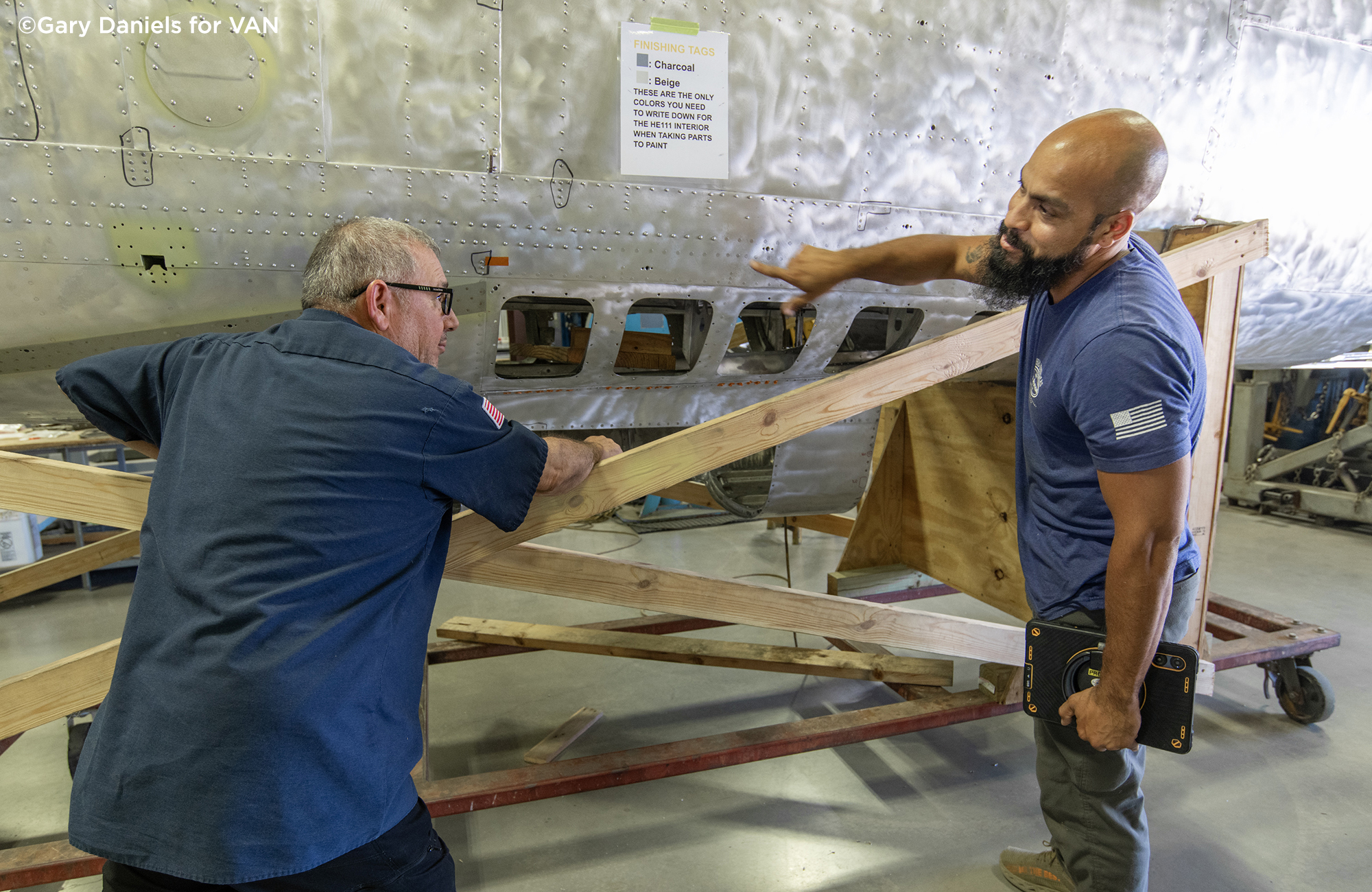
One year after its arrival at Ezell Aviation, the extent of the restoration is impressive. The aircraft has been completely disassembled, with the fuselage divided into three major sections. The main fuselage has been stripped to bare metal for inspection, repair, and priming. Work on the aft fuselage has progressed further, with inspections and repairs completed and primer applied. The cockpit has also been stripped of its equipment, allowing the underlying structure to be inspected, repaired, and primed.

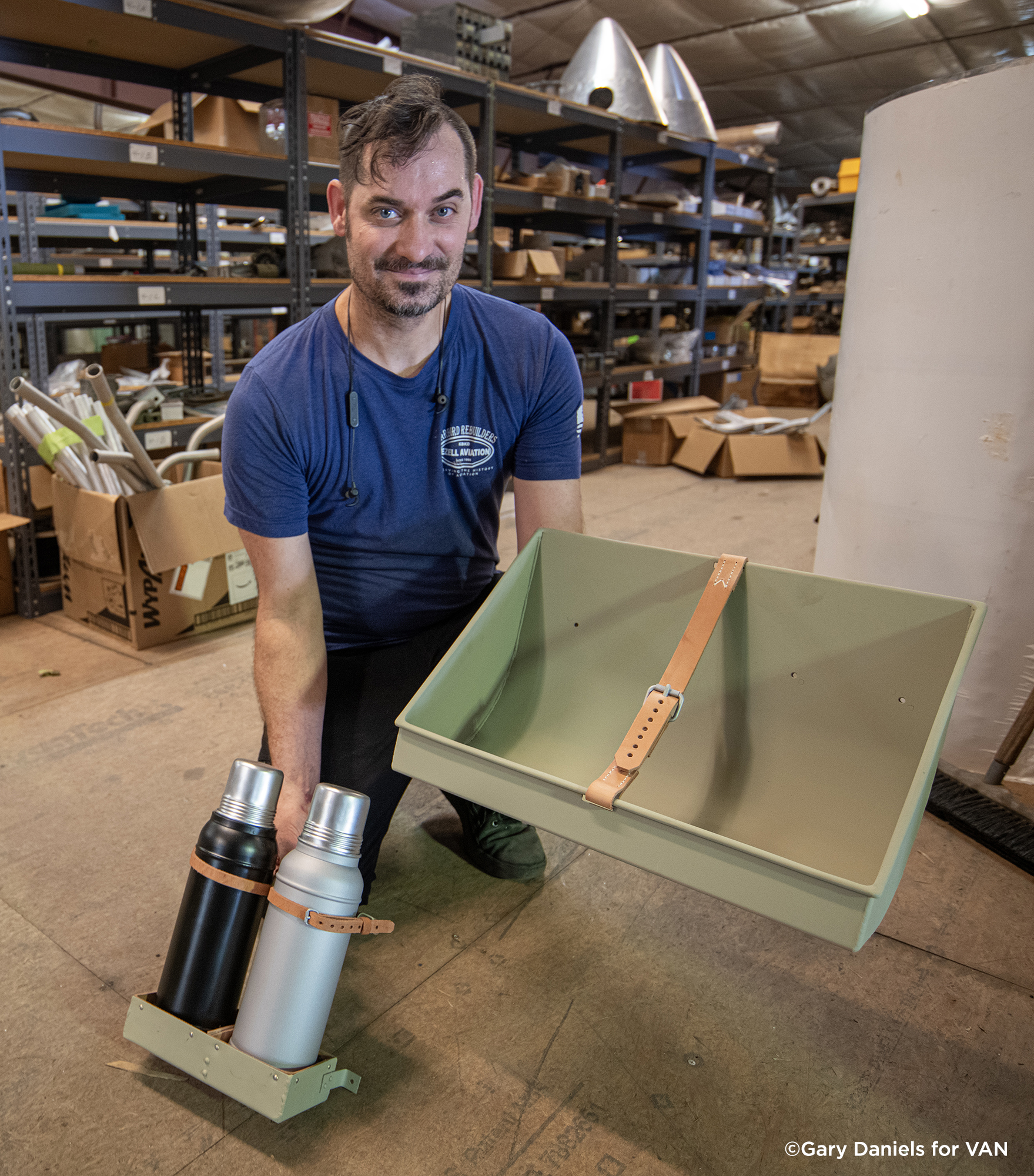
Every cockpit component is being evaluated and either repaired or rebuilt, including the seats, wooden cabinetry, and leather straps. A new instrument panel is being fabricated to accommodate the instrumentation required for the aircraft’s replacement engines. The original Rolls-Royce Merlin 500-45 engines will be replaced with Packard-built Merlins. The change is expected to improve maintainability and parts availability while providing greater commonality with other Merlin-powered aircraft in the museum’s collection.
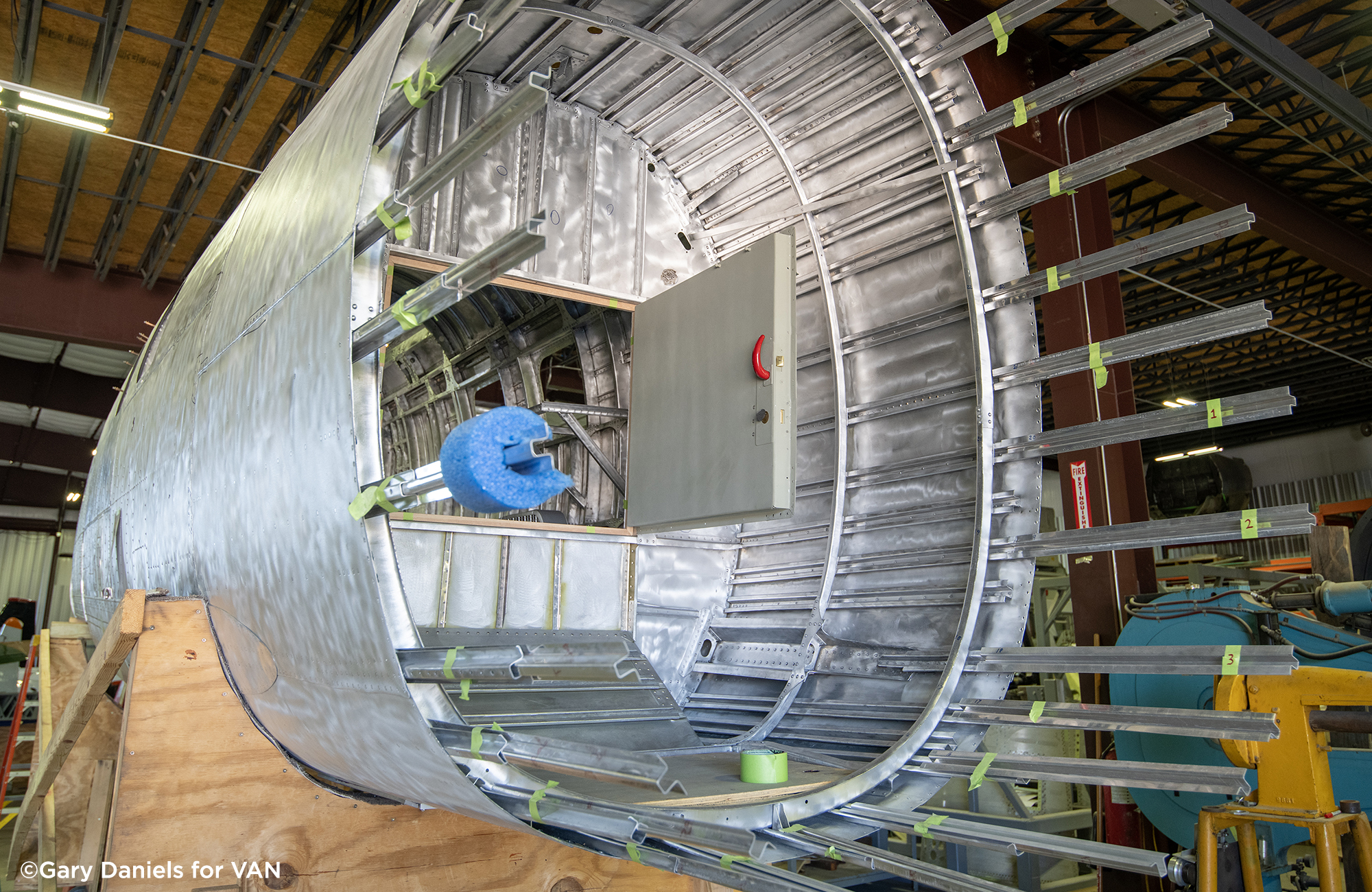
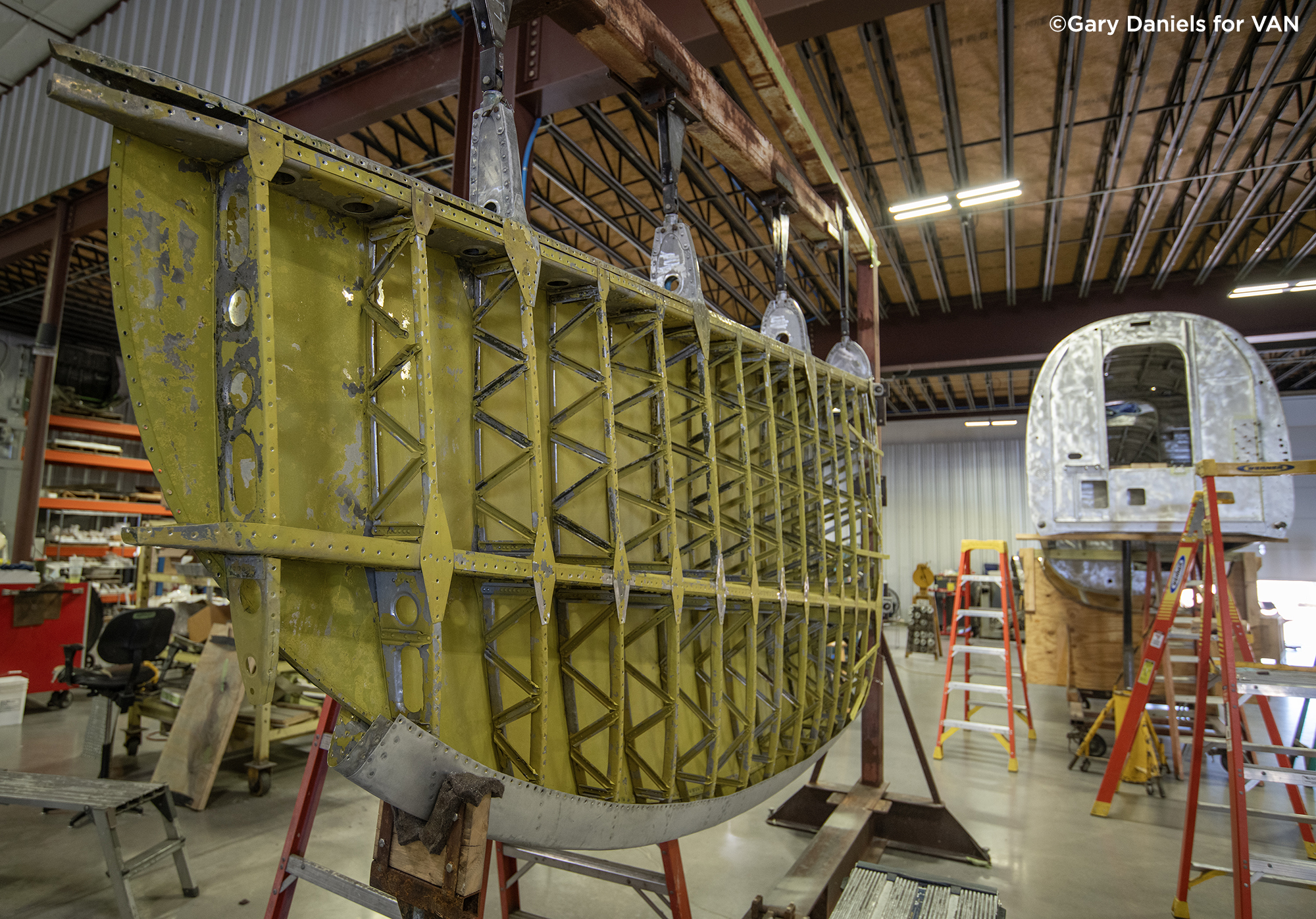
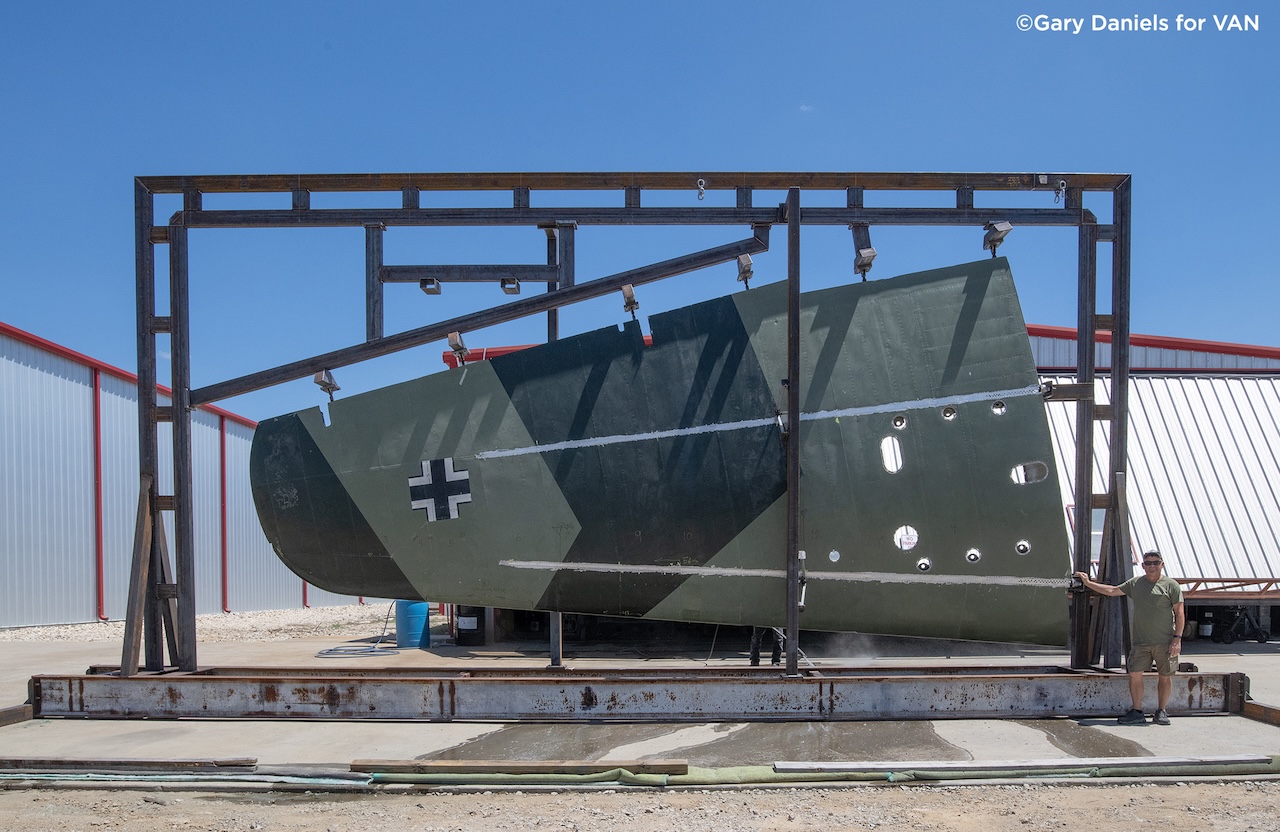
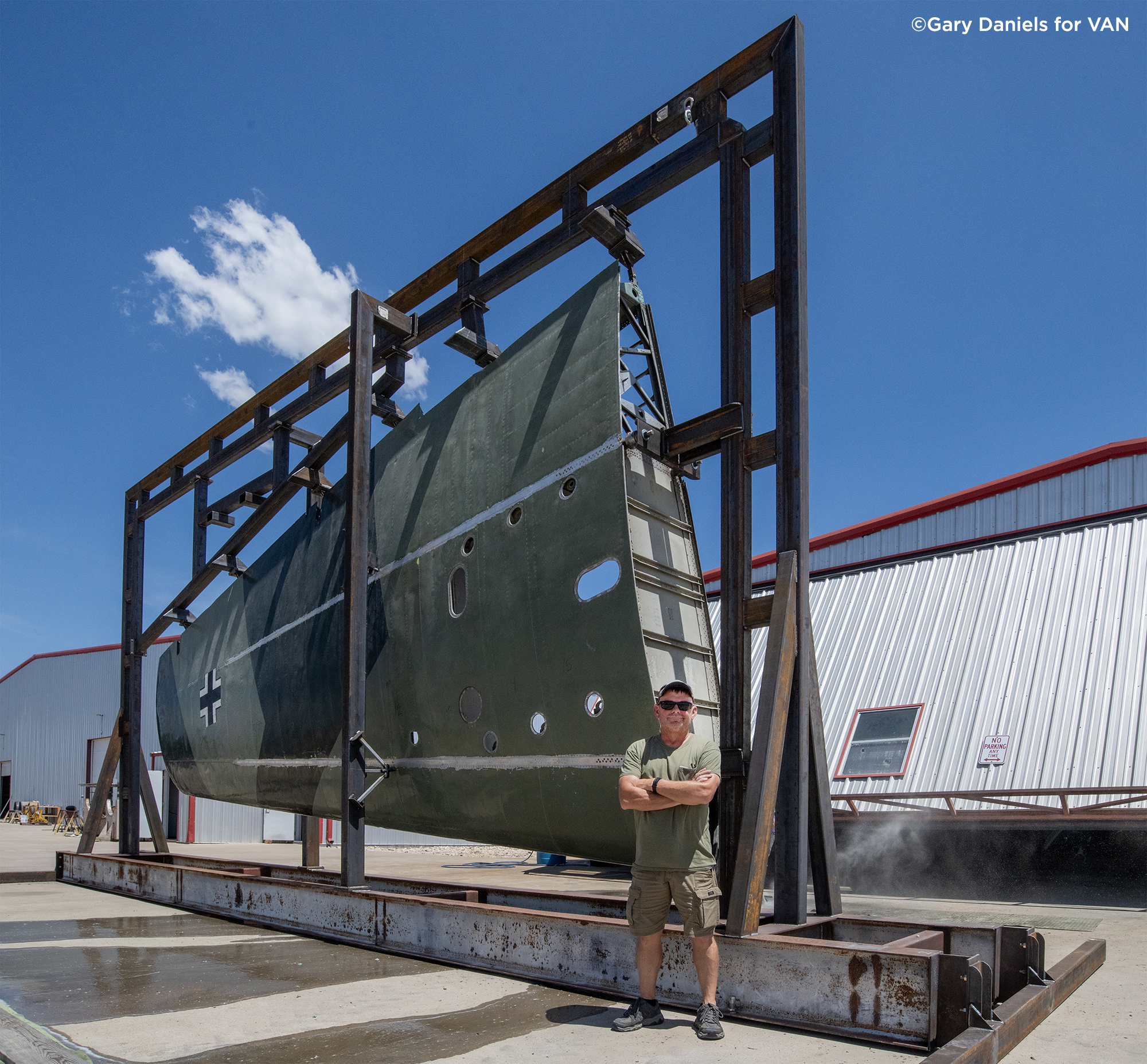
Inspection of the bomber’s large wings required a specialized solution. Glen Ezell designed and constructed an 18-foot-high jig to support each wing during disassembly and inspection. The right wing is currently mounted in the structure, where it is being stripped and examined. A smaller version of the jig was built for the horizontal stabilizers. The left stabilizer is currently undergoing work, while the right stabilizer has been completed and primed.
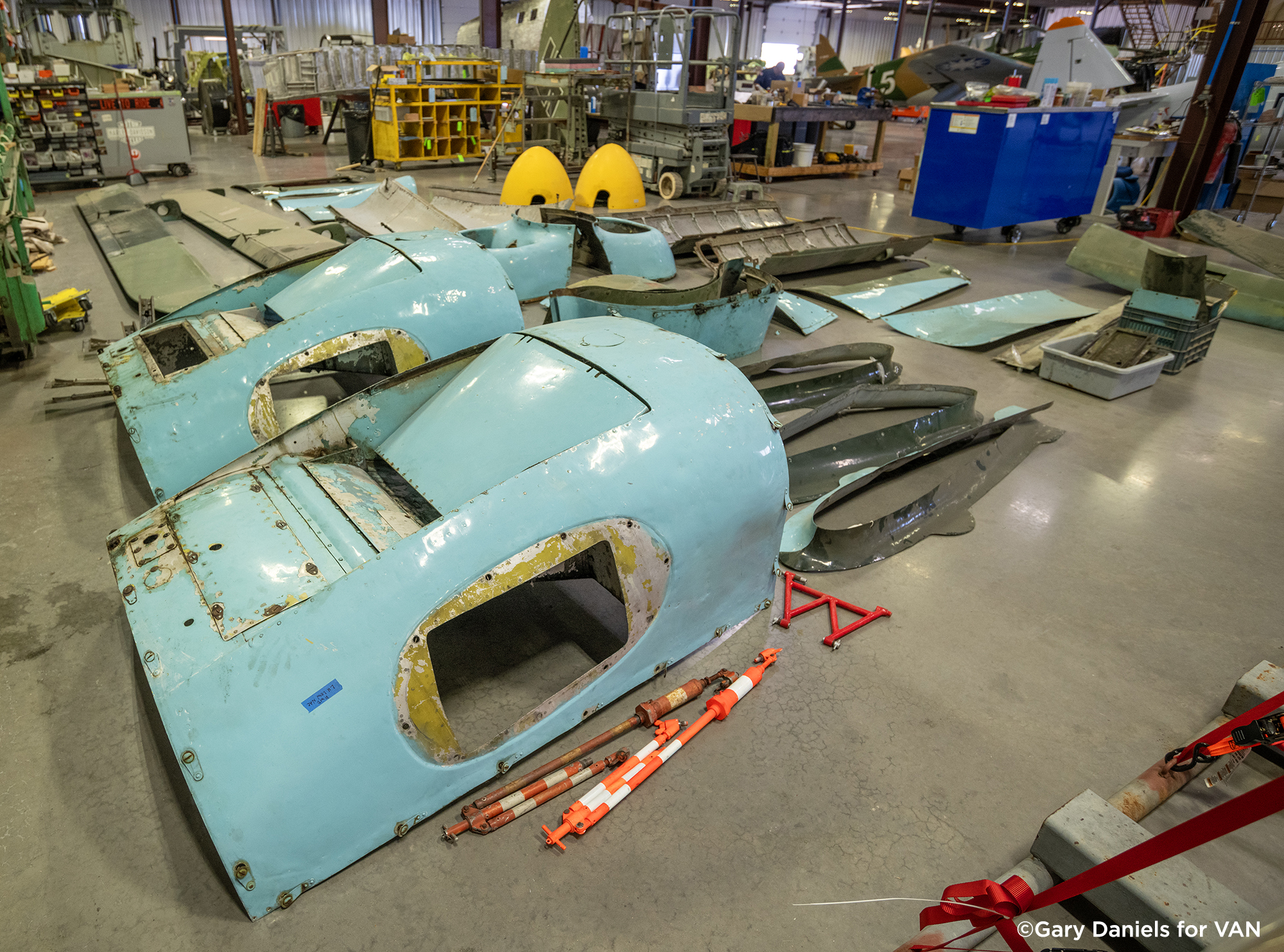
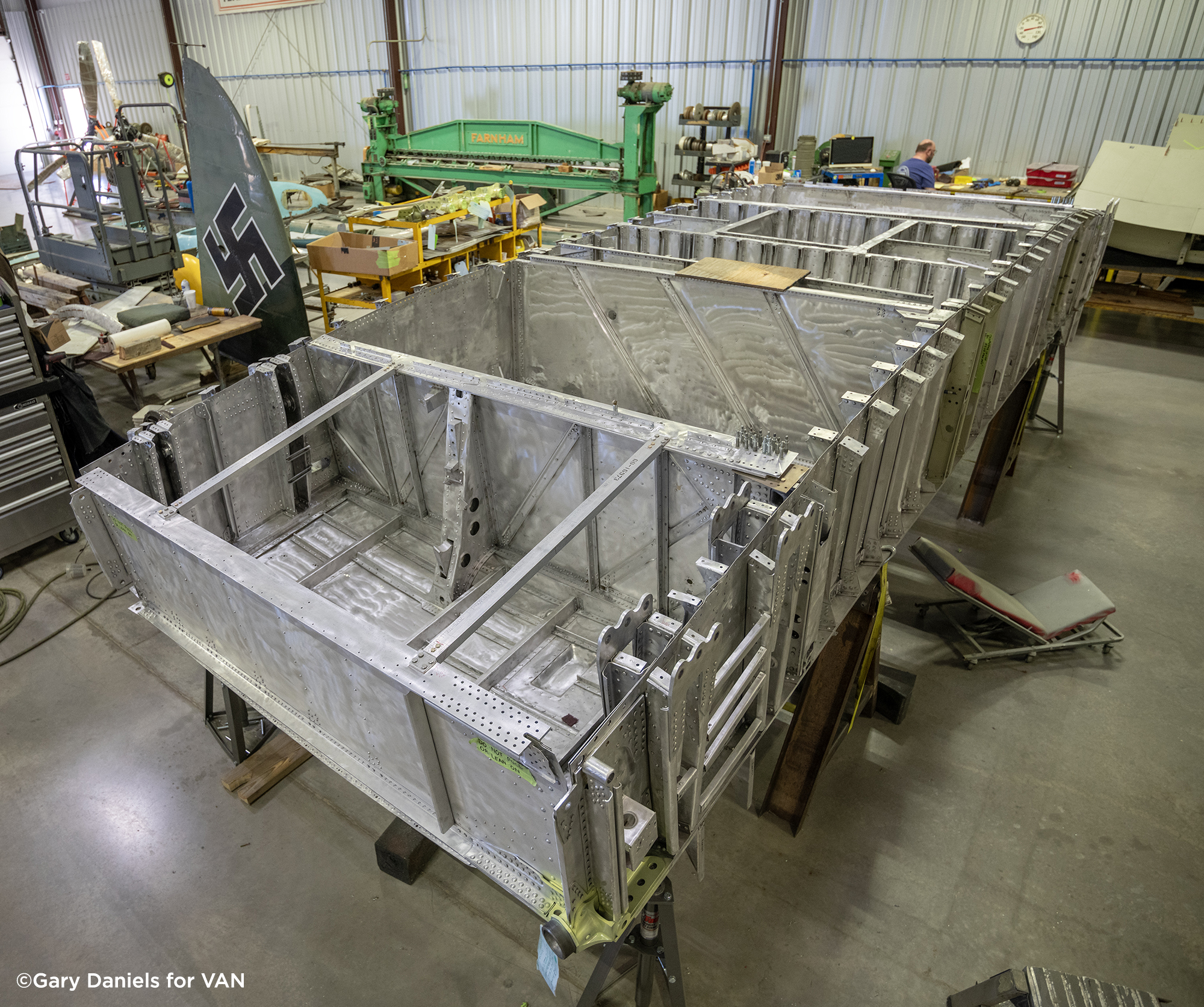
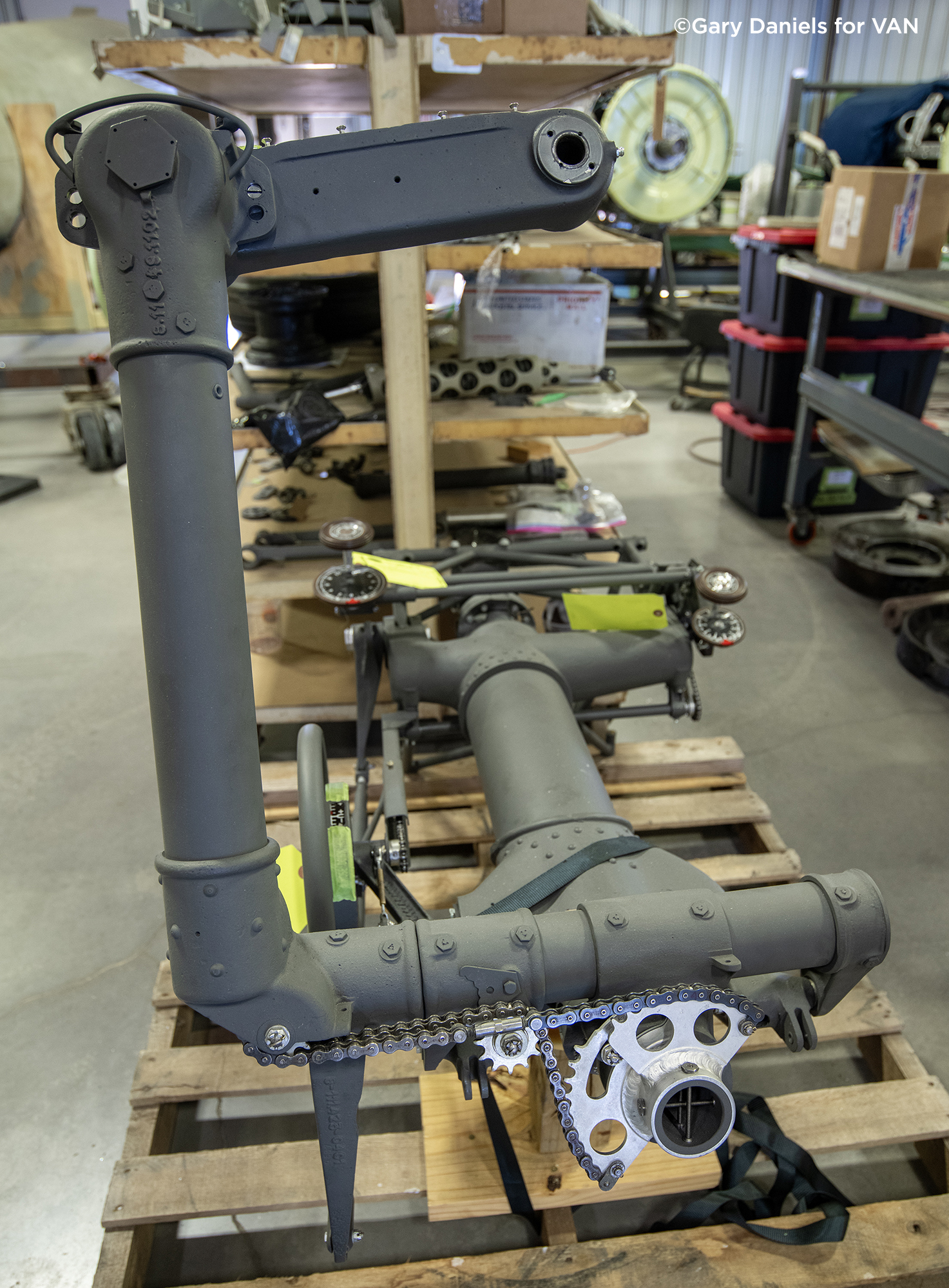
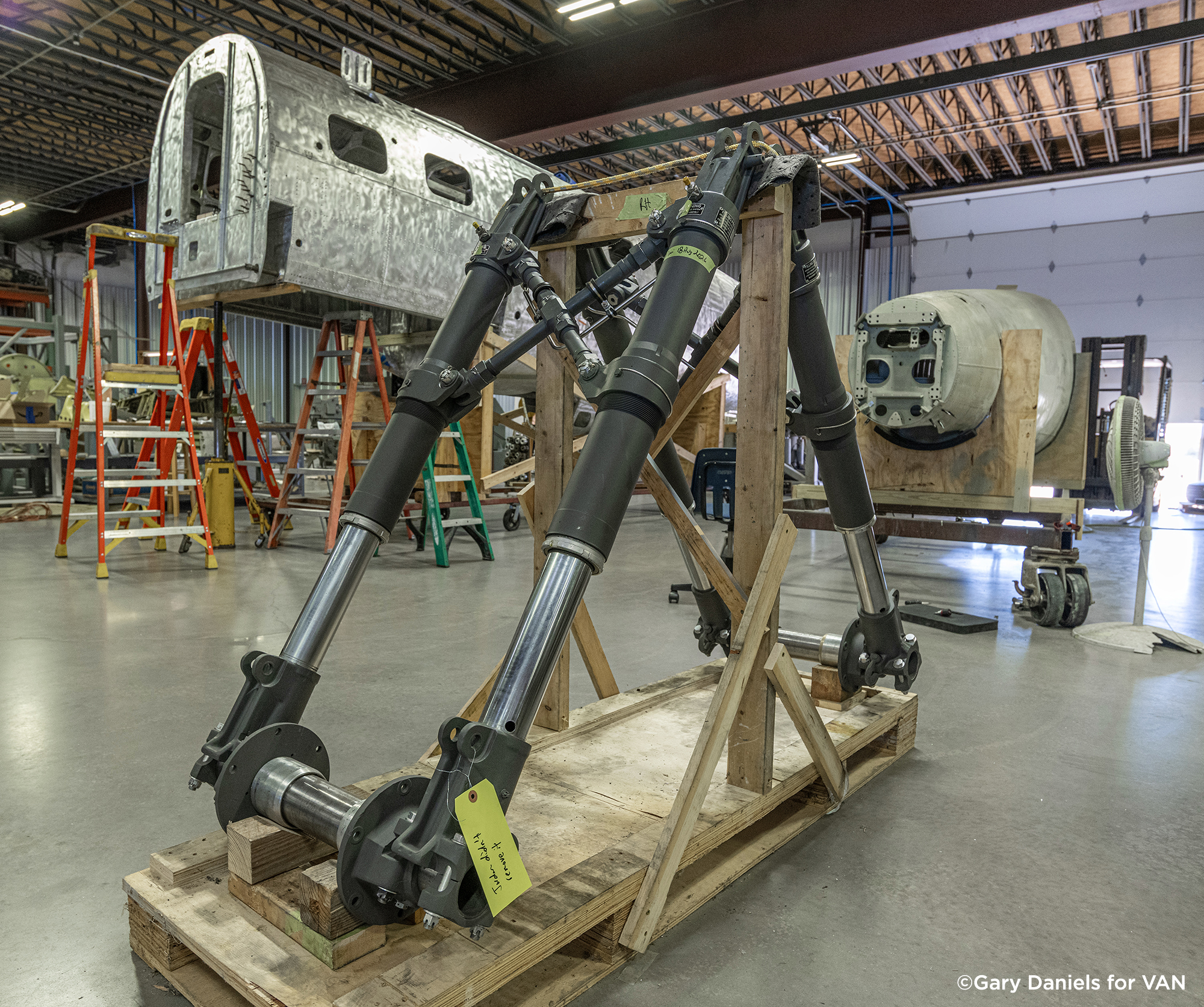
The aircraft’s large center section is positioned upside down and has been stripped and inspected, with the required repairs completed. New wing spars have been manufactured and are undergoing heat treatment. Once installed, the center section will be lifted, turned upright, and reunited with the main fuselage. Elsewhere in the Ezell Aviation hangar, engine cowlings, ailerons, landing gear doors, and numerous smaller components await their turn in the restoration process. The main landing gear struts and tailwheel assembly have already been completed, but the team is still evaluating options for the brakes, wheels, and tires. The final configuration will be selected with long-term maintenance and parts availability in mind.
The return of CASA 2.111E serial number 155 to flight is an extensive, ground-up restoration that will require several more years to complete. The museum currently anticipates a first flight during the 2029–2030 timeframe. The Cavanaugh Flight Museum plans to publish regular updates as work continues on this historically significant aircraft. For additional background, read VAN’s previous report on the beginning of the restoration.