





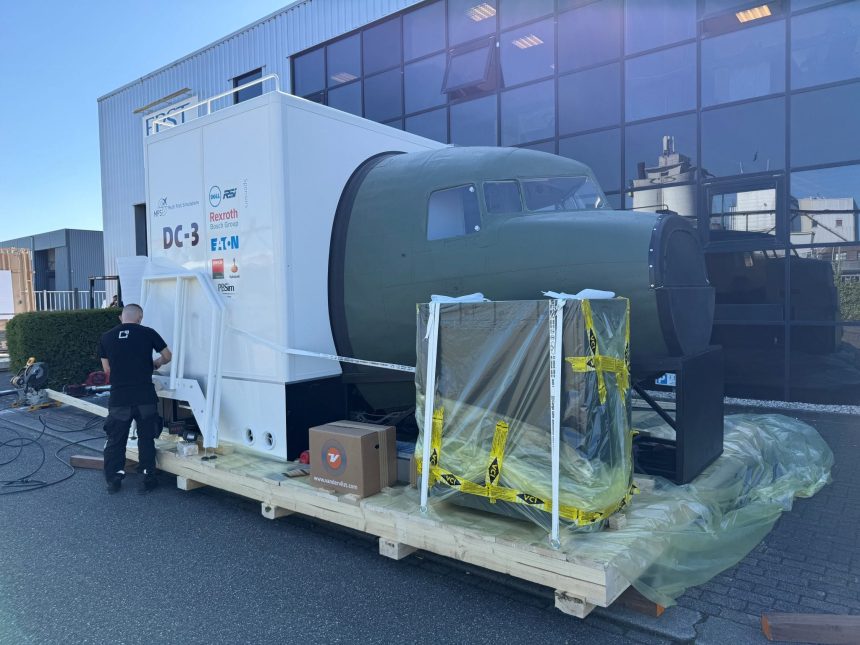

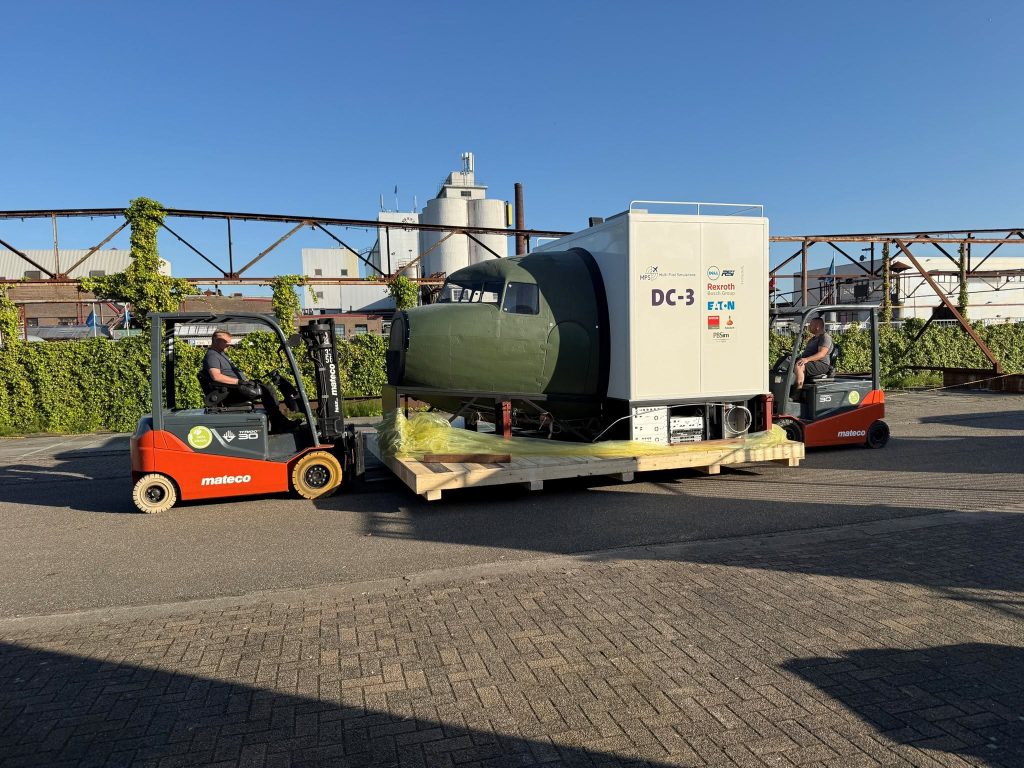
The world’s only certified Douglas DC-3 flight simulator has found a new home in the United States. European Pilot Selection & Training (EPST), based in Utrecht, Netherlands, has announced the sale of its unique DC-3 Flight Training Device (FTD) to Flabob Aviation Associates of Riverside, California. For years, the simulator has played an important role in training DC-3 crews from the Dutch Dakota Association (DDA) and numerous other operators around the world. Its relocation to the United States marks a significant development for the preservation and continued operation of one of aviation history’s most iconic transport aircraft. Founded in 1997, EPST is an EASA-accredited Approved Training Organization (ATO NL-37) specializing in advanced pilot training and pilot selection. While the organization primarily operates Boeing 737 and Airbus A320 simulators, its DC-3 simulator has remained a unique and highly respected resource within the vintage aviation community.
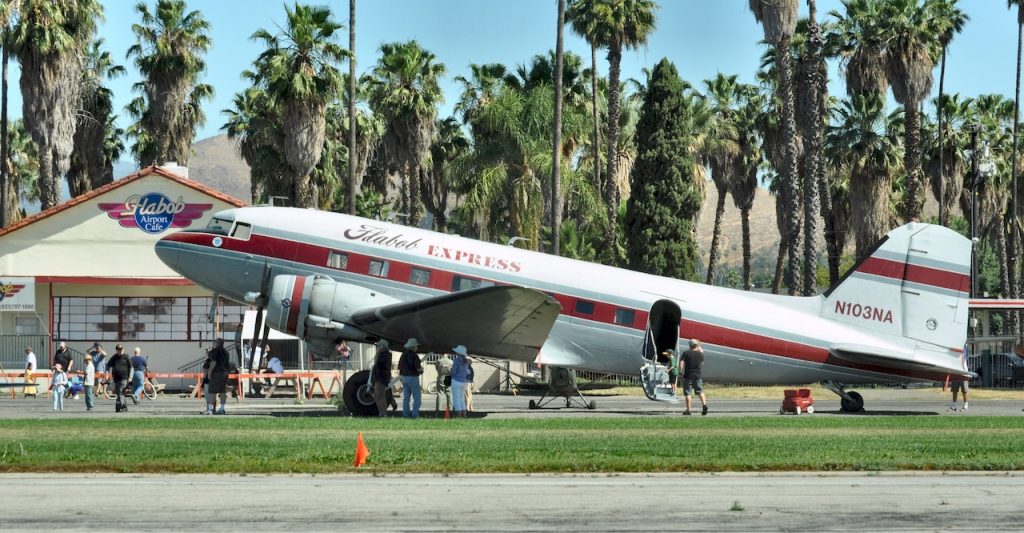
The simulator’s new owner, Flabob Aviation Associates, operates from historic Flabob Airport in Riverside, California. For nearly two decades, the organization has provided pilot training and nostalgic passenger flights aboard its DC-3A Flabob Express, a former Royal Air Force C-47 transport aircraft. Flabob Aviation Associates is part of the Tom Wathen Center’s youth aviation programs, a nonprofit organization that owns and operates Flabob Airport. While the airport functions as a fully operational aviation facility, its primary focus remains education and inspiring young people to pursue careers in aviation. The addition of the simulator will strengthen Flabob Aviation Associates’ existing Pilot in Command (PIC) and Second in Command (SIC) DC-3 training programs. By incorporating simulator-based instruction, the organization expects to enhance training quality while reducing operating costs for pilots seeking DC-3 qualifications.
(Image credit: Paul van den Berg)
The simulator itself represents an extraordinary engineering achievement. Dutch simulator manufacturer Multi Pilot Simulations (MPS) undertook the project entirely at its own expense, recognizing the need for a dedicated DC-3 training platform that could improve flight safety and preserve operational knowledge of the historic aircraft. Creating a realistic DC-3 simulator proved far more challenging than developing modern airline training devices. Unlike contemporary aircraft, little flight-test data and few comprehensive reference materials existed for the DC-3. To overcome these obstacles, MPS rebuilt every instrument, restored and integrated numerous mechanical components with modern electronics, and developed flight models through extensive mathematical extrapolation. Critical performance data was gathered through flights aboard actual DC-3 aircraft, while additional information was sourced from organizations including NASA, Boeing, and the Dutch Dakota Association. Founded in 1982, the Dutch Dakota Association has operated DC-3 aircraft since 1983 and played a key role in the simulator’s development. The association made its aircraft available to MPS, allowing engineers to collect essential flight performance information, instrument data, cockpit sounds, and operational procedures needed to recreate the aircraft faithfully.
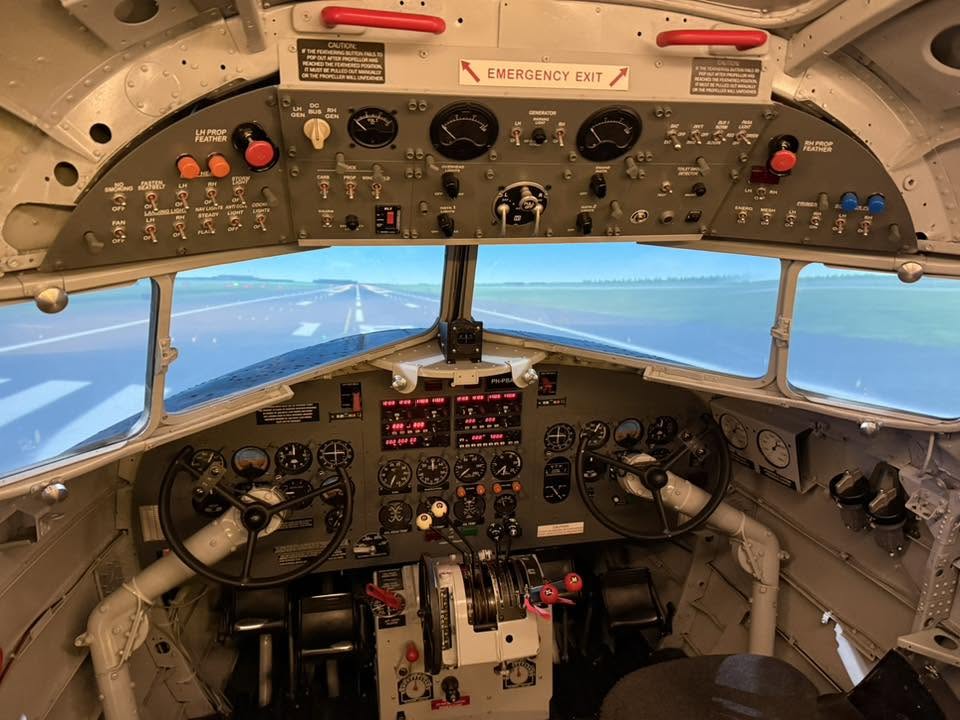
(Image credit: European Pilot Selection & Training (EPST))
One of the simulator’s greatest advantages is its ability to safely replicate emergency procedures and equipment failures that would be impractical—or potentially hazardous—to practice in the actual aircraft. Training on vintage aircraft places significant wear on engines and airframes, particularly during repeated instructional flights. By allowing pilots to practice normal and emergency procedures in a simulator, operators can reduce mechanical stress on increasingly rare and valuable aircraft while improving pilot proficiency. The economic benefits are equally significant. Simulator training allows pilots to repeat complex scenarios until proficiency is achieved at a fraction of the cost of operating a real DC-3.
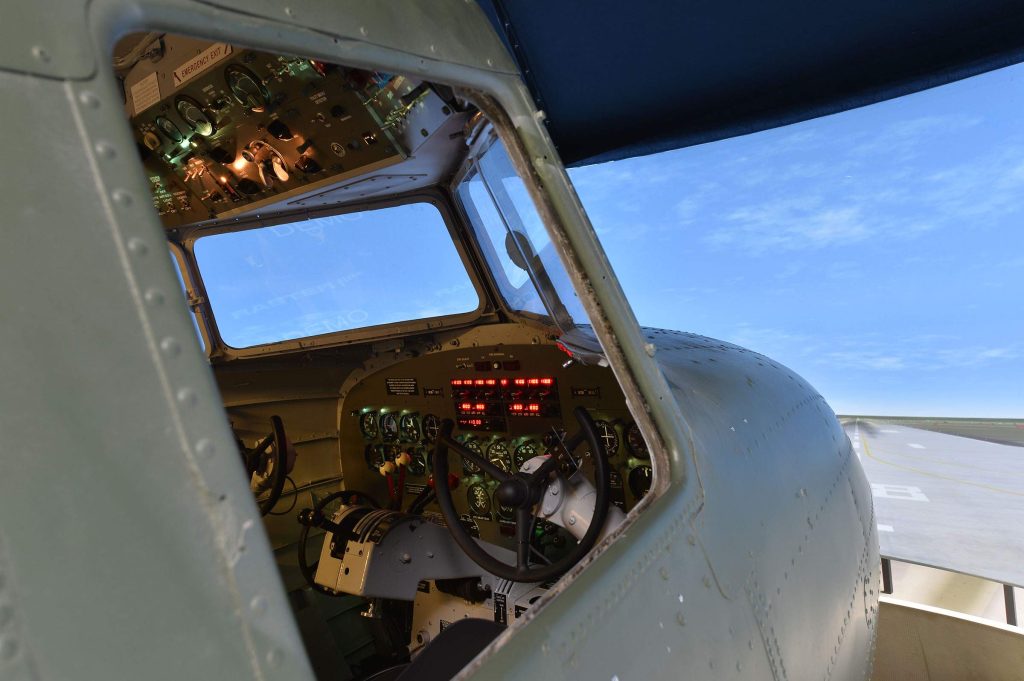
(Image credit: European Pilot Selection & Training (EPST))
To maximize its usefulness as a training platform, MPS obtained EASA operator status and secured FTD-2 certification for the simulator—the highest Flight Training Device approval level available from the European Union Aviation Safety Agency for this type of aircraft. This certification enables operators to conduct structured, affordable training while maintaining rigorous standards. As the simulator begins its new chapter in California, it will continue serving the same mission that inspired its creation: helping ensure that future generations of pilots can safely operate the legendary Douglas DC-3 while preserving one of aviation’s most enduring aircraft for years to come.
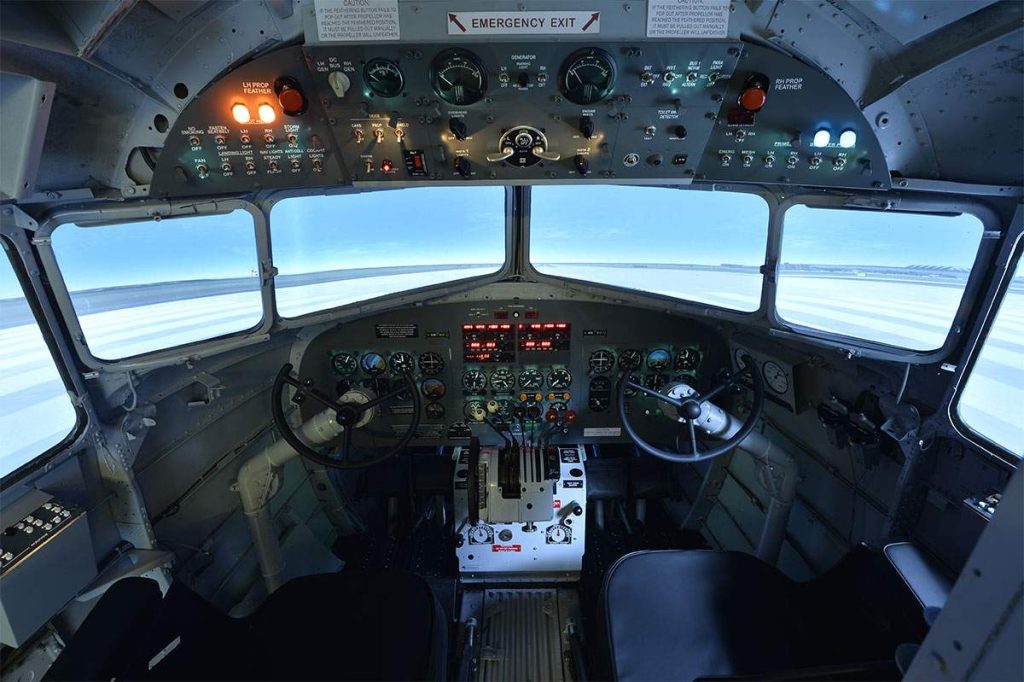
(Image credit: European Pilot Selection & Training (EPST))







Given the amount of work that has gone into the production of the World’s Sole Certified DC-3 Simulator, and its value as a Serious Training Aid, I’m surprised the Dutch let it go.
If there are flyable DC-3’s in europe, and there obviously are, how will New & Existing Pilots Gain and Maintain a Necessary & Required Skills Level?
Especially, when such Skills as ‘Emergency Procedures’ must be certified and demonstrable, to comply with All Flying & Insurance Regulations.