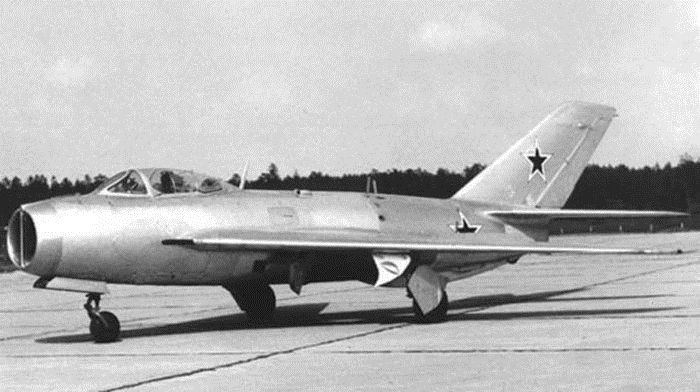
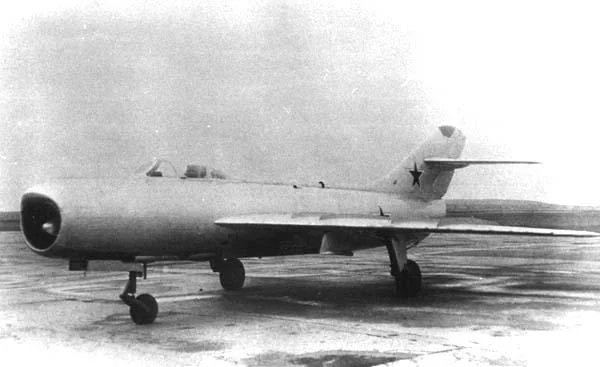


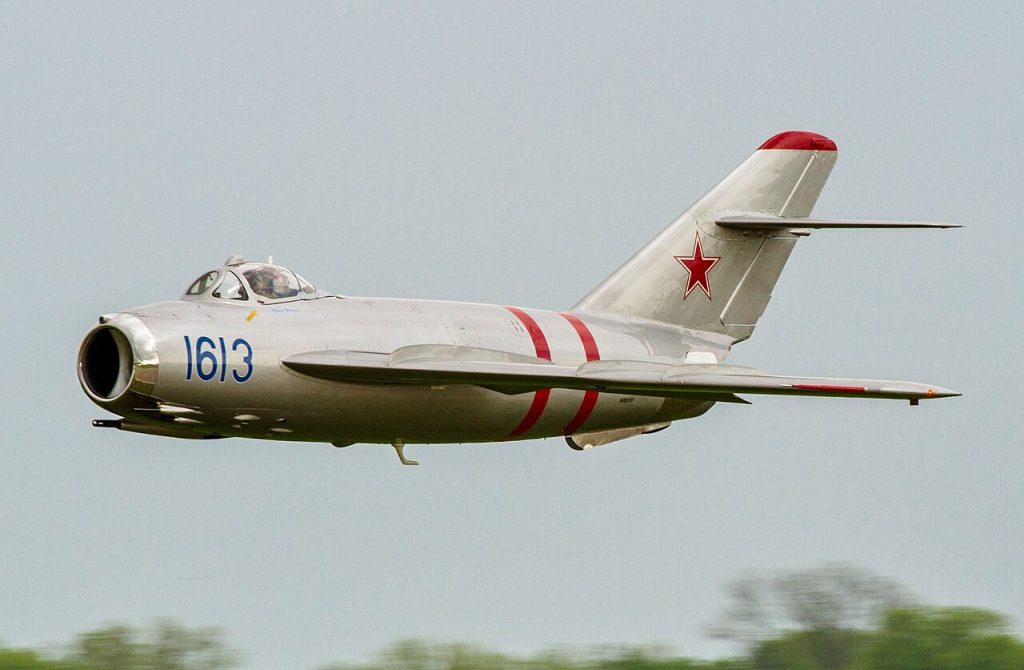
On this day in aviation history, 75 years ago (June 16, 1951), the Mikoyan-Gurevich I-350 took flight for the first time. An experimental jet fighter developed in the early years of the Cold War, the I-350 became the first Soviet aircraft to maintain flight at supersonic airspeeds. Development of an axial-flow turbojet engine had begun within the walls of OKW-165 in 1947. The I-350 was designed around this new engine by OKB Mikoyan-Guryevich. Led by engineer Arkhip Mikhailovich Lyulka, the crew at OKW-165 created the Lyul’ka TR-3A turbojet engine. Later renamed as the Lyulka AL-5, this powerplant produced 10,365 pounds of thrust. The I-350 had the appearance of an up-scaled MiG-17, which first flew on January 14, 1950. The fuselage was narrow and long, the wings were swept at 57 degrees, and the horizontal stabilizer was mounted midway up the tailplane.
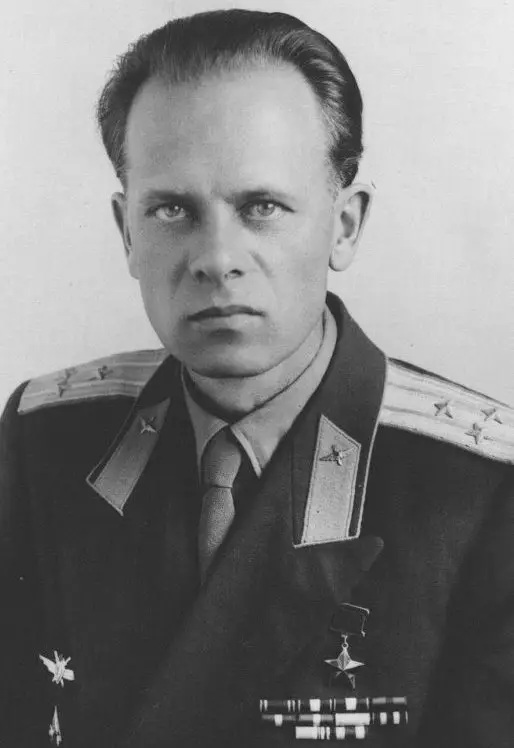
OKW designated the new MiG as the Izdeliye M, but the fighter would eventually be redesignated as the I-350. The I-350M-1 took its first flight on 6/16/51, at the hands of pilot Grigoriy A. Sedov. The I-350M-1 was fitted with an RP-1 Izumrud airborne interception radar. The second prototype, I-350M-2, had a Korshun radar installed. Shortly after takeoff on the first flight, the engine failed, which led to an additional hydraulic failure. Sedov was able to lower the gear manually and successfully land the aircraft, despite adverse control forces. Four more test flights followed, but the Lyulka engine’s reliability issues persisted. The I-350 program was terminated in August of 1951.
The MiG I-350 was able to attain a maximum airspeed of Mach 1.02, which is around 780 mph. The aircraft had a range of 600 nmi, and a service ceiling of 54,500 ft. MiG’s fighter prototype could climb to 33,000 ft in merely 1 minute and 6 seconds, with a thrust-to-weight ratio of 0.57. Had the I-350 been selected for combat duty, the aircraft would have been fitted with a 37 mm Nudelman N-37 autocannon, two 23 mm Nudelman-Rikhter NR-23 autocannons, and a centre-line hardpoint installed for munitions.