






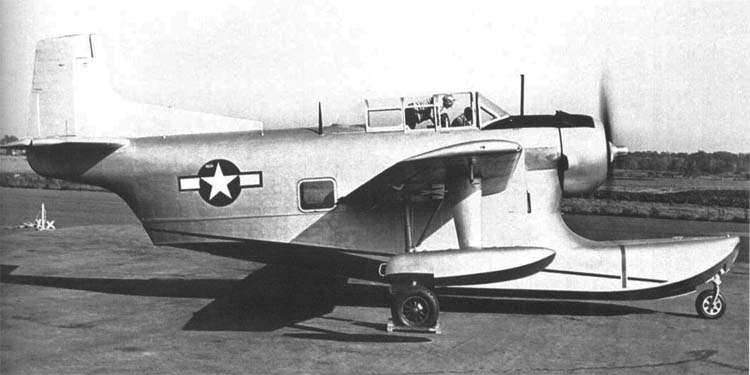


In the mid-1940s, the US Navy wanted a new amphibious aircraft to replace the Grumman J2F Duck. The J2F Duck was a biplane amphibious aircraft that served the United States Navy from late 1934 onward. The last 330 units were built in 1941 and 1942 by Columbia Aircraft Corp, and they kept the J2F-6 name. After WWII, Grumman redesigned the aircraft for the US Navy. The new version was a monoplane amphibious aircraft powered by a Wright R-1820-56 engine, designated XJL. Originally, Grumman designed the plane but handed it over to Columbia Aircraft Corporation for development and construction, which then produced it as the Columbia XJL-1. It helped Grumman to focus its resources on developing fighter aircraft for the Navy. The plane looked a lot like the J2F Duck and is often called “a single-winged Duck.” However, it is a completely new design.
Design of Columbia XJL-1
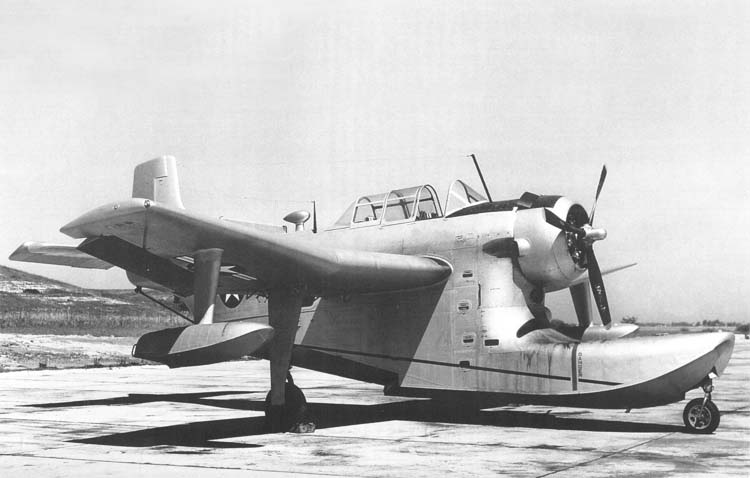
The US Navy ordered three Columbia XJL-1 experimental aircraft from Columbia. The first aircraft was used for destructive strength testing on the ground. The other two airframes were sent to the Navy’s test facility at Patuxent River Naval Air Station in Maryland for evaluation in 1946. With a capacity of eight, including two crew members and six passengers, the Columbia XJL-1 was 45.11 feet long, 16 feet high, with a wingspan of 50 feet and a wing area of 413 square feet. The empty weight of the aircraft was 7,250 pounds, and the gross weight was 13,000 pounds. Its single Wright R-1820-56 engine produced 1,350 horsepower. Its maximum speed was envisioned as 200 mph, with a cruise speed of 119 mph, a range of 2,070 miles, and a rate of climb of 1,110 feet per minute. The two Columbia XJL-1 aircraft tested at Patuxent River experienced repeated structural failures. As a result, testing was abandoned on September 21, 1948.
The Cancellation
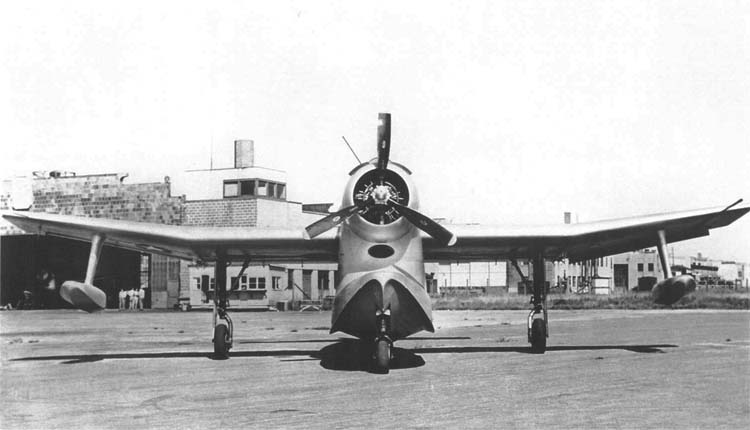
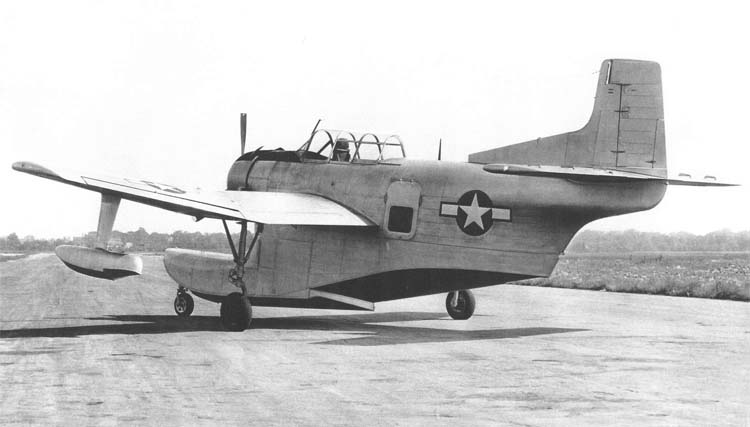
However, a Naval Air Test Center (NATC) report noted that most of the Columbia XJL-1’s handling characteristics were rated as good. But the tests were stopped before completing the full evaluation due to repeated failures of the nose gear and water rudder well, along with a shortage of spare parts. The report highlighted failures in the nose gear actuators, the nose gear door linkage, and the lower water rudder bracket. The NATC report and post-war military budget cuts led to no orders for the Columbia XJL-1. The two prototypes were parked at NAS Patuxent River without engines, propellers, or radios. The third prototype only logged 120 hours of flight time. On February 28, 1949, the Navy removed them from service and offered them for sale by auction. Herbert D. Scudder won the bidding and paid $420 on June 21, 1949, for both airframes and a set of spare parts. Scudder died on December 7, 1955, when the prototype Martin P6M Seamaster jet flying boat crashed into Chesapeake Bay, Maryland, during a test flight. After his death, his widow put the two Columbia XJL-1s up for sale. Currently, one aircraft is registered as N54207 and is at Yanks Air Museum in Chino, California. The other aircraft, registered N54205, is also fully restored and is currently on display at the Pima Air & Space Museum in Tucson, Arizona. In the Grounded Dreams series, the Columbia XJL was a failed attempt to revive the Duck legacy. Read more Grounded Dreams articles HERE.








There is no such thing as “destructive strength testing”, instead, that’s called Structural Testing, where a non flying airframe is tested to its limits to determine the structural life of the aircraft.
Destructive strength testing involves intentionally stressing aviation materials, components, or full-scale airframes past their breaking points to measure ultimate load capacities, fatigue limits, and failure modes.