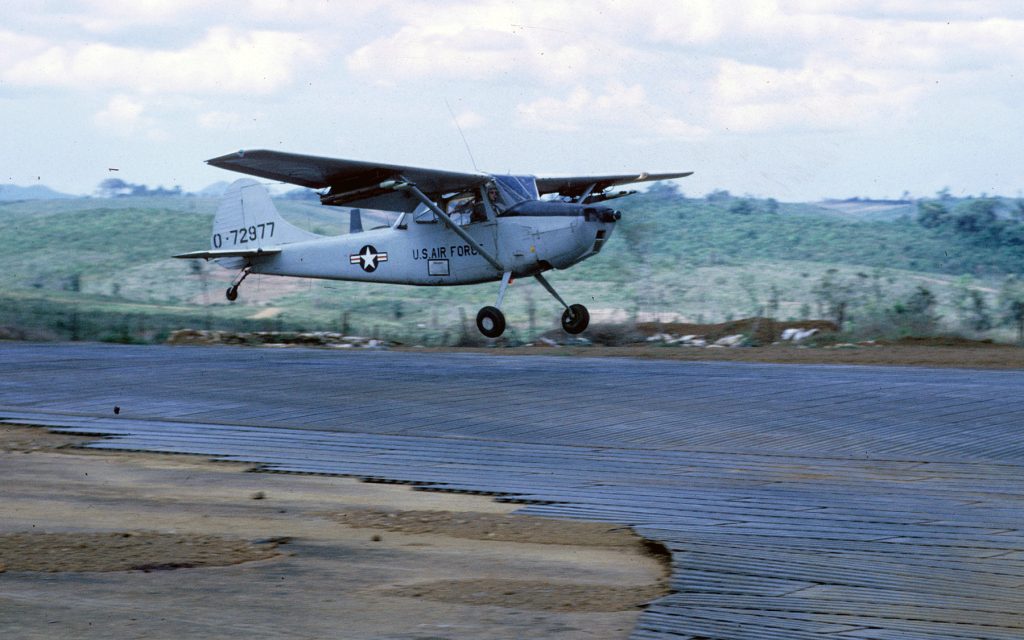
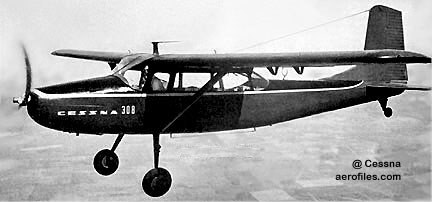

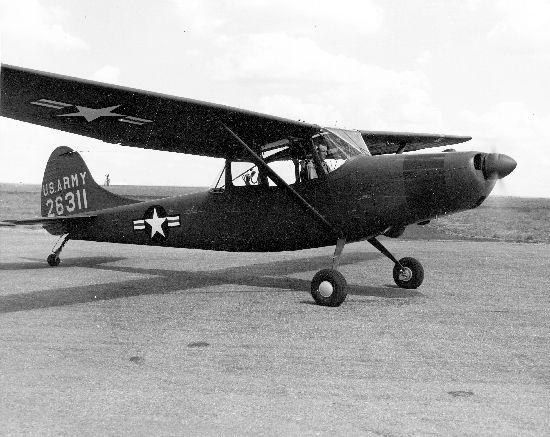
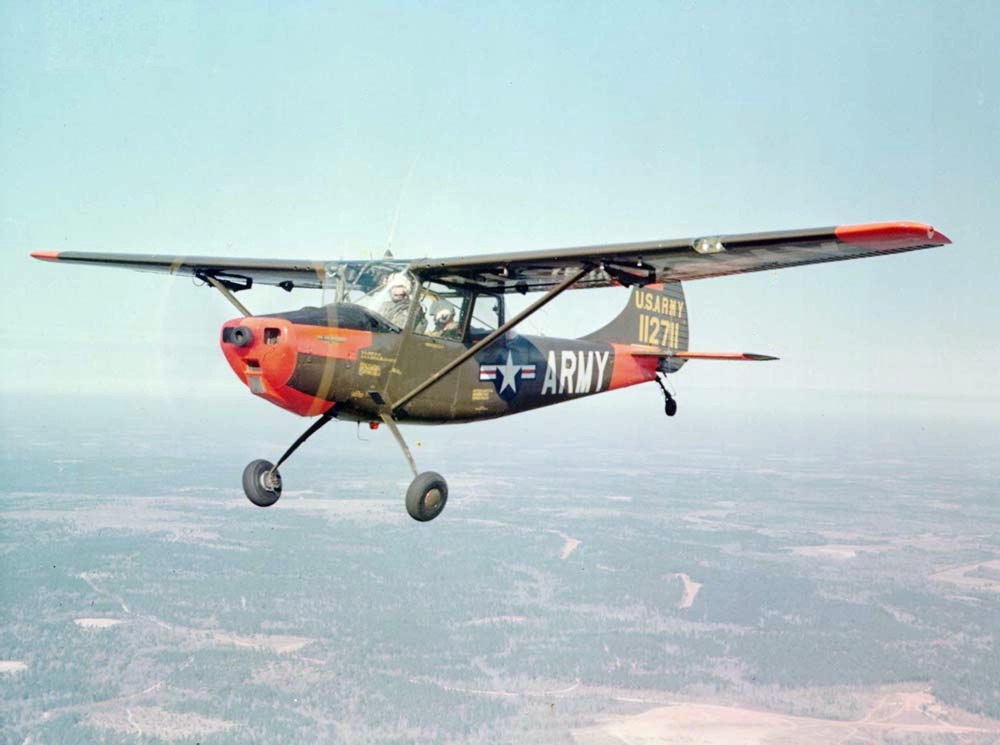
In the early 1950s, the US Army required a utility plane for light transport or reconnaissance. As a result, Cessna developed an aircraft based on its O-1 Bird Dog (Cessna 305) observation aircraft, designated Cessna 308. The main design goals were to accommodate one pilot and three passengers, or to carry up to 1,000 pounds of cargo. The focus was also on short takeoff and landing (STOL) abilities, and the aircraft had to stay within a 5,000-pound gross weight limit to support lighter US models. Cessna built the first prototype of the Cessna 308 at its Wichita, Kansas, facility in the early 1950s, which made its first flight in July 1951, with test pilot Bill Thompson at the controls.
Design of Cessna 308
The Cessna 308 was a single-engine, high-wing aircraft made of metal. Its wingspan was 47 feet, which improved lift compared to the Cessna 305. The aircraft had a taildragger landing gear with fixed main wheels and a steerable tailwheel. In addition, the aircraft had shock absorbers to take off and land on rough fields, which allowed it to operate from short, uneven terrain without the need for retractable gear. It also had high-lift flaps and initially used 6-foot tubes to reduce engine noise, which were later replaced by cowl flaps. The gross weight of the Cessna 308 was 4,200 pounds, and the cabin was larger, seating one pilot and up to three passengers, or carrying cargo up to 1,000 pounds. The aircraft was powered by a single Lycoming GSO-580 engine that produced 375 horsepower. In 1952, the US Army began testing the Cessna 308’s takeoff and landing capability on short runways and rough ground while carrying a 1,000-pound load. In tests, the Cessna 308 performed well, demonstrating its ability to transport supplies and troops, including the injured personnel on stretchers.
The Cancellation
During the tests, compared with other aircraft in the competition, such as the de Havilland Canada DHC-2 Beaver, the Cessna 308 was lighter and had similar STOL capabilities. However, the tests also revealed some problems with the aircraft. The large wingspan slowed the aircraft’s response, resulting in high control forces and engine cooling issues. Because of these problems, the US Army chose the Beaver as its utility aircraft, which had better payload and range for various operations, leading to the cancellation of the Cessna 308. Although the Cessna 308 was canceled, it helped the company design its future single-engine utility aircraft. The company learned to balance wings for low-stall speeds while ensuring responsive controls and reliable engines. These lessons were important for developing later models, such as the Cessna 185 Skywagon series. In the Grounded Dreams series, the Cessna 308 was not a bad aircraft or design; it just didn’t prove as valuable to the US Army as the Beaver, and only one prototype was ever developed. Read more Grounded Dreams articles HERE.