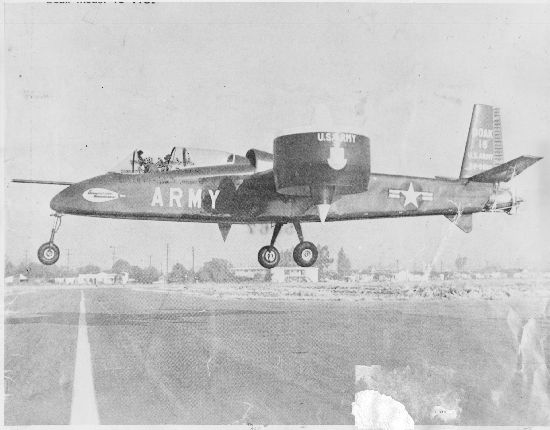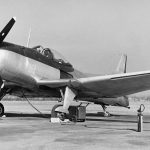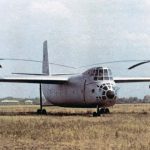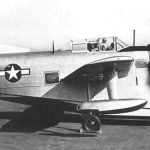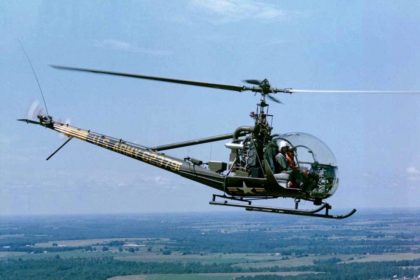


In 1940, Edmund R. Doak, Jr., vice president of Douglas Aircraft Company, founded his own company, the Doak Aircraft Company, in California. During WWII, the company grew to 4,000 employees and received various subcontracts from all major American aircraft manufacturers. The company manufactured molded plywood fuselages for training aircraft such as the AT-6 and the Vultee BT-13, and also produced doors, hatches, and gun turrets for many types of aircraft. In 1950, Doak proposed a Vertical Takeoff and Landing (VTOL) aircraft, designated Doak VZ-4, to the US Army’s Army Transportation and Research and Engineering Command in Fort Eustis, Virginia. He described the aircraft as capable of taking off and landing in small spaces, hovering and staying over a target, and flying backward like a helicopter. However, it would do this without the noise and vibration typically associated with helicopters. Additionally, Doak proposed that the Doak VZ-4 would have the speed, missile capability, and flexibility of a conventional fixed-wing fighter. The Army found Doak’s proposal appealing because the service knew that a Soviet attack could disrupt the takeoff and landing of conventional aircraft. As a result, on April 10, 1956, the Army awarded Doak a contract to build a prototype for research.
Design of Doak VZ-4
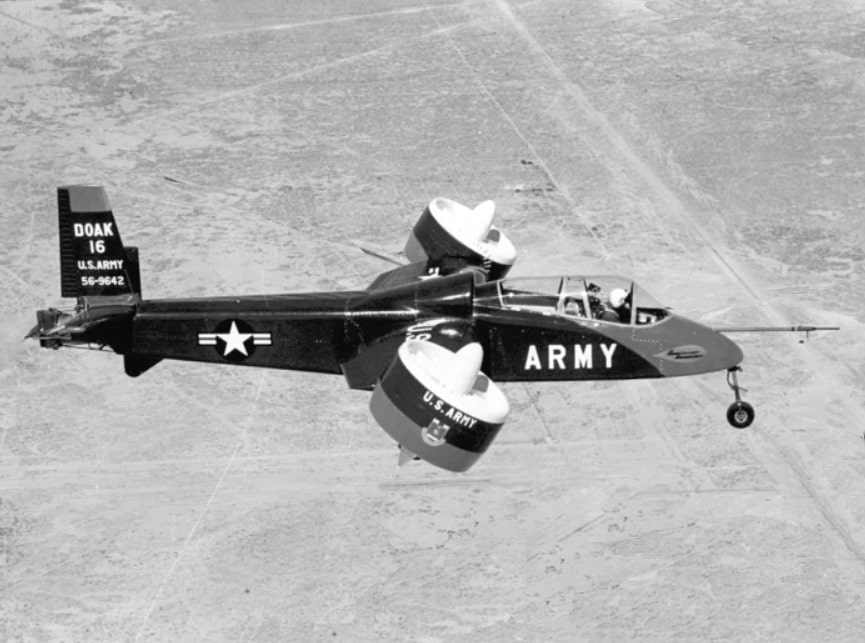
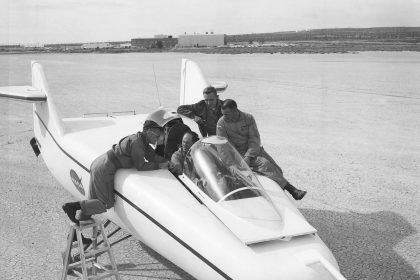
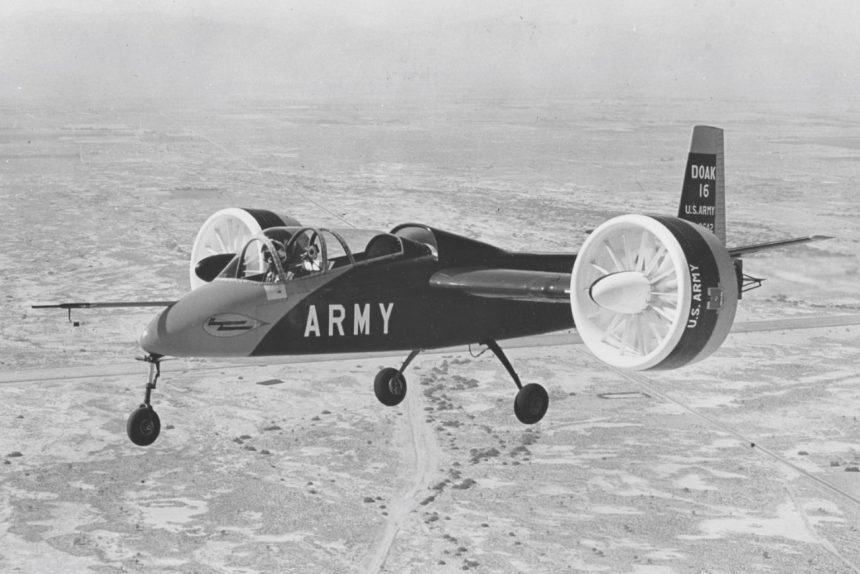
The two-seat Doak VZ-4 was 32 feet long, 10 feet high, with a wingspan of 16 feet and a wing area of 8.92 square feet, excluding ducted fans. The empty weight of the aircraft was 2,300 pounds, and the gross weight was 3,200 pounds. The aircraft was initially powered by a Lycoming YT53 turboprop engine producing 840 shaft horsepower, but was later replaced by a more powerful Lycoming T53-L-1 turbine engine producing 1,000 shaft horsepower. The engine powered two fiberglass propellers mounted on the wingtips. The aircraft’s fans were set vertically for takeoff and landing, requiring 4,800 rpm to lift off, and rotated to a horizontal position for flight. This was the first successful test of this VTOL propulsion concept. The flight tests of Doak VZ-4 began at Torrance Municipal Airport, and the company completed several tests by 1958. The aircraft first hovered on February 25, 1958, and it transitioned from vertical to horizontal flight for the first time on May 5, 1958. While the prototype generally operated well, its ability to take off and land quickly was not as good as expected, and it tended to nose up when changing from vertical to horizontal flight. However, the engineers believed they could fix the prototype’s issues. After conducting taxi tests and 32 hours of flight testing on the ground, plus 18 hours of tethered hovering, the aircraft was moved to Edwards Air Force Base in California in October 1958.
The Cancellation
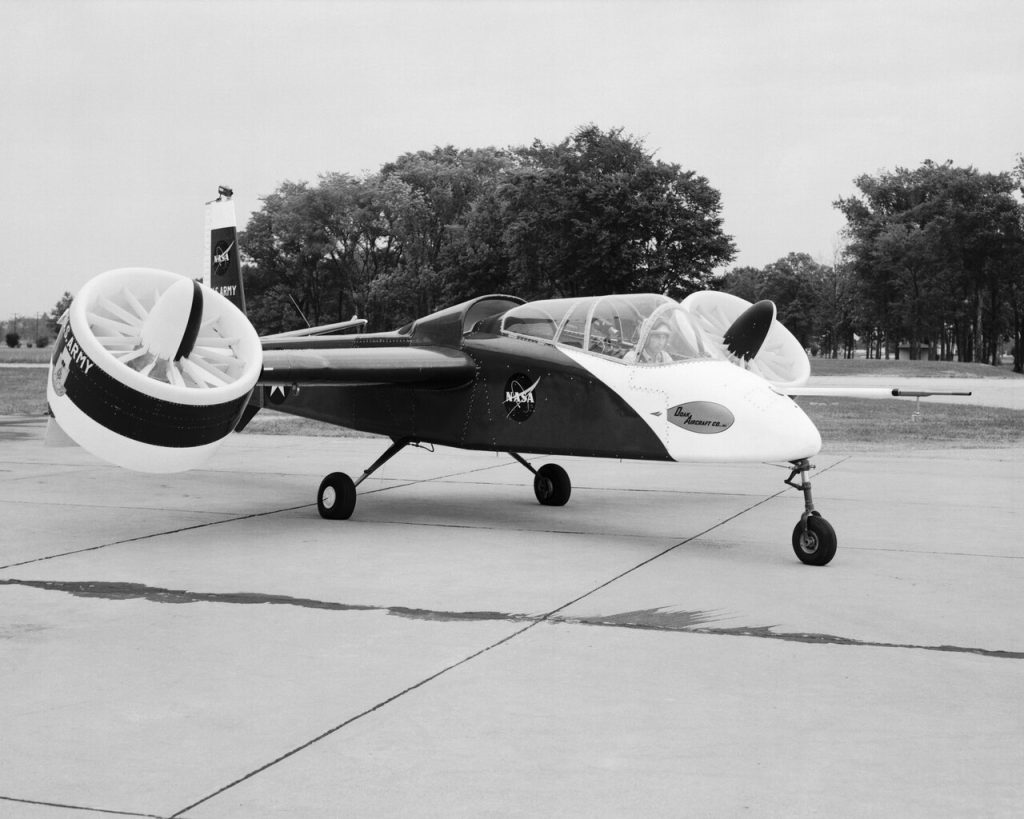
At the base, it underwent another 50 hours of testing. During these tests, Doak VZ-4 showed it could reach a maximum speed of 230 mph, a cruise speed of 175 mph, a range of 250 miles, an endurance of one hour, and a service ceiling of 12,000 feet. In September 1959, the US Army accepted the prototype and sent it to the NASA Langley Research Center in Hampton, Virginia, for further testing. In late 1960, Doak laid off 90 percent of his employees because of a recession in the aircraft industry. Douglas Aircraft then took over the project, bought the patent rights and engineering files, and hired four engineers from Doak to continue working on the VZ-4. The engineers kept on working to improve the VZ-4 until 1963. At the time, the US Army decided that the helicopter could meet its VTOL needs. However, the Army shifted its funding away from developing unconventional VTOL aircraft and focused on traditional helicopters. As a result, the trials for the Doak VZ-4 were stopped. Later, NASA acquired the aircraft and continued testing flights until 1972. In January 1973, the US Army Transportation Museum at Fort Eustis, Virginia, received the VZ-4 as a donation. It was displayed with other aircraft in the museum’s outdoor Aviation Pavilion. In August 2024, the Doak VZ-4 was moved to the US Army Aviation Museum, where it is now exhibited inside the galleries. In the Grounded Dreams series, the Doak VZ-4 was not a bad aircraft and proved various concepts. As an experimental aircraft, it performed well, but as a US Army helicopter, it failed. Read more Grounded Dreams articles HERE.