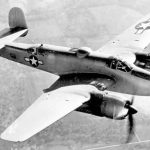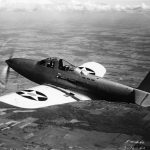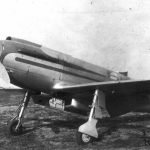
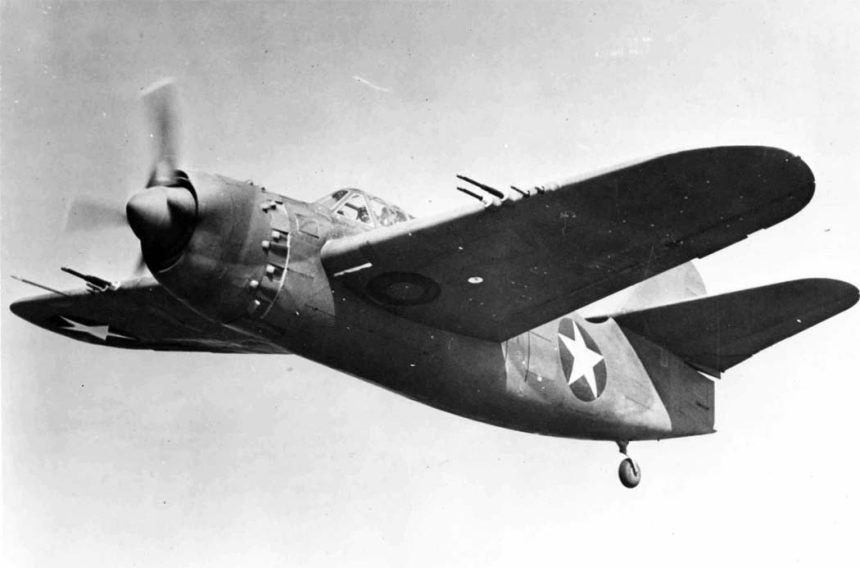

During early WWII, the success of the German Junkers Ju 87 Stuka dive bombers influenced the US Army to develop a similar aircraft. In 1940, the US Army received a report on the war, which stated that the Junkers Ju 87 Stuka was a precise tactical weapon that played a crucial role in Blitzkrieg. The report also mentioned its low speed, making it an easy target for fighter aircraft. The new US Army dive bomber was intended to replace the rear gunner with heavy armor to allow it to survive in air-to-air combat. Brewster Aeronautical Corporation won a contract to build a prototype aircraft, designated Brewster XA-32. The Brewster XA-32 had a solid design on paper, but poor management led to many problems. In addition, the company missed several deadlines, putting the bomber’s development at risk of falling behind its intended timeline.
Design of Brewster XA-32
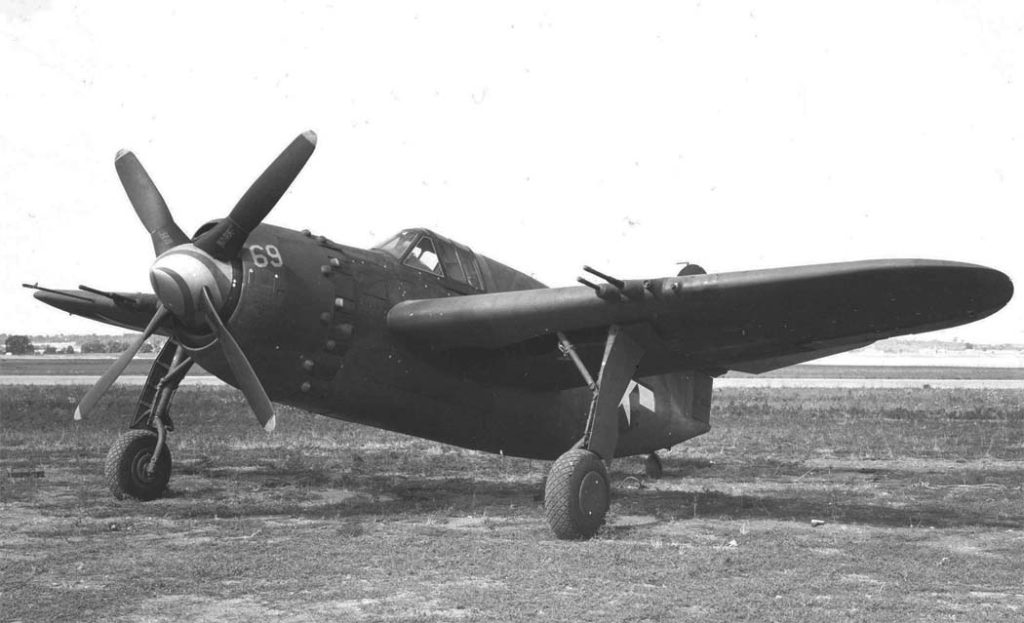
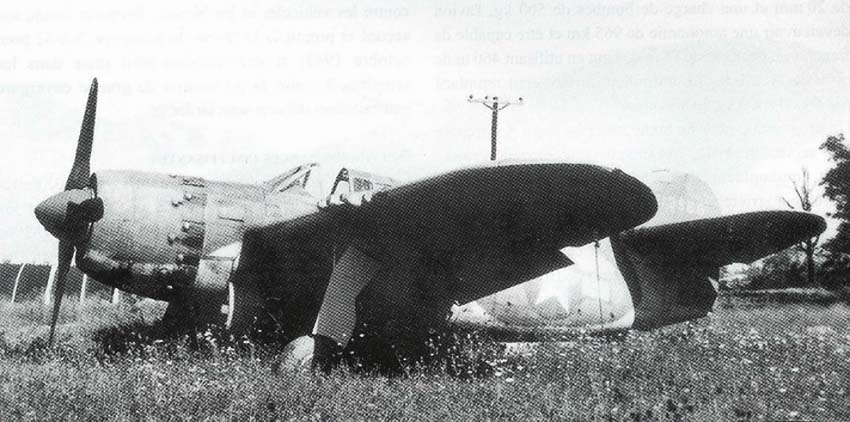
The all-metal Brewster XA-32 was designed between 1941 and 1942. Its round shape increased drag, and poor design details created bumps and lumps. Another major problem with the aircraft was that the exhaust stacks around the engine cowling almost blinded the test pilots during night flights. Also, when the engine backfired at low power, flames would fill the front of the aircraft. The single-seat Brewster XA-32 was 40.7 feet long, 11.3 feet high, with a wingspan of 45.1 feet and a wing area of 425 square feet. The empty weight of the aircraft was 13,500 pounds, which was one of its major limitations. The gross weight was 16,000 pounds, and the maximum takeoff weight was 20,000 pounds. The aircraft was powered by a Pratt & Whitney R-2800-37 Double Wasp radial engine, producing 2,100 horsepower, and it drove a four-bladed Curtiss propeller. Later, engineers attempted to equip the aircraft with a Pratt & Whitney R-4360 Wasp Major engine, producing 3,000 horsepower, but the effort was unsuccessful. The aircraft’s projected maximum speed was 311 mph at 10,000 feet, with a cruise speed of 196 mph. The range of the aircraft was 960 miles, and the service ceiling was 26,000 feet. The Brewster XA-32 was planned to be armed with eight 12.7 mm Browning AN/M2 machine guns or four 20 mm AN/M2 autocannons. It also had three hardpoints with a capacity of 3,000 pounds to carry bombs.
The Cancellation
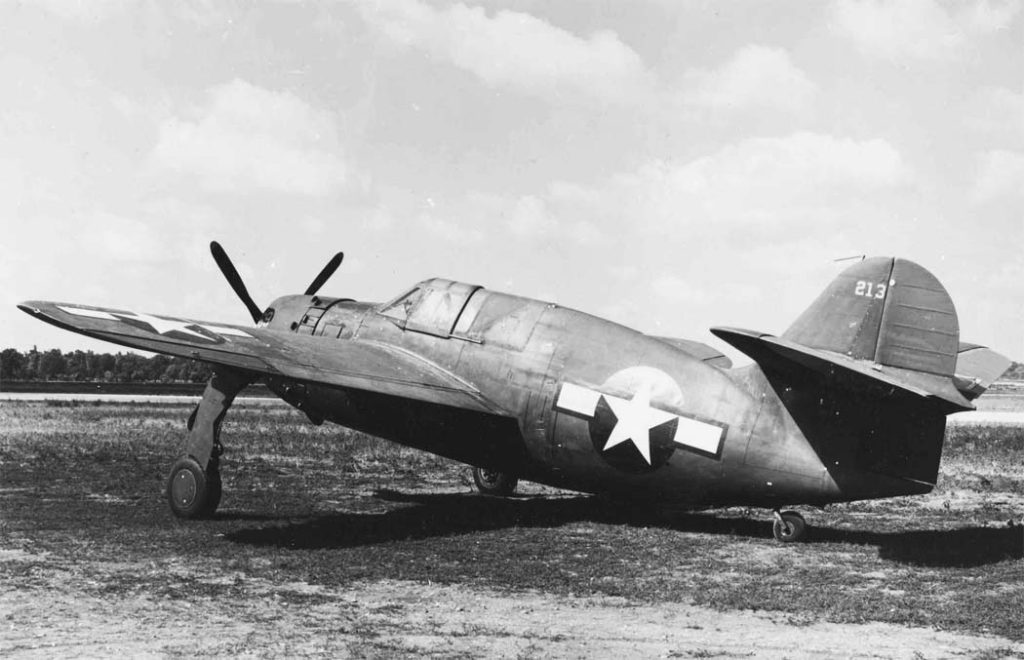
The Brewster XA-32 prototype first flew on May 22, 1943, two years after its design was proposed. However, its performance did not meet the required specifications. Without any weapons, the XA-32 could only reach a speed of 279 mph. While its handling capabilities were acceptable, weapons and external stores reduced its performance. It also created severe buffeting at its top speed. A second prototype, the XA-32A, was built with reduced armament, but it did not solve the problems. At this point, the Army decided not to use the XA-32 and stopped any plans for further production. Changes in combat needs and lessons learned from North Africa and Italy showed that dive bombers like the A-36 Apache had weaknesses against enemy fighters, shifting the focus to developing fighter-bombers, such as the P-47 Thunderbolt, which were effective in both ground attacks and air combat. After the government canceled the Brewster XA-32 program in 1944, Congress investigated the company and found various management problems. As a result, Brewster lost its contract to build F3A-1 Corsairs. The company went out of business in 1946, becoming the only American aircraft manufacturer to fail because of WWII. In the Grounded Dreams series, the Brewster XA-32 could not live up to expectations, and after only two prototypes were built, both of which were scrapped after the flight tests were completed, the program was canceled. Read more Grounded Dreams articles HERE.