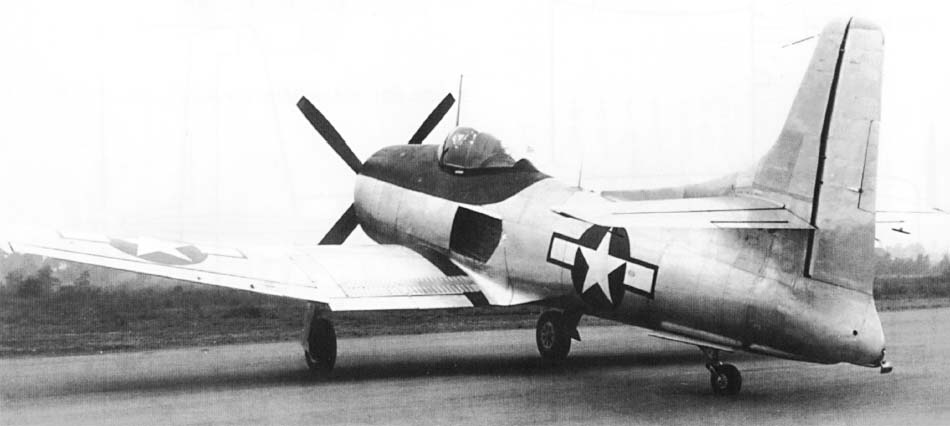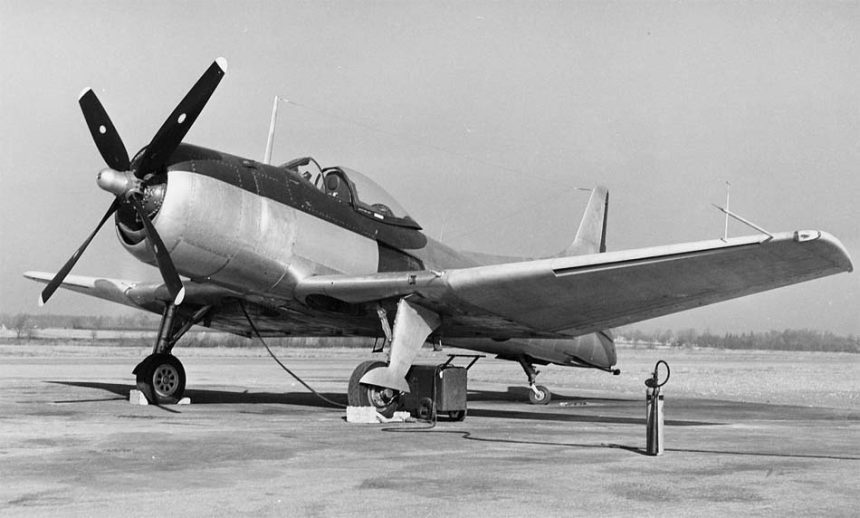

In early 1942, the US Navy wanted a dive and torpedo bomber to replace the Grumman TBF Avenger torpedo bomber and the Curtiss SB2C Helldiver dive bomber. By late 1943, the service found the Douglas SB2D much larger and heavier for this role. As a result, the US Navy began a new design for a smaller dive bomber suitable for escort carriers. The Navy understood the engineering demands of major wartime projects, so it wanted to award the design work contract to companies that did not already have a major wartime production contract. It then selected Fleetwings, located in Bristol, Pennsylvania, which Henry J. Kaiser bought in 1943, and designated the aircraft Kaiser-Fleetwings XBK. The XBK dive bomber program started in February 1944 with a contract for two prototypes. To keep the aircraft small, rather than having internal compartments for weapons and equipment, it would carry them on the outside. A radar could be mounted under the left wing, and the dive brakes were located at the inboard wing’s trailing edge and were of the lower and upper picket fence type. The horizontal tail was placed on the tailfin above the fuselage to help prevent air turbulence when the dive brakes were used. The engine exhausts were positioned unusually, almost behind the cockpit, with the hope that this would reduce drag.
Design of Kaiser-Fleetwings XBTK
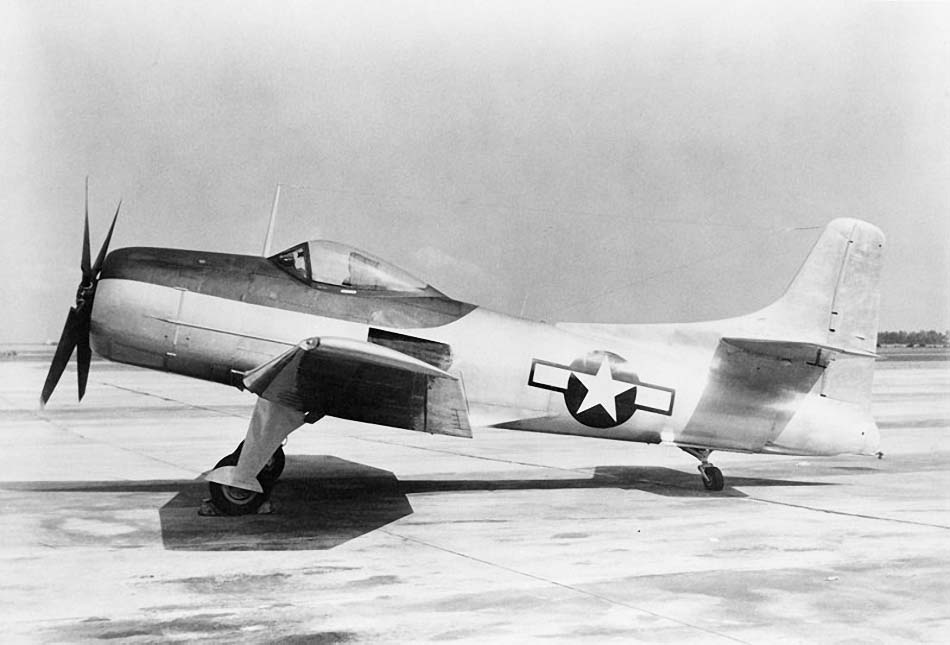
In April 1944, a mockup inspection took place without an engine. The engine was installed in May 1944, and the first prototype was set to be finished by November 1944. To speed up production, the US Navy built a new airfield at the Fleetwings plant. In early 1945, the US Navy’s Bureau of Aeronautics (BuAer) requested that the aircraft be able to carry a torpedo. As a result, the company added a new centerline station for the weapon, and the aircraft’s name changed to Kaiser-Fleetwings XBTK. The first XBTK-1 was completed in March 1945 and flew for the first time on April 12, 1945. The single-seat Kaiser-Fleetwings XBTK was 38.11 feet long, 15.8 feet high, with a wingspan of 48.8 feet and a wing area of 380 square feet. The empty weight of the aircraft was 9,959 pounds, and the gross weight was 15,782 pounds. It was powered by a Pratt & Whitney R-2800-34W 18-cylinder radial piston engine, producing 2,100 horsepower. The aircraft was envisaged to have a maximum speed of 373 mph, a range of 1,400 miles, a service ceiling of 33,400 feet, and a rate of climb of 3,550 feet per minute. It was to be armed with two 20 mm cannons and a central hardpoint capable of carrying up to 2,000 pounds. Additionally, it had two wing stations, each with a capacity of 1,000 lb. The design also included eight wing launchers specifically for 5-inch (127 mm) High Velocity Aircraft Rockets.
The Cancellation
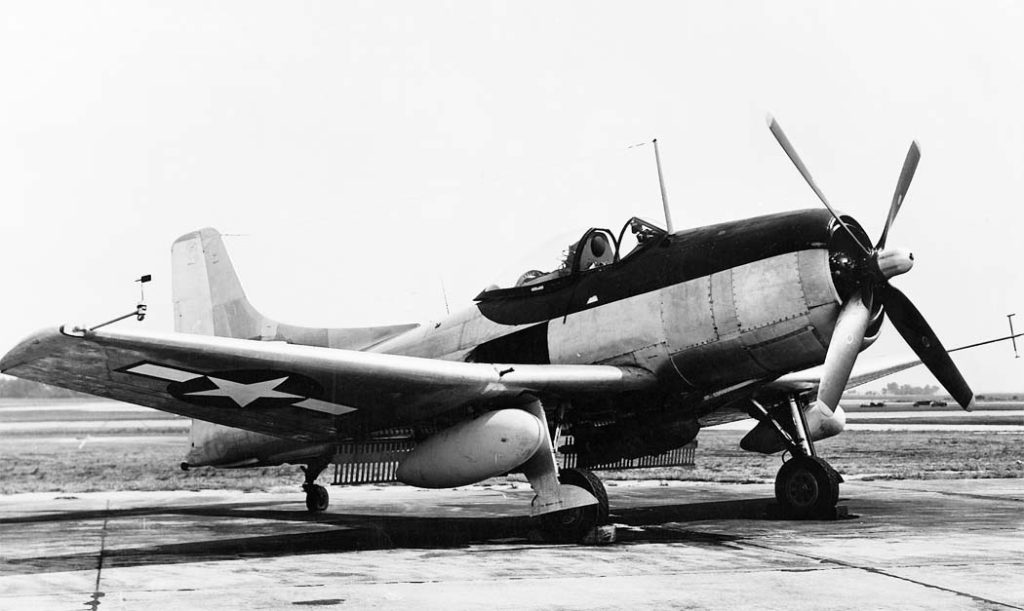
Flight tests showed that the engine did not cool properly, and the fuselage vibrated excessively. Fixing these issues delayed flight trials until July 1945. In August 1945, the Kaiser-Fleetwings XBTK was delivered to the US Navy’s Naval Air Test Center at Naval Air Station Patuxent River, Maryland, for evaluation. After WWII ended, the US Navy reduced its order from 20 to 10 aircraft. Test results recommended replacing the unique exhaust system with a standard one because the cockpit became very hot, and it was hard to get in and out of the cockpit after the engine stopped. The tests also found that the Kaiser-Fleetwings XBTK had poor stall performance, especially with the power off. However, the diving ability of the Kaiser-Fleetwings XBTK was better than that of any other dive bomber then in service or under development. Later, the aircraft was sent back to Fleetwings for redesign. The second production aircraft flew for the first time in March 1946. It had built-in leading-edge slots that improved its stall performance. However, by early 1946, production of new aircraft had been reduced, and the Douglas AD Skyraider and the Martin AM Mauler already filled the roles for the Kaiser-Fleetwings XBTK. In May 1946, officials decided to complete five airframes that were already in production. Continued testing showed problems when the aircraft entered a spin. As a result, the US Navy ended the Kaiser-Fleetwings XBTK contract on September 3, 1946, as there was no longer a need for the aircraft. All five prototypes, including two used in the flight tests, were scrapped. In the Grounded Dreams series, Kaiser-Fleetwings XBTK was a good aircraft, but it arrived too late. Read more Grounded Dreams articles HERE.