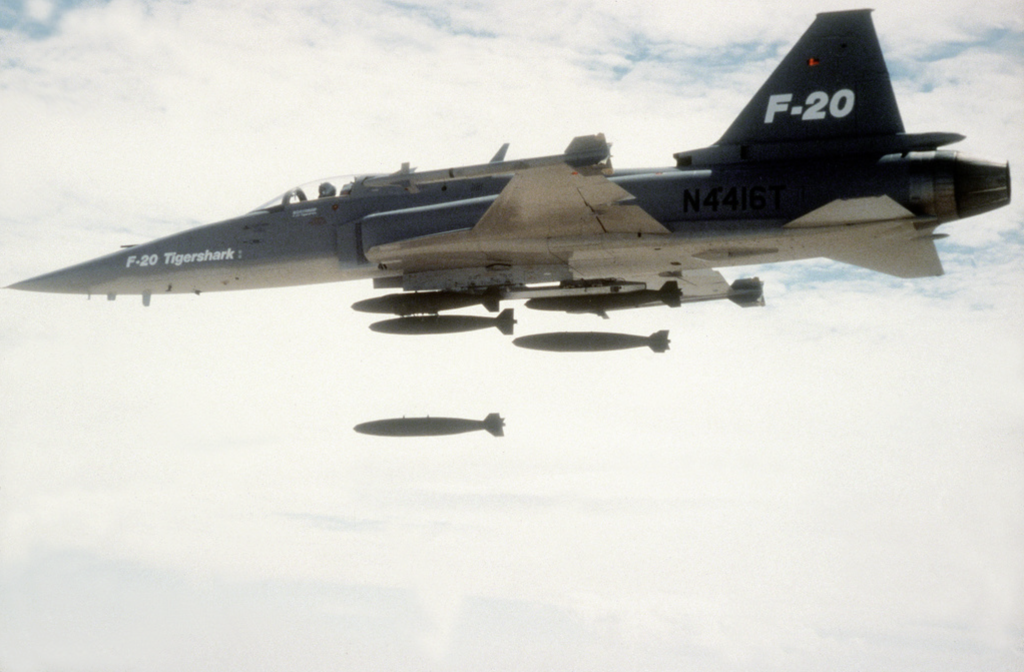
In the early 1980s, the US Air Force evaluated a fighter jet built to be reliable, simple to fly, and inexpensive to maintain. This jet could enter combat within a minute after takeoff and climb to 53,800 feet per minute. Sometimes, it even outperformed the renowned F-16. Despite these strengths, Northrop Corporation ended the program in December 1986 after more than a decade of effort, without selling a single jet. The fighter program, called the F-20 Tigershark, had cost Northrop and its subcontractors over $1.2 billion. Northrop built the F-20 to meet the needs of F-5 customers who still needed new fighters and better technology. The company’s foreign fighter tradition had begun with the F-5A in the 1960s under the Military Assistance Program. The F-5E Freedom Fighter had won the International Fighter Aircraft program competition during the Nixon administration. By the late 1970s, Northrop had successfully marketed F-5s to friendly nations under US government policies that enabled Third World air defense. In this “Grounded Dreams: The Story of Canceled Aircraft” series article, we will explore how the F-20 Tigershark proved its performance, but export politics and the F-16’s dominance killed the jet before it found a buyer. Check our previous entries HERE.
Birth of the F-20
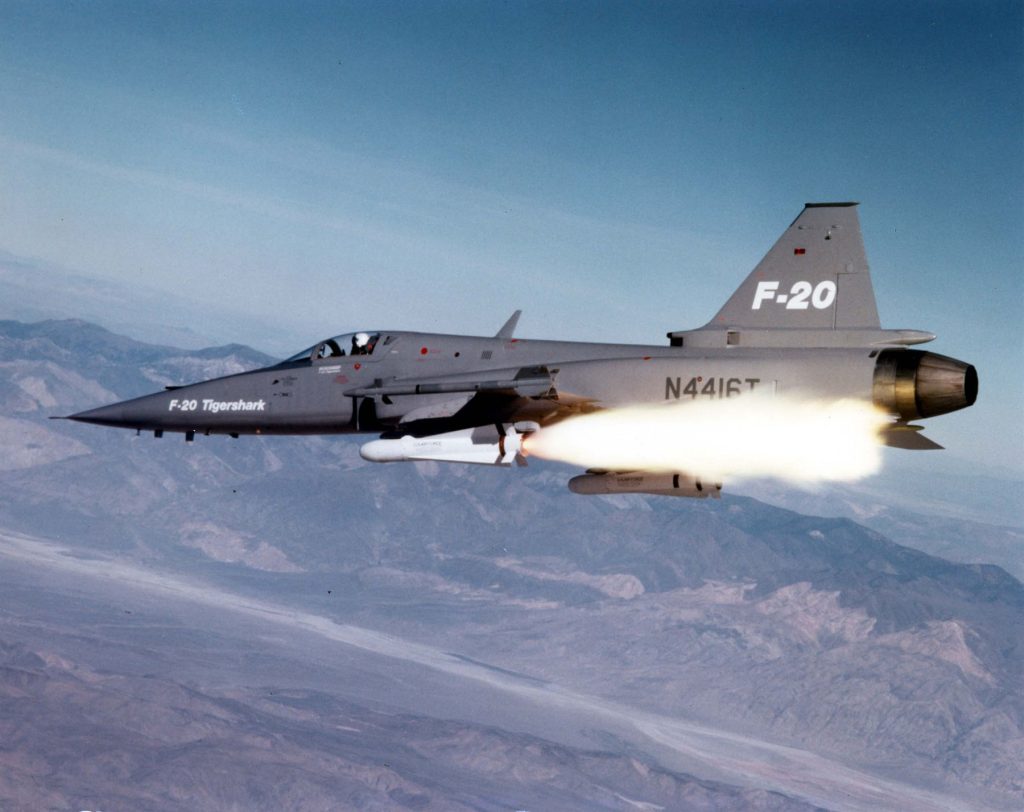
The emergence of new technologies in the 1970s influenced Northrop’s F-5 program planning, as more sophisticated aircraft such as Soviet MiGs and French Mirages had rendered the F-5E obsolete. Northrop determined that the next F-5 aircraft would need features such as more powerful radars, advanced fire control systems, armaments, airframe composites, and fly-by-wire controls to remain competitive. The export fighter market, traditionally favoring austerity, was changing as developing nations sought more capable aircraft. In 1975, Northrop initiated engine studies for potential F-5G upgrades. By 1978, the company selected a single General Electric F404 turbofan engine, providing a 60 percent thrust increase over the two J85-GE-21 turbojets in the F-5E. Northrop’s Chief Executive Officer issued a one-page memo instructing subordinates to design an aircraft with 80 percent of the F-16’s capability at half the cost. Hence, the Tigershark was born, and it was designed to retain commonality with the F-5 family to minimize investments in systems and support equipment for foreign purchasers.
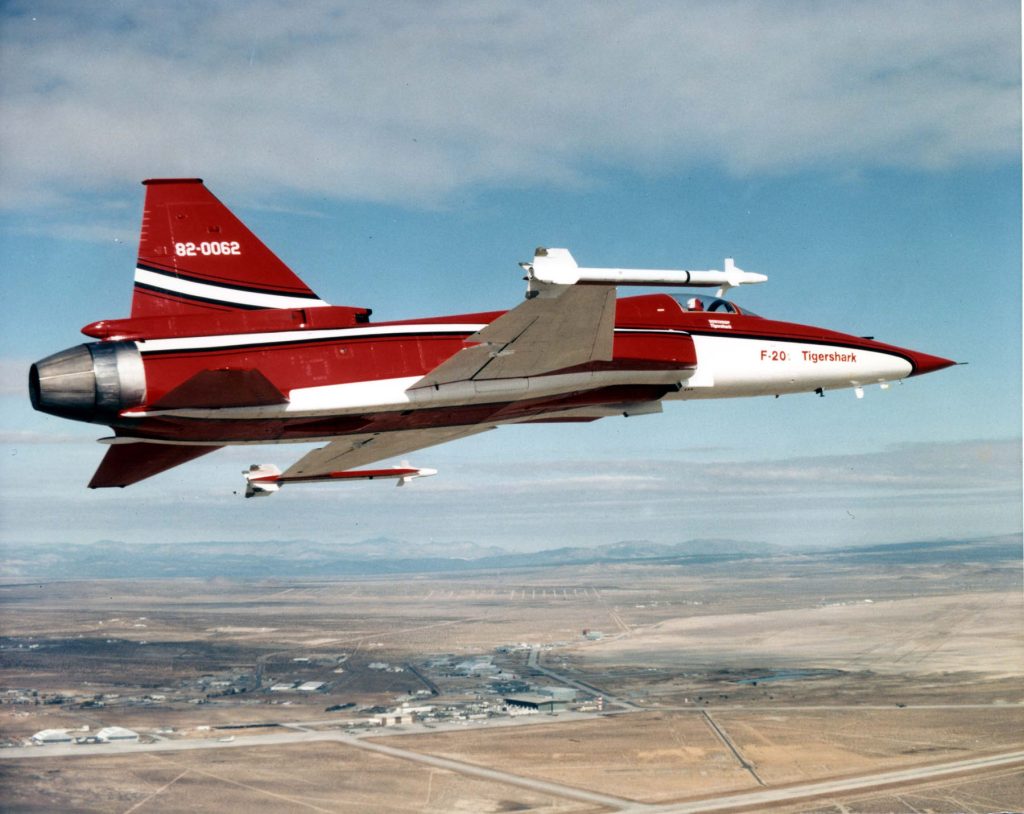
However, then US President Jimmy Carter’s Presidential Directive 13 (PD-13) in May 1977 prohibited development or modification of aircraft solely for export. The Air Force approached Northrop in July 1978 about a single-engine F-5G for Taiwan, which sought 160 Mach-2 class aircraft as a deterrent against the People’s Republic of China. Carter vetoed the sale in October 1978. By January 1980, PD-13 was revised to permit export aircraft development so long as it was not financed by the US government. The Foreign Export (FX) program facilitated intermediate-level fighters between the F-5E and F-16. Northrop entered the F-5G as an FX contender. General Dynamics (GD) configured an F-16 with the older J79 engine as its contender. The Ronald Reagan administration’s entry in 1981 brought a more permissive export environment. Under Secretary of State James L. Buckley argued that arms transfers enhanced the self-defense capabilities of allied nations. In July 1981, a Reagan directive permitted first-line fighter sales on a case-by-case basis, and Pakistan, Venezuela, and South Korea purchased F-16s shortly thereafter.
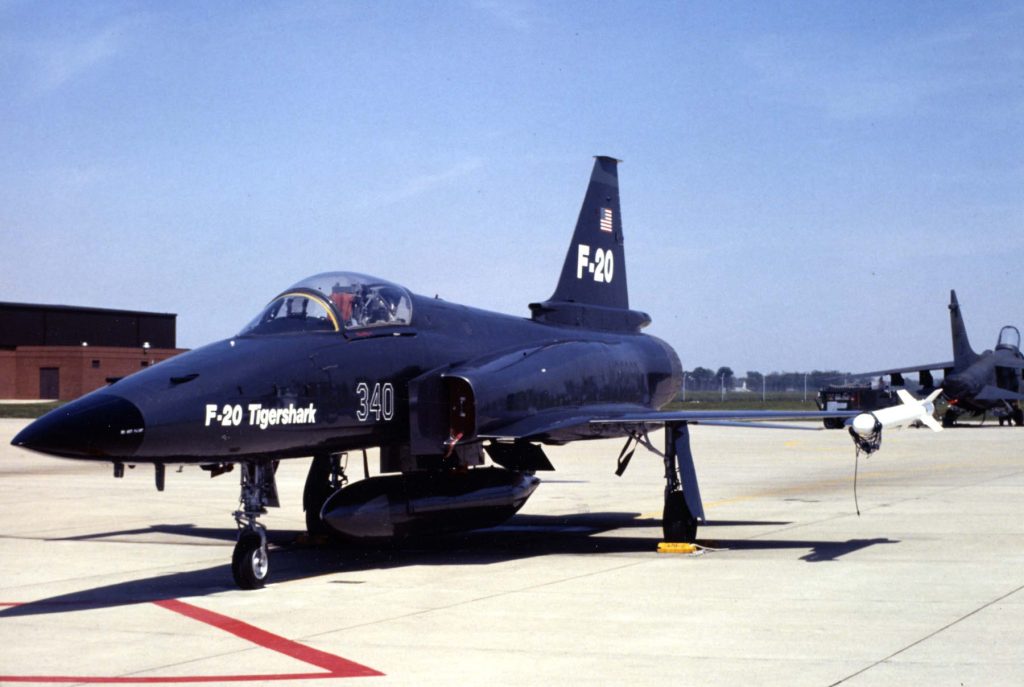
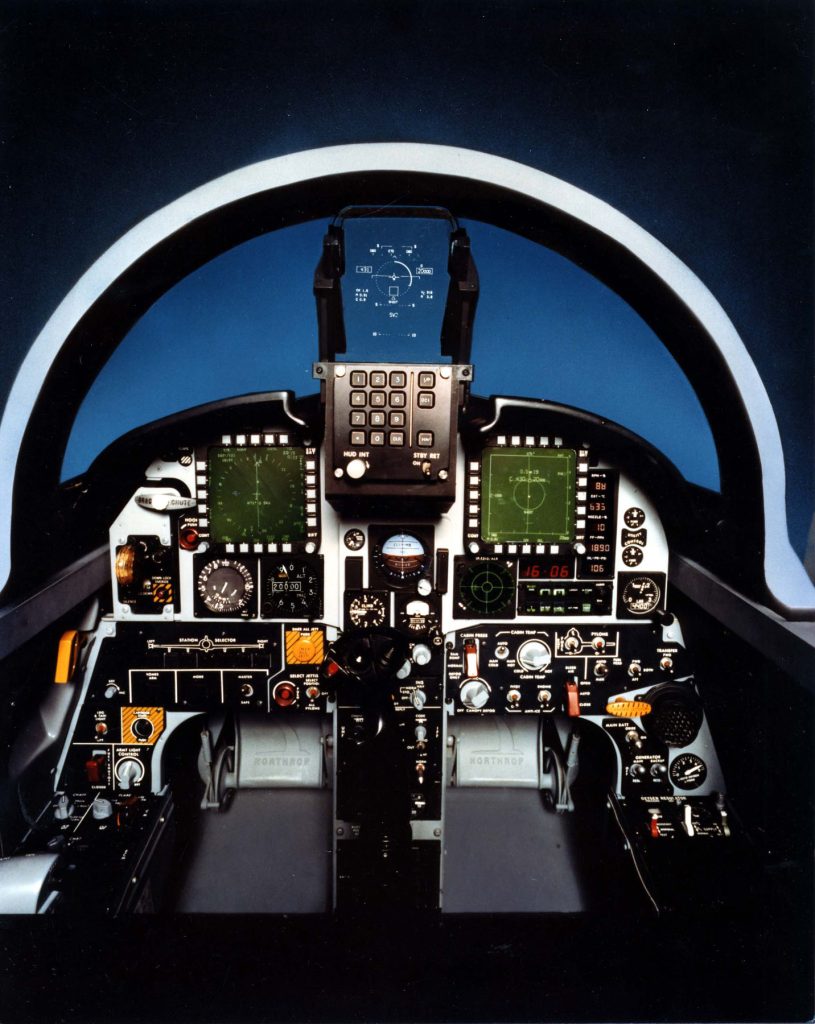
Reagan’s policy shift affected the Tigershark program. Northrop saw the F-16 as the main threat, and the company conducted studies to equip its aircraft with more sophisticated avionics. The Tigershark received a newer, more powerful version of its selected engine. Late in 1982, the Air Force redesignated the aircraft as the F-20. Three preproduction aircraft were built. The first rolled out of Northrop’s Hawthorne Production Development Center (PDC) in August 1982, 32 months after program go-ahead and one month ahead of schedule.
Competition with F-16
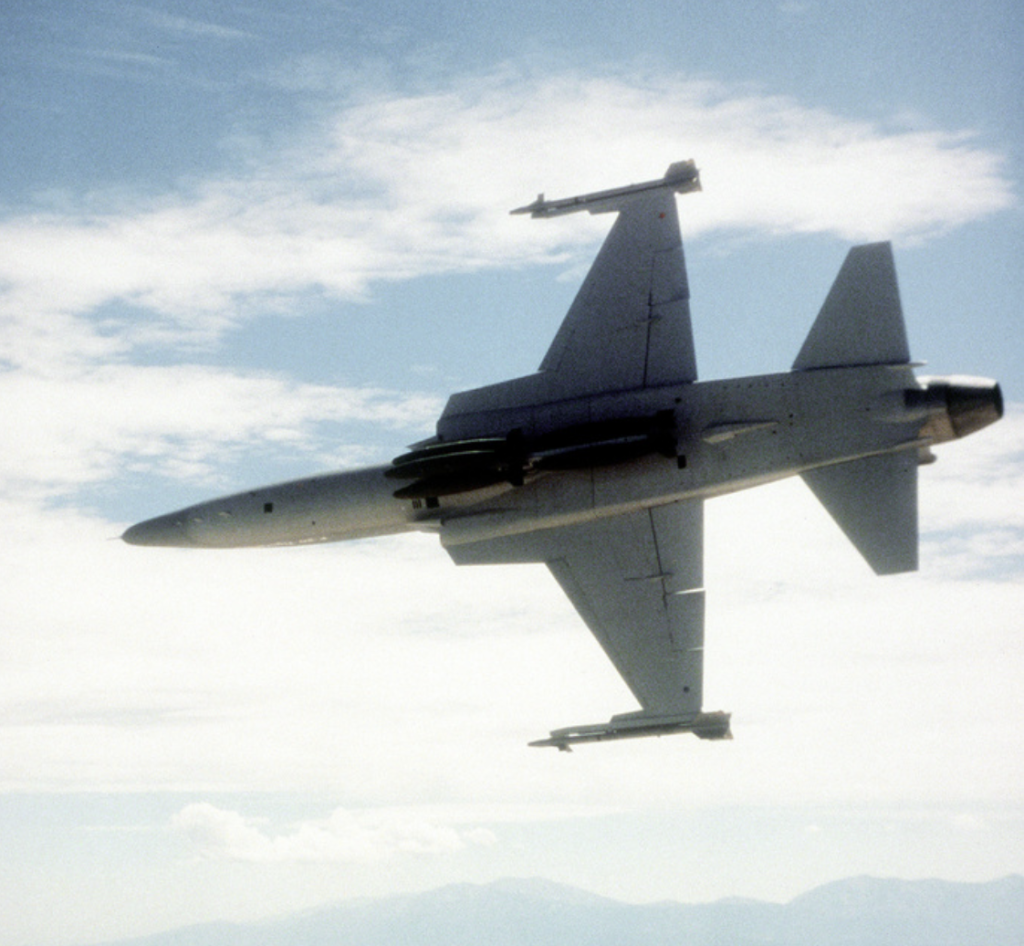
Northrop called the F-20 R&D a clean success. The aircraft met every performance, reliability, maintainability, and operability target set for it. The prototype rolled out 32 months after the go-ahead, beating the schedule by one month. Northrop’s design philosophy put sortie generation first, which was easy-to-fix planes that scramble fast, fly more patrols than high-performance hangar queens, giving export customers better air defense. The F-20 design verified Northrop’s willingness to trade some performance for gains in affordability and supportability. Subsystems were selected for proven reliability or superior paper specifications. The General Electric F404 engine had fewer than half the parts of the F-16’s Pratt & Whitney F100 and a mean flight hours between failures (MFHBF) rate of 190 compared to the F100’s 45. Northrop rejected a General Electric radar rated at 100 MFHBF and selected a configuration rated at 200 MFHBF, and composites were used based on experience gained in another program.
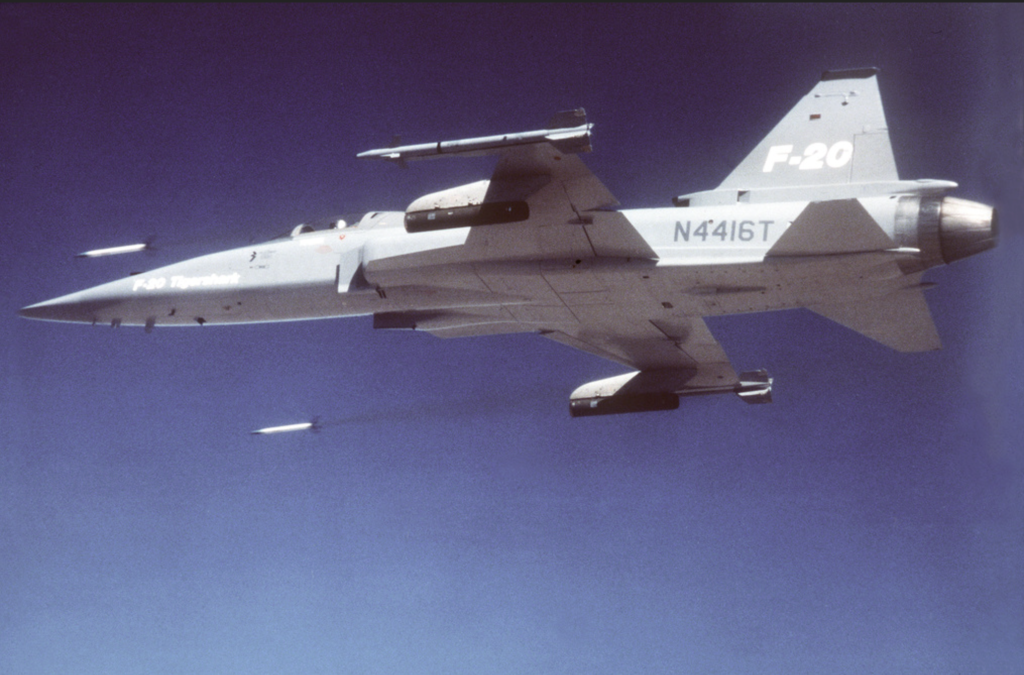
The F-20 met all Northrop performance goals, including scramble time to mission-capable status at 40,000 feet, instantaneous and sustained turn rates at different altitudes, acceleration through airspeed ranges, weapons deployment, target acquisition, and mission profiles. The aircraft exceeded its planned MFHBF as of its last flight, with approximately 1,500 flights completed before termination. Foreign pilots flew the single-seat F-20 after two days of simulator training. Two Tigersharks crashed, but US Air Force-verified studies found no system malfunctions in either case. Comparisons with the F-16 showed the F-20 with faster scramble time due to its inertial navigation system, 10-15 percent less operating range depending on conditions, and less armament capacity. The F-20 achieved an MFHBF of 4.2 during testing versus the F-16’s operational 3.2, and required 15.1 maintenance manhours per flight hour (MMHFH) versus the F-16’s 33.9, as highlighted by Northrop’s marketing strategy. However, the comparisons were problematic.
The F-20’s 1,500 flights took place in a controlled test environment at Edwards Air Force Base with handpicked maintenance personnel. Operational F-16 data covered years of usage, including misuse and neglect. RAND, an American nonprofit global policy think tank, said in its 1987 analysis on the program that new avionics subsystems usually do not fail; they degrade, making MFHBF and MMHFH numbers meaningless. Pilot reports and built-in test results are often inconclusive, and malfunctions at high g-forces do not replicate on ground test stands. As a result, Northrop’s F-20 comparisons with F-16 lost credibility, and Air Force representatives questioned the test-to-operational estimation. Third-world operators, who already were facing meager support, could not predict F-20 performance simply on F-5 avionics. Despite R&D accomplishments, private funding, clear design goals, incremental subsystem selection, and production focus, the F-20 became a marketing failure.
Northrop Bids and Failures
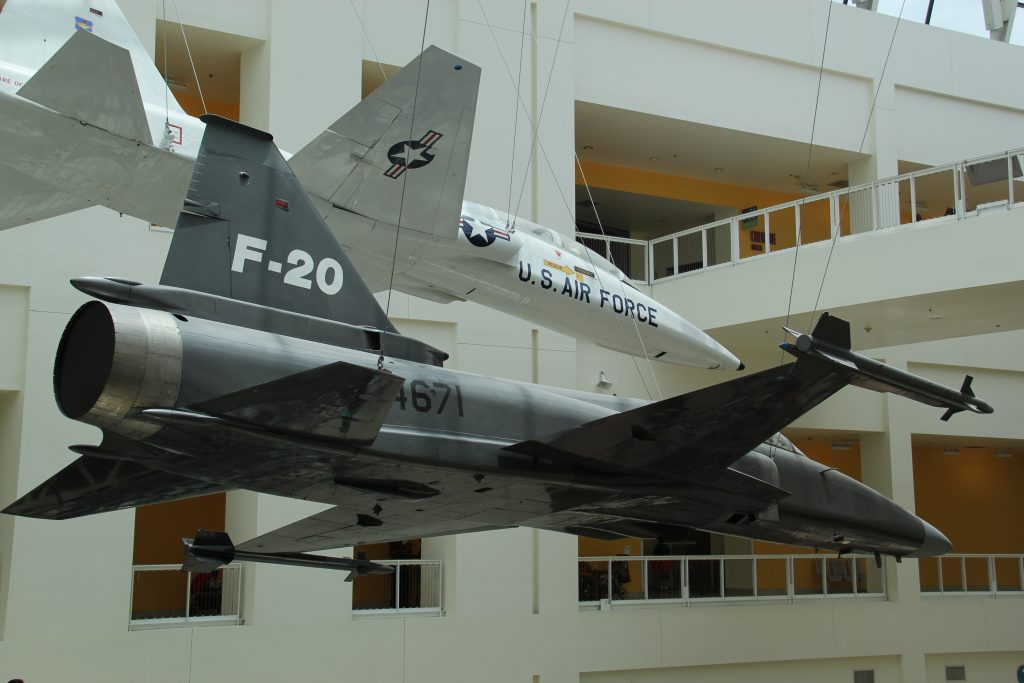
Northrop’s first attempt to get the jet in the US inventory came in 1984 with a Navy competition for 14 aggressor aircraft. GD offered a fixed-price baseline F-16C with an F110 engine at just over $11 million per aircraft flyaway. Northrop matched the F-20 price at roughly the same figure. However, the Navy picked the F-16, judging it better suited to future threat requirements, and GD won the contract. In April 1985, Northrop went straight at GD with an unsolicited Air Force proposal for 396 F-20s, half the planned FY87-91 F-16 buy, at $15 million each with support. The proposal was cheaper than GD’s $18 million F-16C. GD fired back with 720 downgraded “F-16C-minus” birds at $13.5 million. Congress ordered a 270-aircraft Air Defense Fighter flyoff, but the Defense Resources Board made it winner-take-all. The North Dakota Air National Guard said neither plane fit the mission and suggested $750 million F-4 upgrades instead of $4 billion new buys. The Congressional Research Service (CRS) and Congressional Budget Office (CBO) favored F-16 production scale over F-20 promises.
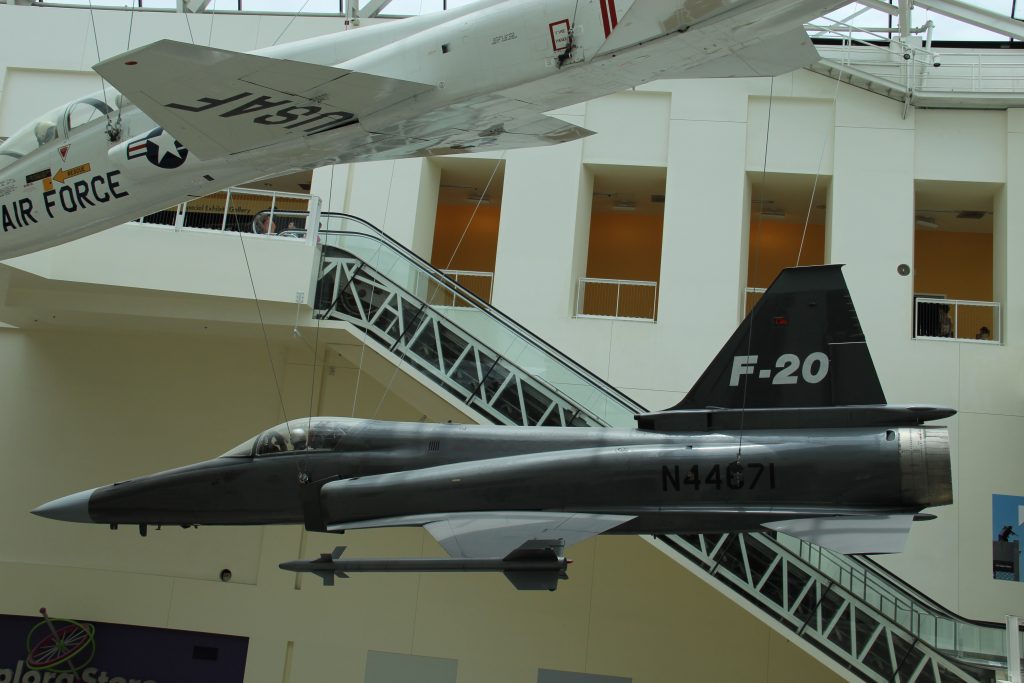
The Air Force rejected both Northrop and General Dynamics proposals. On October 31, 1986, the service decided to pull 270 F-16As from active squadrons and modify them for air defense work. New F-16C/D production would backfill the active force. General Dynamics received a $633 million contract for modification kits and spares, ending Northrop’s bid. Not a single jet was sold while Taiwan, for which the jet was specifically developed, extended F-5E production. As a result, Northrop terminated the program after $1.2 billion in private investment, which was the defense industry’s largest at the time. The F-20 demonstrated private R&D capability, clear goals, incremental subsystems, and production focus. However, as a result of many political changes as well as competition from other aircraft such as the F-16, the market for the plane never developed.