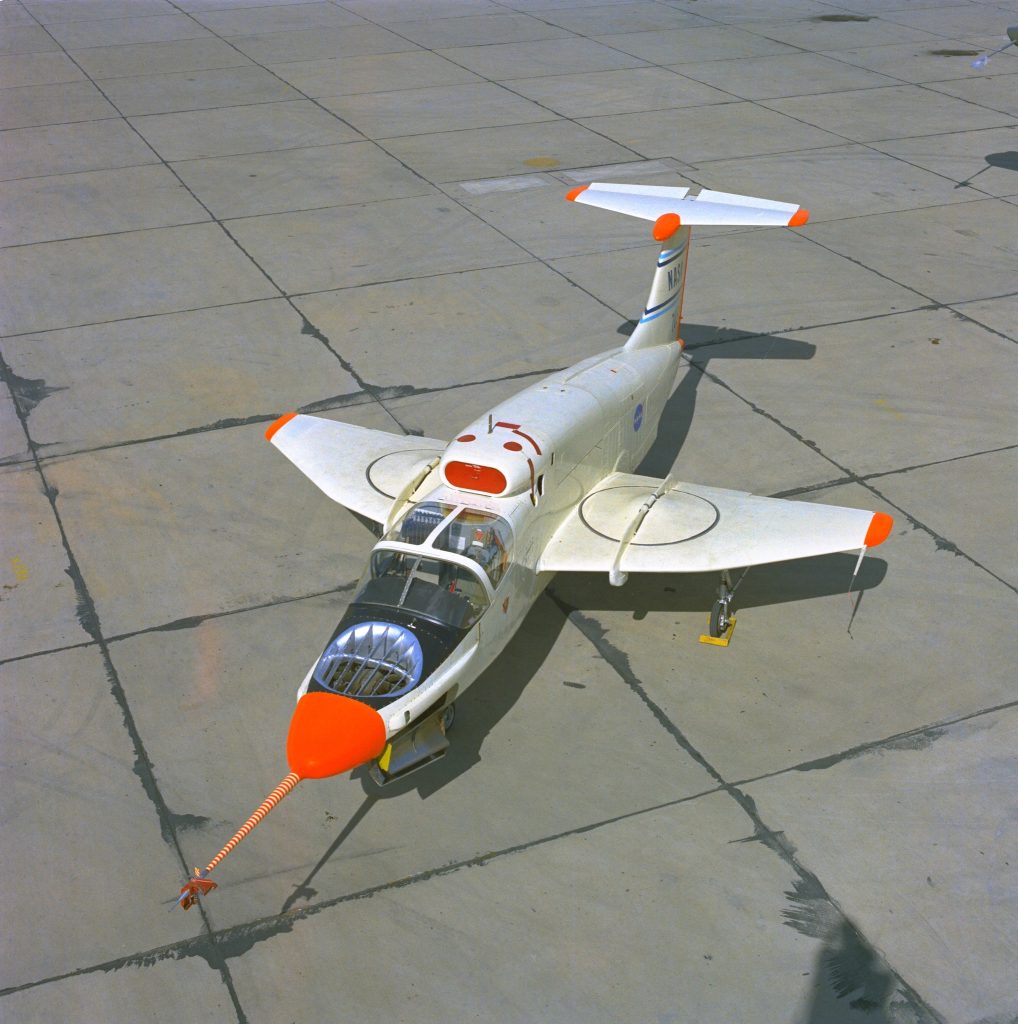
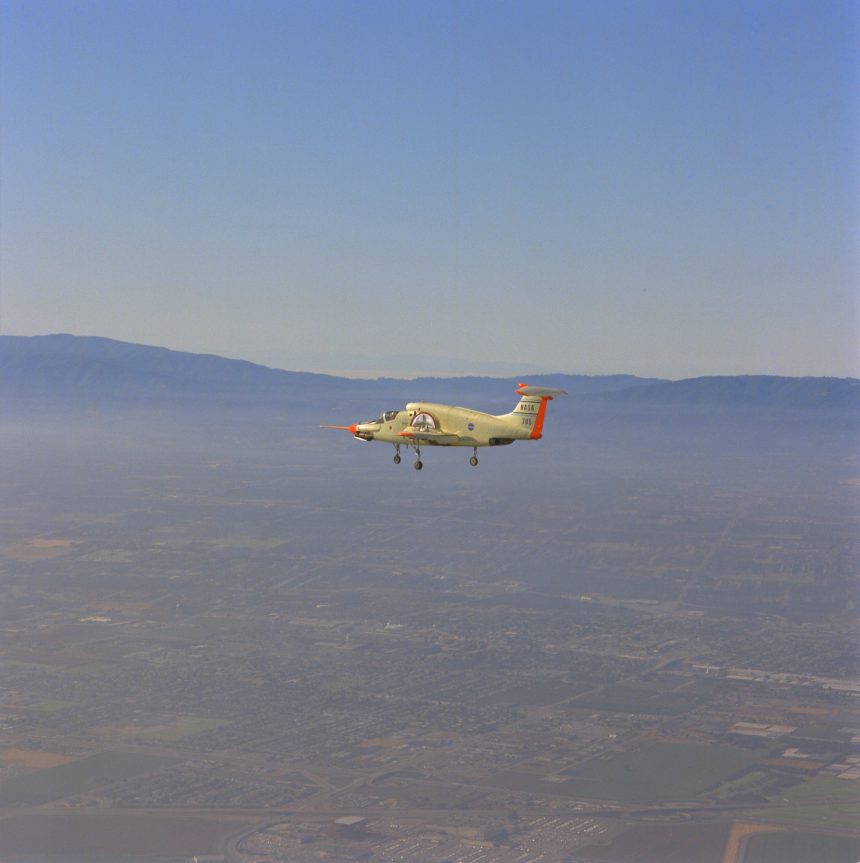


From the 1950s to 1970s, the US Army tested several short- or vertical-takeoff and landing (S/VTOL) aircraft to improve its surveillance capabilities. Several concepts were tested, including tailsitters and tiltrotors. One of the dozens of aircraft tested was the Ryan XV-5 Vertifan, which proved the concept of ducted fans but was itself cancelled. The US Army commissioned the XV-5 Vertifan in 1961. With a crew of two, the aircraft was 44.6 feet long, 14.9 feet high, with a wingspan of 29.10 feet and a wing area of 260.3 square feet. The empty weight of the aircraft was 7,541 pounds, with a maximum takeoff weight of 13,600 pounds for conventional takeoff and 12,300 pounds for VTOL takeoff. The maximum speed of the aircraft was 547 mph, with a range of 1,000 miles and a service ceiling of 40,000 feet.
Design of XV-5 Vertifan
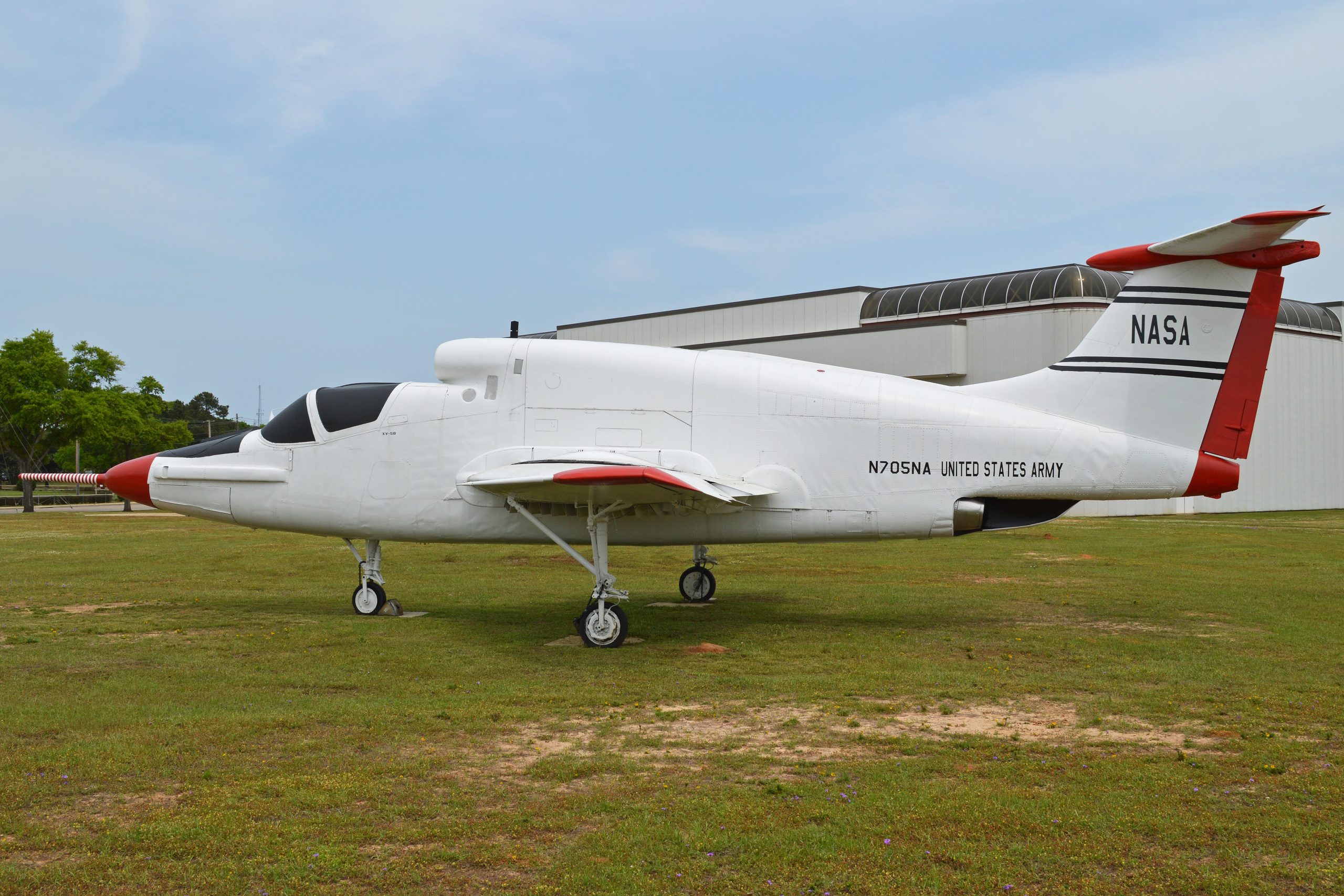
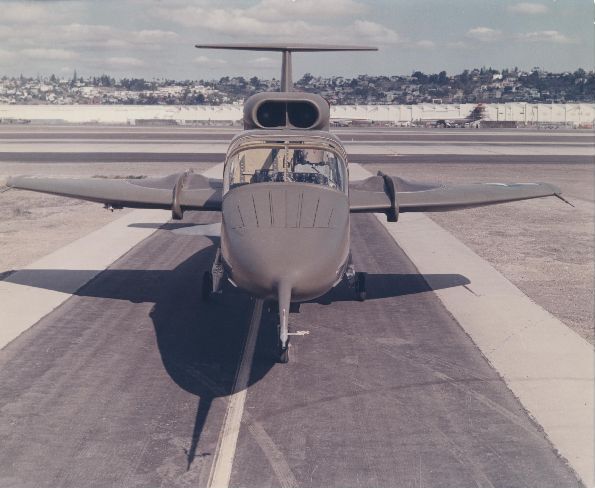
The XV-5 Vertifan was powered by two General Electric J85-GE-5 turbojet engines, each producing 2,658 pounds of thrust. To achieve VTOL capabilities, the aircraft was equipped with two larger 62.5-inch-diameter General Electric X353-5 lift fans in the wings and a smaller 36-inch-diameter fan in the nose. Together, the fans generated about 16,000 pounds of vertical lift, which was nearly three times the thrust produced by the turbojet engines. The wings also had louvered vanes beneath to adjust thrust fore and aft for better yaw control. The wing’s lift and revolutions per minute (RPM) were determined by the exhaust output from the aircraft’s J85 engine. The XV-5 Vertifan had a T-tail, delta wings, and an intake above the two-seat cockpit with side-by-side seating. The aircraft had two colors: military green for the US Army, designated XV-5A, and white for NASA, called XV-5B. In late 1966, two XV-5As were tested by 15 test pilots. On April 27, 1965, while performing in a public flight demonstration, an XV-5A crashed, killing its pilot. The crash investigation found that the pilot accidentally activated the switch that converted the aircraft from a conventional position to a vertical one. The pilot tried to use the rocket ejection system at low altitude, but the ejection seat was not set up correctly, which led to his death. Following this accident, the engineers changed the conversion switch to a lift-lock toggle and moved it to the main instrument panel.
The Cancellation
The XV-5 Vertifan was hard to control during landing for several reasons. Yaw control, which helped guide the plane, relied on changing the angle of the lift fans in opposite directions. The method did not provide enough yaw control for accurate handling at low speeds. The duct doors also caused difficulty with control, as even at low speeds, opening them caused changes in pitch. Additionally, the aircraft had very poor acceleration during standard takeoffs. On October 5, 1966, the second aircraft was seriously damaged during rescue trials when a “horse collar” sling used for saving survivors got caught in a wing fan. However, it was considered that the fan could still work well enough for controlled flight. The second aircraft was rebuilt and became known as the modified XV-5B, with testing continuing until 1971 before it was retired. The aircraft could not be delivered to the US Army but was used for experimentation and proved several important concepts, including the ducted fan, which was used for some time after the XV-5 program was cancelled. The aircraft’s engine and lift fan combination led to the development of GE’s first high-bypass-ratio engine, the TF-39. The XV-5 Vertifan also proved that air could be moved through a lift fan, leading to the development of an 80-inch tip-drive fan that rotated 90 degrees, powered by a more powerful J79 engine, to demonstrate the efficient cruise fan concept. The idea of a large cruise fan was used in the GE TF-39 engine, which powered the US Air Force’s largest strategic airlifter, the Lockheed C-5 Galaxy. In the Grounded Dreams series, XV-5 Vertifan stands as an aircraft that proved its worth as a testbed but could not find a place in the US Army inventory. Read more Grounded Dreams articles HERE.