







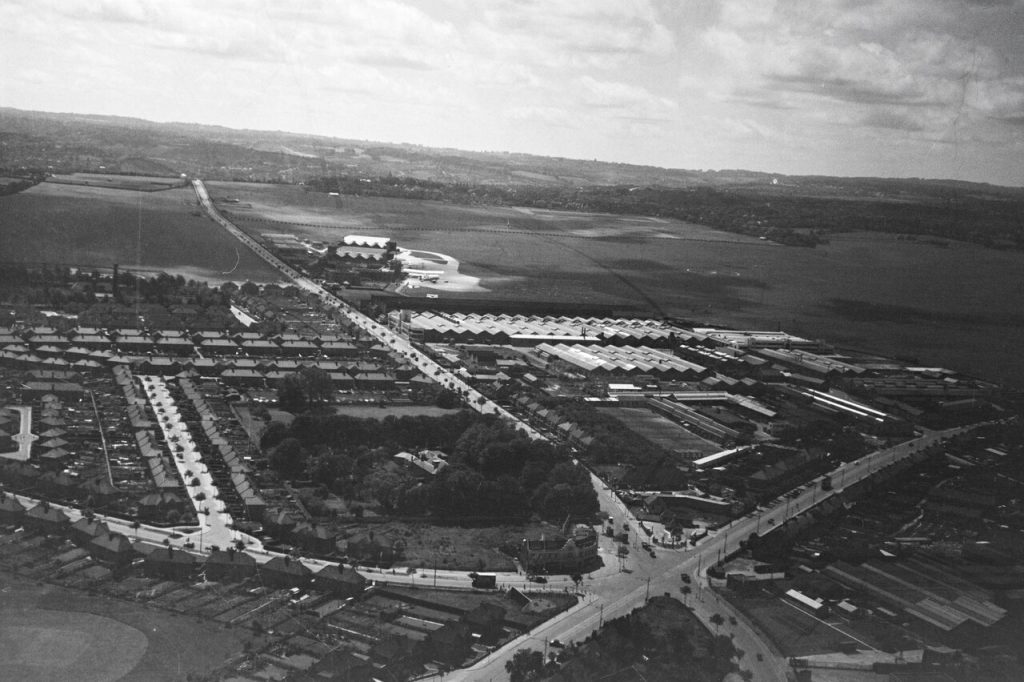
Nine miles south of central London sits a treasure trove of vintage aviation. Croydon Aerodrome (renamed London Croydon Airport after WWI) faces the busy A23 (Purley Way) highway into London. Today, its former grass airfields—operational from 1920 to 1959—are long gone, occupied by light industrial units, playing fields, and a housing estate. The roar of iconic passenger biplane engines overhead is forever silenced. But a powerful sense of flying history still lingers here, defiantly. Croydon Airport and its remaining buildings are a feast for the aeronautically minded.
Croydon was born in 1915 as a Royal Flying Corps (RFC) airfield, from which fighter biplanes rose to intercept German Zeppelin airships and Gotha bombers raiding the capital during WWI (1914-1918). Opened in 1920 (as London Terminal Aerodrome), it rapidly became London’s original international airline hub. Here, the world’s first international air terminal building, built in glorious neoclassical and Art Deco style, opened for passengers in 1928. Its innovative architecture offered a blueprint and the standard for all international airports operating today. Covering a site of 330 acres, Croydon was the world’s largest airport by 1928. It was also a centre for airport technical excellence, operating the world’s first Control Tower, Air Traffic Control, and its own Beacon navigation system. In the interwar years, Croydon was associated with glamour. It drew wealthy passengers, celebrities and movie stars travelling on embryonic interwar airlines. At the same time, to the flash of press camera lightbulbs and celebrating crowds, courageous aviation pioneers used Croydon for world record-breaking flights. Long before London’s Heathrow and Gatwick airports became associated with airline travel, Croydon Aerodrome was Britain’s first air gateway to Europe and beyond. From 1920 to 1959, Croydon’s history mirrors that of civil aviation itself.
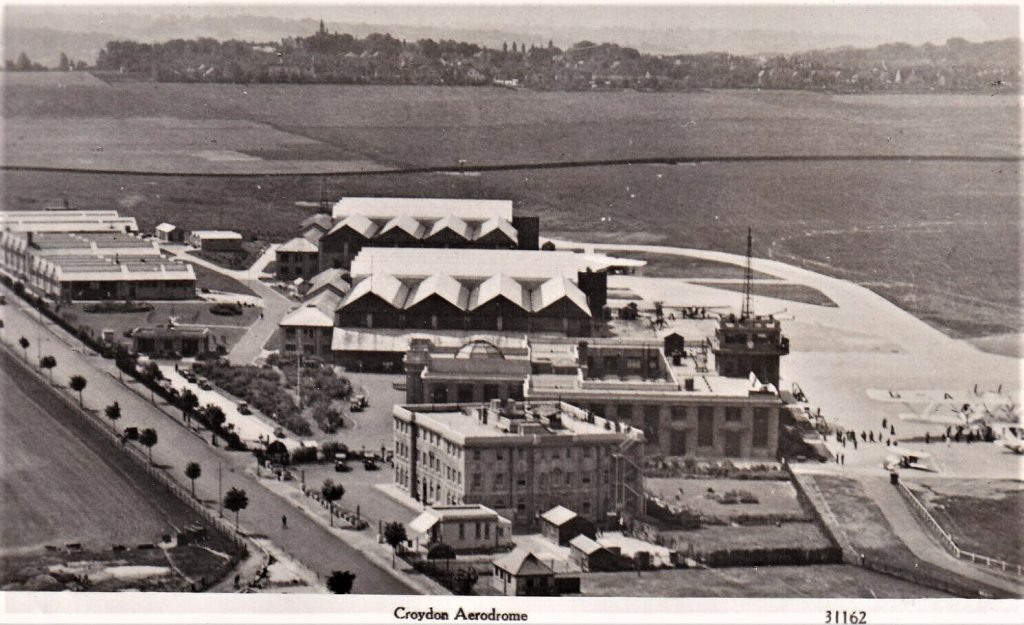
(Image credit: Mark Crombie - RP Postcard Croyden Aerodrome)
WWI Origins
The story of Croydon Airport did not begin with civil passenger services, but with Royal Flying Corps (RFC) biplane interceptors. During WWI, Britain’s Air Ministry established two adjacent airfields to defend London against German Zeppelin and Gotha bomber raids: RFC Station Beddington and Waddon Aerodrome. Operational from December 1915, B.E.2 fighter biplanes rose from both airfields to intercept intruding German aircraft during 1916 and 1917. At war’s end in 1918, nascent civil aviation passenger services in the United Kingdom began to emerge, at first operating out of Hounslow Heath Aerodrome. An attached National Aircraft Factory (No.1) at Waddon also provided a vital repository of spare parts and engines from wartime aircraft for civil operations. As Britain recovered slowly from the cataclysm of war, passenger demand for air services to Europe and beyond was growing rapidly, and aircraft sizes were increasing. Pilot training and pleasure flights for the public at Croydon also became popular pastimes. In 1919, pilot trainees at Croydon included HRH Prince Albert (King George VI from 1937), and Winston Churchill (then Secretary of State for Air and War). Prince Albert gained his pilot wings, but Churchill did not qualify. After taking off from Croydon, Churchill and his instructor narrowly survived a bruising crash; he decided enough was enough. Meanwhile, the British government recognised the potential of flight for national strategic and economic recovery. There was a clear need for a new air hub close to the capital. In March 1920, Britain’s Air Ministry selected the Beddington and Waddon sites as London’s official customs aerodrome. But the existing layout was unpromising, unsuited to commercial airline operations. The airfield was bisected by a public accessway (Plough Lane), and the administrative air buildings were simple RFC wooden huts. Major redevelopment was vital.
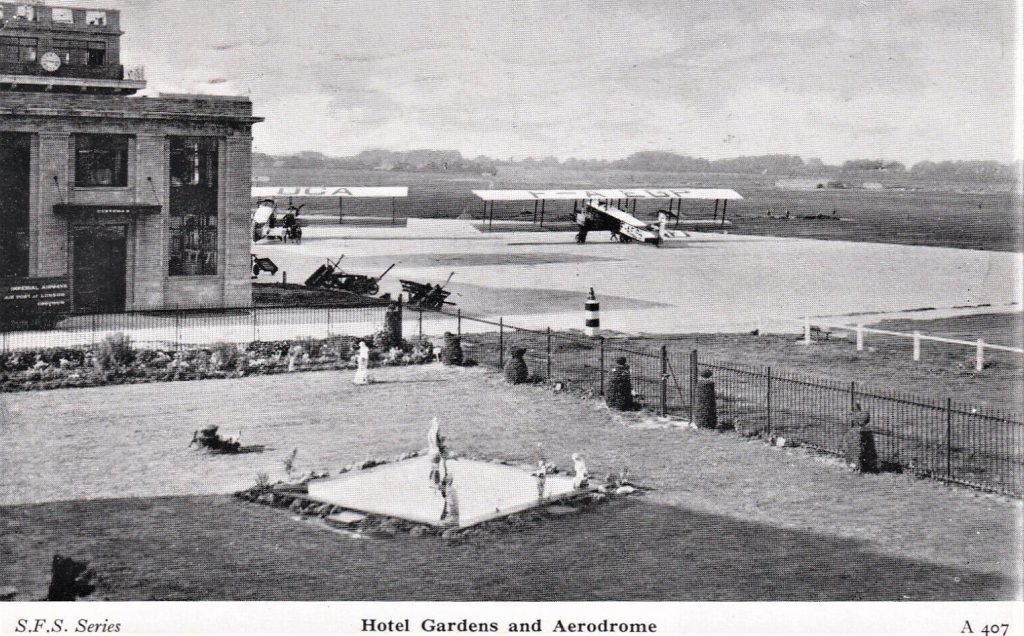
(Image credit: Mark Crombie - Postcard Croydon Hotel gardens & Aerodrome LONDON)
World Firsts
In 1925 a £267,000 engineering project was launched to modernize the site. Plough Lane was closed and a modern grass airfield and taxiways, designed to handle large civil airliners, were constructed. Facing Purley Way, a splendid neoclassical and Art Deco Administration Building, Booking Hall and passenger entrance were completed. On May 2, 1928, Lady Maud Hoare, wife of the Secretary of State for Air, officially opened the new site. It was an event that revolutionised civil aviation, introducing the world’s first purpose-built international air terminal and integrated air traffic control tower.
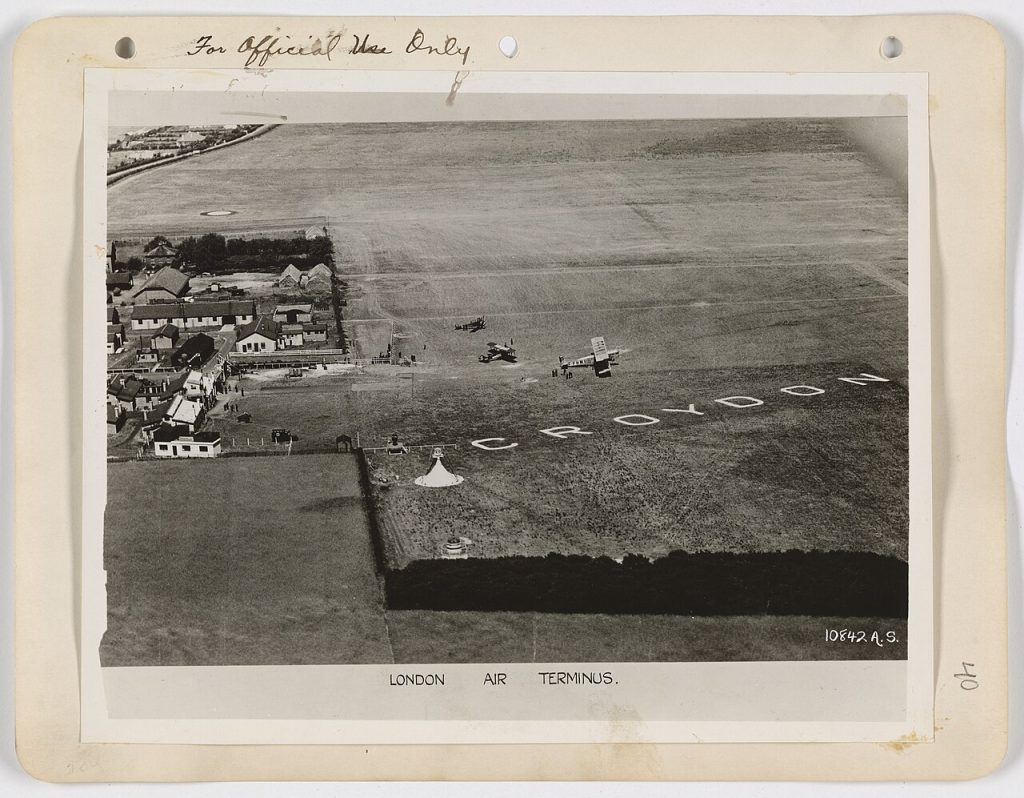
(Image credit: Unknown author or not provided - U.S. National Archives and Records Administration)
First International Air Terminal
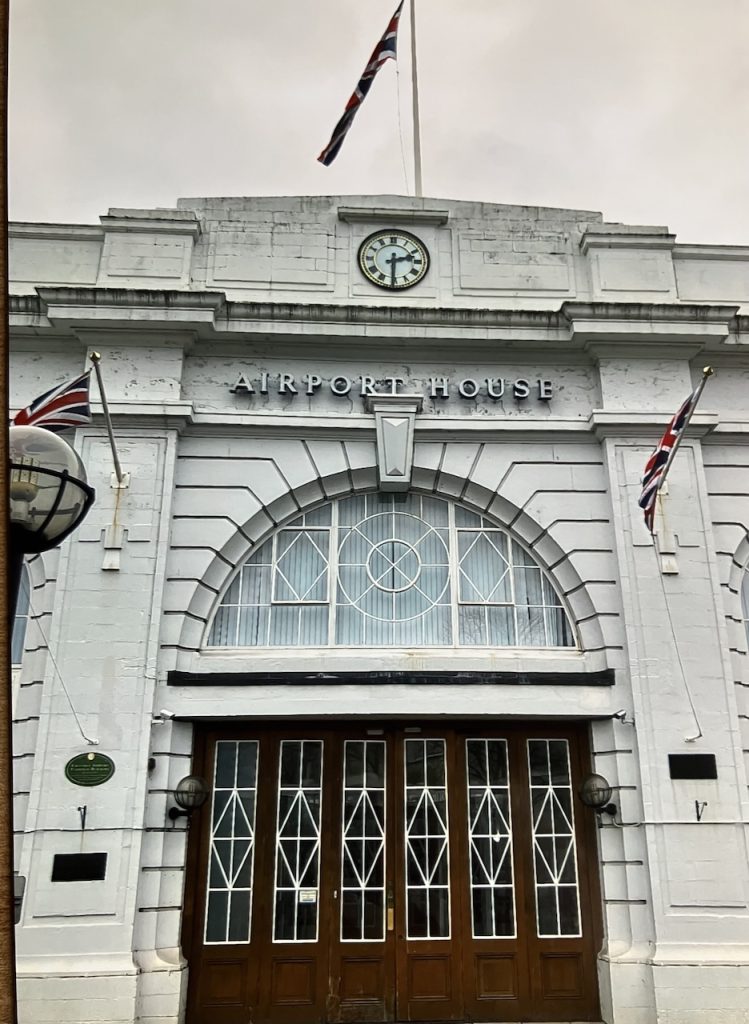
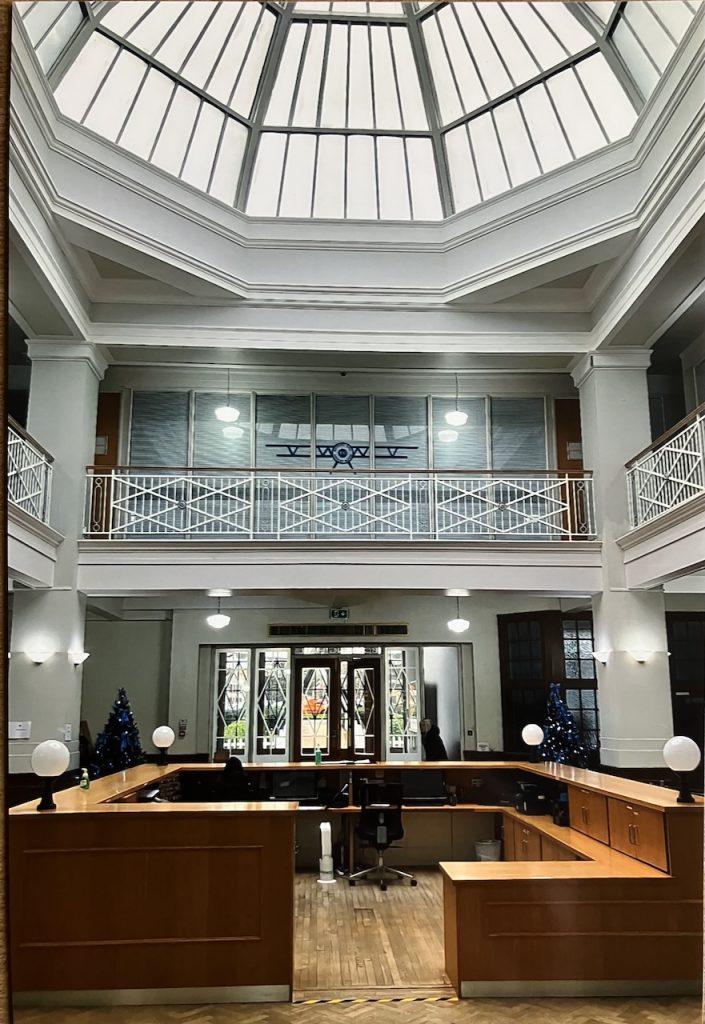
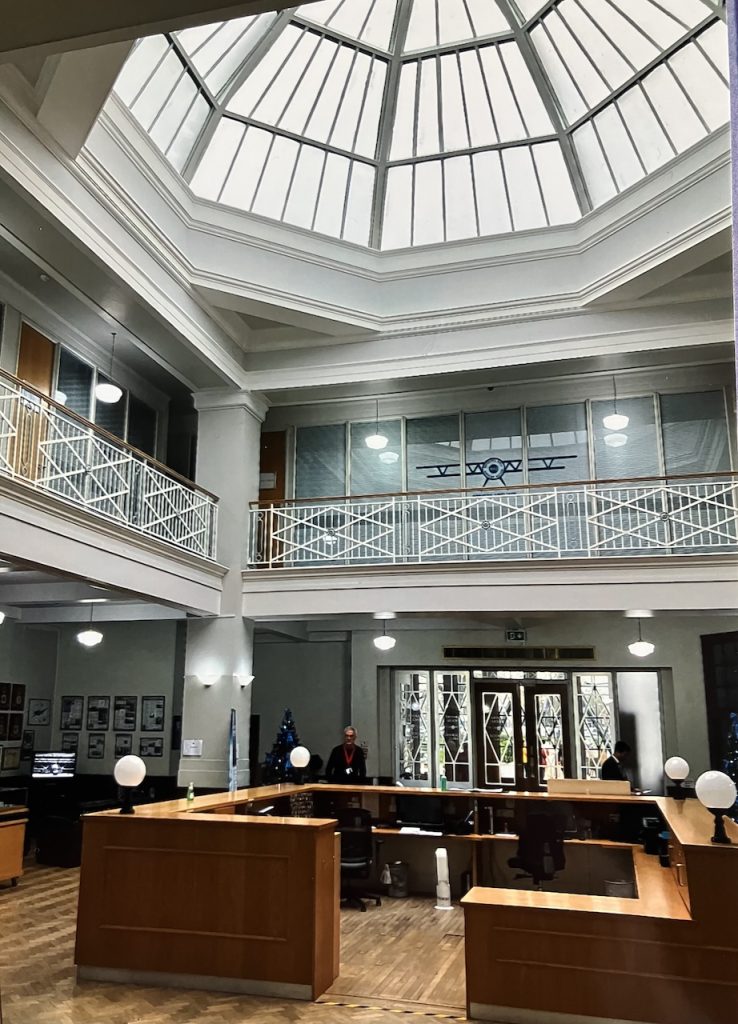
Before Croydon, ‘airports’ across the world (and certainly in Britain) were mostly a series of ad hoc wooden sheds with fluttering airfield windsocks. But at Croydon, Air Ministry architects, working imaginatively, designed a new architectural layout built around the dual new concepts of Departures and Arrivals. In their blueprint designs they drew all vital airport functions into one high-efficiency structure. The heart of the new Croydon Aerodrome, the largest in the world in 1928, was its impressive and stylish Central Booking Hall. Departing passengers walked into a high-ceilinged two-storey atrium, lit naturally by a large glass dome. Here, they purchased tickets and checked in at one of six desks, designated by airline. Passengers and their luggage were weighed to comply with aircraft capacity, and a medical check was conducted. They were then cleared through passport control and British customs channels before walking out to their aircraft. To keep passengers flowing fluidly, architects introduced zoned passenger routes, with clearly signposted segregated lanes separating departing and arriving passengers efficiently. In the 1920s, this was a revolution in civil passenger management. It has been copied by all airports ever since. The Booking Hall was flanked by two freight buildings—a North Cargo Wing for outbound goods and a South Cargo Wing for inbound freight, with bonded customs stores and double doors for rapid freight and mail loading. Nearby, a secure steel vault offered storage for gold bullion and international mail. Shops sold newspapers and refreshments. An octagonal Departures and Arrivals Indicator post with clocks displayed the latest flight information.
First Control Tower, Air Traffic Control, and “Mayday”
Croydon Aerodrome was not only London’s first airline passenger hub. It was also a testing ground for the latest developments in aeronautical, air traffic control, and communication systems. Navigating the skies over Britain and Europe in the interwar years was a risky business. Pilots routinely relied on handheld maps in open cockpits (in all weather conditions) and used railway lines and roads below as their main visual reference points. In the 1920s and 1930s, Croydon pioneered safety frameworks still used across global aviation today. In 1923, Croydon’s Senior Radio Officer, F.S. Mockford, invented a unique distress phrase for pilots facing emergency situations. In the early 1920s, most aircraft flew between Croydon and Le Bourget Airport in Paris. Mockford proposed “Mayday,” the phonetic equivalent of the French m’aidez (“help me”). The British Air Ministry approved it, and by 1927, it was adopted as the international standard radio distress call. It still is.
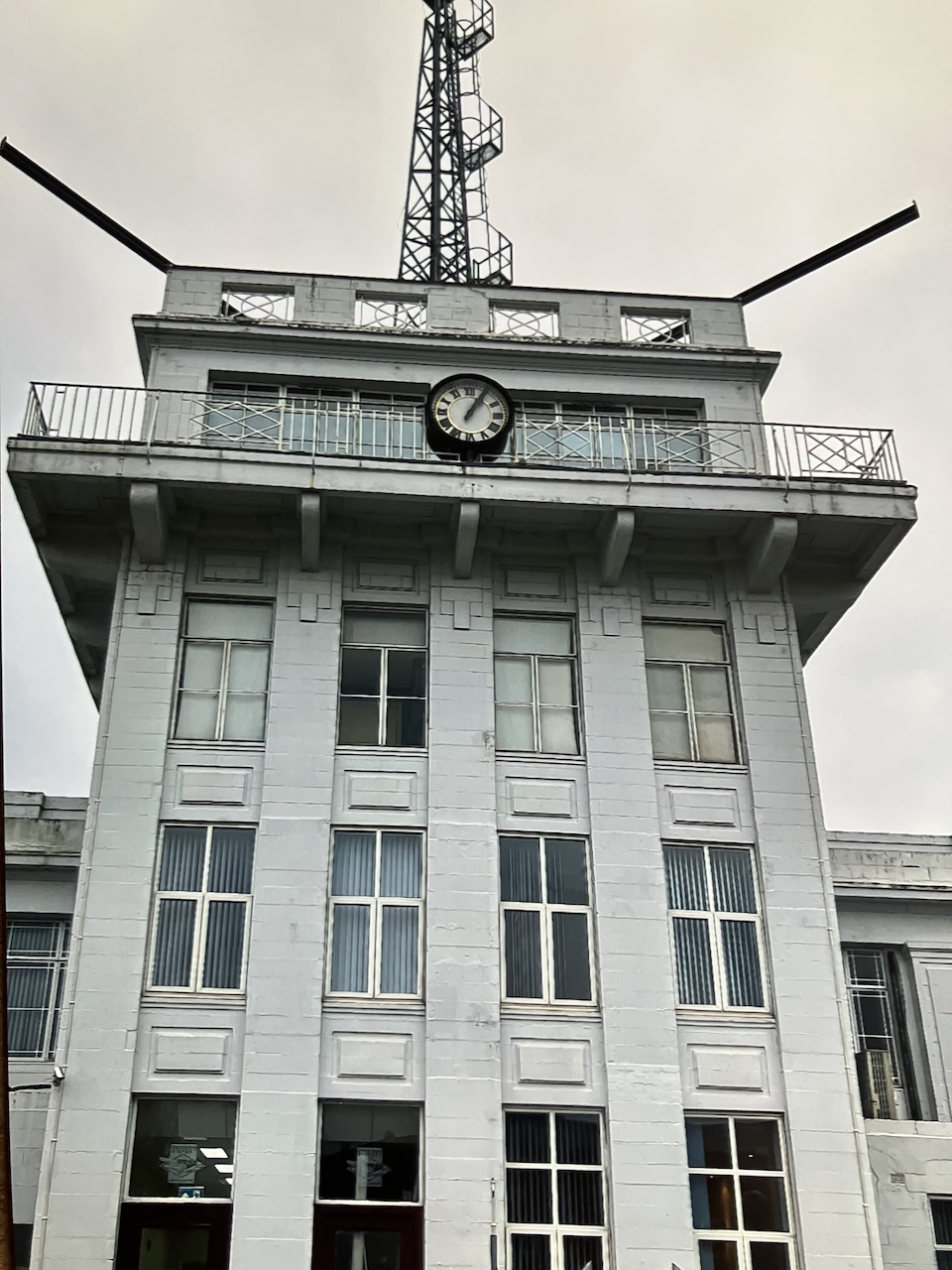
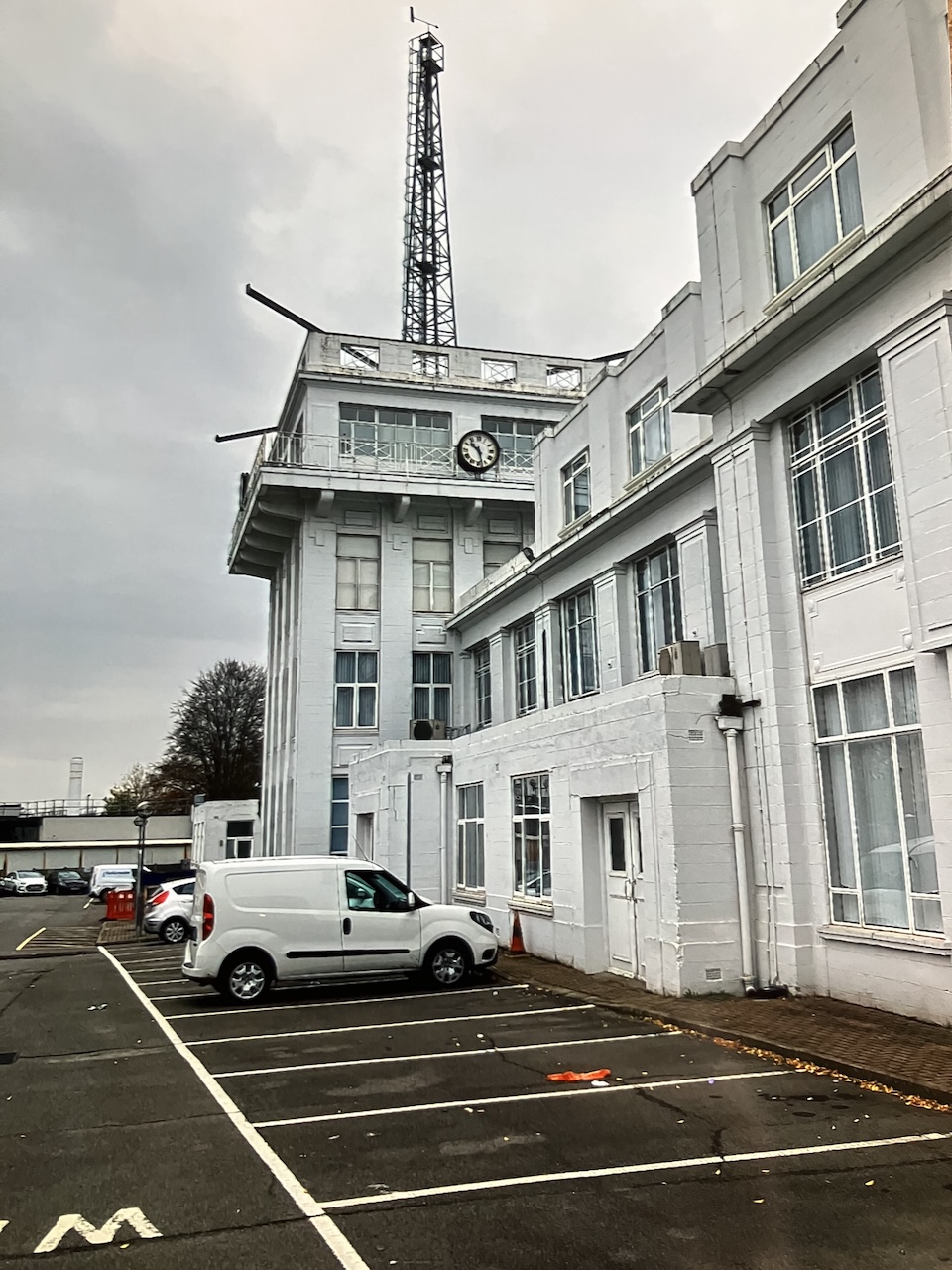
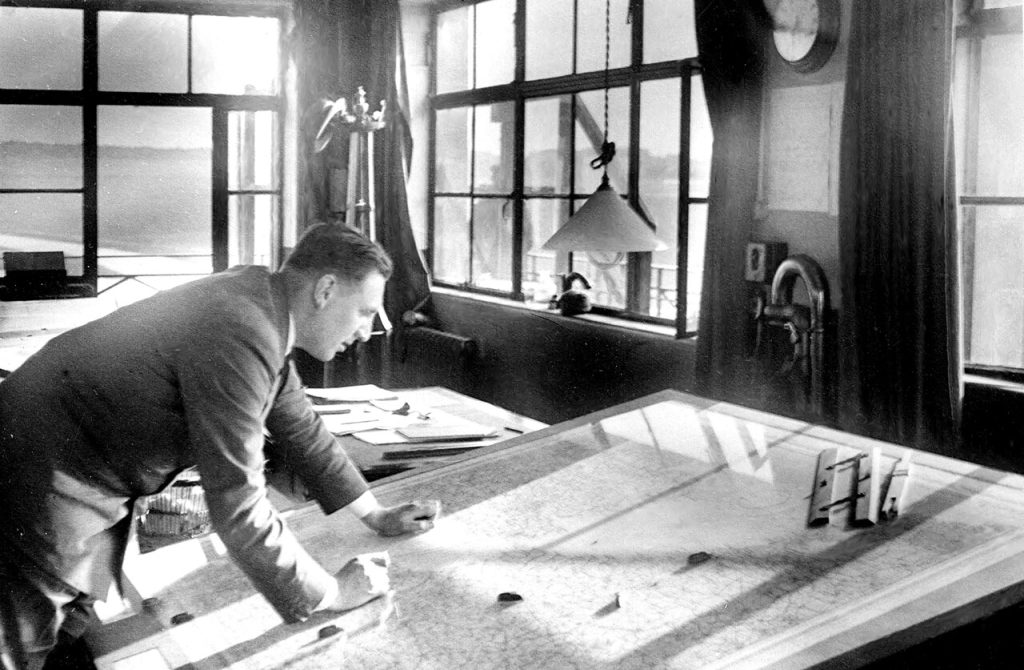
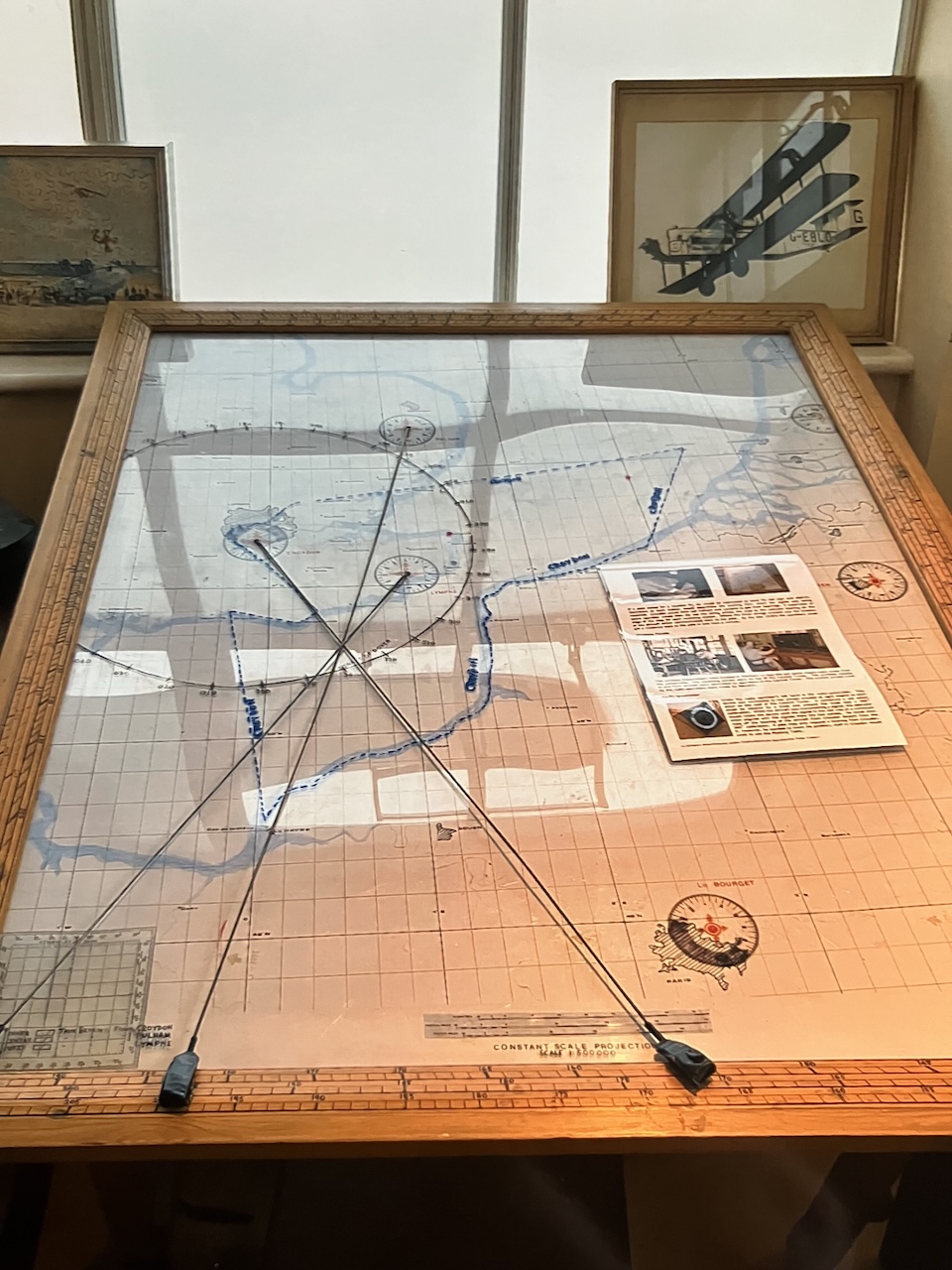
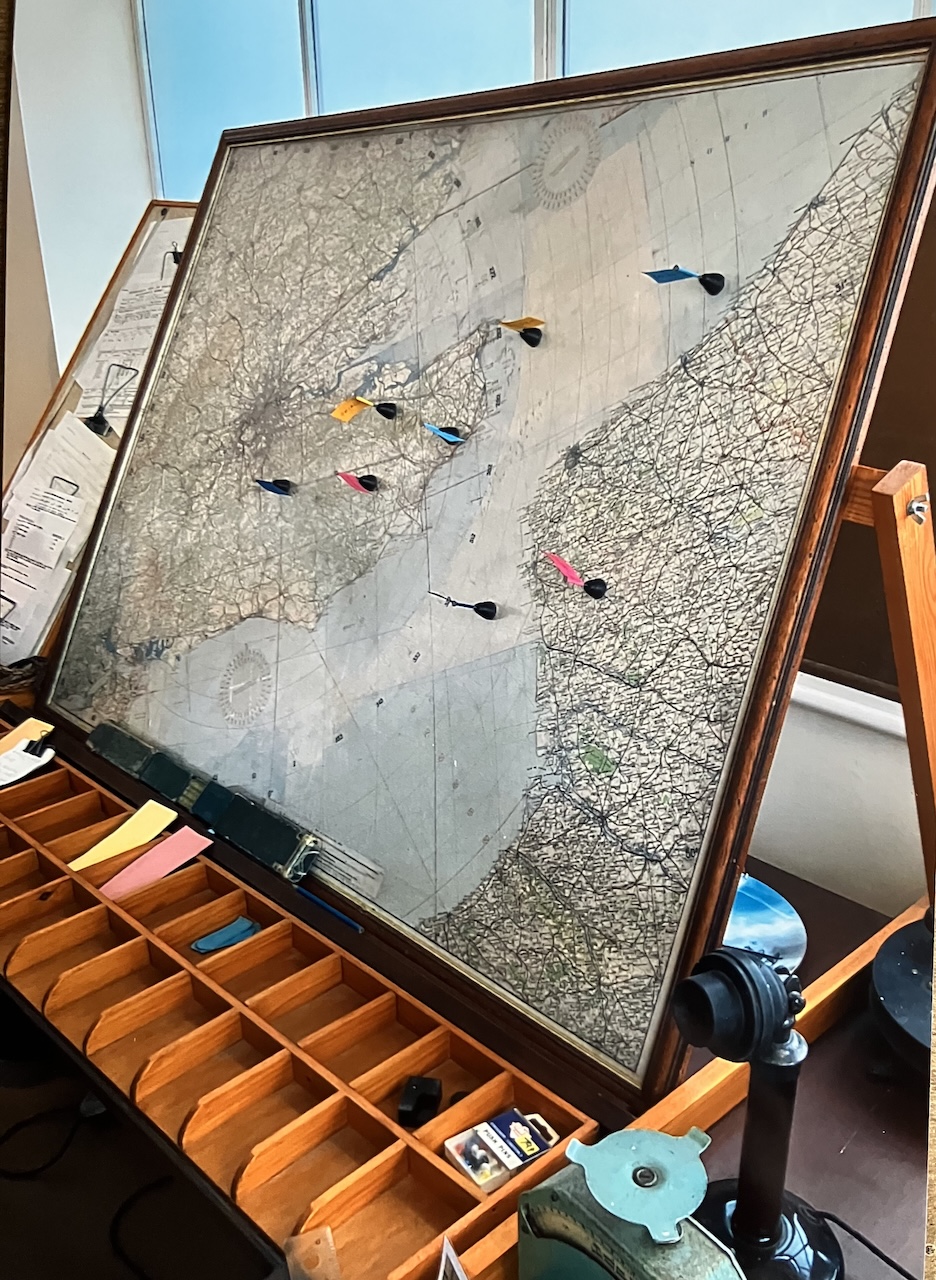
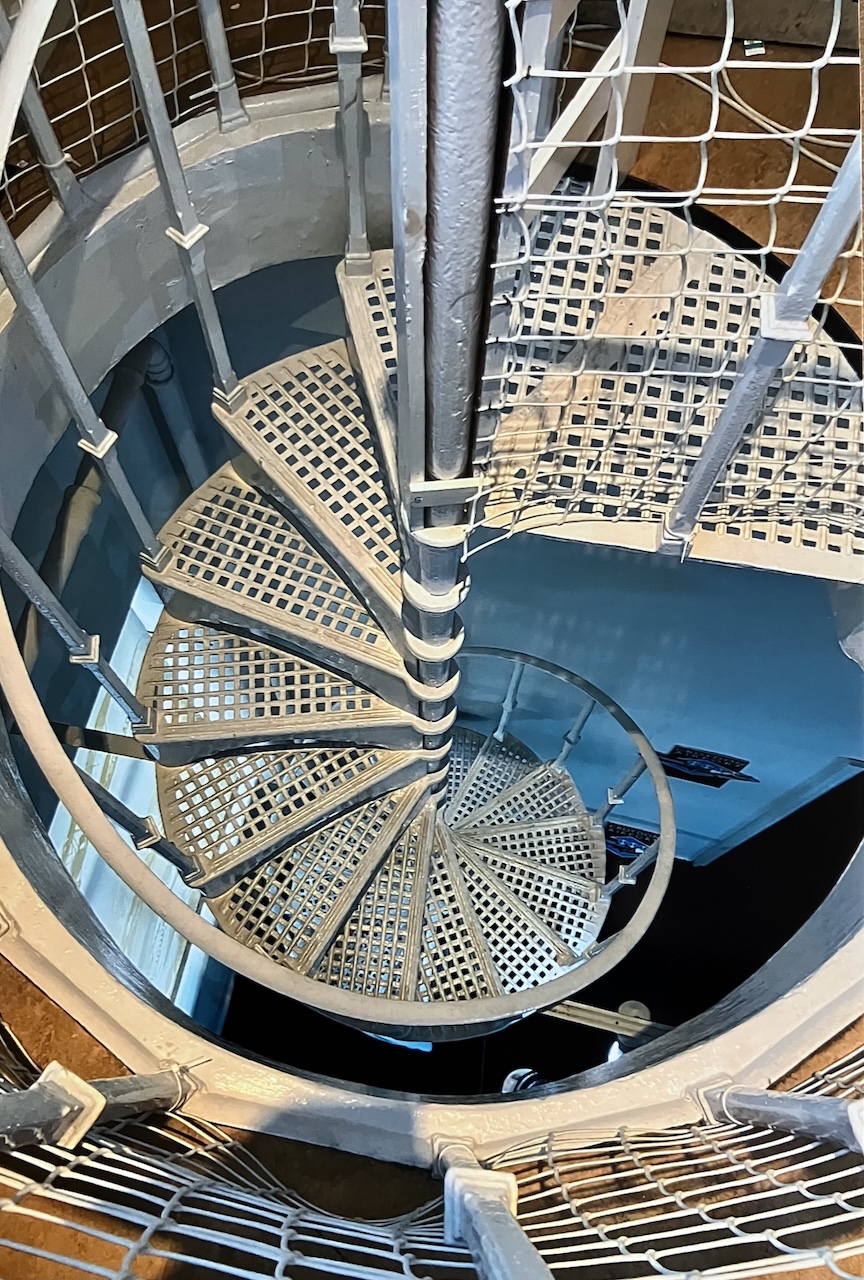
Behind the terminal building, facing the flight apron, was Croydon’s 50-foot-tall, 30-foot-square Air Traffic Control Tower. On its roof were radio communication masts, increasing its total height to 80 feet. Air traffic controllers sitting at map plot tables on the top floor used a high-speed pneumatic vacuum tube system to receive real-time weather maps from colleagues in a Meteorological Office two floors below. Croydon was among the first of world airports to deploy an intricate ground-based Beacon navigation system and a track-laying radio direction-finding network. First used by the United States in 1919, on air routes between New York and Chicago, Croydon operated its own state-of-the-art version. High-intensity red flashing route beacons to guide pilots at night (or in poor visibility) were positioned along the cross-Channel flight paths. At Croydon, a large, rotating beacon—with a range of 45 miles—flashed out code to guide pilots on their approach. Croydon also pioneered the use of control zones around airports. In 1933, aircraft approaching Croydon were required to gain radio clearance from its Control Tower before entering the flight zone around the airport. Critically, Croydon introduced the German-designed Lorenz blind-landing system for all approaching aircraft on 2 November 1935.
First Airport Hotel
Throughout the 1920s and 1930s, travelling from Croydon was an exclusive experience. It was a luxury option, taken by travellers who could afford first-class ocean liner tickets or by business executives. Passengers arriving at Purley Way passed through a security Gate Lodge and could also check into the adjoining Aerodrome Hotel (1928)—the world’s first purpose-built airport hotel—before boarding their flights. For those flying the premier routes, air travel was accompanied by liveried cabin crew, fine china, white tablecloths, luxury food hampers and the continuous roar of radial engines warming up on the apron.
Croydon’s Rise
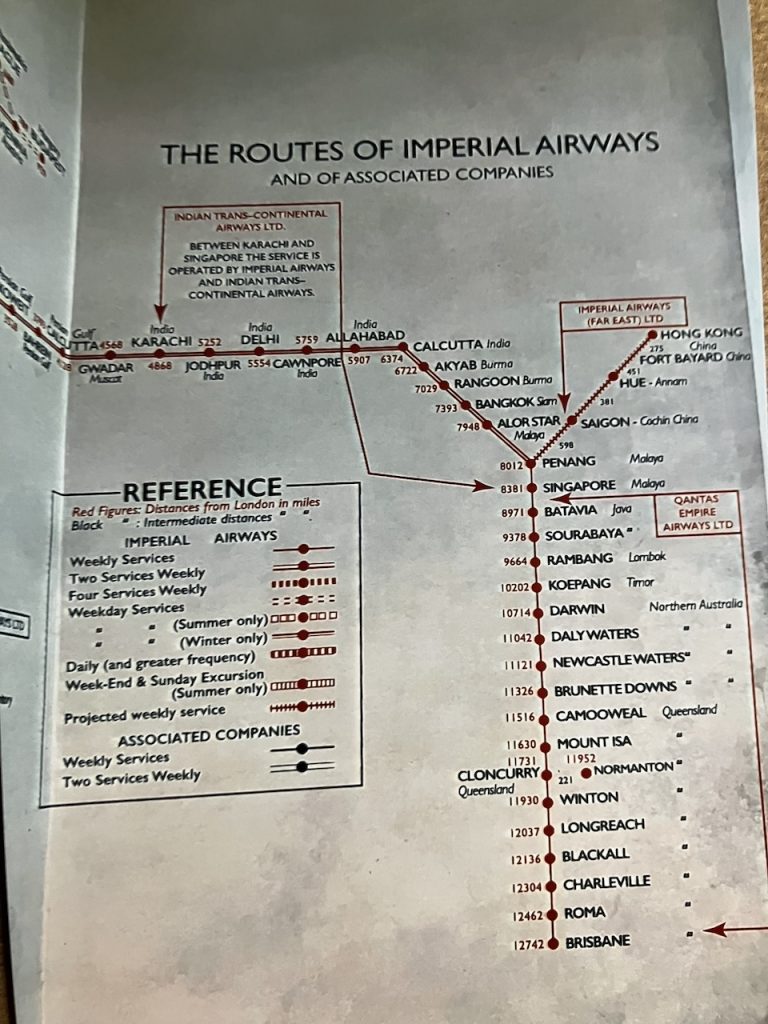
In 1920, four British airlines, led by Daimler Airway, launched the first regular London-Paris air service using French Farman Goliath F.60 aircraft. These were followed by flights to Amsterdam and to Brussels operated by Dutch airline KLM. The Paris route was also serviced by Vickers Vimy Commercials, Handley Page W.8s, squat Vickers Vulcans, and de Havilland DH 34s. From April 1923, regular London-Berlin flights began for the first time. In 1924, Britain’s first national airline, Imperial Airways, was formed and used Croydon as its home base. By the mid-1920s, civil aircraft of unprecedented size, such as the de Havilland DH.66 Hercules, three-engined Armstrong Whitworth Argosy and Handley Page W.9, became a familiar sight, droning in and out of Croydon. In March 1929, a further aviation breakthrough took place at Croydon, with the launch of a London to Karachi (then in British India) route using biplane, flying boat and rail travel. The journey time was unprecedented: one week.
World Records
Record-breaking aviators and aviatrixes were synonymous with Croydon Aerodrome in the 1920s and 1930s. On May 29, 1927, an American hero touched down at the aerodrome. Fresh from his first solo transatlantic flight from New York to Paris, Charles Lindbergh flew his Ryan NYP NX-211 Spirit of St. Louis from Paris into Croydon. A cheering crowd of around 120,000 people broke through the airport barriers onto the landing field, forcing Lindbergh to make three separate landing attempts to avoid hitting them. Lindbergh climbed up a ladder on an airport building to address them. In the late 1920s, Croydon hosted aviation record breakers galore. Sir Alan Cobham (Croydon to India and South Africa and back and pioneer of biplane air-to-air refuelling), Bert Hinkler (solo from Croydon to Darwin, Australia), Lady Mary Heath (the first woman to hold a commercial pilot’s license and also fly solo from South Africa to Croydon), the Duchess of Bedford (solo flights from South Africa and India to Croydon in her Fokker FVIIA monoplane) and Australian flyer Sir Charles Kingsford-Smith (Australia to Croydon, 1929) all used Croydon to take off or return from world-record flights. Sensationally, Spanish pilot Juan de la Cierva flew a C.8L autogyro from Croydon in 1928, cross-channel to Paris, achieving a world first for a rotary aircraft.
On May 5, 1930, British aviatrix Amy Johnson taxied her green and white de Havilland DH60G Gipsy Moth, Jason, and took off from Croydon into aviation history. Nineteen and a half days later, she landed in Darwin, becoming the first woman to fly solo from England to Australia. When she returned to Croydon via an Imperial Airways flight on August 4, 1930, 200,000 rapturous fans were waiting at the airfield to hear her speak. An estimated one million people lined the streets to celebrate her achievement, as she was driven in triumph back to London.
Golden Era
Day-to-day operations at Croydon were defined by the sights and sounds of throbbing radial engines and heavy, fabric-and-metal biplane airliners. The airport served as the operational base for Imperial Airways, the UK’s flagship international carrier, formed in 1924. Imperial used Croydon to pioneer routes that stretched across Europe through to Africa, the Middle East, India, Asia and Australia. Major international competitors such as Air France, KLM, and Germany’s Deutsche Lufthansa also maintained a sizeable presence at Croydon. As the 1930s dawned, new services from Croydon began, including London-Brussels night air mail flights. The Armstrong Whitworth Argosy became a fixture at Croydon Aerodrome, famous for Imperial Airways’ “Silver Wing” luxury lunch service to Paris. Argosys were joined by the iconic Handley Page HP.42, a huge four-engined biplane airliner with a high safety record and luxurious, Pullman-style passenger cabins. Newer aircraft types used between Croydon, Brussels and Switzerland included Imperial Airways’ first monoplane services, using Armstrong Whitworth AW15 Atalantas (1932).
The wide variety of aircraft types used at Croydon reflected the extraordinary growth of aviation production in the interwar years. By the mid-1930s, the beautiful de Havilland DH.89 Dragon Rapide biplane was also employed from Croydon for shorter regional passenger and mail flights. By 1935, passenger numbers at Croydon totalled 120,390 (up from a mere 6,383 in 1920). Along with rivals Paris and Berlin, this made Croydon still one of the busiest airports in the world. As the decade wore on, international carriers such as KLM and Swissair introduced sleek all-metal monoplanes, including the US-made Douglas DC-2 and DC-3. Lufthansa (renamed from 1933) operated four-engined Focke-Wulf Fw 200 Condors on flights from Croydon to Berlin. Imperial Airways operated Armstrong Whitworth AW27 Ensigns and graceful de Havilland DH.91 Albatrosses on the same route. In 1939 Imperial Airways was reformed as British Airways, offering flights to Sweden using de Havilland DH 86s, Fokker FXIIs to Paris, US-built Lockheed 10 Electras and German JU 52/3Ms for night mail flights to Berlin.
Celebrity
In the interwar years, Croydon Aerodrome routinely saw the glitterati of Hollywood and European cinema pass through its Booking Hall. Charlie Chaplin, Mary Pickford, Douglas Fairbanks, Josephine Baker, Fred Astaire, Marlene Dietrich, Rita Hayworth and Anna Neagle were among the film stars who frequented the airport. In 1935, crime novelist and frequent flyer Agatha Christie released her latest work, ‘Death in the Clouds‘, featuring murder on a flight from Paris to Croydon. Other notables included baseball star George Herman ‘Babe‘ Ruth and a young John F. Kennedy. By 1936, over 107,000 people had visited the airport terminal buildings, many to its rooftop viewing gallery, to watch aircraft depart and arrive. As the 1930s progressed, the passenger manifests also included high-ranking Nazi diplomats, including German Ambassador Joachim von Ribbentrop and Hermann Goering (Commander in Chief of the Luftwaffe from 1935). On May 11, 1937, Goering arrived at Croydon, accompanied by his valet, in a Junkers JU 52. Lacking a diplomatic invitation, he nevertheless hoped to attend the Coronation of King George VI set for the following day. British Special Branch police politely asked him to wait in a private room. Ambassador Von Ribbentrop then collected him from the aerodrome, and they drove to the German Embassy at Carlton House Terrace in London. There, Ribbentrop persuaded Goering that his presence would not be welcome. Goering reluctantly returned to Croydon and departed resentfully in his JU-52 back to Germany. This farcical episode lasted 12 hours. It is an irony of history that Goering, head of the Luftwaffe, who subsequently commanded the air assault against Britain (including Croydon) in 1940-1941, was previously an unwelcome transit passenger in Croydon’s Terminal building. There is no record that he was asked to present his passport for inspection.
RAF Croydon, 1939-1946
With the outbreak of WWII in September 1939, civil aviation at Croydon was suspended. The last German Lufthansa flight departed Croydon on 31 August. The airfield was requisitioned by the Royal Air Force and renamed RAF Croydon. It was incorporated into No 11 Group, RAF Fighter Command’s air defence system, vital for the defence of southern England and London during the Battle of Britain (July-October 1940). Hawker Hurricanes and Supermarine Spitfires were soon deployed to RAF Croydon’s airfield. On the evening of August 15, 1940, a wave of 21 Messerschmitt Bf 110 fighter-bombers attacked RAF Croydon. Bombs cratered its airfield, and several hangars were badly damaged. The raid also destroyed an adjoining factory, which manufactured vital electronics components for British aircraft. 62 civilian factory workers and station personnel were killed. British Hurricanes from 111 Squadron responded: six Bf 110s were later intercepted and brought down.
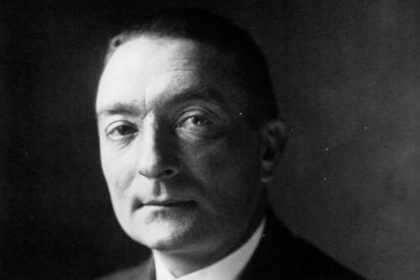
(Image credit: Walter Mittelholzer)
Finale, 1946–1959
Croydon returned to civil administration in 1946. But the war had fundamentally transformed civil aviation and airlines. New airliners, such as the British-Canadian Avro 691 Lancastrian (a variant of the Avro Lancaster bomber), Handley Page H.P81 Hermes, the US Douglas DC-4, and Lockheed Constellation, required longer, reinforced concrete runways. Croydon’s grass landing strip was now redundant. Newly built London Heathrow Airport (1946) assumed the mantle as the capital’s new international hub. Regional and charter traffic increasingly passed to Gatwick Airport, Crawley. Croydon continued in the 1950s for private flying, executive charters, and short-haul travel using de Havilland Rapides to the Channel Islands and Europe. But the writing was on the wall. On September 30, 1959, the final scheduled flight departed; a de Havilland DH.114 Heron operated by Morton Air Services (piloted by Captain Last). After almost four decades of innovation and pioneering service, Croydon closed.
Croydon Today
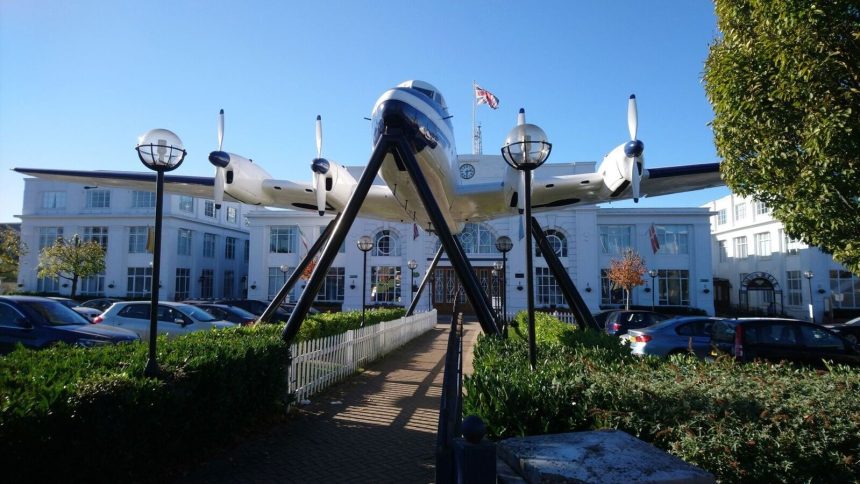
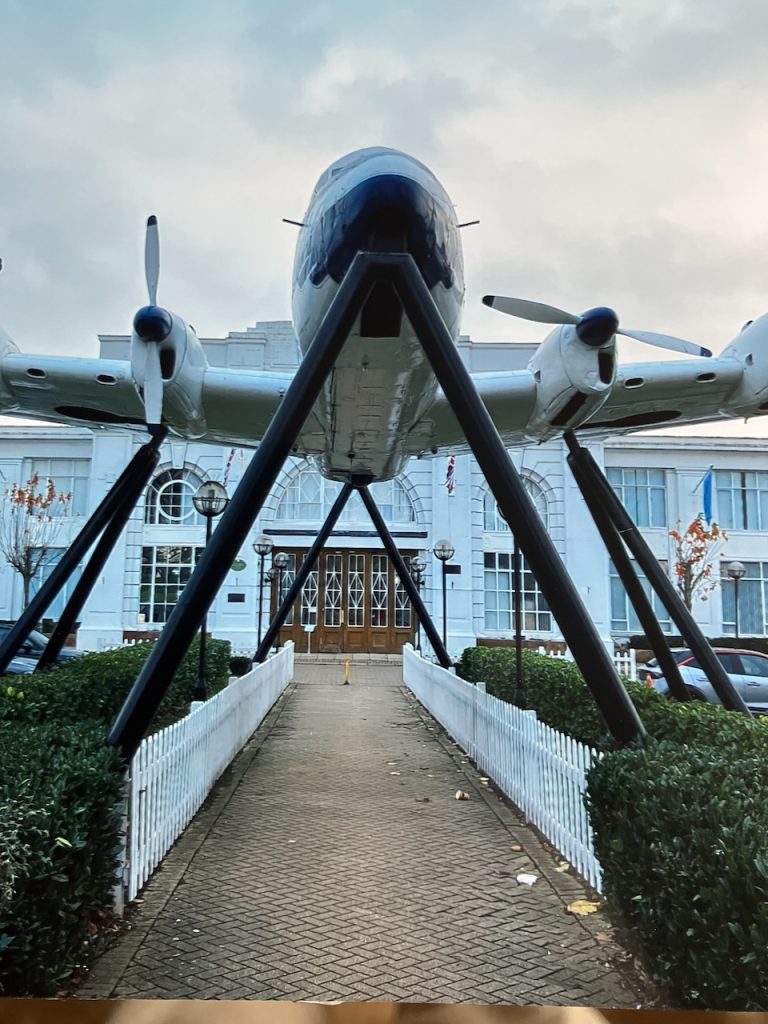
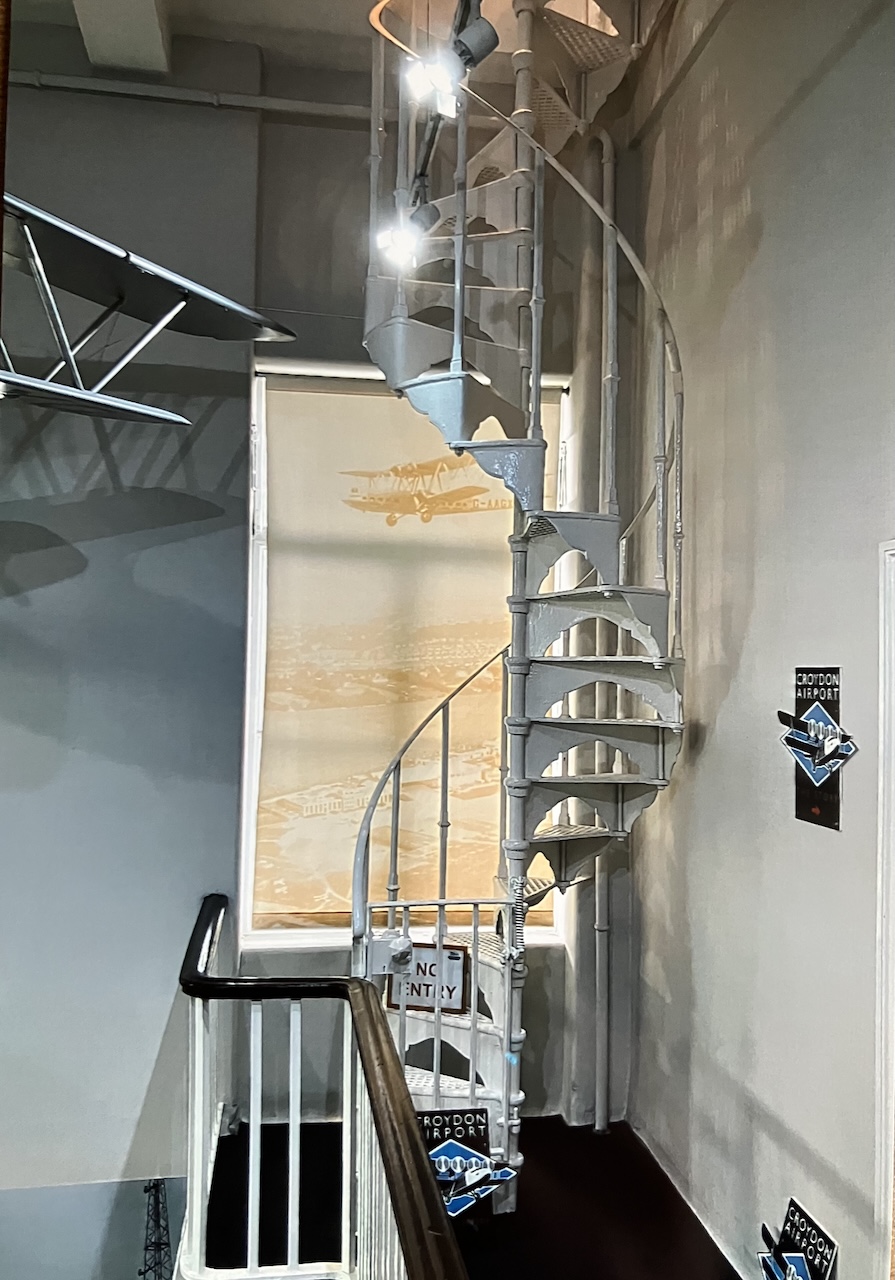
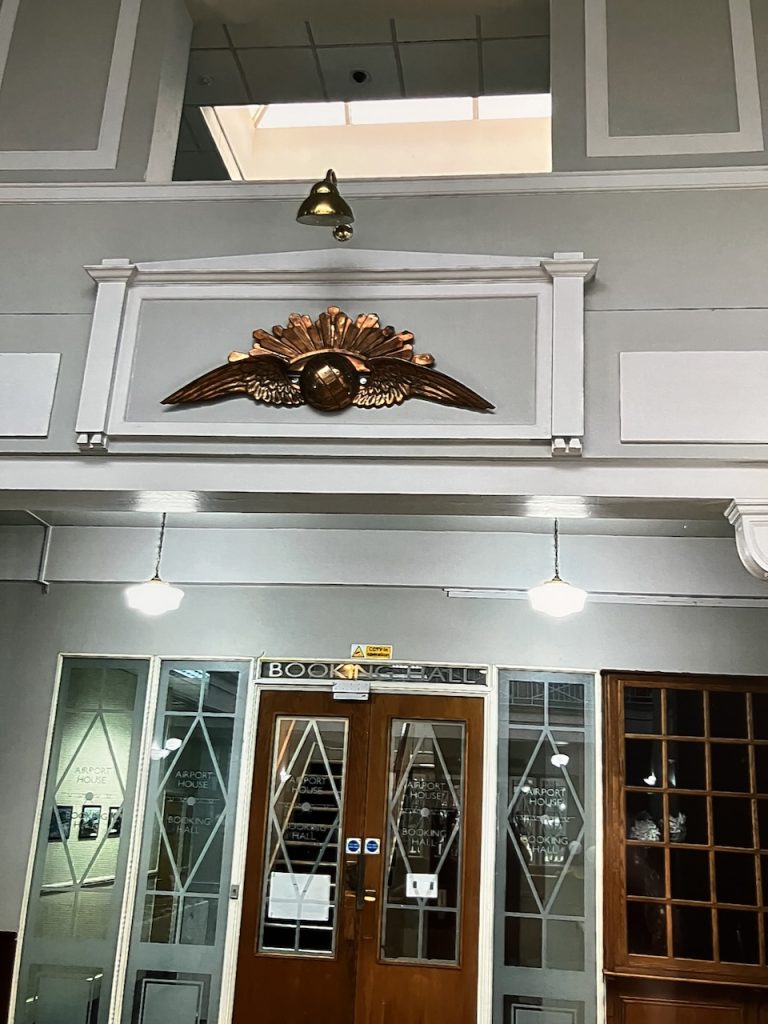
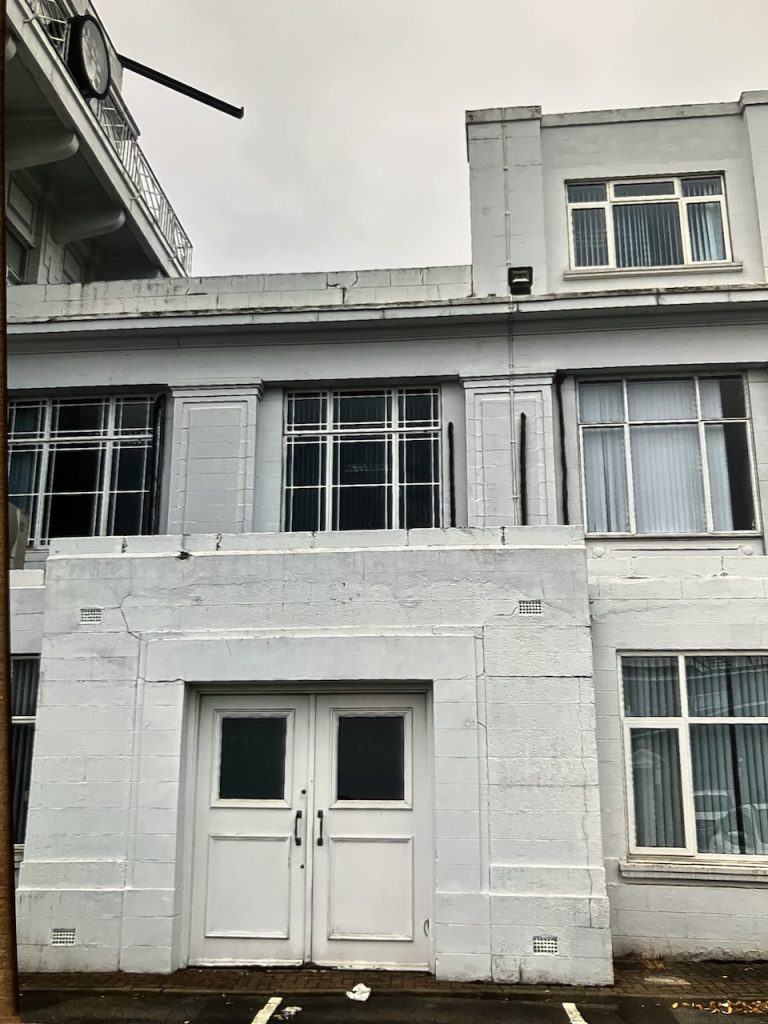
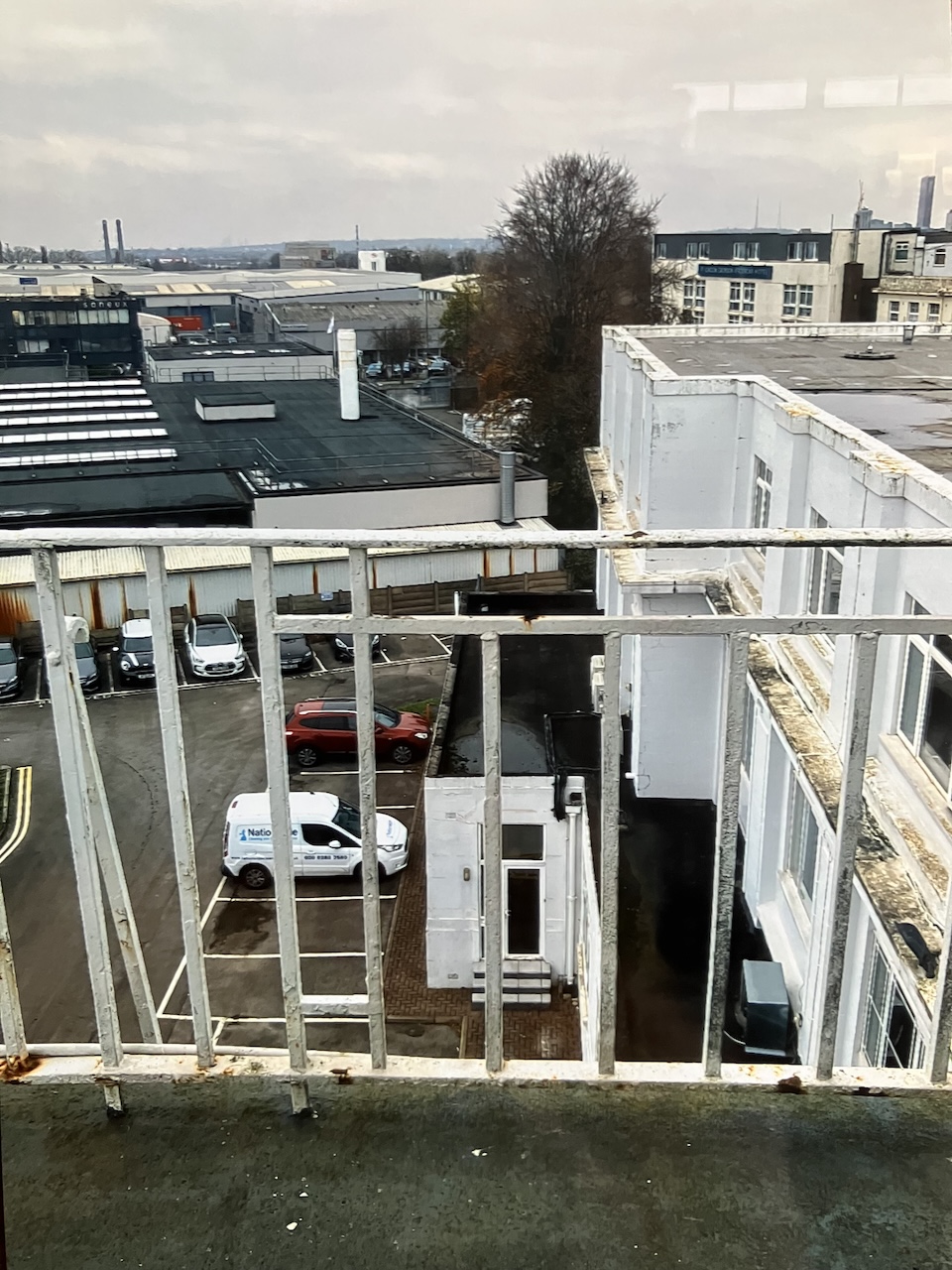
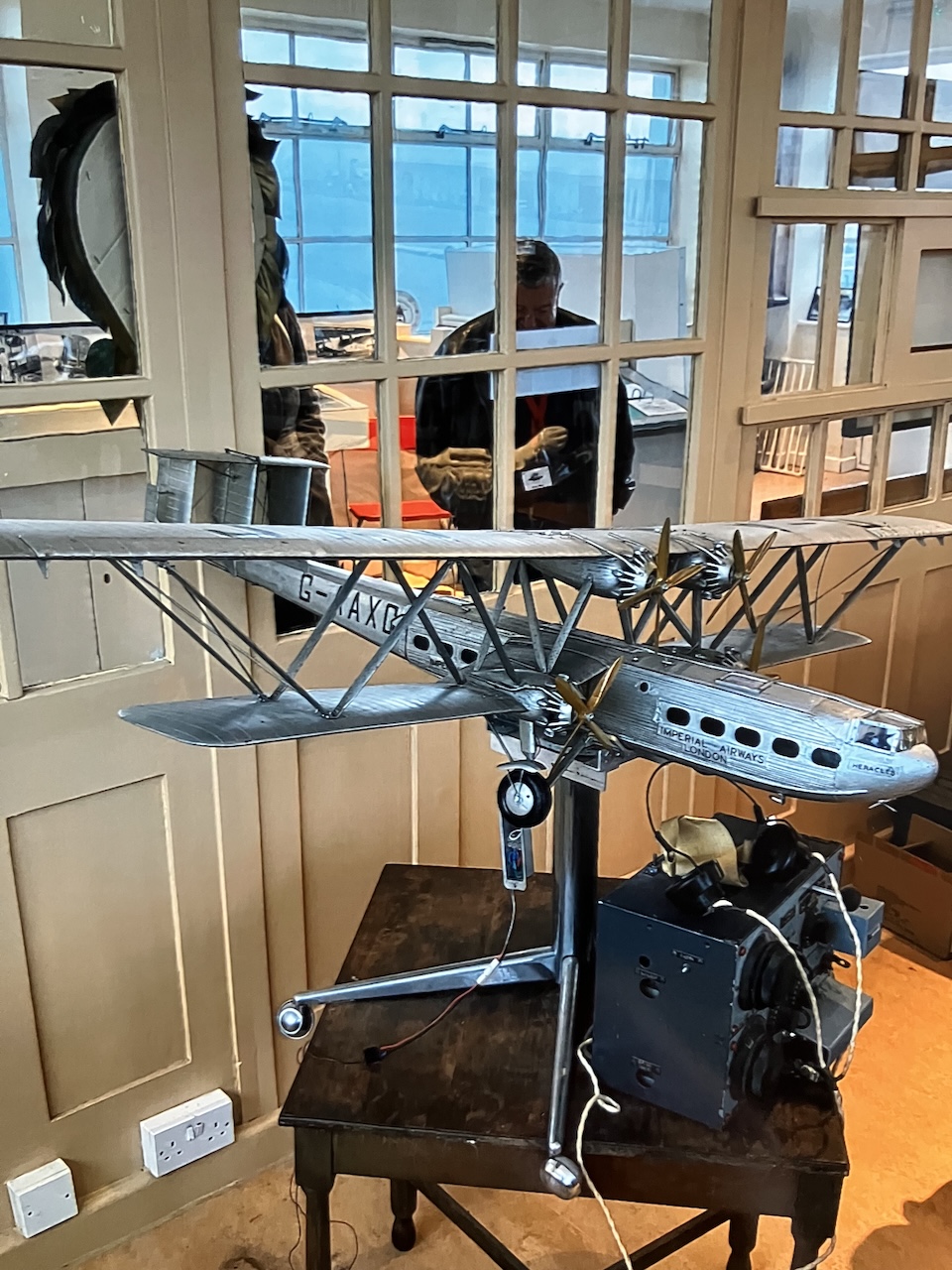
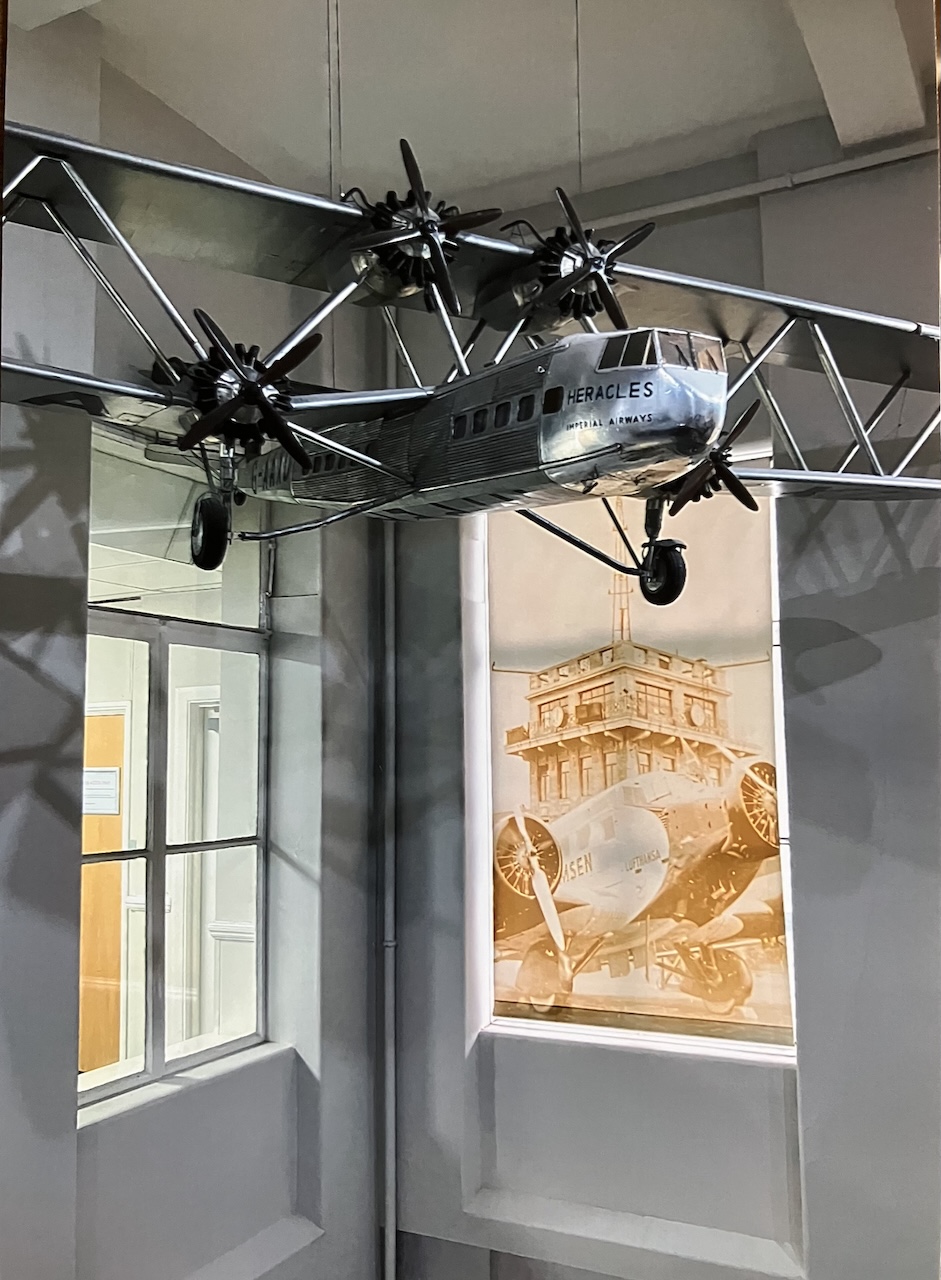
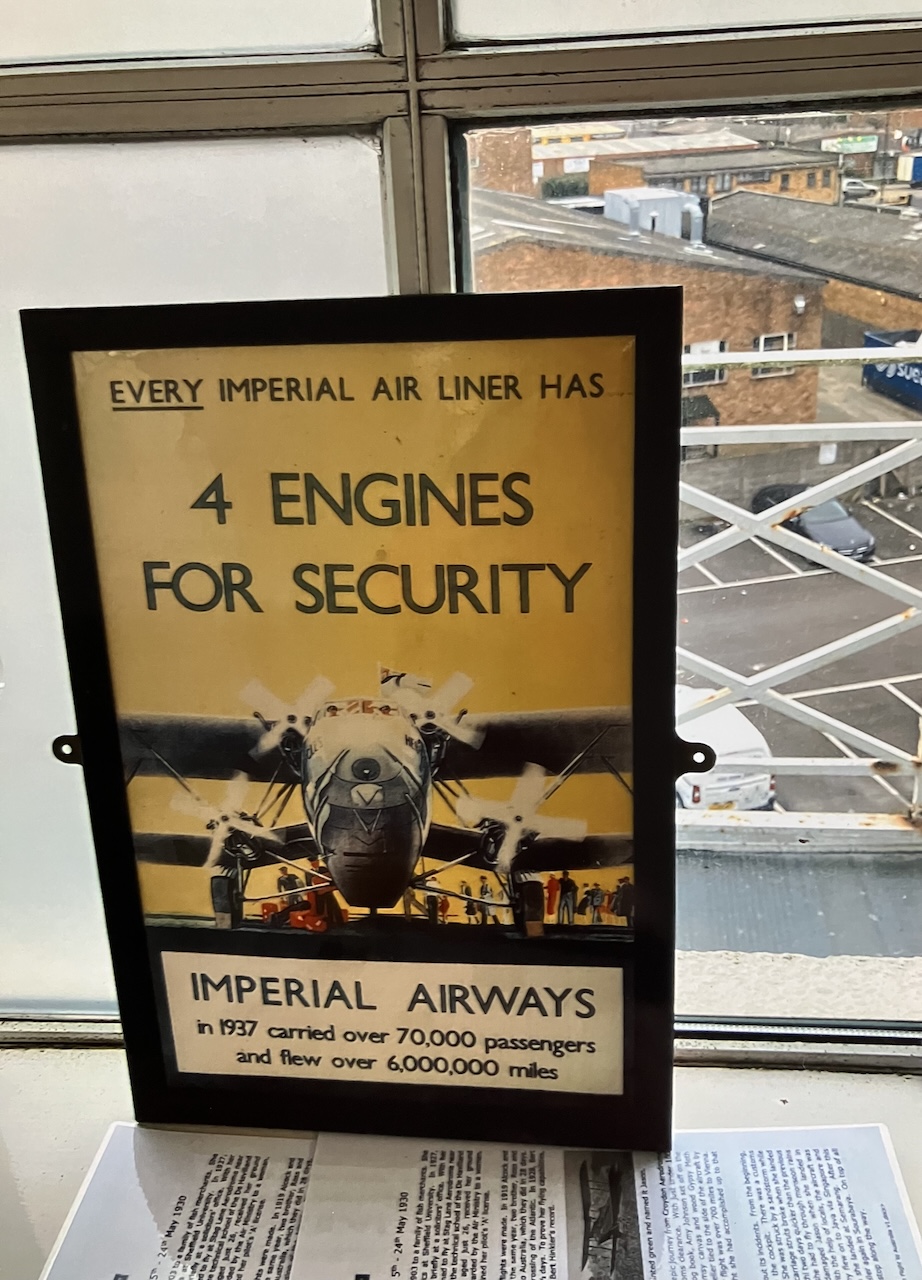
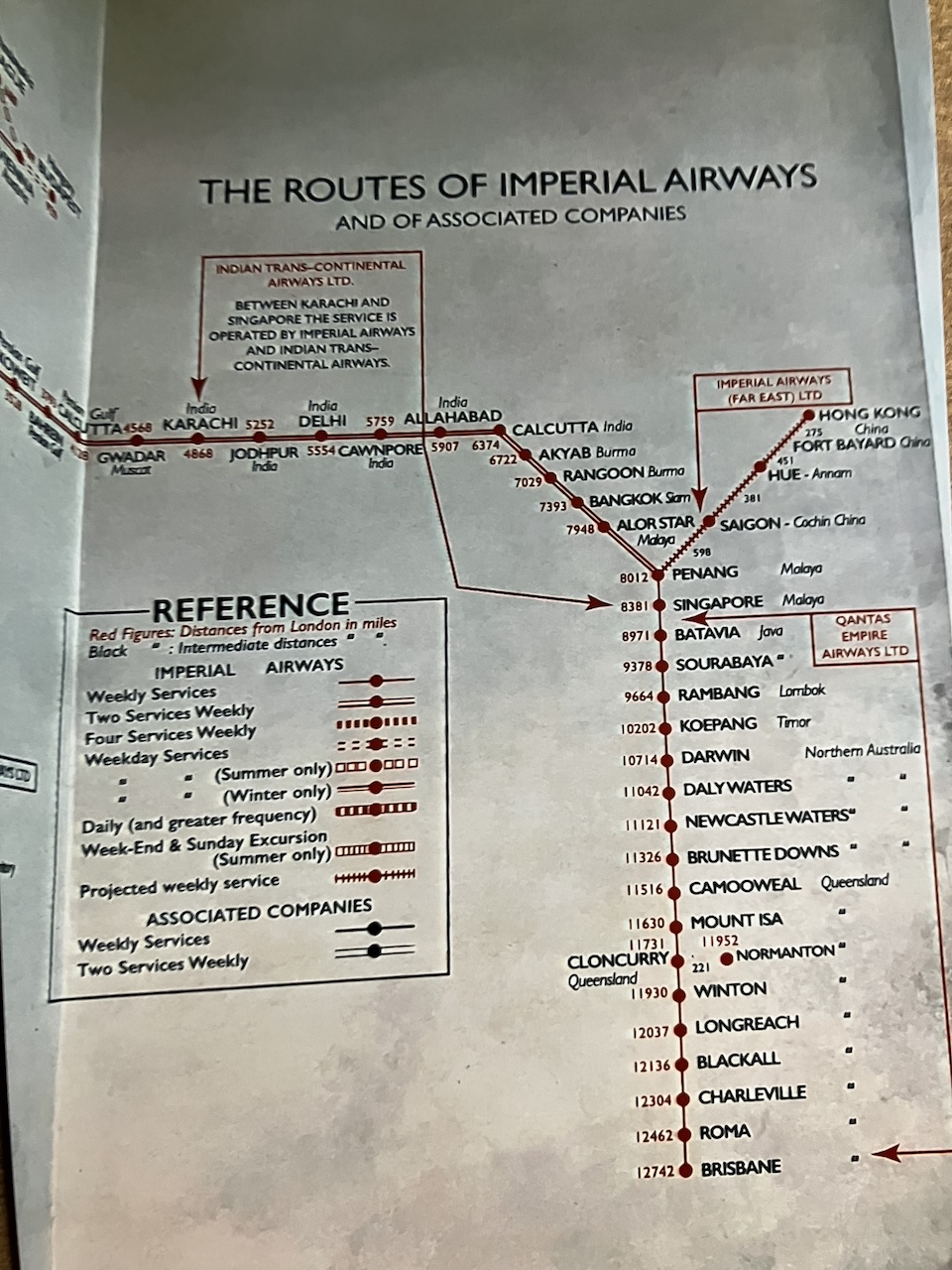
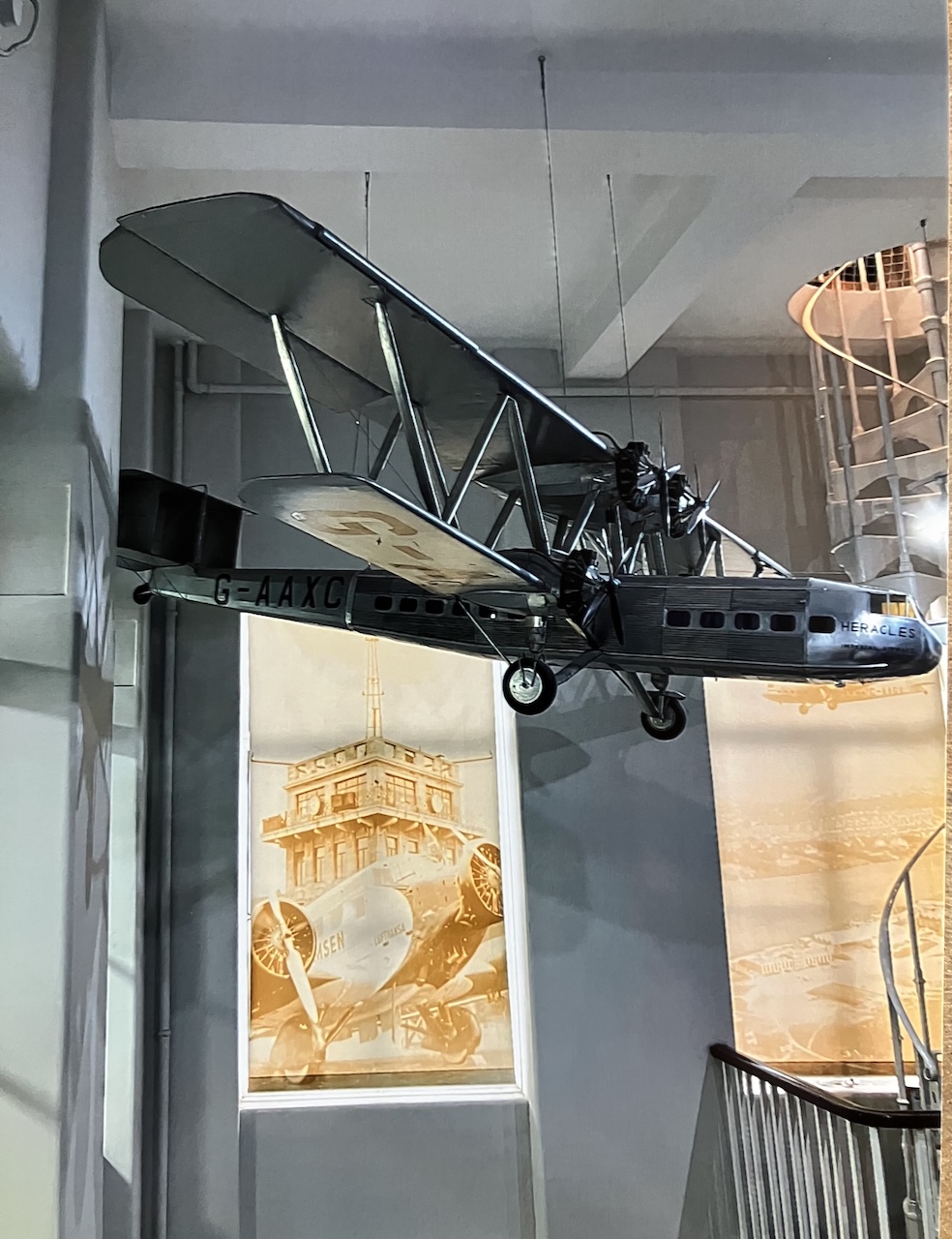
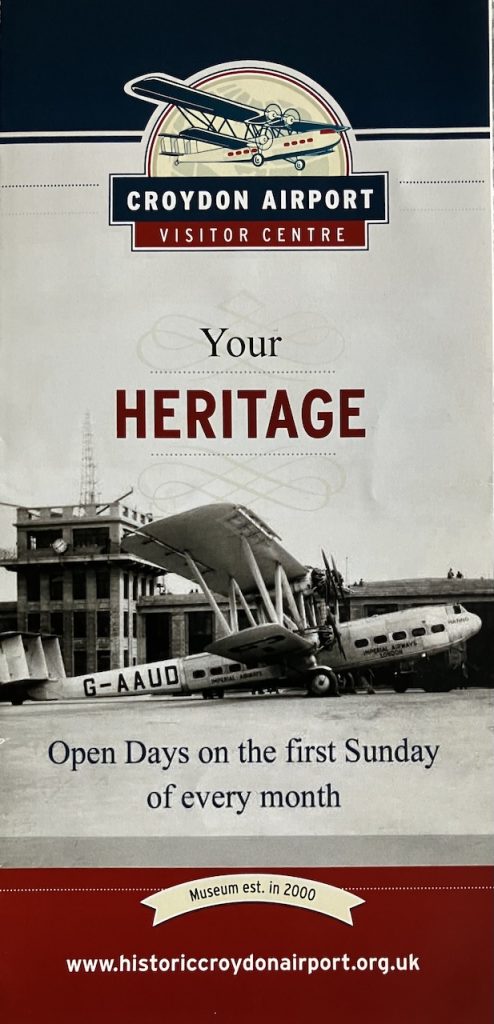
Today, Croydon Airport’s heart still beats. It is easily accessible from central London. The iconic white terminal building (Booking Hall) and its adjacent Gate Lodge are protected English Heritage architectural sites. The building has been renamed Airport House and includes a modern business centre. Nearby, the Art Deco Aerodrome Hotel also continues to welcome guests. Visiting aviation enthusiasts will find much to enjoy at the Croydon Airport Visitor Centre. The world’s first air traffic control tower and echoing Booking Hall remain highly atmospheric. A large, restored Imperial Airways bronze winged globe symbol prominently recalls the terminal’s history. Since 2000, a volunteer-run museum features tours, models, period photographs, route maps, uniforms, and artifacts preserving the Imperial Airways era. Visitors can also climb stairs into the original Control Tower, discover Croydon’s air traffic control nerve centre and look down onto the former apron tarmac. They can see the same doors through which so many celebrities, film stars, and world-famous aviators once passed. Mounted on a pedestal outside on Purley Way is a historic, twin-engine de Havilland Heron light airliner, commemorating the aircraft type closing Croydon’s final commercial aviation chapter. The Croydon Airport Museum opens its doors to visitors on the first Sunday of every month. To know more and support the Historic Croydon Airport, click on this link: www.historiccroydonairport.org.uk.




Ex RAF (Telegraphist/Wireless opr. 1960’s) here, and later Lufthansa Snr.Reservations Agent London 1969-1992. Wonderful roundup on the former Croydon Airport. Hope to visit it later this year.