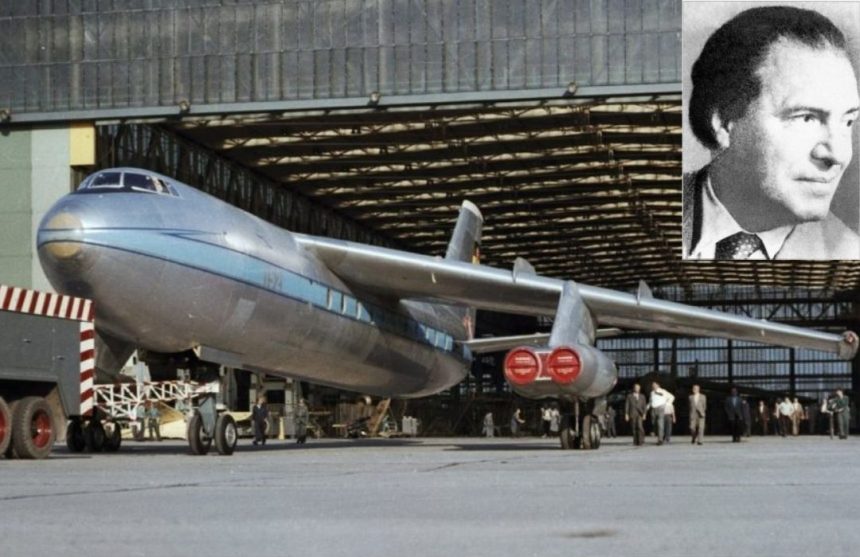

The Baade 152 was the first and only jet-powered passenger airplane built in East Germany, and the person behind its development was Brunolf Baade. Baade was born on March 15, 1904, near Berlin and attended the Emperor Frederick Grammar School from 1910 to 1922. At 14, he briefly got involved in revolutionary activities in Germany after WWI. It worried his non-political parents and revealed his rebellious nature, influenced by his conservative school environment. He studied at the Technical University in Berlin while interning at Blohm + Voss in Hamburg, where he aimed for a career in shipbuilding. In Hamburg, he worked on building the Waskenland, which later sailed to South America. Brunolf Baade worked as a coal trimmer and took the opportunity to explore the region and its cultures. After returning to Berlin, Baade focused on the aircraft industry. Due to the Treaty of Versailles, powered aircraft were limited, so he joined the Academic Flying League and built gliders. He took flying lessons, entered glider competitions, and by the end of 1927, he had earned a pilot’s license from the German Flying School (DVS). He also completed internships involving static load testing before receiving his mechanical engineering degree in 1929 from the Technische Hochschule München. He briefly interned at Bavarian Aircraft Works (BFW) and worked there during a financial crisis, collaborating with Willy Messerschmitt on new passenger aircraft.
In 1930, Brunolf Baade came to the US to work for BFW but chose to stay. He worked for several American companies, including Goodyear. Although he found success in North America, he returned to Germany in late 1936. He took a job at Junkers in Dessau, where he quickly advanced in rank and salary. During WWII, he was the head of the Development and Design Department and worked on military aircraft, including the Ju 88 and Ju 287. WWII ended in May 1945, but before that, in April, US soldiers arrested Brunolf Baade at the Junkers design office in Raguhn. Baade had been a member of the Nazi Party since 1937. He spent a few months in Bad Hersfeld. His fluent English helped him communicate with the soldiers. They informed him that Germany would lose much of its industry and could not have an aircraft industry for many years. It made Baade consider supporting Soviet influence in the future. In June, American troops occupied Dessau, raided the Junkers library, and took aircraft as trophies. Brunolf Baade was released that same month. By July, Soviet troops replaced the Americans in central Germany, as agreed at the Yalta Conference, placing Dessau in the Soviet zone. In late 1945, the Soviets asked Baade to help rebuild the Junkers research facilities in Dessau using leftover wreckage. Since US forces had taken away physical assets, the Soviets relied on the knowledge of the plant workers. As a result, they received over 2,000 written reports sent to the USSR. Work continued on advanced jet designs. However, on October 22, 1946, as part of Operation Osoaviakhim, Soviet soldiers moved Baade and other engineers to a village near Moscow called Podberezye.
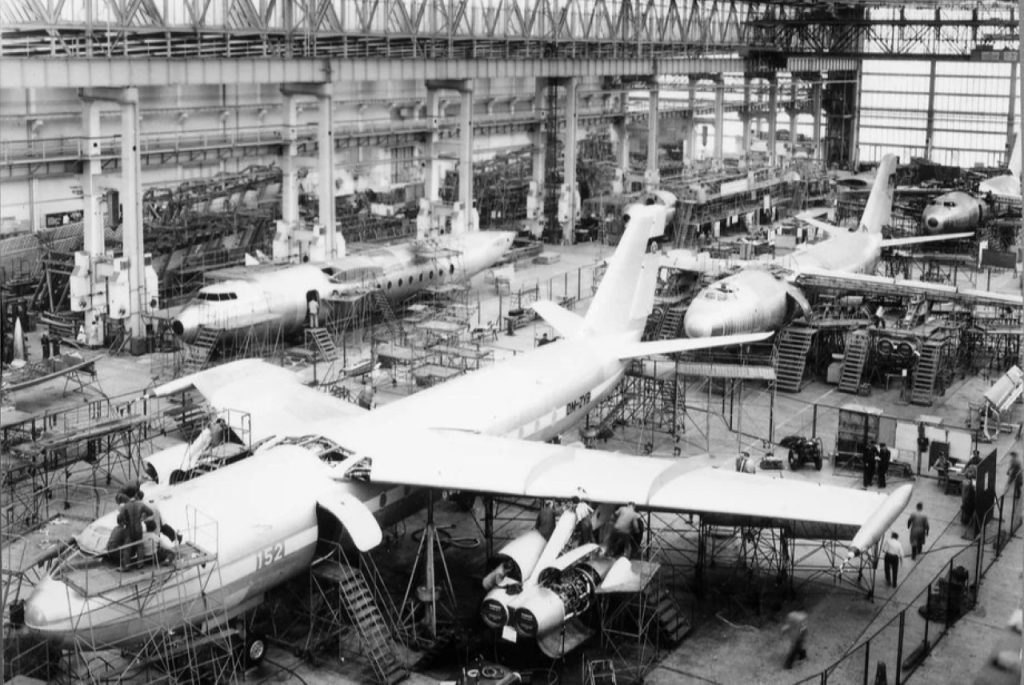
Brunolf Baade became a leader among the relocated German engineers and had more freedom than his colleagues. Under his leadership, the engineers worked on the Junkers Ju 287 jet bomber, which was renamed OKB-1 EF 131, and later the OKB-1 150 jet bomber. By 1951, the OKB-1 150 had become a heavy bomber, but was canceled in 1952 due to lack of resources. In October 1949, the German Democratic Republic was founded. It faced economic problems and social unrest, leading to the East German uprising in 1953. After Stalin died in 1953, relations between the USSR and East Germany improved. In December 1953, Baade persuaded the Soviets to allow the development of the OKB-1 150 into a passenger aircraft. By 1954, Brunolf Baade moved to East Germany and joined the ruling Socialist Unity Party. By June 1954, the last of the German engineers had returned to Germany or Austria. After returning to the German Democratic Republic with Soviet approval for the promised passenger jet, Brunolf Baade was tasked with developing the Baade 152. While he had strong political support, he underestimated important challenges. Upon his team’s return from the Soviet Union, there was no infrastructure to develop an aeronautical industry, and many skilled workers had migrated to West Germany for higher wages. In a 1956 survey, only 11 percent of the specialists had previous aeronautics experience. Brunolf Baade lost access to Soviet test pilots and key technical documentation, which complicated the project. However, his connections allowed for the delivery of essential components from the Soviet Union when local sources fell short.
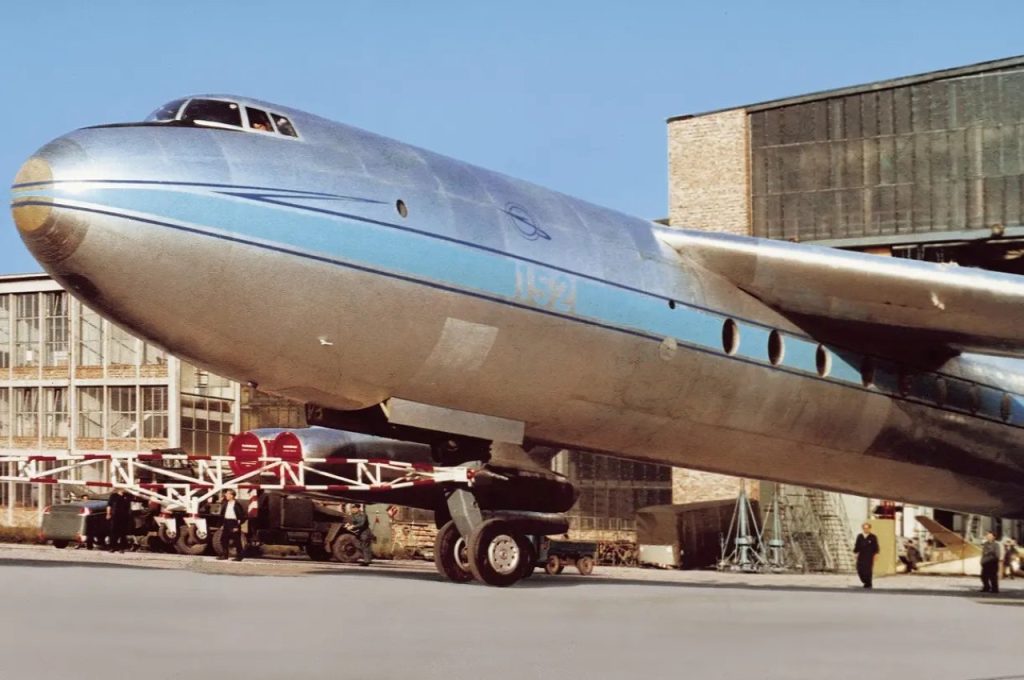
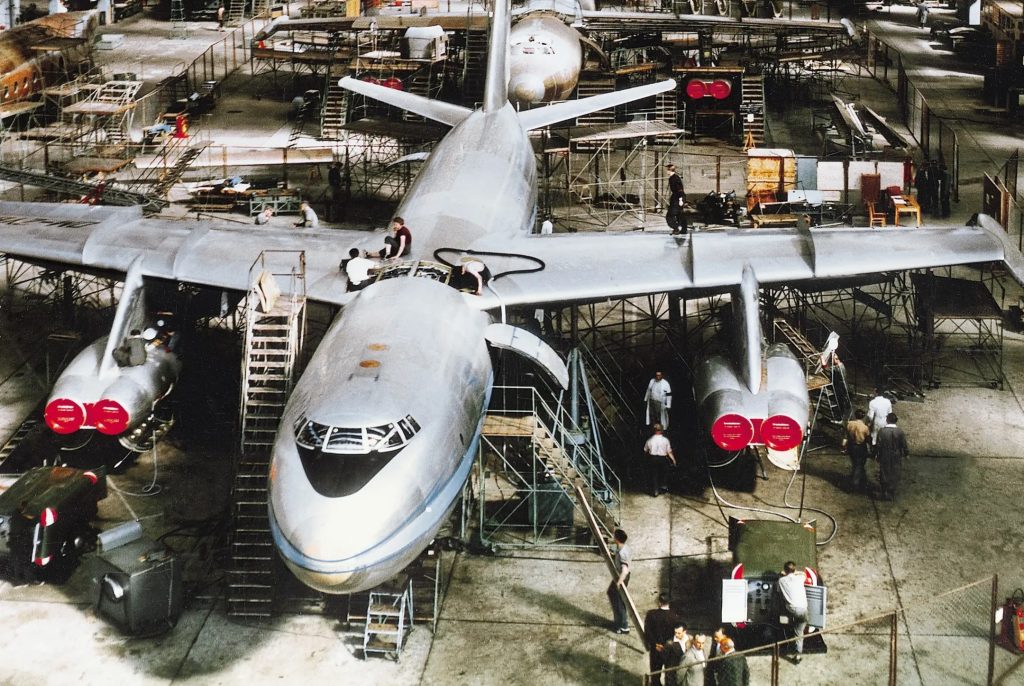
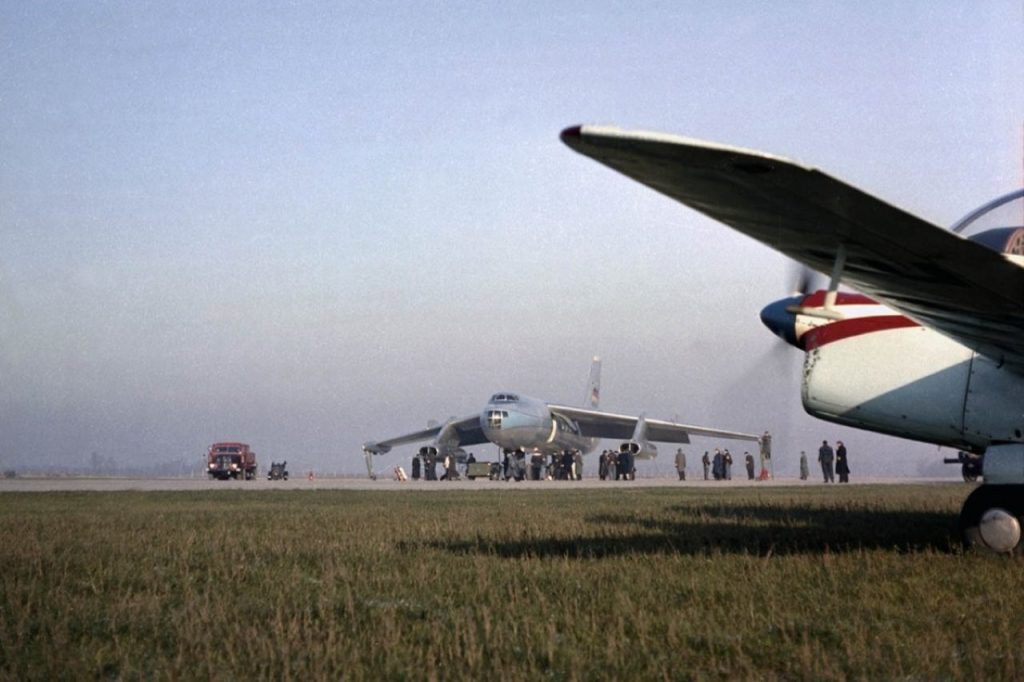
Funding was secured to build a new development center at a former Luftwaffe airfield in Klotzsche, Dresden. This led to hiring and training the workforce. As prototypes such as the Comet, Boeing 367-80, and Caravelle were developed in the West, Brunolf Baade’s team improved the design of the 152 by increasing its capacity and speed while retaining its original structure. The 152 prototype was first presented in April 1958 without engines and made its first flight in December 1958, powered by Soviet-built Tumansky RD-9 engines. A second flight in March 1959 ended in a crash during a demonstration rehearsal, killing all four people on board. Initially, the crash was thought to be due to pilot error, but later investigations suggested that fuel feed problems may have played a role in the accident. Aircraft development at the Dresden facility and the Pirna engine plant officially ended in 1961. In March 1961, Brunolf Baade became the director of the newly created Institute for Lightweight Construction and the Economical Use of Materials, located in Dresden-Klotzsche. Before this, he had worked as a lecturer at the Faculty for Aeronautical Engineering at Dresden University of Technology since 1955. Baade retired from the Institute when he turned 65 in March 1969. Brunolf Baade died on November 5, 1969, in a hospital in Berlin or in Dresden, from complications related to stomach cancer. He is buried in Eichwalde, near Berlin. Some sources say he never fully recovered after returning from the Soviet Union in 1954. As one of the pioneers of aeronautical engineering, Brunolf Baade’s real strength was not just in engineering but also in his ability to navigate politics and institutions. He was a strong individual who achieved great results when he had skilled technicians and economists on his team. Read more similar articles HERE.