






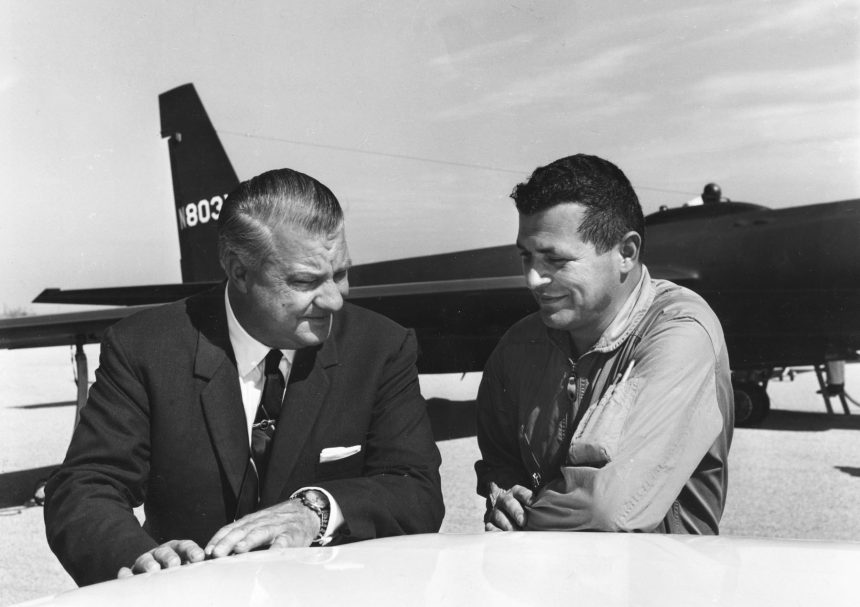

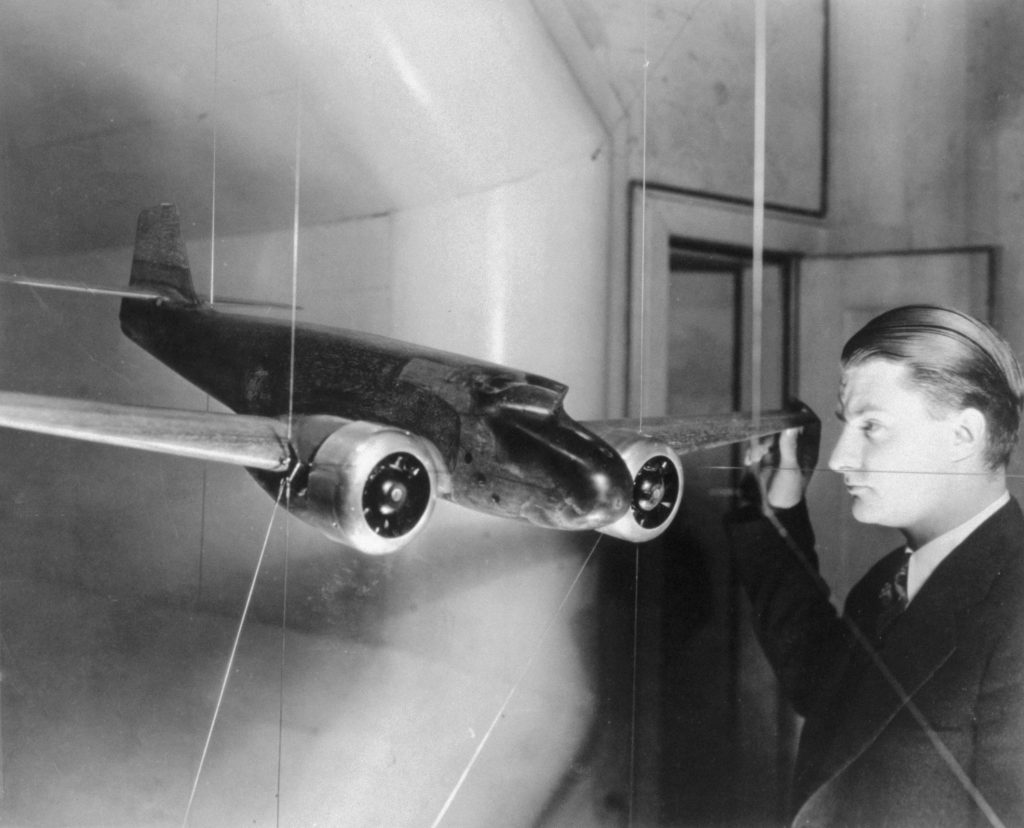
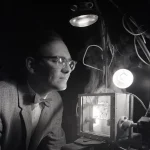
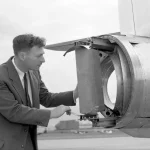
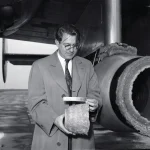
In June 1943, the US Army’s Air Tactical Service Command (ATSC) needed a jet fighter to counter the growing Nazi German jet threat. A month later, a young engineer named Clarence Leonard “Kelly” Johnson and his team presented the XP-80 Shooting Star jet fighter proposal to the ATSC. Soon after, Lockheed was approved to develop the United States’ first jet fighter. This project started what would later become the Skunk Works, with Kelly Johnson leading it. Kelly Johnson was born in Ishpeming, Michigan, a small mining town. Johnson won a prize for the design of his first aircraft when he was 13. He graduated from Flint Central High School in 1928, then attended Flint Junior College, now called Mott Community College. He later went to the University of Michigan in Ann Arbor, where he earned a Bachelor’s and a Master’s Degree in Aeronautical Engineering. At the University of Michigan, Kelly Johnson tested Lockheed’s proposed Model 10 airliner in a wind tunnel. He discovered that the aircraft lacked enough directional stability, but his professor disagreed and informed Lockheed that it was stable. After finishing his master’s degree in 1933, Johnson joined Lockheed as a tool designer, earning $83 a month. Shortly after starting, he persuaded Hall Hibbard, the chief engineer, that the Model 10 was actually unstable. Hibbard sent Johnson back to Michigan to run more tests. Kelly Johnson made some changes to the wind tunnel model, and later Lockheed adopted his ideas, resulting in the successful Model 10. It caught the attention of company management, and Johnson was promoted to aeronautical engineer.
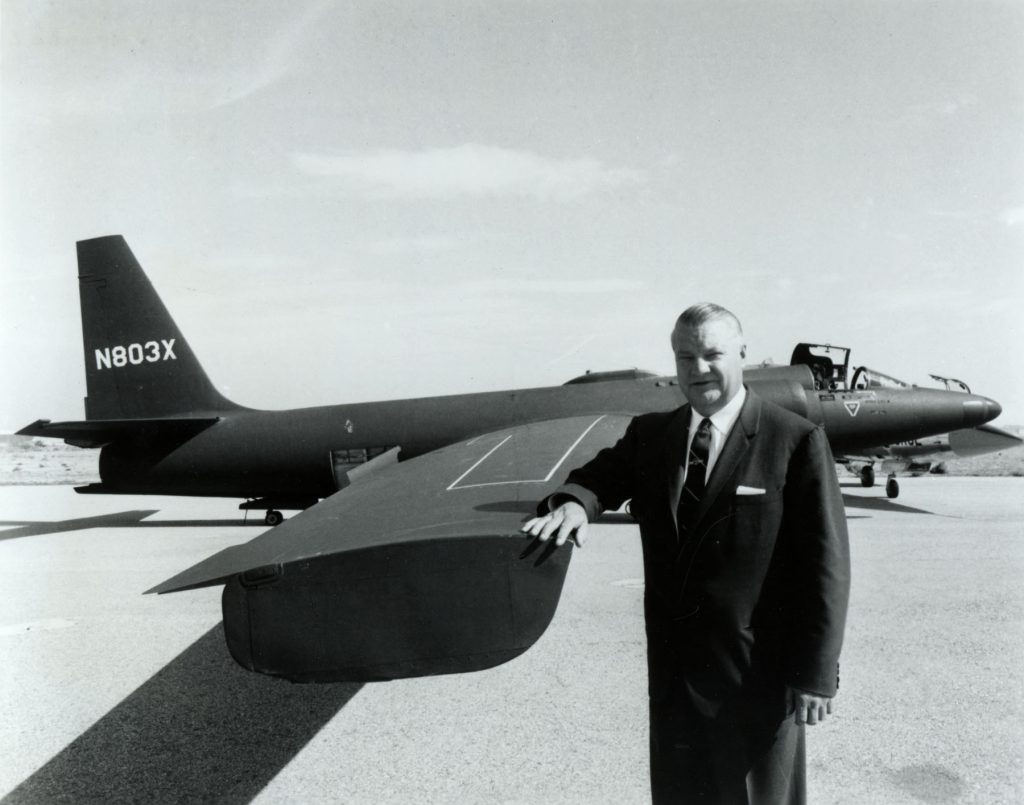
After working as a flight test engineer, stress analyst, aerodynamicist, and weight engineer, Kelly Johnson became the chief research engineer in 1938. Johnson played an important role in developing several aircraft, beginning with the P-38 Lightning, an advanced twin-engine fighter. Almost 10,000 Lightnings were built, and they were important during WWII. Later, in the early-to-mid 1940s, Kelly Johnson and his team built the XP-80 in just 143 days, seven days faster than the original plan. In 1952, he was named chief engineer at Lockheed’s Burbank plant, which was later known as the Lockheed-California Company. In 1955, the Central Intelligence Agency (CIA) asked Johnson to build an airbase at Groom Lake, Nevada, which is now called Area 51. This base was used to test flights of the Lockheed U-2 secretly. By 1956, Kelly Johnson was promoted to Vice President of Research and Development there. Johnson helped design the Lockheed AQM-60 Kingfisher, a decade before the well-known SR-71. The Kingfisher was a successful single-engine aircraft that could fly at Mach 4.3. It was made mainly of steel and used to test American air defense capabilities against nuclear missiles. The experience Kelly Johnson gained from this project led to the development of the CIA’s A-12 spy plane, and the combined knowledge from the Kingfisher and A-12 was used to develop the infamous SR-71 Blackbird. His team introduced several important innovations that allowed the aircraft to fly at high altitudes and fast speeds. Because of this, it could not be intercepted or shot down. No other jet has matched the Blackbird’s performance to date. Kelly Johnson served on Lockheed’s board of directors from 1964 to 1980 and became a senior vice president in 1969.
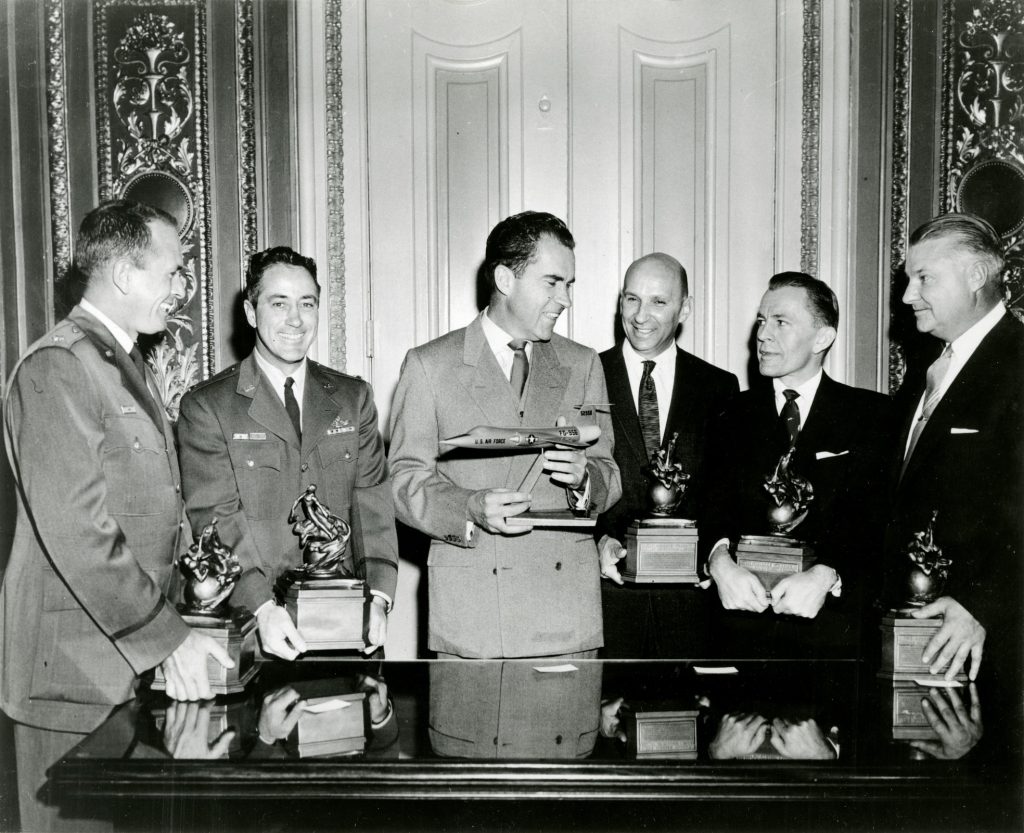
Kelly Johnson officially retired from Lockheed in 1975, and Ben Rich took his place, but Johnson continued as a consultant at the Skunk Works. In June 1983, Lockheed renamed the Rye Canyon Research and Development Center in Santa Clarita to the Kelly Johnson Research and Development Center to honor Johnson’s 50 years of service to the company. While at Lockheed, Johnson became one of the top aeronautical designers of the 20th century. He helped create over 40 aircraft, including the P-38 Lightning, the Hudson, the Constellation family, the F-80 Shooting Star, the F-104 Starfighter, the U-2, and the SR-71. In addition to developing aircraft, Johnson also had a strong impact on leadership at Skunk Works. Kelly Johnson promoted the KISS principle and summed up his management style with the phrase “Be quick, be quiet, and be on time.” He led the division by following 14 rules that focused on small, trusted teams, avoiding unnecessary bureaucracy, setting clear requirements, controlling costs, cooperating closely with the military, and conducting fast flight tests to maintain the credibility of the designs. He received many medals and honors, including the Collier Trophy, the Medal of Freedom, the National Medal of Science, and the National Security Medal. Hall Hibbard, Kelly’s boss, best summed up Johnson’s skills. “That damn Swede,” Hibbard said, “can actually see air.” As one of the Pioneers of Aeronautical Engineering, Kelly Johnson was a born engineer who knew he wanted to design airplanes “since I was twelve years old.” Read more such articles HERE.












excellent article, thank you. He was a master of both design and team leadership.