
Japanese Aircraft Carriers 1920-1945 by Ermanno Martino, reviewed by Joe May, available on Amazon.
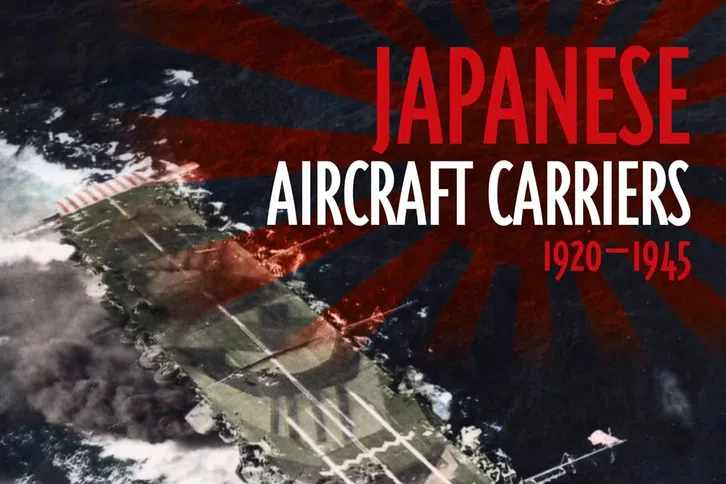
Ermanno Martino is greatly esteemed as a naval historian, especially regarding the Imperial Japanese Navy (IJN). His newest book, Japanese Aircraft Carriers 1920-1945, is prized for its attention to detail as well as deep knowledge. One example of this trait is noting the armor and the steel involved in each ship’s construction, since Martino gives specific alloys and thicknesses of these materials. This is the difference between painting a wall and painting a mural when it comes to describing naval vessel construction and is why Japanese Aircraft Carriers 1920-1945 is so exemplary. Nor will readers get lost or overwhelmed with tech-speak just for its own sake. Martino’s writing is clear, complete, spare, and elegant. The cover illustration of Japanese Aircraft Carriers 1920-1945 encapsulates the book’s incredible depth of Martino’s research. The IJN Unryu is shown underway, and in color, during 1944 with a camouflage scheme designed to render her elevators difficult to target by attacking dive bombers. But how did Imperial Japan come to this advanced aircraft carrier design, and at such dire times for Imperial Japan during WWII?

The onset of WWII saw three navies with offensive aircraft carrier forces. These were the Royal Navy (RN), the U.S. Navy (USN), and the Imperial Japanese Navy (IJN). It was the IJN, though, that first saw aircraft carriers grouped as an offensive strike force to attack while employing surprise from unheard-of ranges. Japanese Aircraft Carriers 1920-1945 is the story of how the IJN began as a nascent force, initially closely following the RN, to one rivaling the number and capability of the USN’s aircraft carriers.
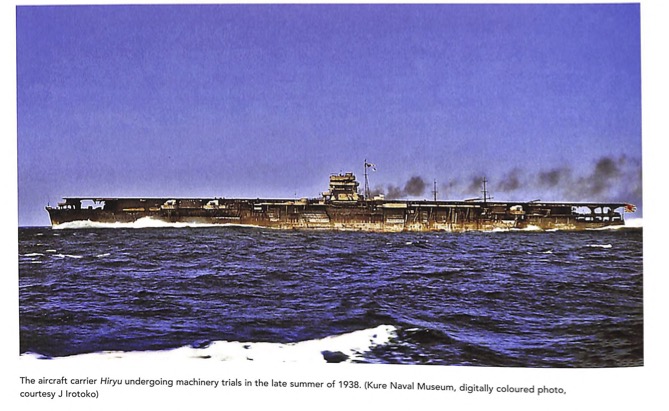
Closely following the Royal Navy (RN) in aircraft carrier design, the IJN aircraft carrier designs had two fully enclosed hangar decks; neither could be opened to the sea like USN aircraft carriers, though armored decks, as with the RN, were not present in all but the later designs. The RN designed their carriers with armored flight decks since their naval combat was envisioned within range of opposing land-based aircraft, such as in the Mediterranean Sea, thus increasing the risk of suffering direct bomb strikes as well as plunging fire from ship-borne cannon. Both the IJN and the RN have enclosed hangar decks to enhance perceived seaworthiness, especially with the lower hangar deck close to the water line.
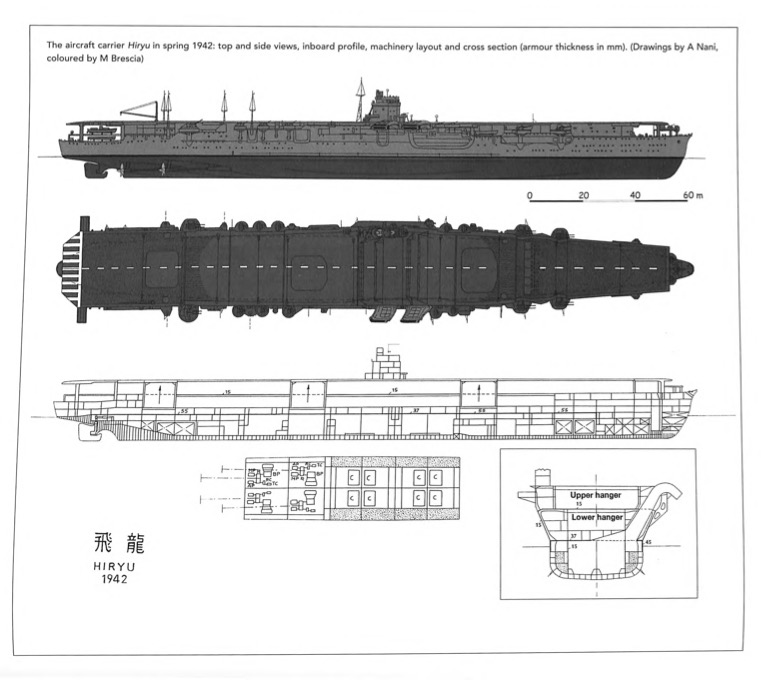
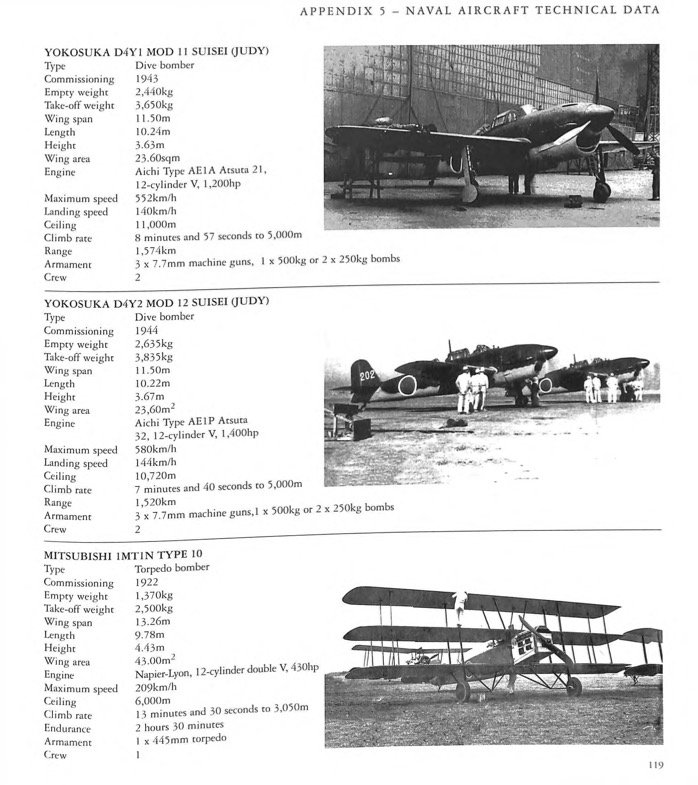
Martino treats each IJN aircraft carrier or class in turn, chapter by chapter, seventeen of them, with an eighteenth chapter describing the operational history of each ship. Readers learn of each ship’s creation and subsequent modifications due either to battle damage or gained experience. Readers can then review each ship’s history, including locations of any bomb strikes or torpedo hits suffered. Japanese Aircraft Carriers 1920-1945 is a book about the IJN learning to field naval aviation while at sea, becoming a supremely mobile and lethal aircraft carrier force, then ultimately incurring damage and destruction to the point of annihilation. Martino also generously includes a list of vital abbreviations as well as five appendices which cover a gamut including names, schemes, radars, guns, and technical data.
Japanese Aircraft Carriers 1920-1945 is published in the UK by Seaforth Publishing. It is published and distributed in the USA as well as Canada by the Naval Institute Press. Rugerro Stangliki and Michele Cosentino translated the original Italian monograph of Ermanno Martino from Italian into English with poise as well as accuracy. J Irotoko is the graphic artist who created the line drawings and pleasingly digitized color renderings of the original black-and-white photographs.
| Hardcover
Publisher: Naval Institute Press (2025) Size: 12″ x 10″ Index: X (a chapter for each aircraft carrier or class) Bibliography: ✔︎ Notes: ✔︎ Photos: ✔︎ (tons, many nicely colorized) Cost: $65 (much less as a member) ISBN: 978-1-68247-782-3 Page Count: 128 pp. Available on Amazon |