
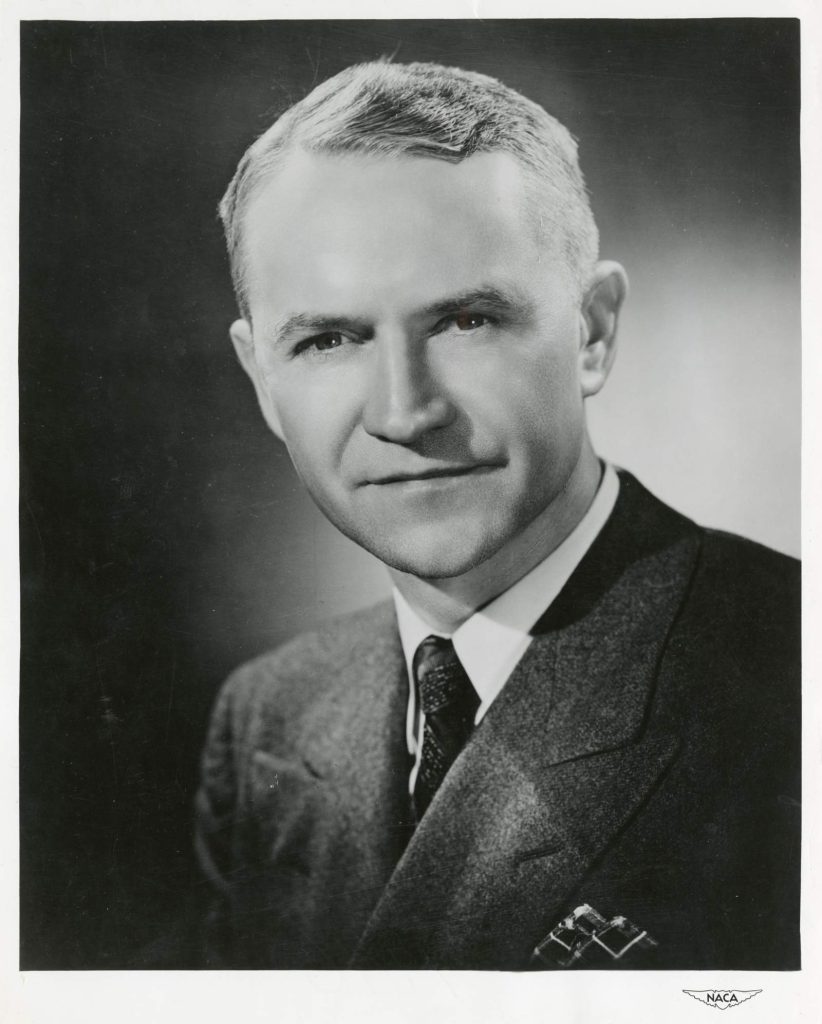
In the 1930s, to safely collect data on new de-icing equipment under real icing conditions, NACA needed an aircraft resistant to icing. Lewis Rodert, who led NACA icing research from 1936 to 1945, developed his own de-icing system for two aircraft, which served as flying laboratories for further research. Lewis Rodert was born on February 26, 1906, in Kansas City, Missouri, and graduated from Garnett High School in 1923. He graduated from the University of Minnesota in 1930. After working as an aeronautical engineering professor at Duluth Junior College and at the Curtiss Airplane & Motor Company, he joined the National Advisory Committee for Aeronautics (NACA, now NASA) in 1936. In September 1936, Lewis Rodert started working at the NACA Langley Memorial Aeronautical Laboratory with Alun R. Jones to study aircraft icing. At the time, icing was considered a minor problem, adding weight and making it harder for the aircraft to climb. But Lewis Rodert’s research showed that icing was a major problem because it altered the shape of the aircraft’s wings, which caused a reduction in lift and an increase in drag. Icing also resulted in instrument and carburetor problems, leading to incorrect readings and engine failure. Ice on the propellers also affected performance. The ice on the windshield jammed the flight control systems and interfered with radio communication. These life-threatening icing problems could occur within minutes.
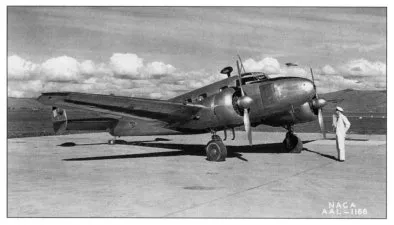
In September 1937, using a United DC-3, Lewis Rodert’s team demonstrated that even small amounts of ice affected lift, drag, and the risk of stalling. This led to the construction of a large icing tunnel at Langley. Unfortunately, they found that the ice produced in the tunnel did not mimic natural ice formation. The BF Goodrich Rubber Company then created an inflatable boot for the leading edge of the wing to break off ice, which proved somewhat effective and became standard equipment by the late 1930s. Lewis Rodert and Jones successfully tested a US Navy Martin XBM-1 aircraft that used excess engine heat to melt ice, prompting further research. The NACA approved modifications to an all-metal Lockheed 12A aircraft to serve as a dedicated anti-icing test bed, receiving strong support from Lockheed’s Vice President and Chief Engineer, Hall L. Hibbard. They channeled hot gases from the engine to heat the leading edge of the wing while using cool air to prevent the metal from overheating. By August 1939, this design was ready for testing on US Navy PBY flying boats. The Navy Bureau of Aeronautics helped adapt the Lockheed 12A design for the PBY. In November 1939, the US Army Air Corps (USAAC) requested the Lockheed 12 for testing at Wright Field. At Wright, Major CM Cummings assisted Rodert in finalizing the design. The USAAC purchased new wings and a modified windshield from Lockheed for $25,000 for NACA research.
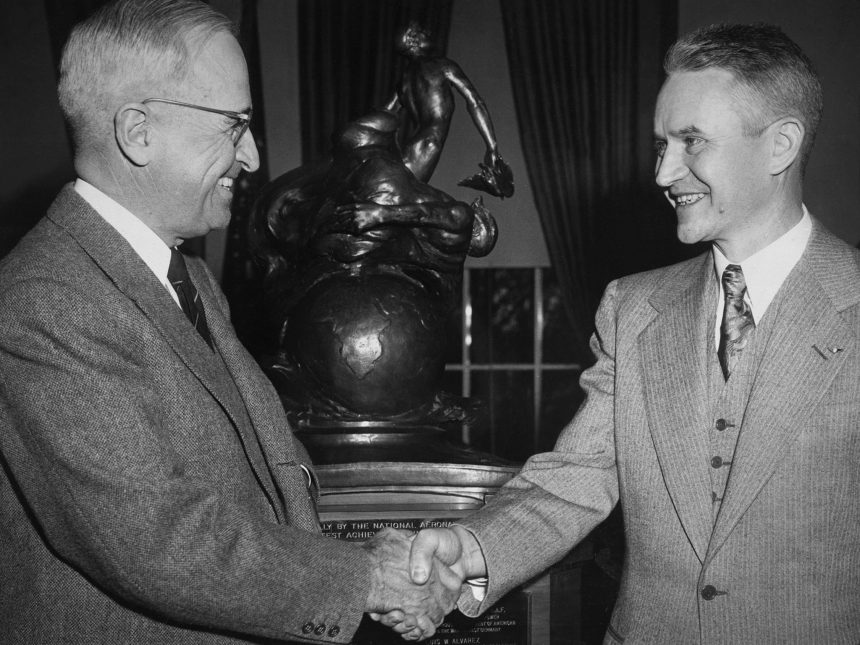
Lockheed made the wings, and Lewis Rodert moved the Flight Research Branch to the Ames Laboratory, next to the Navy’s Moffett Field in California. The Ames team conducted tests using a North American O-47 until the Lockheed 12A was ready from the factory on January 22, 1941. In December 1947, US President Harry S. Truman congratulated Lewis Rodert for winning the 1946 Collier Trophy. The award recognized Rodert’s work on a thermal anti-icing system for aircraft, which was a major accomplishment in American aviation that year. President Truman, also from Missouri, was personally pleased that Rodert received this honor because his own plane, the Independence, a Douglas DC-6, was one of the first to use the thermal de-icing system. In 1948, Lewis Rodert worked in Cleveland as the Chief of the Flight Research Branch. He researched ways to prevent airplane fires and developed a type of fuel that was less likely to ignite. In 1956, Lewis Rodert joined Lockheed in California as a special assistant to the research director. Later in his life, he left the aviation industry, and his marriage ended in 1967. Lewis A. Rodert died on October 11, 1973, in Fresno, California, at the age of 67. As one of the Pioneers of Aeronautical Engineering, Lewis Rodert will always be remembered as the developer of one of the earliest thermal anti-icing systems for aircraft. Read other similar stories HERE.