






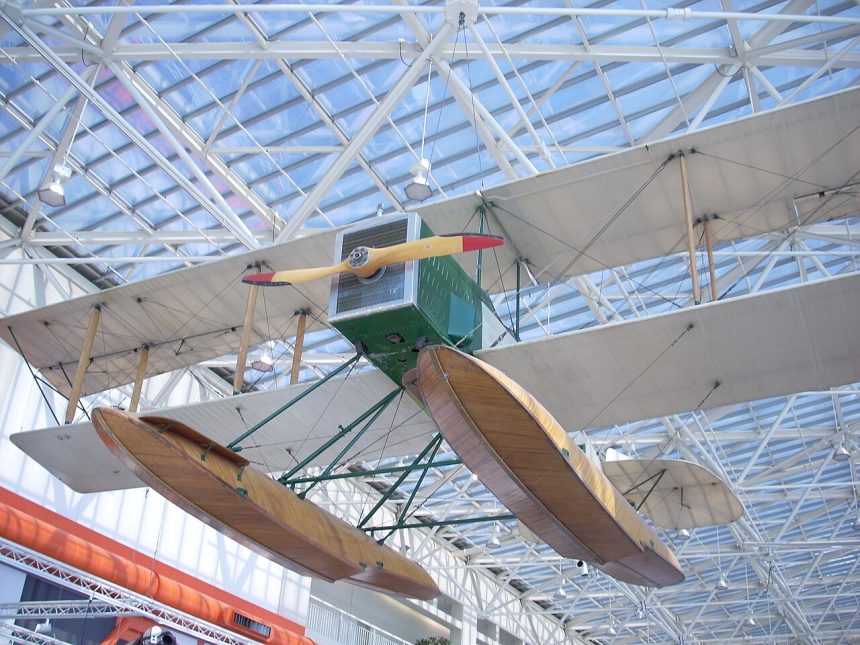

On this day in aviation history, 110 years ago (June 15, 1916), the first flight of the Boeing Model 1 took place. Also called the B & W Seaplane, after designers William Boeing and Lt. Conrad Westervelt, the Model 1 was Boeing’s first aircraft. Construction of the Model 1 took place at Boeing’s boathouse hangar on Lake Union, in Seattle, Washington. The aircraft was constructed of wood, wire bracing, and linen covering. Three B & W Seaplanes were manufactured, the first being named Bluebill and the second named Mallard. Both B & W aircraft were pitched to the United States Navy, but the interest was not there. As a result, the Model 1s were sold to the New Zealand Flying School, registering Boeing’s first international sale. While in New Zealand, the B & W set an altitude record of 6,500 feet on June 25, 1919. On December 16, 1919, the B & W became the first airplane to carry mail in New Zealand. From here, the aircraft was used regularly for airmail services.
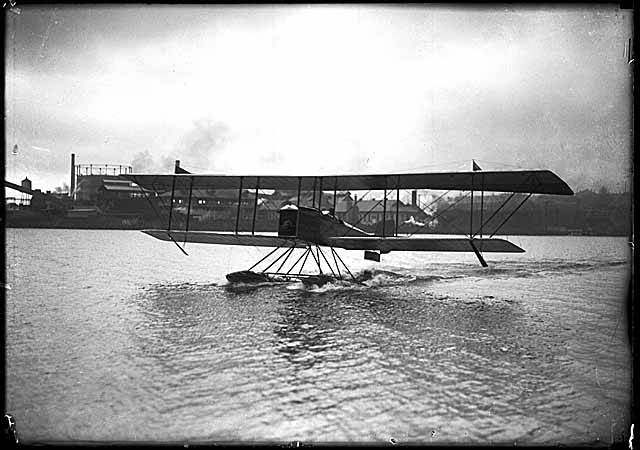
In 1966, Boeing commemorated the 50th anniversary of the Model 1’s first flight by manufacturing a third aircraft, the Model 1A. The Model 1A was a modernized replica of the original, featuring a welded steel tube fuselage and modern flight controls. The instruments of the Model 1A were also modern, and the aircraft was powered by a 170-hp Lycoming GO-435 engine. Boeing built the Model 1A as a seaplane, like the original, but later modified the aircraft with bolt-on wheels for land operations. The original Boeing Model 1 was powered by a 125-hp Hall-Scott A-5 Straight-6 piston engine. A cruise speed of 67 mph and a maximum airspeed of 75 mph were attainable by the B & W, which also had a range of 280 nmi and a 700 fpm rate of climb. The B & W was 27 ft 6 in long and had a wingspan of 52 ft.
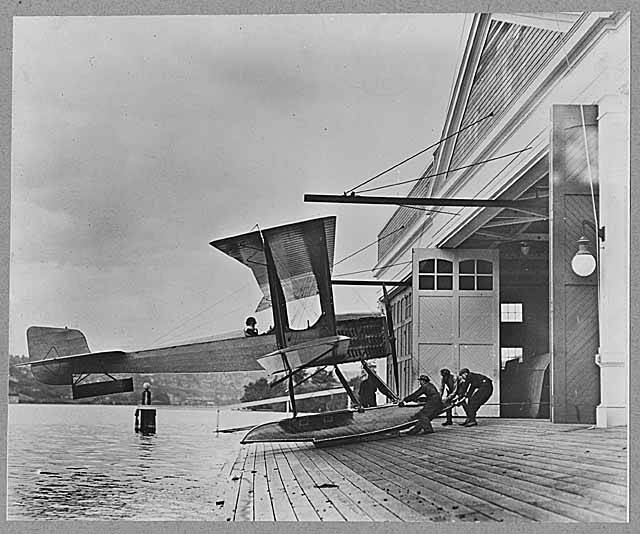









In that day and age, how did this plane get all the way to New Zealand?