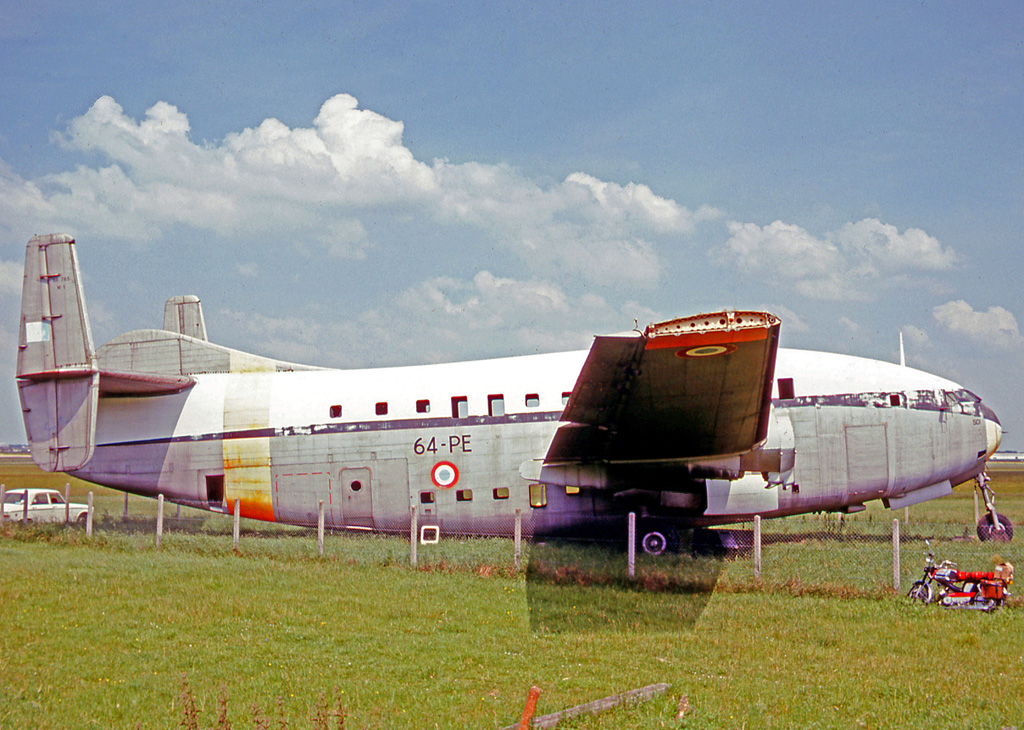
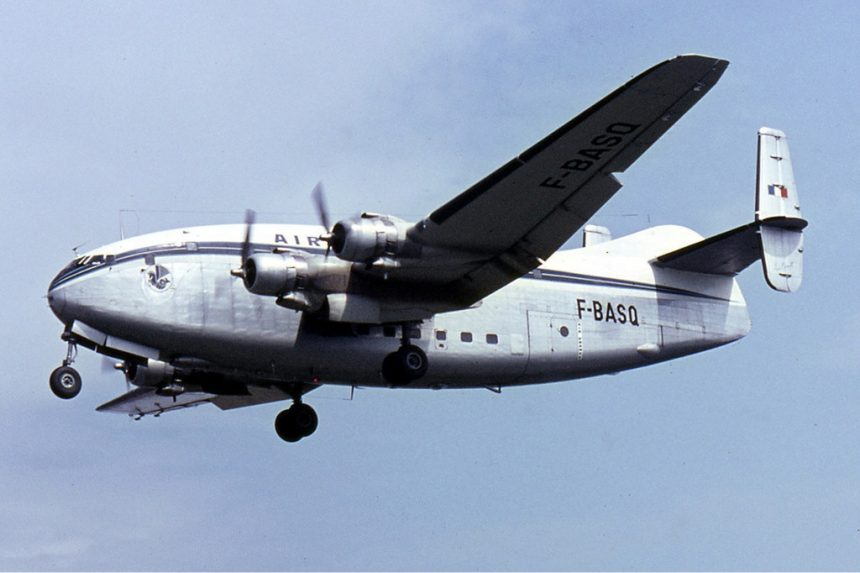

On this day in aviation history, 75 years ago (July 20, 1951), the Breguet 763 Provence took flight for the first time. Nicknamed the Deux-Ponts, or “Double Decker,” the 763 was one variant in a series of transport aircraft developed by French aircraft manufacturer Breguet Aviation. Work on the Breguet 761 prototype, named Project 76-1, began in 1944, prior to the end of WWII. A need was foreseen for an airliner with a medium range that could haul 100 passengers. Breguet aimed to use readily available parts as much as possible, opting for four 1,580-hp SNECMA 14R-24 radial engines as the 761’s source of power.
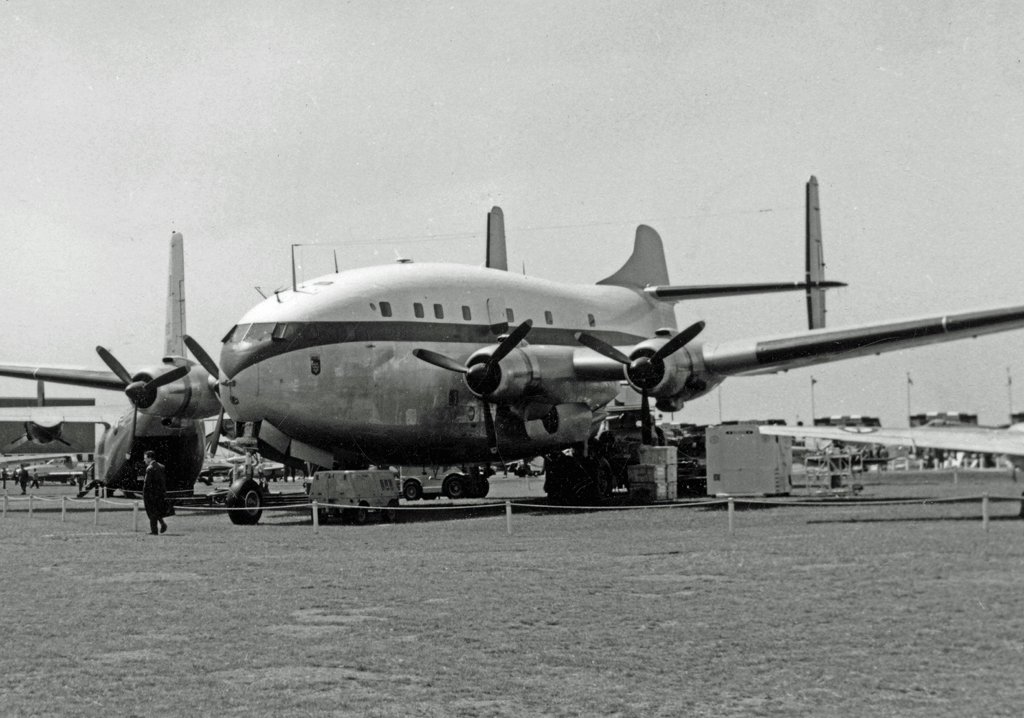
Three pre-production Br.761s variants were manufactured, powered by four 2,020-hp Pratt & Whitney R-2800-B31 radial engines. Twelve production aircraft were ordered by the French government; six destined for Air France, and the other six for the Ministry of Transport. The Breguet 763 production variant, while serving with Air France, had capacity for up to 107 passengers and an elevator between the two floors. Four 2,400-hp Pratt & Whitney R-2800-CA18 engines powered the 763 to a cruise speed of 240 mph at 10,000 ft. The Provence had a range of 1,240 nmi and a 1,140 fpm rate of climb.
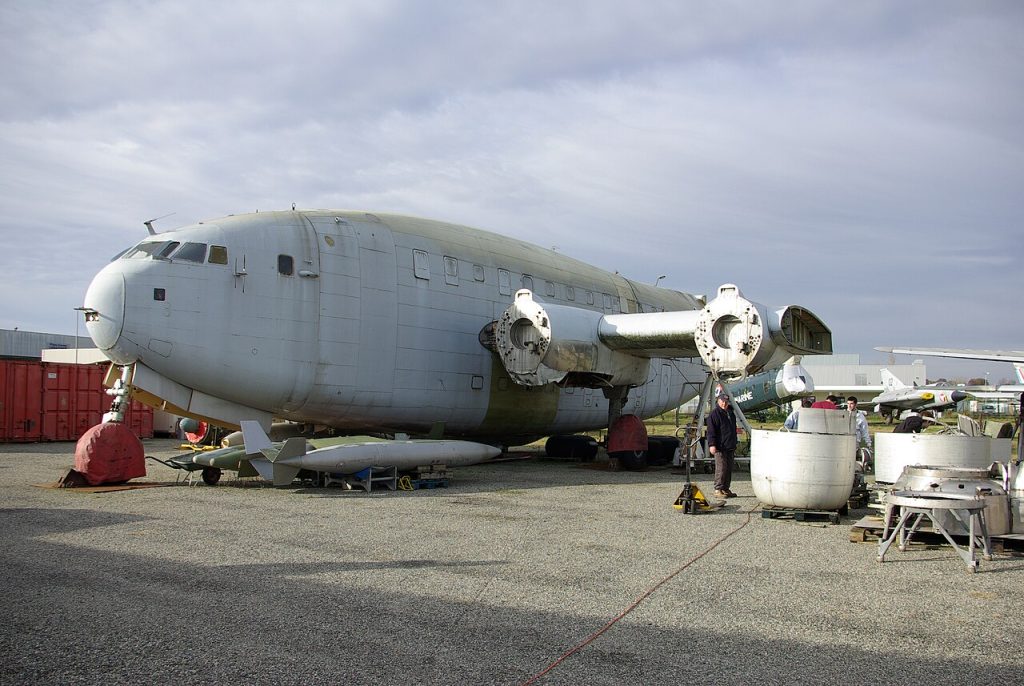
In addition to Air France, the French Air Force and Navy operated the Breguet Deux-Ponts. So too did United Kingdom-based Silver City Airlines. Breguet further developed the 763 into the 764, which was a proposed anti-submarine variant to be used by the French Navy. One of the prototype 761s was converted for this purpose, but the project was ultimately abandoned. A 765 Sahara variant was built, which was a freighter version for the French Air Force. Four 765s were made, flying under the power of four 2,500-hp Pratt & Whitney R-2800-CB17 radial engines. Three Deux-Ponts series aircraft survive today, only one of them a Br.763 variant. Formerly with Air France, Br.763 c/n 6 – F-BASS, serves as a restaurant at Aéroclub de Chaubuisson’s aerodrome in Fontenay-Trésigny, France.