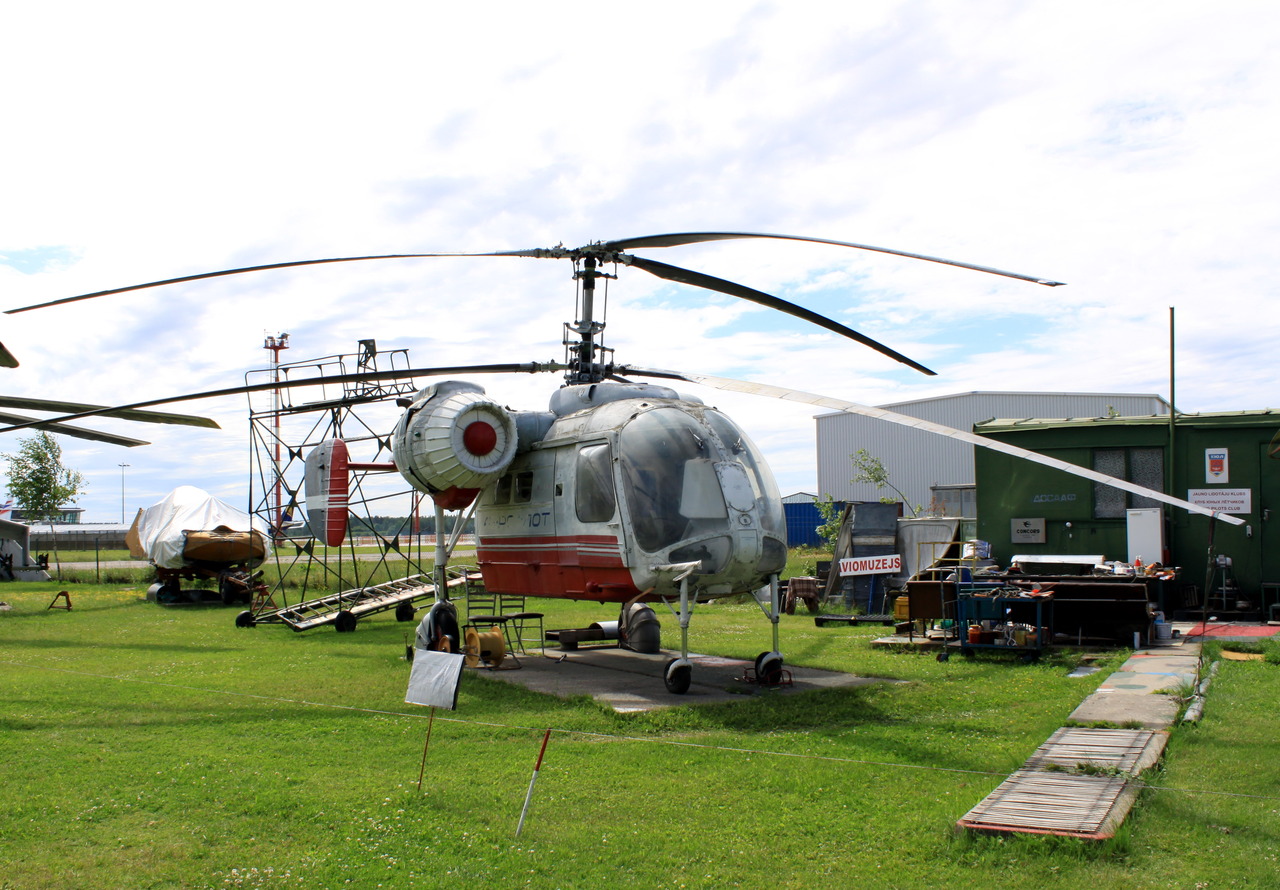
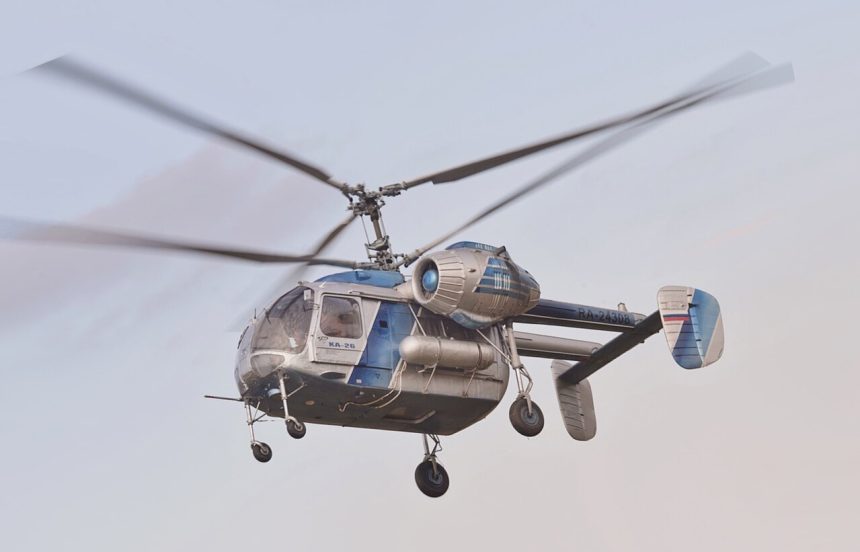


On this day in aviation history, 61 years ago (August 18, 1965), the first flight of the Kamov Ka-26 took place. Known to NATO as the “Hoodlum,” the Ka-26 was a light utility helicopter distinguished by Kamov’s characteristic coaxial rotor system. Unlike most helicopters, the Ka-26 was powered by two piston engines and featured an interchangeable rear cabin that allowed the aircraft to perform a variety of roles. The Ka-26’s unusual design centered around versatility. Its fixed cockpit could be fitted with removable modules configured for passengers, medical evacuation, cargo, or agricultural work. The helicopter could even operate without the cabin installed. Production began in 1969, and the Ka-26 became particularly successful in agricultural work, where its coaxial rotors produced a symmetrical downwash well suited to crop spraying.
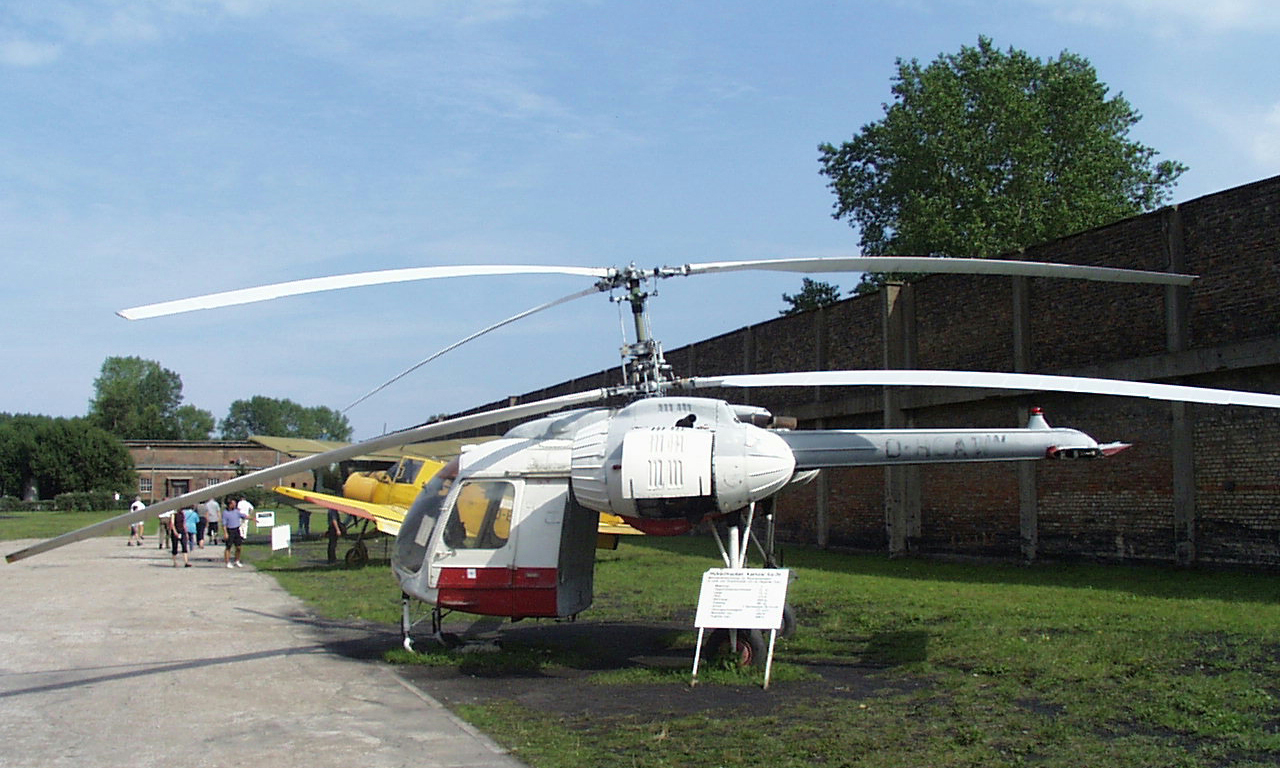
The Ka-26 also saw military and government service throughout the Soviet Union and Warsaw Pact countries. A total of 816 aircraft were produced between 1968 and 1985, and the design was later developed into the turbine-powered Ka-126 and Ka-226. Examples of the original Ka-26 remain in use today. The Ka-26 measures 25 feet 5 inches in fuselage length and uses two 42-foot 8-inch diameter coaxial main rotors. Power comes from two 325-horsepower Vedeneyev M-14V-26 radial engines. The helicopter has a maximum speed of 110 mph, a range of 250 miles carrying seven passengers, and a service ceiling of 9,800 feet. Depending on configuration, it can carry six or seven passengers or more than 2,400 pounds as an external load.