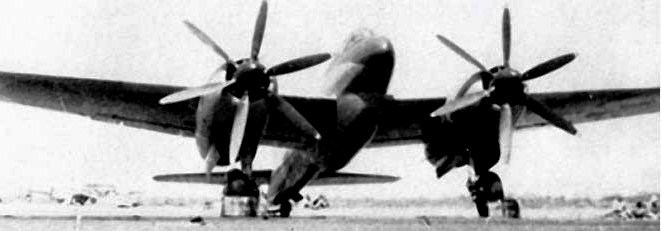
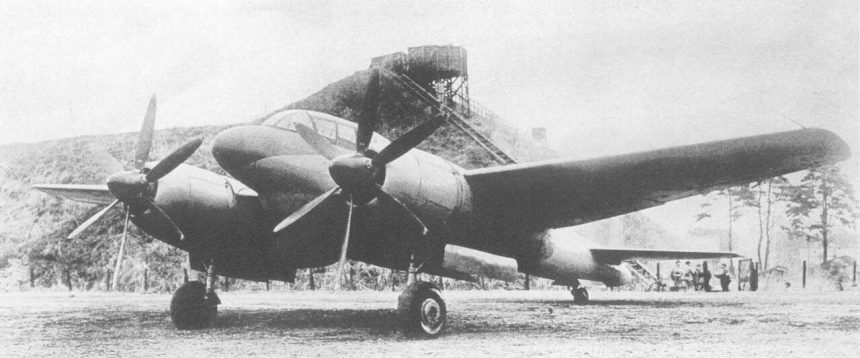


On this day in aviation history, 81 years ago (April 8, 1945), the first flight of the Rikugun Ki-93 occurred. The Ki-93 was a Japanese twin-engined fighter prototype that was developed during World War II by the Army Aerotechnical Research Institute. The AARI was known in Japanese as Rikugun Kokugijutsu Kenkyujo, abbreviated as Giken. Established in 1941, the intent of the institute was to study advanced military aircraft. The Ki-93 was Giken’s attempt to create a heavy fighter armed with a large calibre cannon, one that could fly in anti-shipping and bomber destroyer roles.
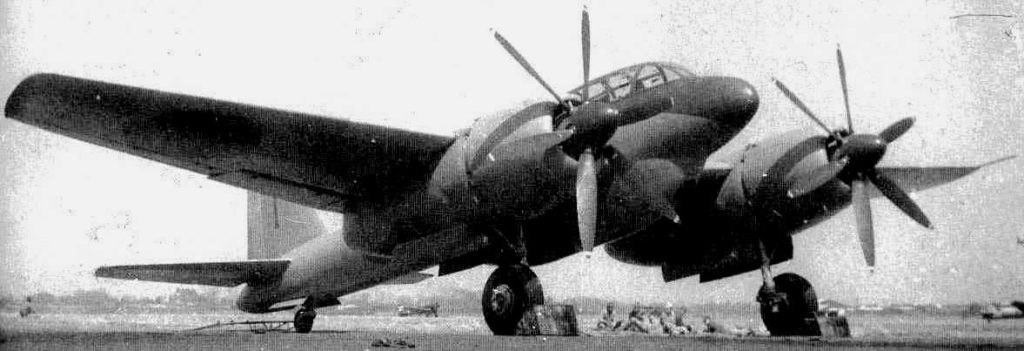
The design of the Ki-93 was passed to the First Army Air Arsenal (Dai-Ichi Rikugun Kokusho, or, Kosho) for further study and augmentation. The Kosho team modified the design of the Ki-93, adding a heavy cannon and upgrading the engines to the more powerful 1,970-horsepower Mitsubishi Ha-214 18-cylinder radial engines. On February 22, 1943, approval was granted for the manufacturing of Ki-93 prototypes. This heavy fighter was an all-metal low-wing monoplane design, flown by a crew of two sitting in tandem. The Ki-93 featured a laminar-flow section wing and a ventral gondola underneath the fuselage to fit the large cannons.
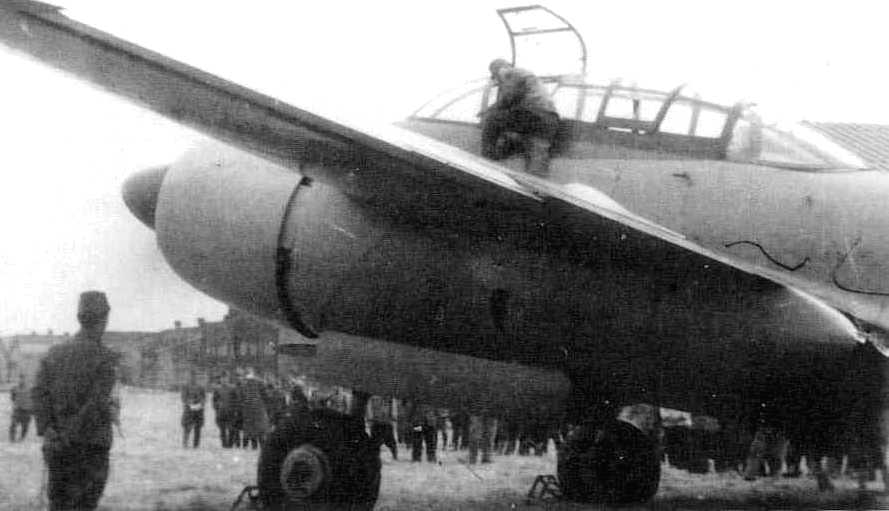
Two variants of the Ki-93 were planned. First was the Ki-93-Ia bomber destroyer, to be armed with one 57 millimeter and two 20 millimeter cannons. Second was the Ki-93-Ib anti-shipping aircraft, planned to carry a 75 millimeter gun in the gondola, and also have capacity for two 550-pound bombs. The Ki-93’s twin Mitsubishi Ha-214 engines swung unique 6-bladed VDM propellers that were 12 feet and 6 inches in diameter. Cruise speed was found to be 220 mph for the Ki-93, while the aircraft’s maximum airspeed topped out at 388 mph. The aircraft had a range of 1,600 nautical miles and a service ceiling of 39,530 feet.
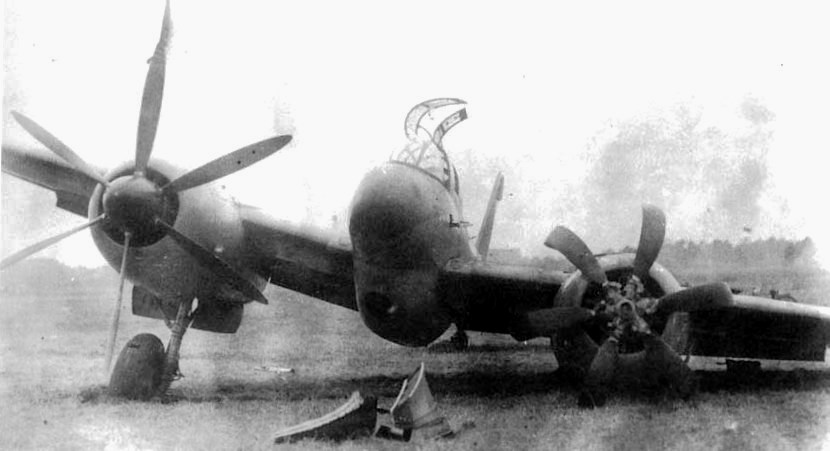
The Ki-93’s first flight on April 8, 1945, was flown by Lt. Moriya and 2nd Lt. Ikebayashi from Tachikawa airfield. During the flight, the aircraft’s low-speed handling characteristics were tested. The Ki-93 was found to be overweight and underpowered; the Ha-214s only produced 1,970 of the expected 2,400 horsepower each. After the 20-minute “discovery flight,” the sole Ki-93 experienced a ground-loop after the pilot undershot the runway. The undercarriage, props, and engine mounts were all tweaked in the accident. Although repairs were made within four weeks, a B-29 bomber raid over Tachikawa destroyed the hangar that the Ki-93 was stored in, effectively ending the program and the aircraft’s future.