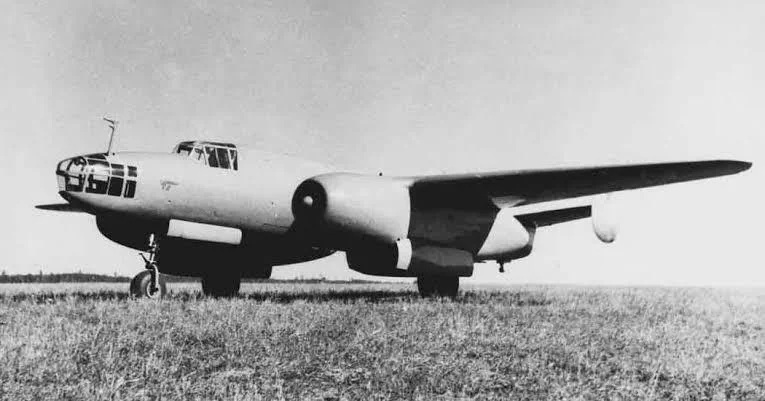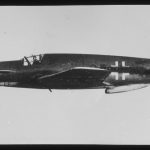
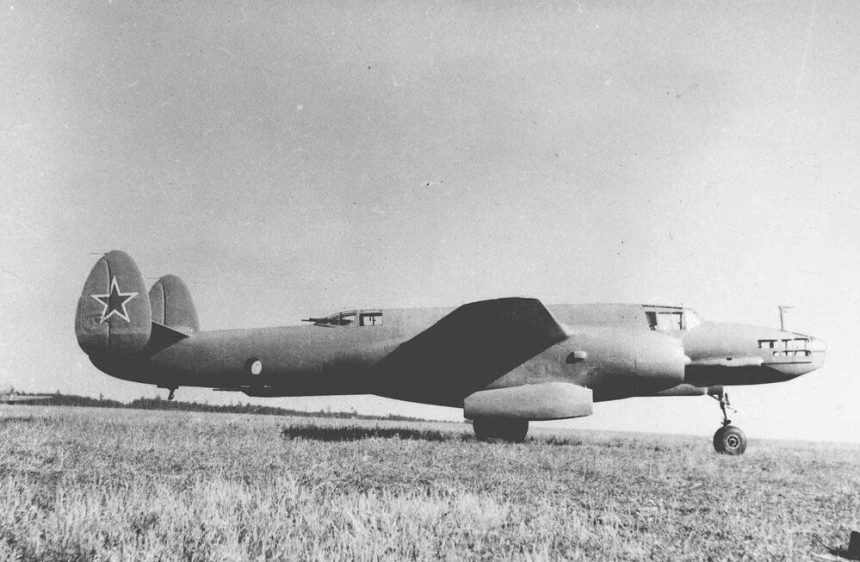

On this day in aviation history, 79 years ago (June 27, 1947), the first flight of the Tupolev Tu-12 took place. Known in development under the designation Tu-77, the Tu-12 was a Soviet jet-powered medium bomber prototype. The Tu-12 was a further development of the successful Tu-2 Bat, which proved its might in the WWII. Tupolev worked in conjunction with the Soviet Air Force (VVS) to bring the Tu-77 along, as the bomber was to serve as a tool for understanding the requirements of a successful medium bomber jet. Tupolev had been working on a separate jet bomber, the Tu-73, but faced delays due to engineering limitations. The company suggested that the already proven Tu-2 bomber be further developed into a jet variant. The Tu-2 was re-engined with two imported British Rolls-Royce Nene turbojet engines (or a Soviet “copy” Klimov RD-45), each with 5,000 lbf. Six prototypes were “built” from previous Tu-2s. In addition to the engine swap, wing dihedral was changed, the fuselage was lengthened, a tricycle landing gear system was installed, and controls/control surfaces were strengthened. Flight testing revealed the Tu-12 to have “a considerable gain in speed, an improved rate of climb, a higher service ceiling, but poorer field performance and a considerably greater fuel load required to achieve the same range as the Tu-2.”
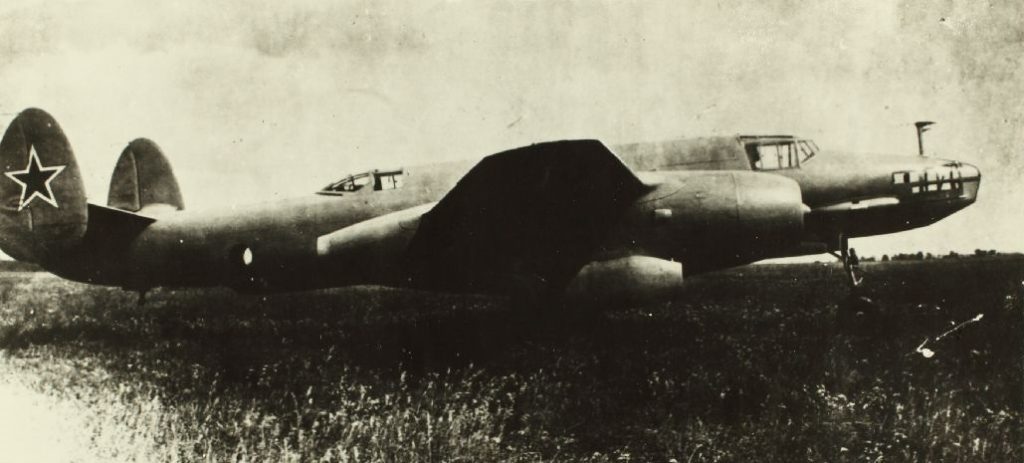
The Tu-12 did not have a pressurized cabin, which limited the service ceiling and overall effectiveness of the Tupolev prototype as a medium bomber. A lack of deicing equipment also stood in the way of the Tu-12’s potential. At high velocity, the turret-mounted VUB-68 and Lu-68 guns were nearly impossible to manipulate. The fixed NS-23 cannon in the nose caused vibrations severe enough to make the navigator’s equipment inoperable, and it also damaged the cabin’s glazing. The Identification Friend or Foe (IFF) system worked, at the expense of a functioning intercom and radios. Trials were conducted against MiG-9 and Yak-23 jet fighters, which were valuable for gathering information on the fighters’ armament and the bombers’ defensive equipment. A crew of five would have served aboard the Tu-12, which had a maximum airspeed of 487 mph. The Tu-12 had a range of 1,188 nmi and a service ceiling of 37,305 ft. In addition to a gun and a cannon, the Tu-12 could be armed with 6,614 lbs of bombs.