






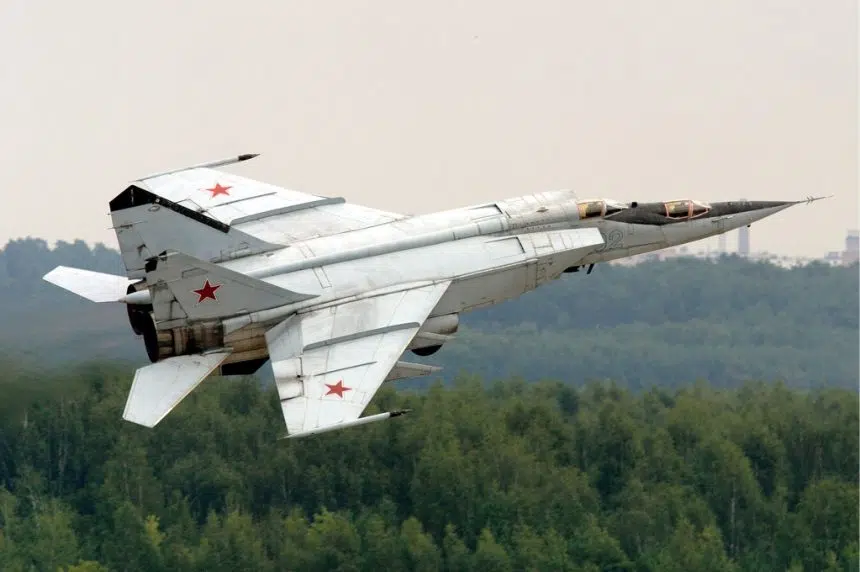


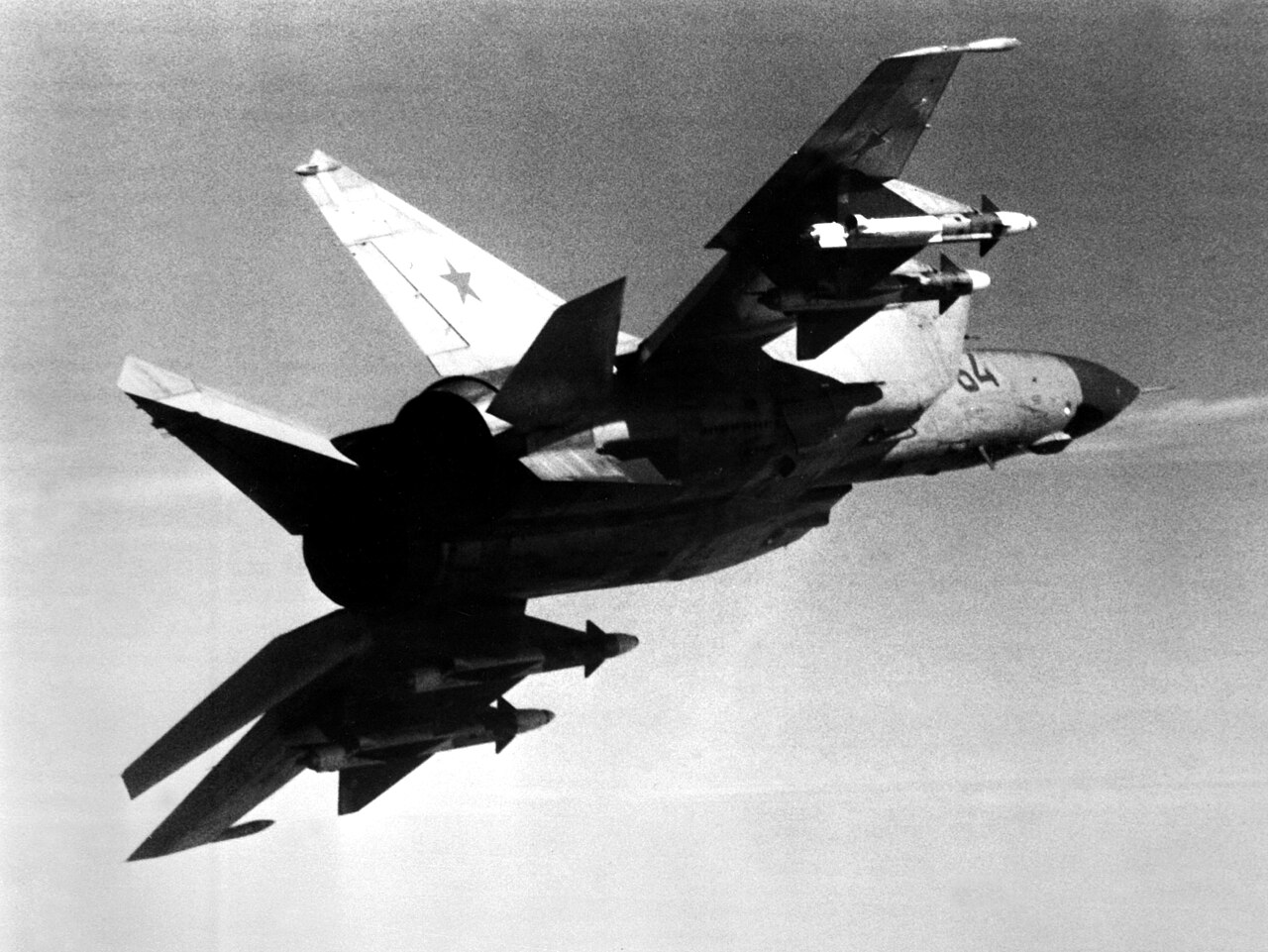
On this day in aviation history, 50 years ago (September 6, 1976), Soviet Air Defence Forces pilot Lieutenant Viktor Ivanovich Belenko defected to the West by flying a MiG-25P Foxbat interceptor to Japan. Landing at Hakodate Airport on the island of Hokkaido, Belenko delivered one of the Soviet Union’s most closely guarded military aircraft directly into Western hands. Belenko departed Chuguyevka Air Base in the Soviet Far East during a training flight and descended to low altitude to avoid Soviet radar coverage. Crossing the Sea of Japan, he initially intended to land at Chitose Air Base but was unable to locate it. With his fuel supply nearly exhausted, Belenko instead headed for Hakodate’s civilian airport. The MiG-25 touched down at high speed, overran the runway, and came to rest near the edge of the airport.

Belenko requested asylum in the United States, while his aircraft became an extraordinary intelligence opportunity. Japanese and American specialists extensively examined and dismantled the Foxbat, discovering an aircraft built largely from nickel steel rather than the titanium construction many Western analysts had expected. Its electronics made extensive use of vacuum tubes, while its design emphasized tremendous speed and altitude performance rather than maneuverability. The aircraft was eventually returned to the Soviet Union in 30 crates, while Belenko settled in the United States and later became an American citizen.

The MiG-25P was powered by two Tumansky R-15B-300 afterburning turbojets producing approximately 22,500 pounds of thrust each. The Foxbat could sustain speeds around Mach 2.8 and operate at altitudes approaching 80,000 feet. Its primary armament consisted of four large air-to-air missiles carried beneath the wings. Although the West had once feared the MiG-25 as an advanced “super-fighter,” Belenko’s aircraft revealed it to be a highly specialized interceptor optimized to attack fast, high-flying targets.













Another example of the West grossly overestimating the capabilities of the Soviet military. The lack of advanced electronics in 1976 was a stunning finding. To my understanding Russia still doesn’t have its own production of laptops?
Not an aviation expert, however, it sounds likeva plane designed to “down” an SR-71 or equal?
When the Foxbat is loaded with four AA-6 Acrids, its top speed, and interception altitude are severly limited, plus, its radar system can’t track, and prosecute an interception on the Blackbird, and the AA-6 Acrid doesn’t have the energy to chase down the SR-71, as well.
Victor is a true hero of freedom and understanding that communism is horribly wrong for humanity . Thank god he was so brave !!!
A very brave man. I wonder what became of his family.
My thoughts too
I believe that the soviets used valve radio equipment to avoid damage from EMP after a nuclear detonation but then I stand to be corrected.
Our form of gov. Isn’t so great either at this time