





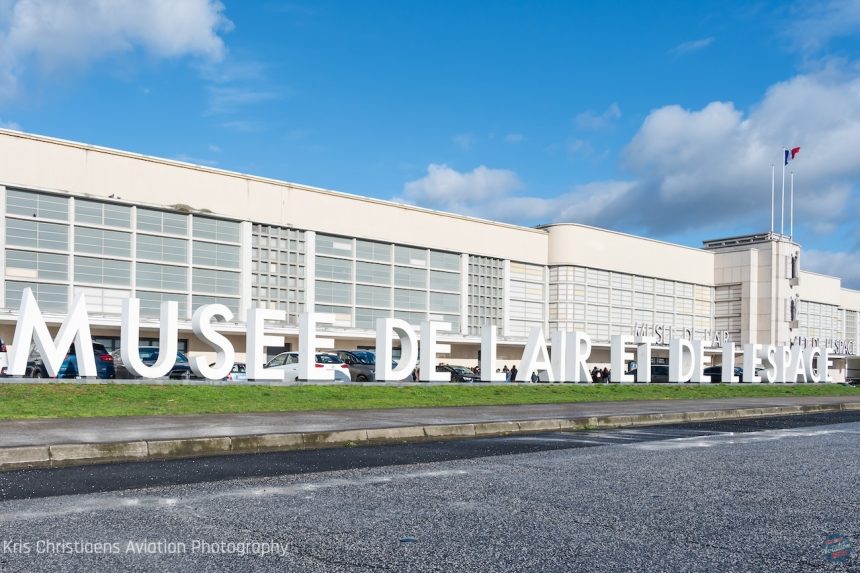

France’s National Air and Space Museum, formally called the Musée de l’Air et de l’Espace, ranks among the world’s foremost aviation museums. Situated at Paris–Le Bourget Airport just northeast of the city, it occupies a historic airfield that was central to the early days of commercial flight. More than a conventional museum, it serves as a sweeping record of humanity’s journey through the skies, from the first tentative balloon experiments to the age of space exploration. Founded in 1919, the museum is one of the oldest of its kind, born in the immediate aftermath of the First World War at a moment when aviation had demonstrated its profound military and technological potential. The collection began in temporary premises near Paris before gradually moving to Le Bourget in the 1970s, following the relocation of the airport’s commercial operations. The move gave the museum the room it needed to house large aircraft and build a thorough, lasting exhibition. Today it spans several hangars, the elegant Art Deco terminal built in 1937, and wide stretches of outdoor tarmac. Among the museum’s greatest strengths is its chronological layout. Visitors follow the story of flight from its beginnings, moving past delicate early planes built from wood, wire, and fabric. These fragile machines capture the trial-and-error spirit of early aeronautics, when pioneers were still wrestling with the fundamentals of lift, propulsion, and control. Encountering them in person makes clear just how daring and uncertain those first steps into the air really were.
 Concorde Hall
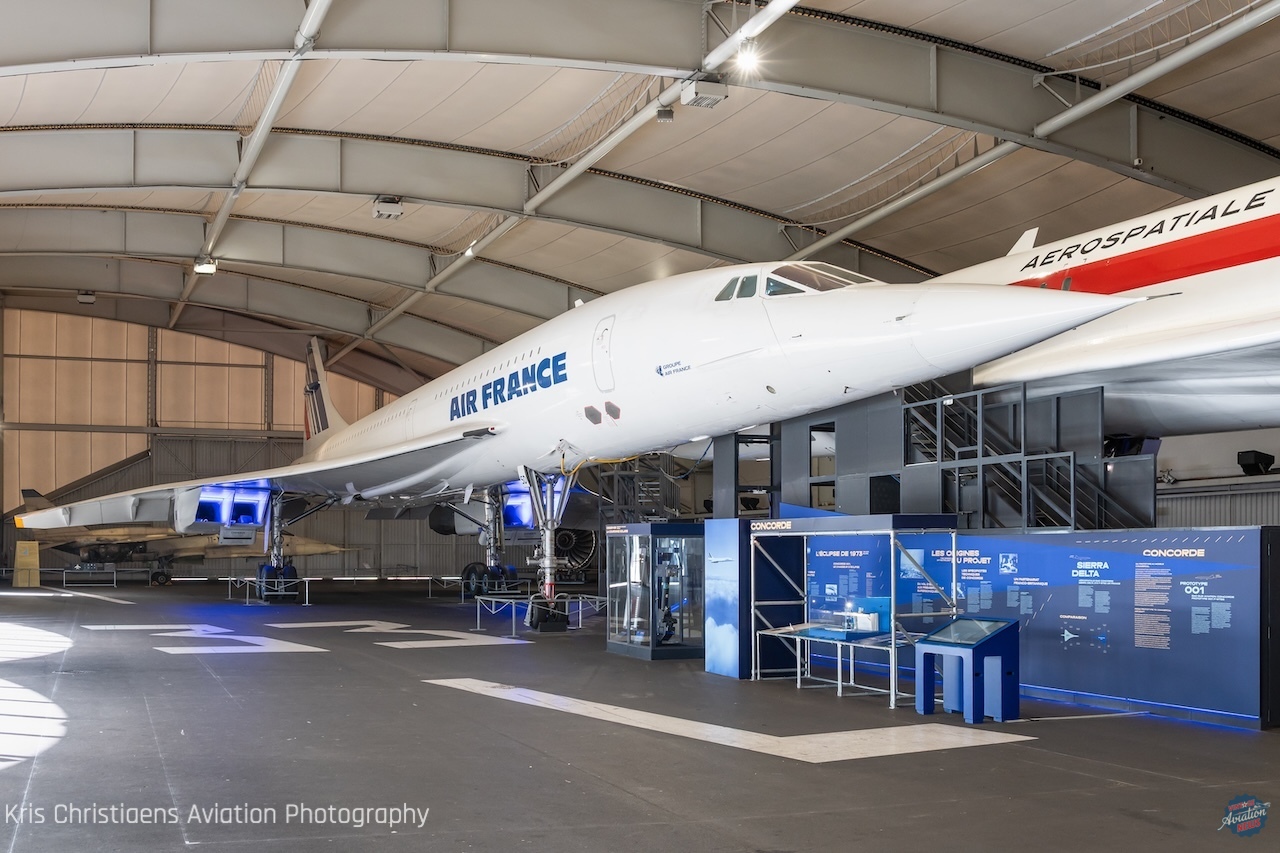
Among the Musée de l’Air et de l’Espace’s most captivating spaces is its Concorde Hall, devoted to one of the most audacious and recognizable aircraft ever conceived. The hall houses both Concorde 001, the original French prototype, which took its maiden flight in 1969, and the Air France production aircraft Concorde F-BTSD, affectionately known as “Sierra Delta.” Having both airframes together is a rare treat, allowing visitors to trace the journey from experimental prototype to polished operational machine, a comparison few aviation museums anywhere in the world can offer. What sets this hall apart is how close it brings you to the aircraft. Visitors can step aboard, pass through the narrow passenger cabin, and make their way into the cockpit. The interior tells its own story. The fuselage is long and tapered, shaped to minimize supersonic drag. The windows are strikingly small, a necessary concession to the thermal stresses of sustained high-speed flight. The seating is tight, a clear statement of Concorde’s guiding principle: velocity above all else. The hall also places Concorde in its broader historical context. Born from a joint venture between Aérospatiale and the British Aircraft Corporation, the aircraft embodied the aerospace ambitions of the Cold War era and stood as a symbol of Anglo-French industrial partnership. It entered commercial service in 1976 and flew for nearly three decades, carrying passengers across the Atlantic in roughly three and a half hours at more than twice the speed of sound before retiring in 2003.
 Hall Grande Guerre
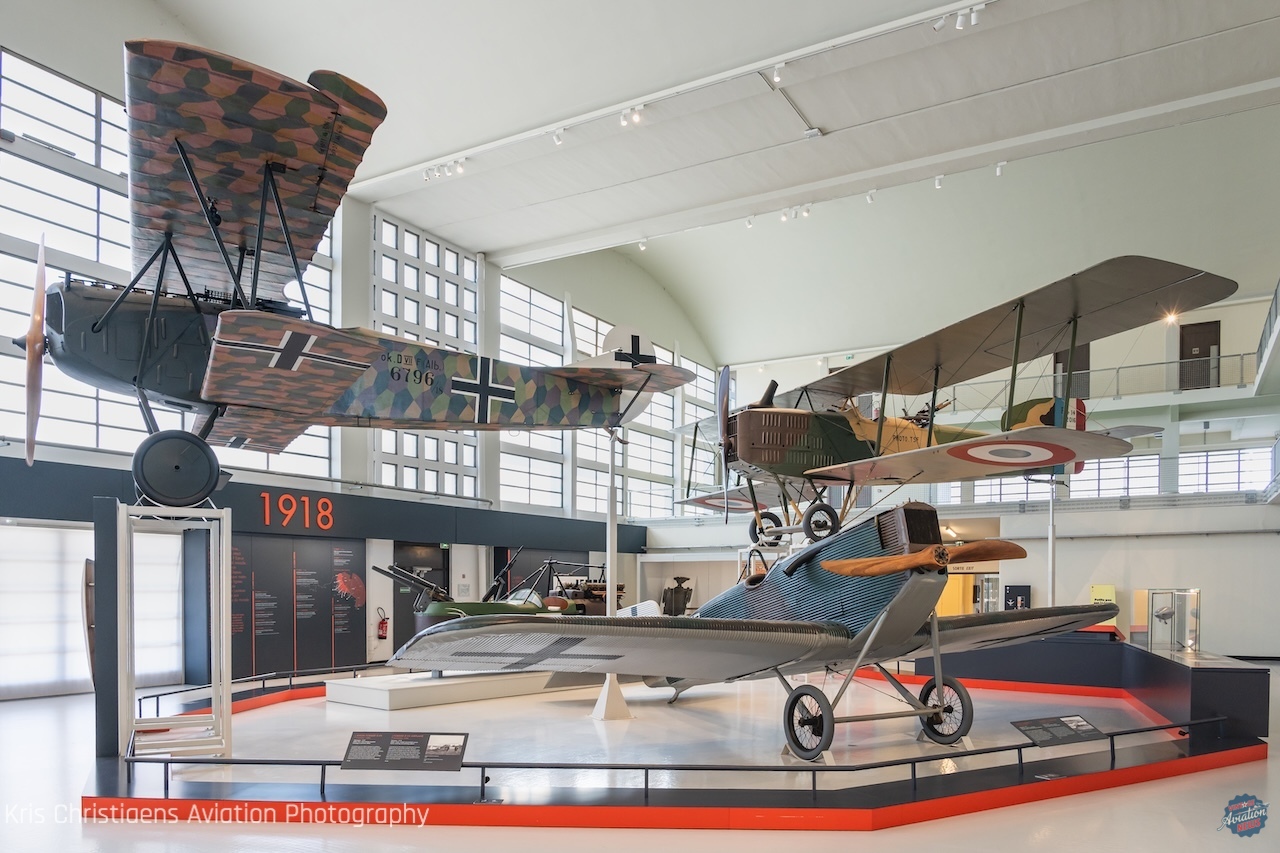
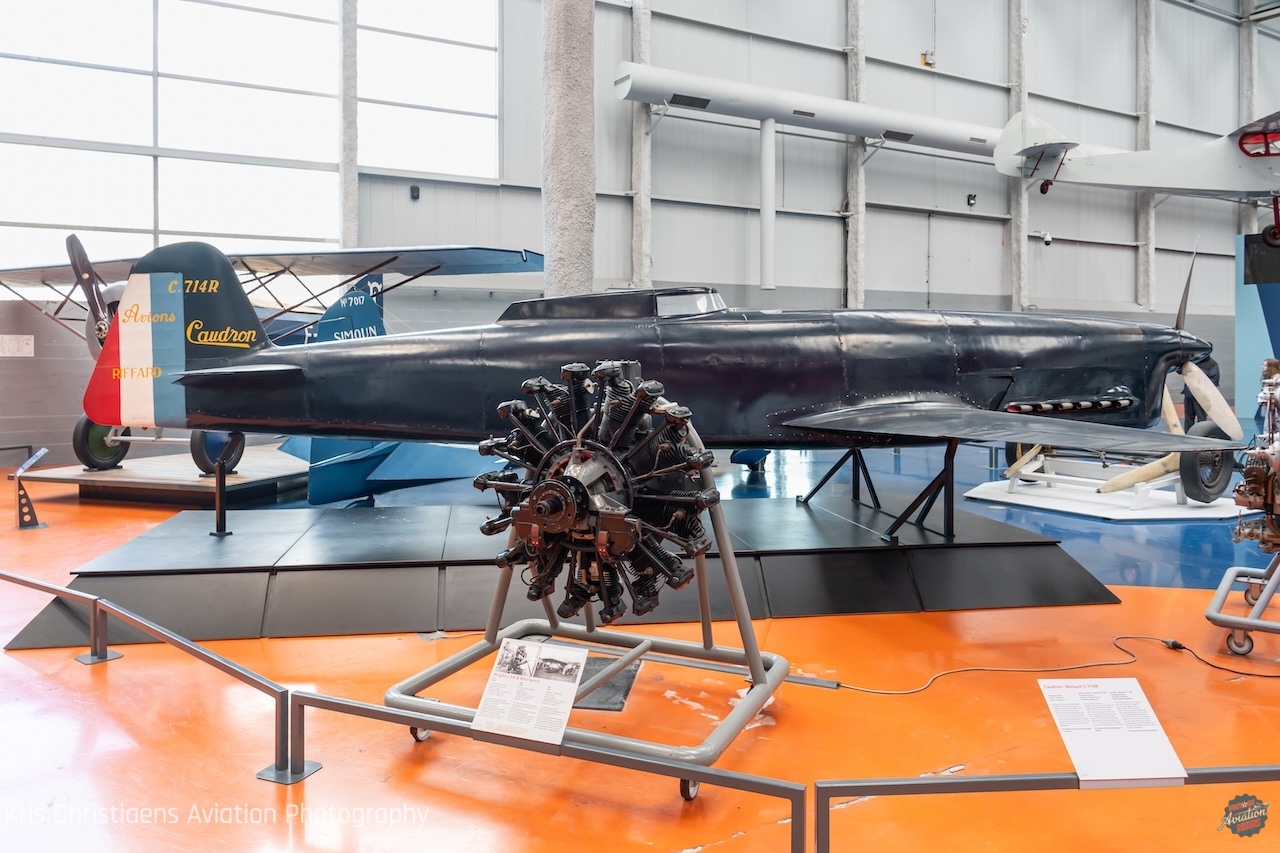
The First World War hall is one of the museum’s most historically charged spaces. It traces the remarkable transformation of aviation across just four years, from 1914 to 1918, as aircraft evolved from fragile observation tools into specialized weapons that would permanently alter the nature of warfare. The hall is arranged both chronologically and technically, helping visitors follow how rapid industrial innovation was driven and shaped by the brutal demands of the trenches. The earliest aircraft on display reflect aviation’s initial role in the conflict: light, difficult-to-handle machines sent up primarily to observe enemy positions and direct artillery fire. As the war ground on, the introduction of synchronized machine guns, more powerful engines, and sturdier airframes gave birth to the dedicated fighter. Among the aircraft on show are the Blériot XI, Voisin III, Nieuport 11, SPAD S.XIII, Fokker Dr.I, and the Sopwith Camel, a lineup that spans several nations and speaks to the fierce technological rivalry playing out above the Western Front. The hall extends well beyond the aircraft themselves. Rotary and inline engines, early gun synchronization mechanisms, pilot uniforms, and reconnaissance cameras fill out the picture, illustrating just how quickly aviation engineering matured under the pressure of war. Visitors can examine the structural logic of wire-braced wings, wooden spars, and fabric skins, construction methods that demanded relentless upkeep and placed extraordinary demands on the men who flew them.
 Hall des Prototypes
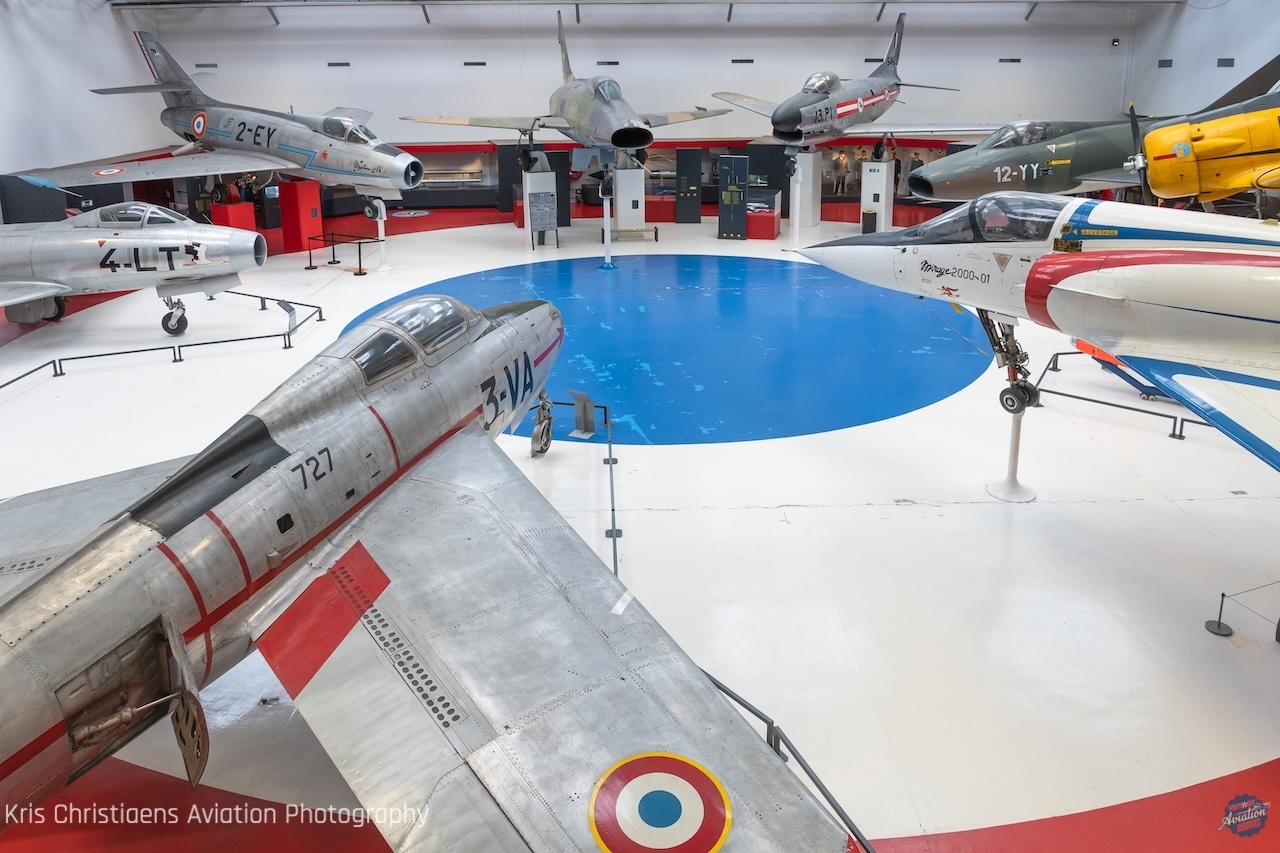
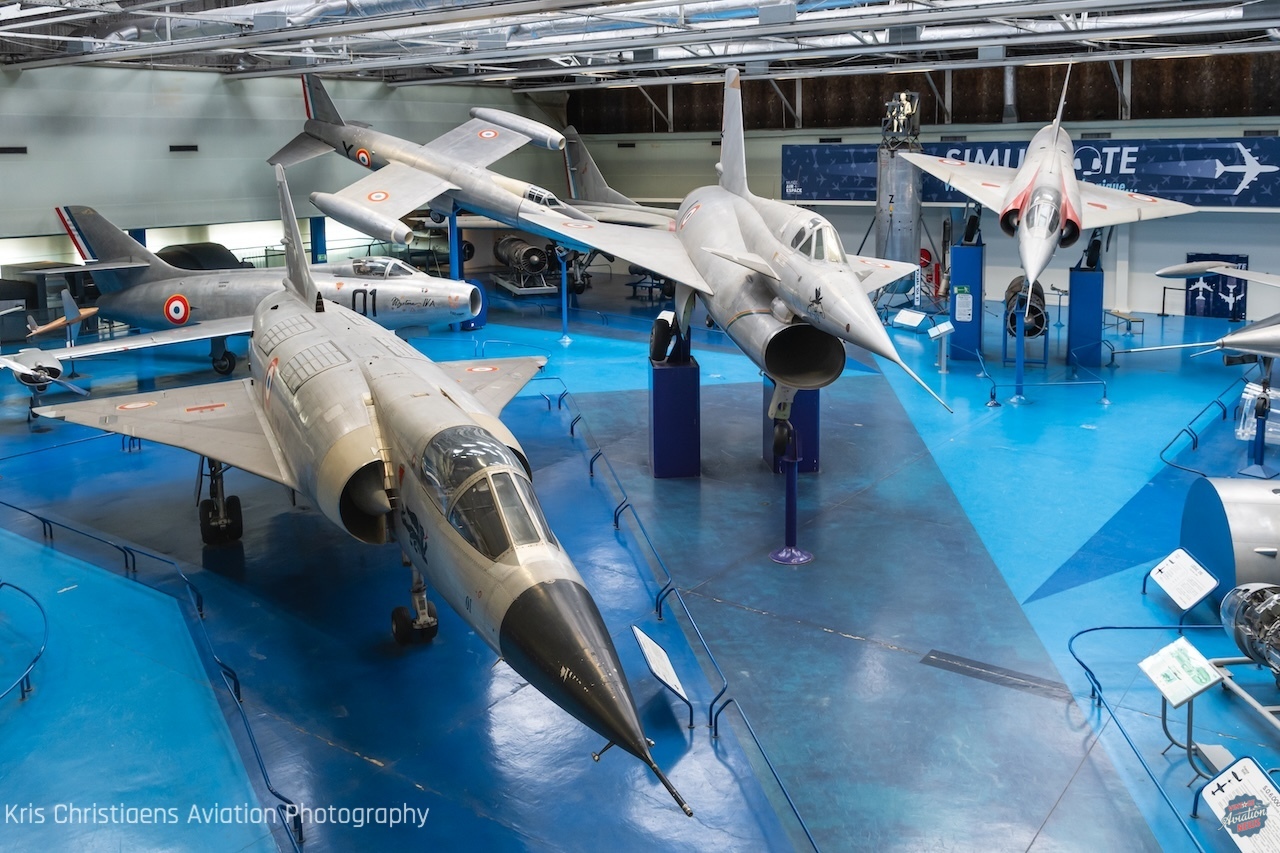
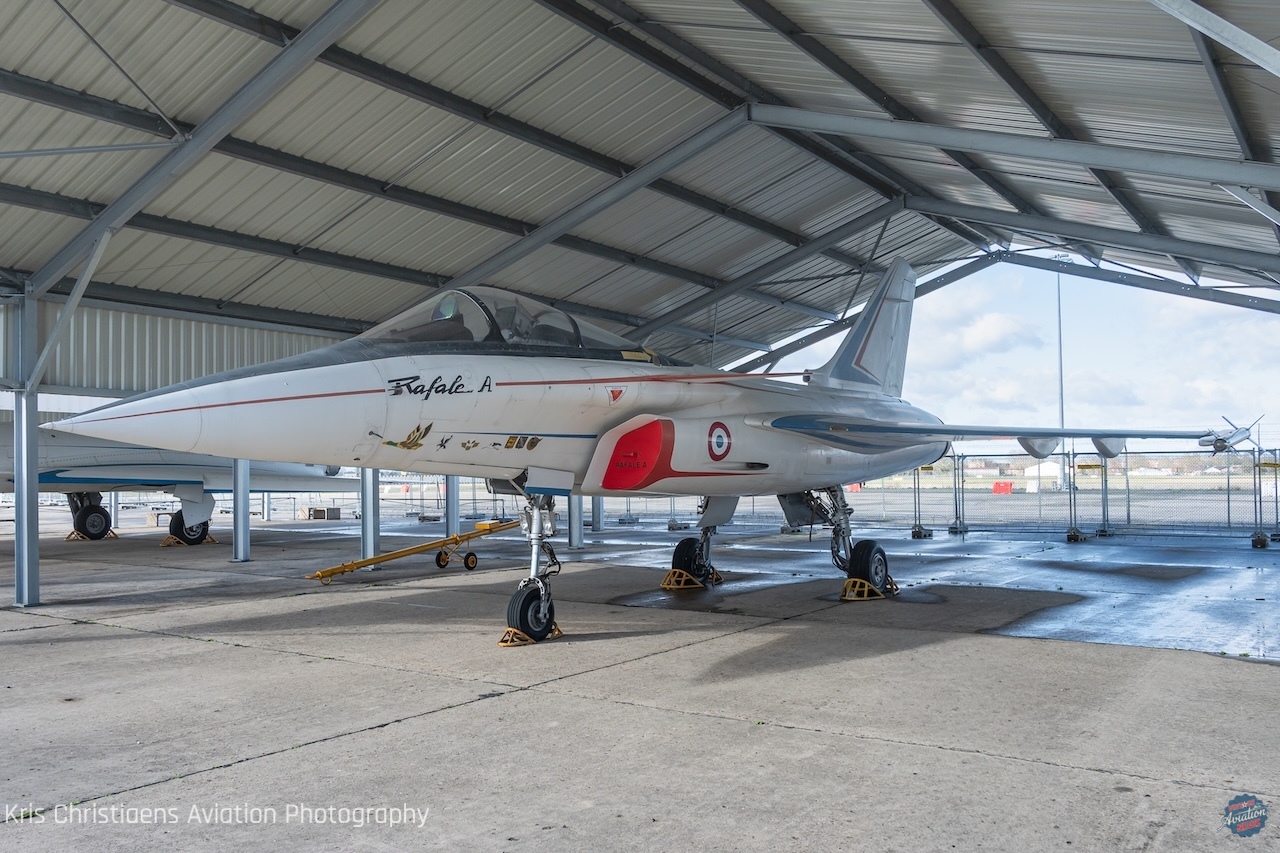
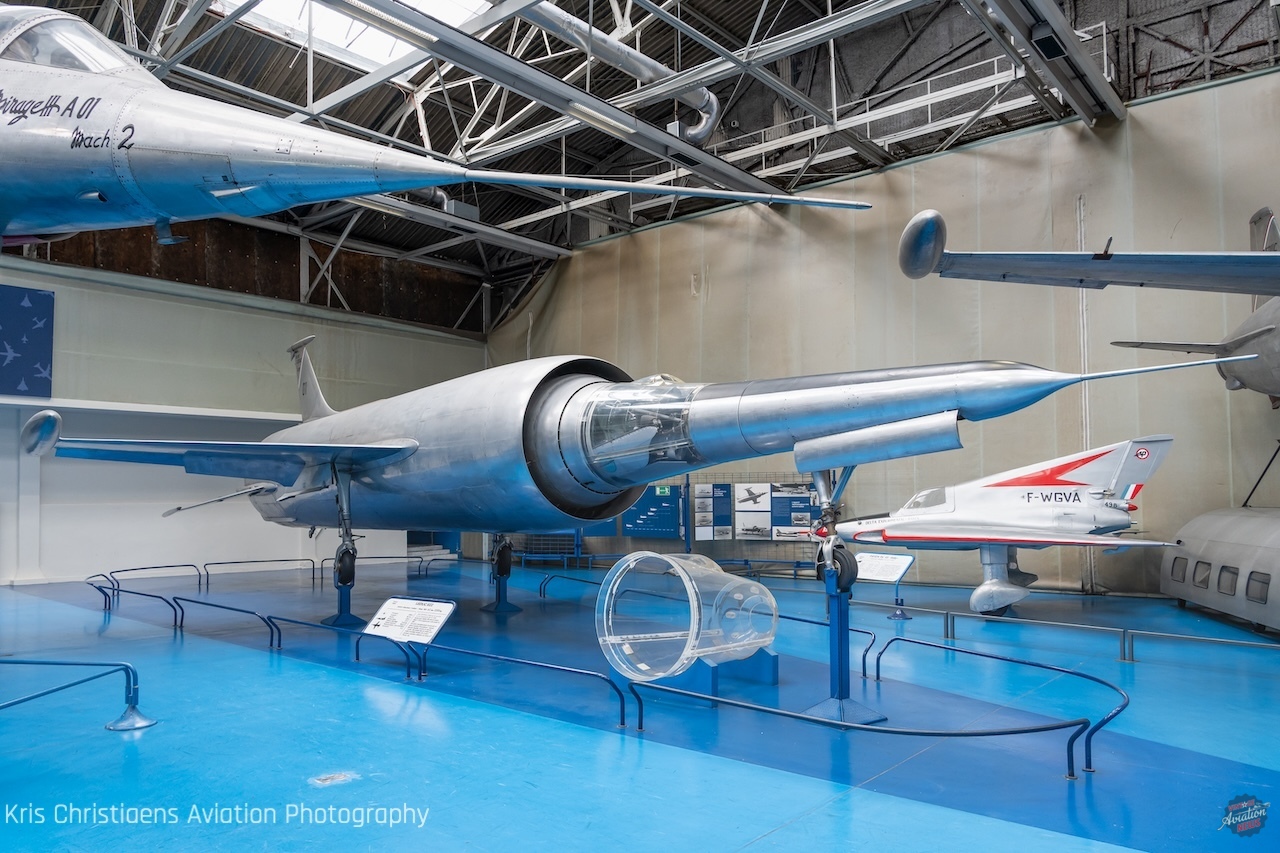
The Hall des Prototypes is one of the museum’s most technically absorbing spaces. Where other galleries trace the arc of aviation history through conflict and chronology, this hall is devoted to something different: experimentation, ingenuity, and the engineering ambitions that never made it to the production line. It is a testament to aeronautical risk-taking, where designers pushed hard against the limits of speed, aerodynamics, and propulsion. The aircraft gathered here were built in tiny numbers, often as single airframes, serving as proof-of-concept machines rather than operational vehicles. Their value lay not in what they became, but in what they demonstrated. The hall makes clear that aerospace progress is rarely linear. Failed or abandoned programs still feed into the broader pool of aerodynamic knowledge, propulsion research, and systems understanding, and many of the ideas tested here quietly shaped the aircraft that followed. Visitors can trace the evolution of wing geometries, fuselage forms, air intake designs, and propulsion arrangements across decades of experimentation. Many of the machines on display carry the unmistakable imprint of Cold War priorities: supersonic performance, high-altitude interception, and missile integration, while others explored more unconventional territory, including vertical and short takeoff capability, ramjet propulsion, or structural configurations that defied convention. Among the aircraft on show are the Nord 1500 Griffon II, the SNCASO SO.9000 Trident, the Dassault Mirage III prototype, the Leduc 022, and the Breguet 941, each representing a distinct moment of calculated aeronautical ambition.
 Hall Pionniers de l’air
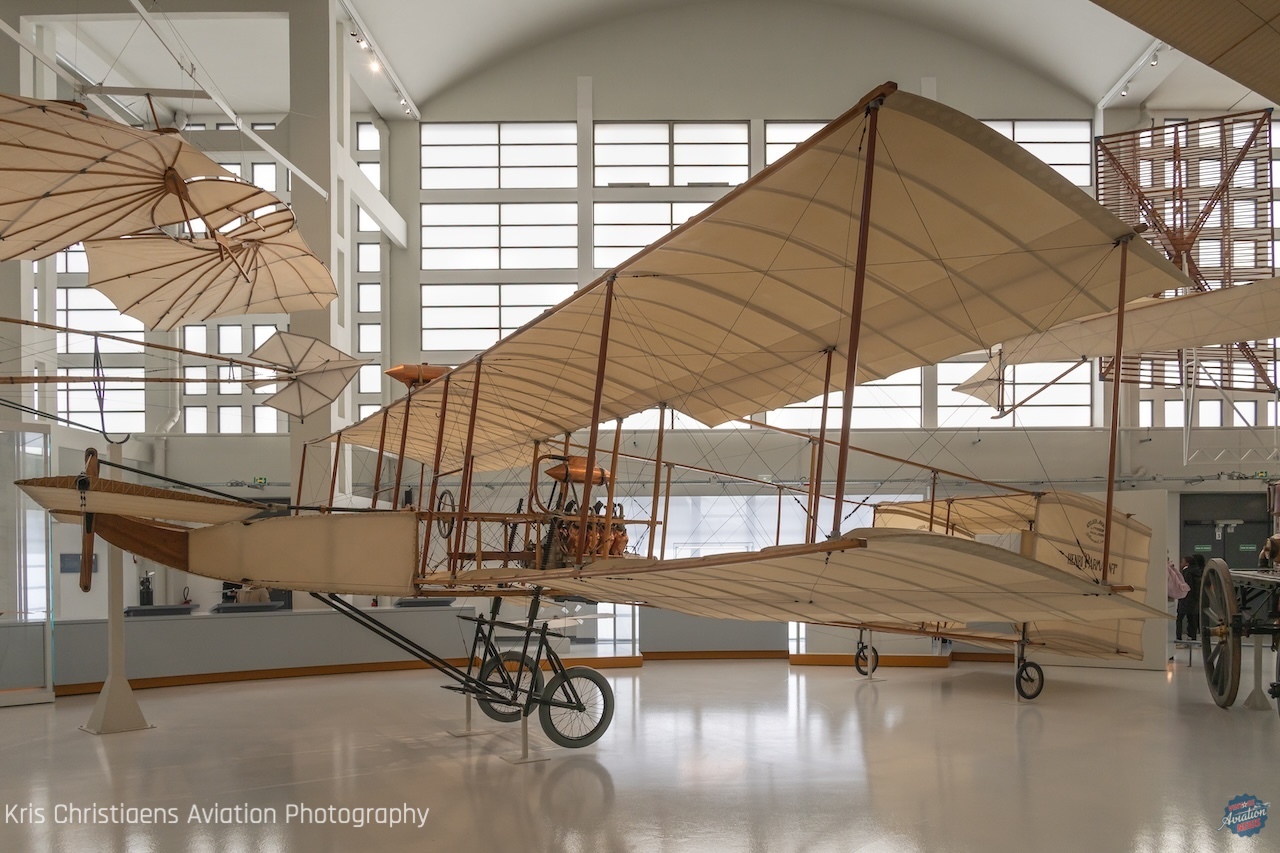
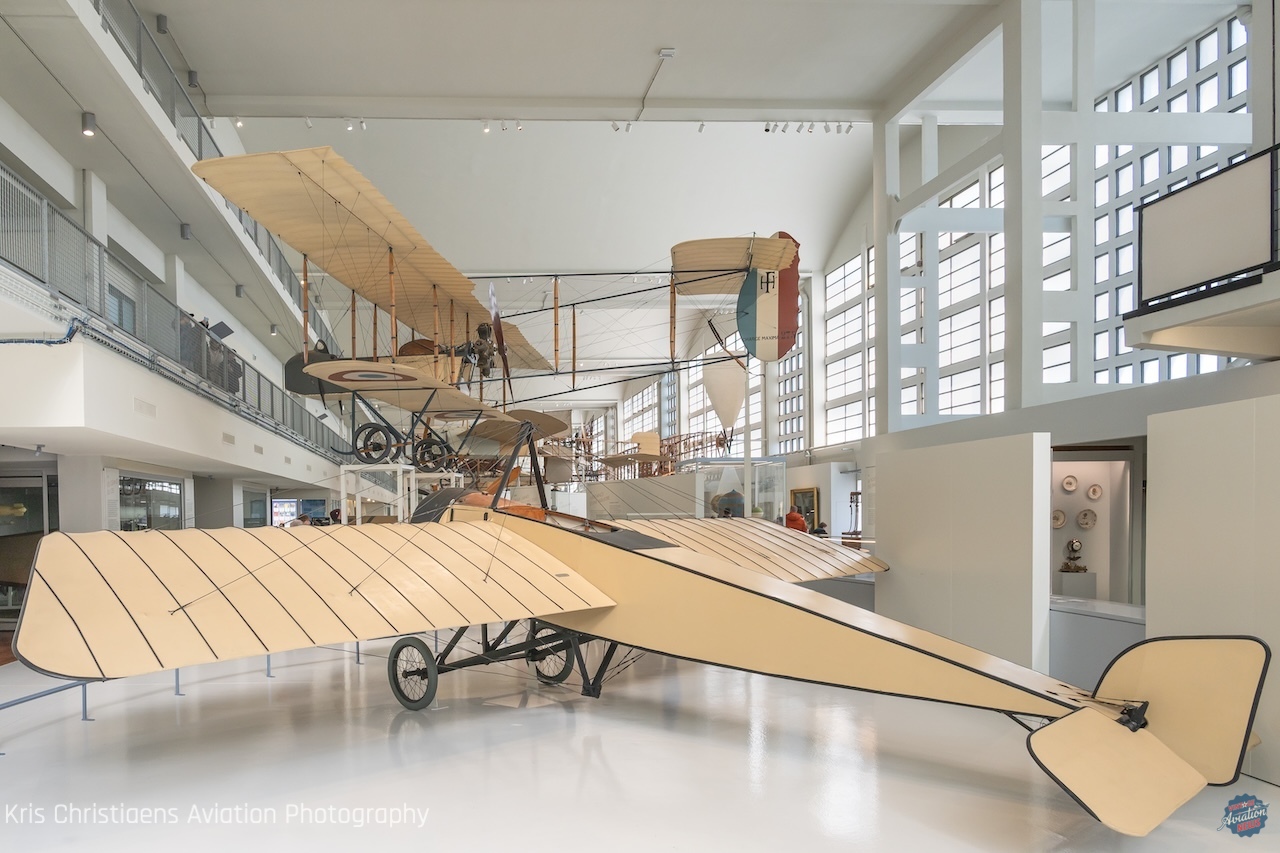
The Hall Pionniers de l’air serves as the museum’s intellectual starting point. Before the jets, before the world wars, before Concorde, there were inventors, engineers, and risk-takers wrestling with a single fundamental problem: how to achieve sustained, controlled, powered flight. This gallery is dedicated to those efforts and to the fragile, improvised machines they produced. The hall centers on the late nineteenth and early twentieth centuries, a time when aviation was still closer to inspired guesswork than established science. Airframes were built from wooden spars braced with wire and skinned in treated fabric. Engines were light but prone to failure. Aerodynamic theory remained incomplete. Every flight carried genuine uncertainty. Among the figures whose work anchors the gallery are Louis Blériot, whose Blériot XI made history by crossing the English Channel in 1909; Gabriel Voisin, whose early biplanes helped place France at the forefront of pre-war aeronautical development; and Henri Farman, whose cross-country flights and endurance records pointed toward a future of increasingly reliable, practical aviation. The hall goes beyond simply displaying aircraft. Exhibits guide visitors through the scientific problems these pioneers had to solve: early wind tunnel work, the challenges of propeller design, studies of wing camber, and the search for engines powerful enough to lift a plane yet light enough not to prevent it. Visitors can follow the gradual shift from intuitive trial and error toward something resembling systematic aerodynamic research. What strikes most visitors is the sheer fragility of the machines on display. Beside the jets and supersonic aircraft elsewhere in the museum, these early planes look almost skeletal. Control depended on wing warping or rudimentary surfaces. Landing gear was minimal. Safety provisions were essentially nonexistent. And yet these improbable constructions achieved the first controlled powered flights and established the foundation upon which everything else was built.
 Tarmac
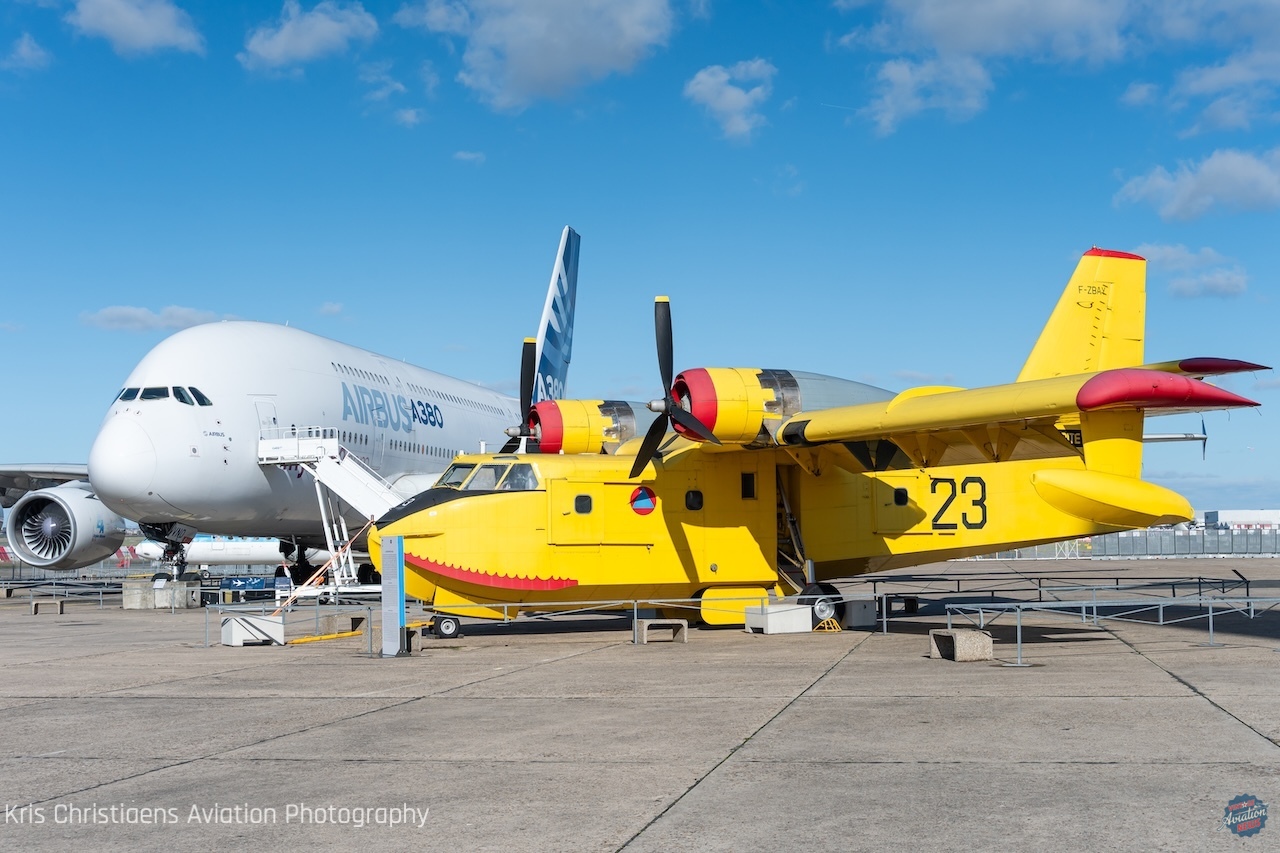
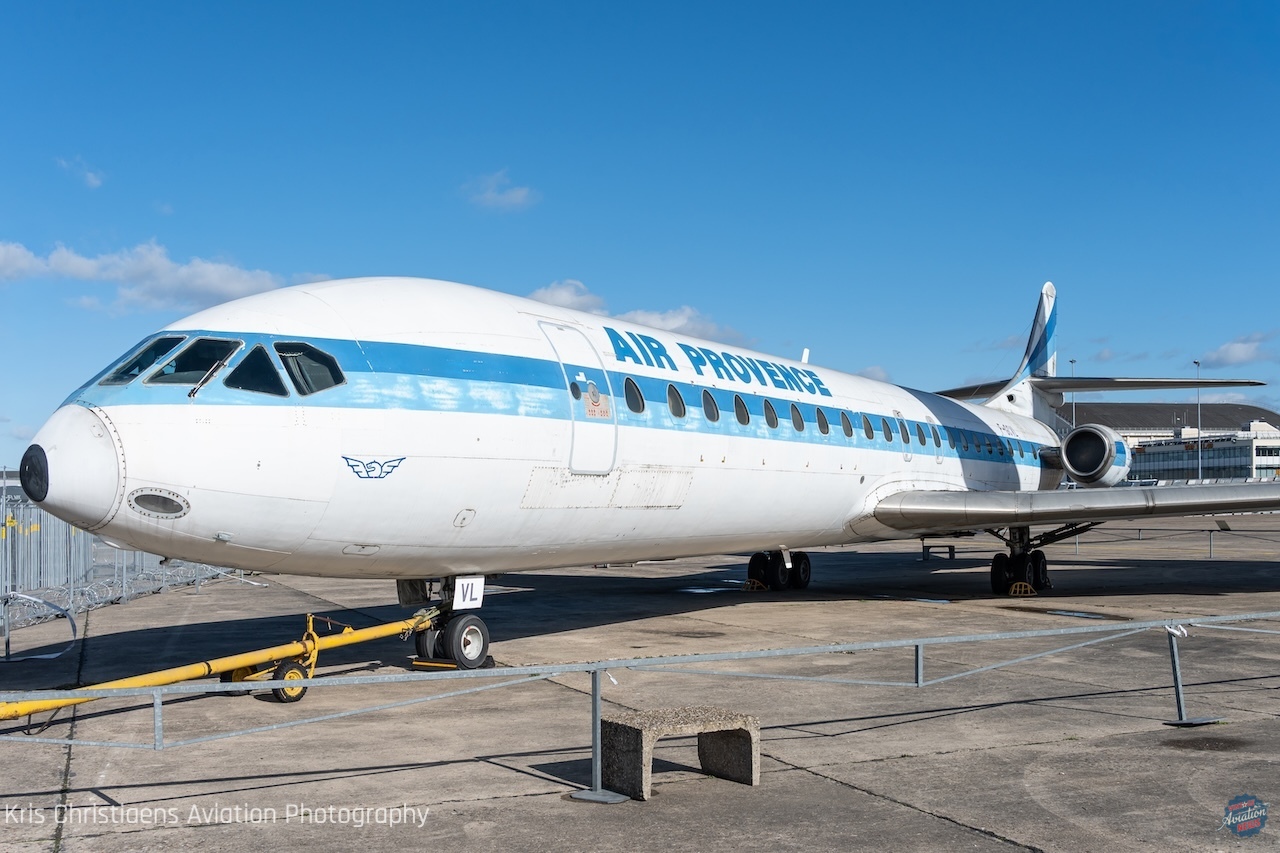
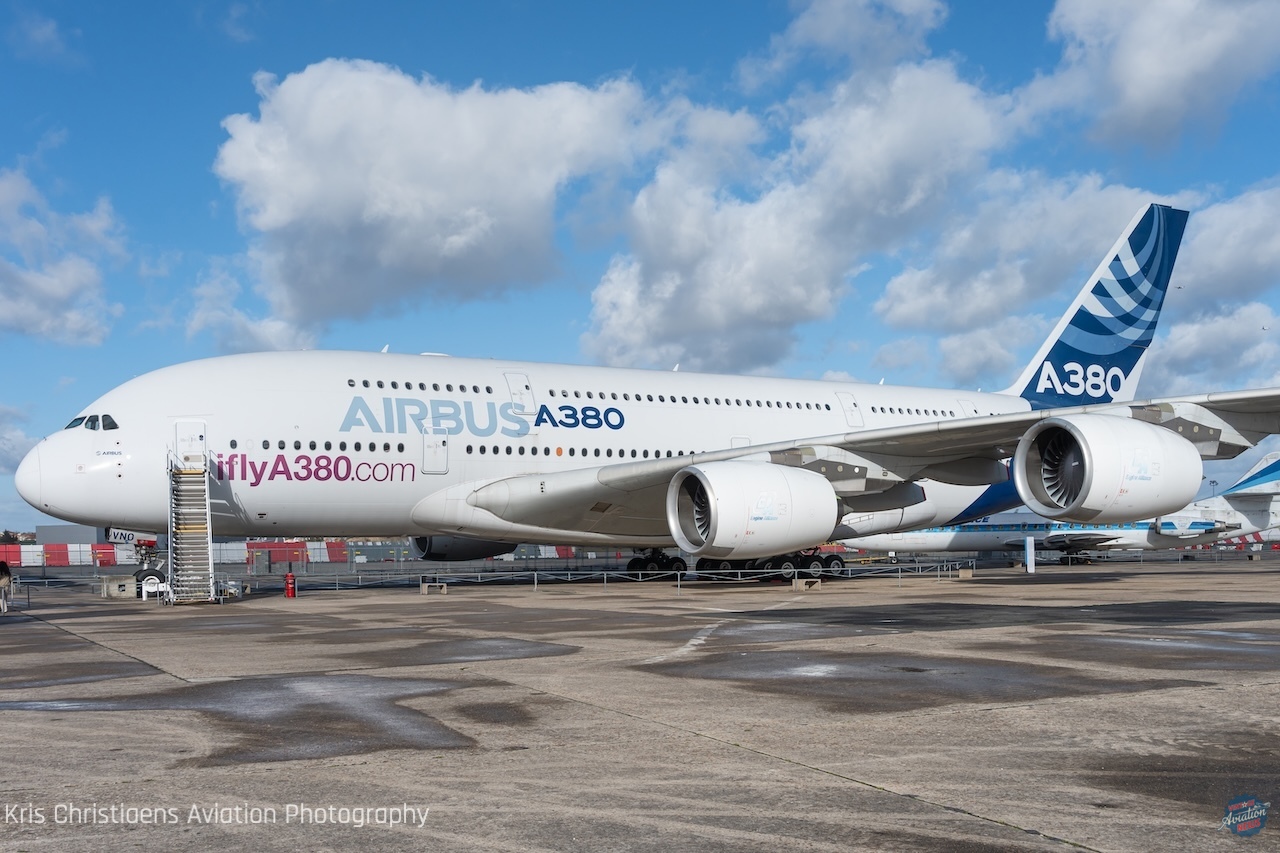
The museum’s outdoor tarmac is among its most arresting spaces. Free from the constraints of indoor galleries, the aircraft here can be taken in at their true scale. Visitors can walk beneath vast wingspans, study landing gear arrangements, examine engine placements, and gain a genuine feel for the proportions of machines that were built to fill the sky. The lineup can shift over time as aircraft rotate in and out for restoration, but the apron consistently offers some remarkable examples. Among the largest presences on the tarmac is a Boeing 747-100, one of the aircraft that defined modern mass air travel. Its appearance here marks the moment aviation crossed into the wide-body era, when long-haul flight became accessible to a far broader public and the emphasis shifted decisively toward high-capacity commercial operation. Equally commanding is the Airbus A380, whose sheer scale sets it apart the moment it comes into view. With a wingspan approaching 80 metres and two full passenger decks, it towers over virtually everything around it, offering visitors a vivid sense of the structural and logistical complexity involved in bringing such a machine into existence and into regular service. Alongside these giants, the tarmac also holds the Dassault Mercure 100, the Canadair CL-215, the Breguet Atlantic, the C-160 Transall, and the Sud-Aviation Caravelle, each representing a distinct chapter in the history of aviation and well worth exploring up close.
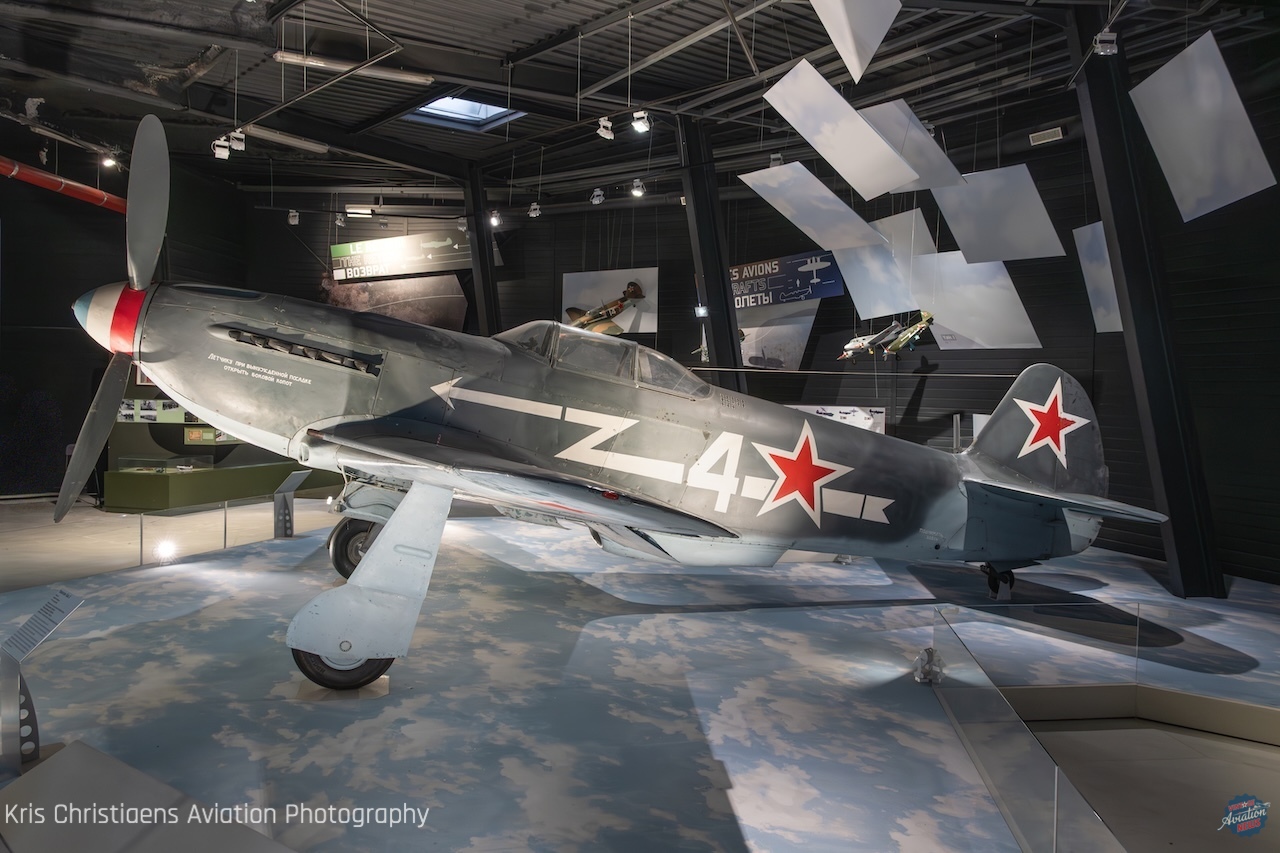
The Hall Normandie–Niemen at the Musée de l’Air et de l’Espace is dedicated to one of the most remarkable and symbolic episodes in French military aviation history: the story of the Normandie–Niemen fighter regiment. This unit was formed in 1942 and sent to the Eastern Front to fight alongside the Soviet Air Force against Nazi Germany, making it the only Western Allied fighter group to operate under Soviet command during the Second World War. The hall presents both the operational history and the human dimension of the squadron. Through photographs, archival documents, uniforms, medals, and personal artifacts, visitors gain insight into the pilots’ experiences on the harsh Eastern Front. The unit earned its dual name “Normandie–Niemen” after distinguishing itself during battles near the Niemen River in 1944, a rare honor granted by the Soviet leadership in recognition of its combat effectiveness. A central highlight of the hall is the display of Soviet-built fighter aircraft associated with the regiment, notably variants of the Yakovlev Yak-3, one of the most agile and effective fighters of the war. The Yak-3’s lightweight construction and strong low-altitude performance made it particularly suited to the Eastern Front’s combat conditions. Seeing this aircraft in a French national museum underscores the unusual alliance and shared sacrifice represented by the regiment. The exhibition also explains the broader political and strategic context. At a time when France was divided and partially occupied, the Free French forces sought to demonstrate active resistance and international cooperation. The Normandie–Niemen pilots became symbols of Franco-Soviet solidarity and postwar reconciliation, and their legacy remains significant in both countries. Unlike galleries focused purely on technology, the Hall Normandie–Niemen emphasizes courage, diplomacy, and identity. It blends aviation engineering with wartime narrative, reminding visitors that aircraft are not only machines but also instruments shaped by the political realities and human decisions of their time.
 Why visit this museum?
The Musée de l’Air et de l’Espace makes a compelling case for itself not simply as a collection of aircraft, but as one of Europe’s most thorough and intellectually serious explorations of aviation and space history. It tells a coherent story of how humanity learned to fly, scaled that achievement into industry, turned it to war, opened it to the public, and eventually pushed beyond the atmosphere altogether. The historical range is exceptional. Founded in 1919, the museum spans more than a century of aeronautical development, and visitors can move through that arc in sequence: from the skeletal monoplanes of the pioneer era to the biplanes of the First World War, through the engineering leaps of the Second, into the supersonic ambitions of the Cold War, and onward to space. Few institutions present this continuum so clearly or so completely. The aircraft themselves are worth the visit alone. The collection includes rare and significant airframes across every era, but the undisputed highlight is the pair of Concordes. Boarding Concorde 001, walking its narrow cabin, and stepping into the cockpit is a genuinely uncommon experience, one that conveys the realities of supersonic engineering in a way no photograph can replicate. The Hall des Prototypes adds another dimension, offering a window into the experimental programs and bold dead ends that quietly shaped modern aviation. Machines like the Nord 1500 Griffon II are a reminder that aerospace progress has always depended as much on high-risk exploration as on steady refinement. Finally, the setting itself carries weight. Le Bourget is not a repurposed warehouse or a purpose-built museum campus; it is a working piece of aviation history, the same ground where Charles Lindbergh touched down in 1927 after his transatlantic crossing, and where the Paris Air Show continues to take place. That context is present in every corner of the visit.
Practical Tips
This is not a museum you can comfortably see in an hour. Between the multiple halls, large aircraft, outdoor tarmac, and interiors you can actually board, three to four hours is a reasonable minimum for a solid overview. If you plan to spend time inside Concorde or the Boeing 747, have a strong interest in aviation history, or want to photograph the collection properly, half a day is more realistic. Enthusiasts could fill an entire day without difficulty. The site is large and partly outdoors, so comfortable footwear is essential. Expect to cover real distances between hangars and across the apron. In cooler months, it is worth dressing in layers, as some halls and aircraft interiors can be chilly. In summer, bring water and sun protection if you intend to spend time among the outdoor displays. For food, the on-site restaurant L’Hélice sits near the entrance and offers snacks, light meals, and hot dishes, usually with views over part of the airfield. The museum also has picnic areas, making it a practical option for families who prefer to bring their own food. Given the size of the site, leaving for lunch and returning is more disruptive than it is worth. Photography is welcome throughout the museum for personal use, indoors and out. The Concorde Hall and Hall des Prototypes are particularly rewarding to photograph. Tripods and professional lighting equipment are generally not permitted without prior arrangement, and temporary exhibitions may carry their own restrictions, so it is worth paying attention to posted signage. Some aircraft interiors are dimly lit, so a camera or phone that handles low light well will serve you better than one that does not. For more information about the museum, visit www.museeairespace.fr.




Went there on a tour last year.It was wonderful and extremely good time.Seeing all the planes.