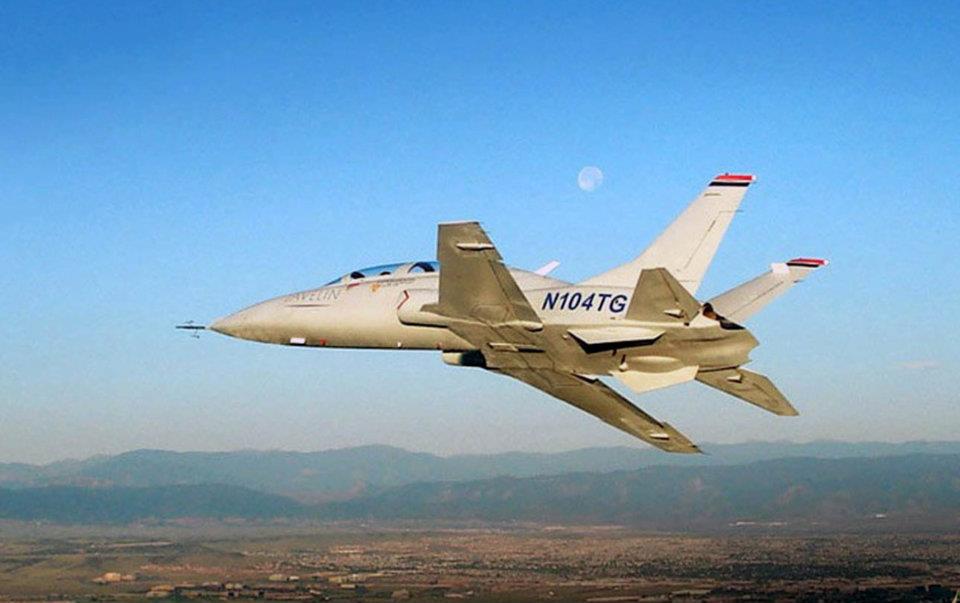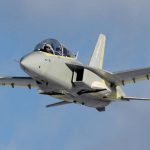
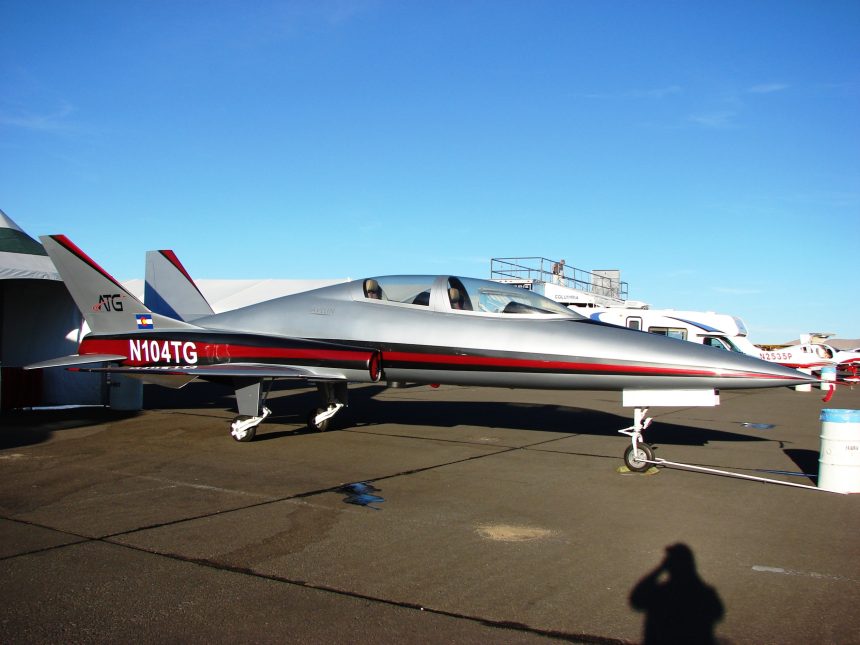

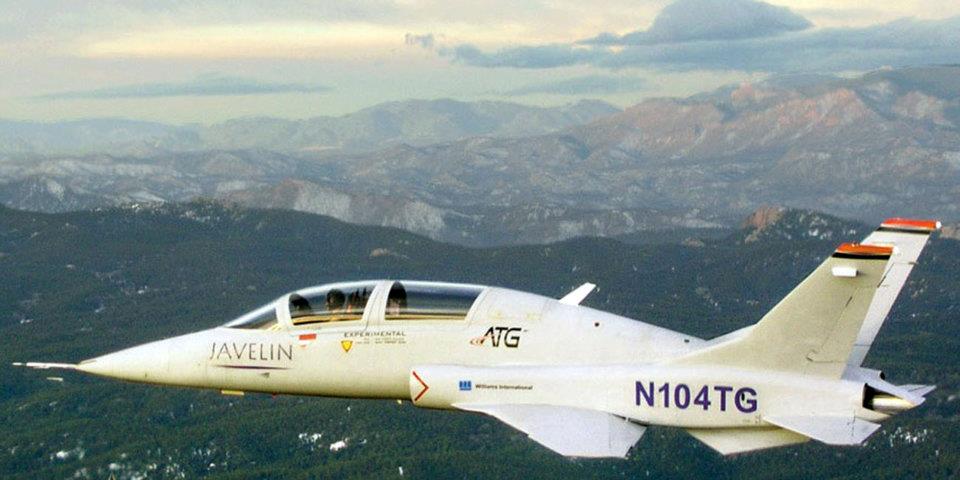
In the year 2000, a new aerospace company, Aviation Technology Group (ATG), was founded in the US. The company’s first major project was developing a small, high-speed personal jet that looked similar to a fighter jet. As a result, the company started developing ATG Javelin MK-10. The Javelin MK-10 was a two-seat, pressurized, retractable-gear, composite airplane with two turbofan engines mounted in the aft fuselage. The aircraft was 37 feet long, 10.6 feet high, with a wingspan of 25.1 feet and a wing area of 140 square feet. The empty weight of the aircraft was 4,655 pounds with a maximum takeoff weight of 6,900 pounds. It was powered by two Williams FJ33-4-19J turbofan engines, each producing 1,750 pounds of thrust. The maximum speed of aircraft was 575 mph (around Mach 0.8), with a range of 1,151 miles, and a service ceiling of 45,000 feet. The rate of climb was 9,000 feet per minute. The Javelin MK-10 made its first flight on September 30, 2005, at Centennial Airport in Englewood, Colorado. During the 35-minute flight, the aircraft performed well. It proved its flying and handling capabilities during takeoff and landing, with all systems working correctly. Later, more test flights were conducted, and the aircraft proved itself every time. By November 2007, according to ATG, 153 people were on the waiting list to buy the aircraft, with deliveries expected to begin in 2008.
Javelin Military Versions
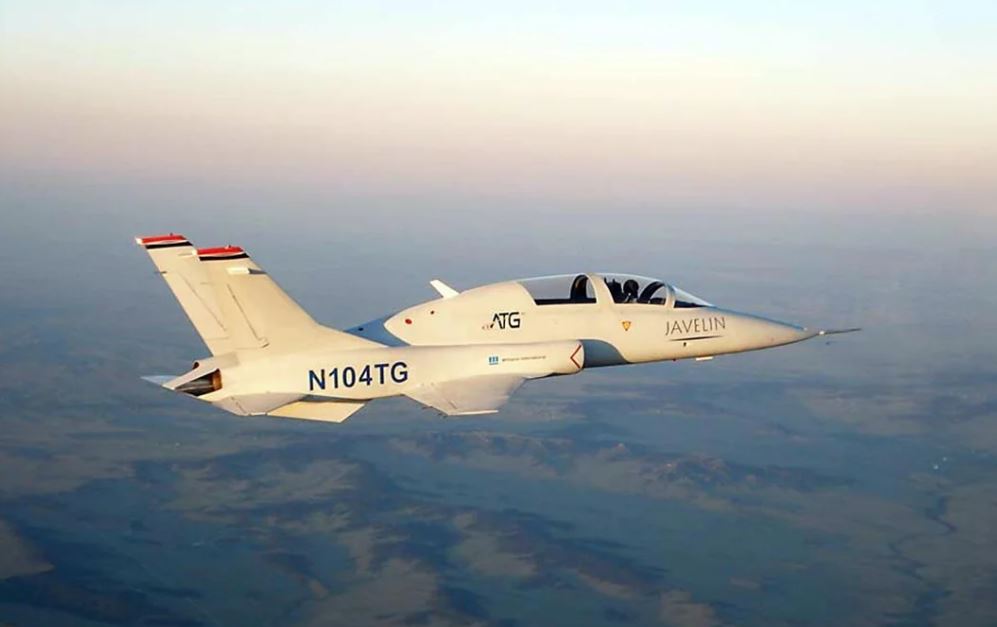
Its good performance also prompted the development of Javelin versions of training aircraft for the military. ATG partnered with Israel Aircraft Industries (IAI) to develop two versions of Javelin, MK-20 and MK-30, as military trainers. According to Air Force Technology, the Mk-20 trainer was designed for phase 2 basic training, with provisions to upgrade it to more advanced phase 3 training. The cockpit and avionics of the Mk-20 were integrated with the displays and systems found in fighter aircraft such as the F-15, F-16, Eurofighter, Rafale, MiG-29, and Su-30. The Javelin MK-20 was powered by two Williams International FJ33-4-17M turbofan engines, each producing 1,700 pounds of thrust. The aircraft was designed to achieve speeds of Mach 0.85. The Mk-30 focused on advanced pilot training in phases 3 and 4. The Mk-30 was designed to train tactical navigation and formation flying at speeds up to 500 knots at low altitudes. It could reach maximum speeds of Mach 0.95. Both MK-20 and MK-30 were designed to have a range of 1,380 miles and a service ceiling of 45,000 feet. The virtual training systems in both planes included a pilot evaluation system, a Mission Planning and Debriefing System (MPDS), simulators, and a classroom-based training management program. Instructors and pilots can use Air Combat Maneuvering Instrumentation (ACMI) for debriefing.
The Cancellation
The cockpit of the Javelin family of aircraft included a hands-on throttle-and-stick concept, a heads-up display, and Martin-Baker ejection seats. In addition, ATG chose Florida-based company Avidyne to provide the FlightMax Entegra integrated avionics system for Javelin. As a part of this system, the Javelin had Avidyne’s system with two 10.4-inch screens in both the front and back cockpits. These screens used to show essential navigation details, moving maps, and data link information. Additionally, the Entegra system included VHF communication equipment, Mode S transponders, GPS receivers, and a flight-control system for reduced vertical separation minimum (RVSM) operations. However, ATG halted all the operations and development of Javelin after it failed to receive a $200 million investment to continue the program. In 2008, the company filed for bankruptcy, which finally ended the development of Javelin. Later, Javelin’s design rights were acquired by a small American manufacturer, Rud Aero, in partnership with Stavatti Aerospace. The companies offered the aircraft to the US Air Force as part of the mid-2010s T-X program. However, in 2018, the US Air Force selected the Boeing T-7 Red Hawk as its trainer aircraft, ending even the last hope for the Javelin. The aircraft was not bad; the idea was not bad; even the tests proved successful, with a dream waiting list, but the aircraft was canceled due to a lack of funds. It is rare in the Grounded Dreams series for a good aircraft with huge orders to be canceled by the company developing it to file for bankruptcy. Read more Grounded Dreams series articles HERE.