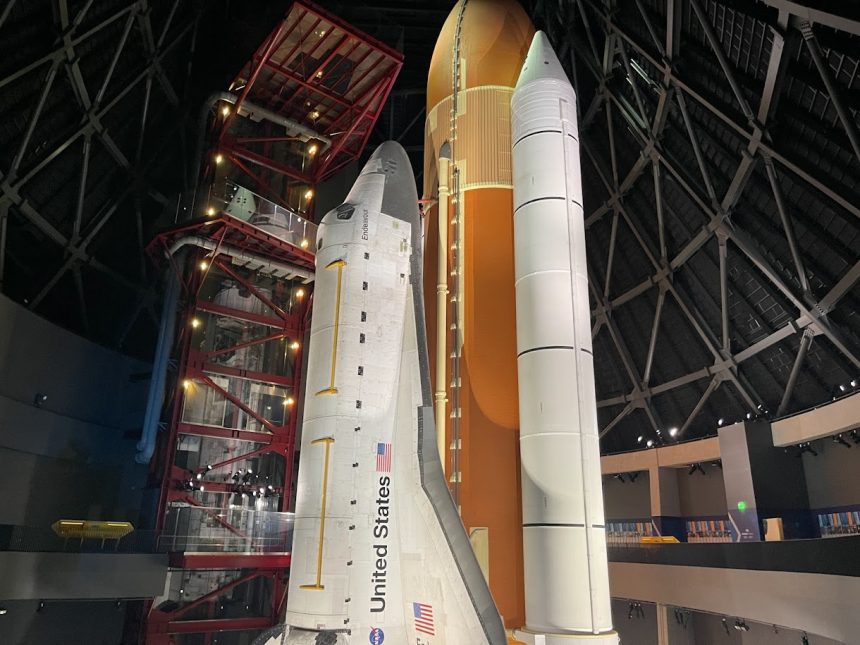

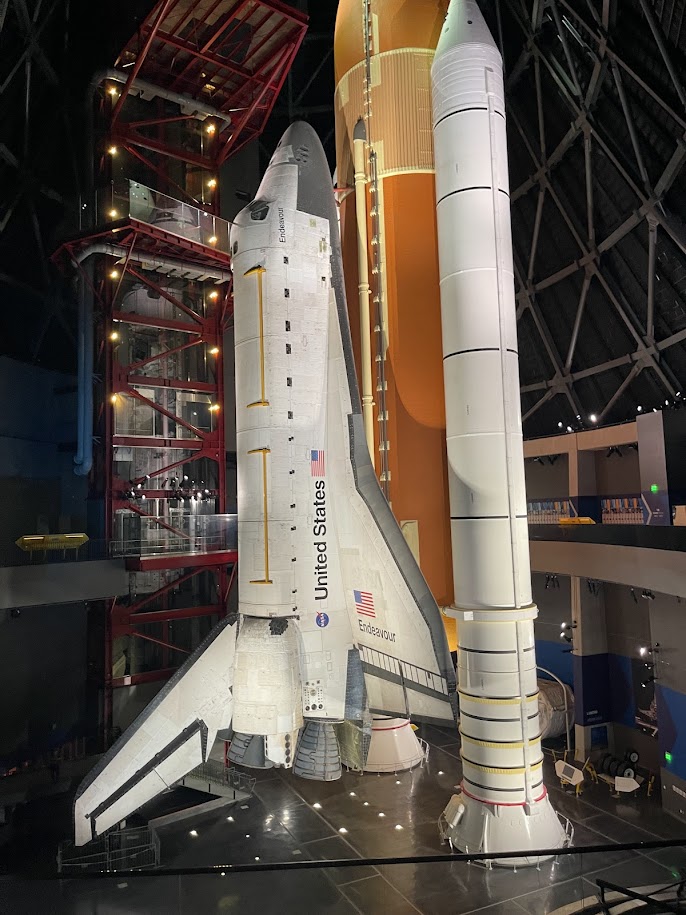
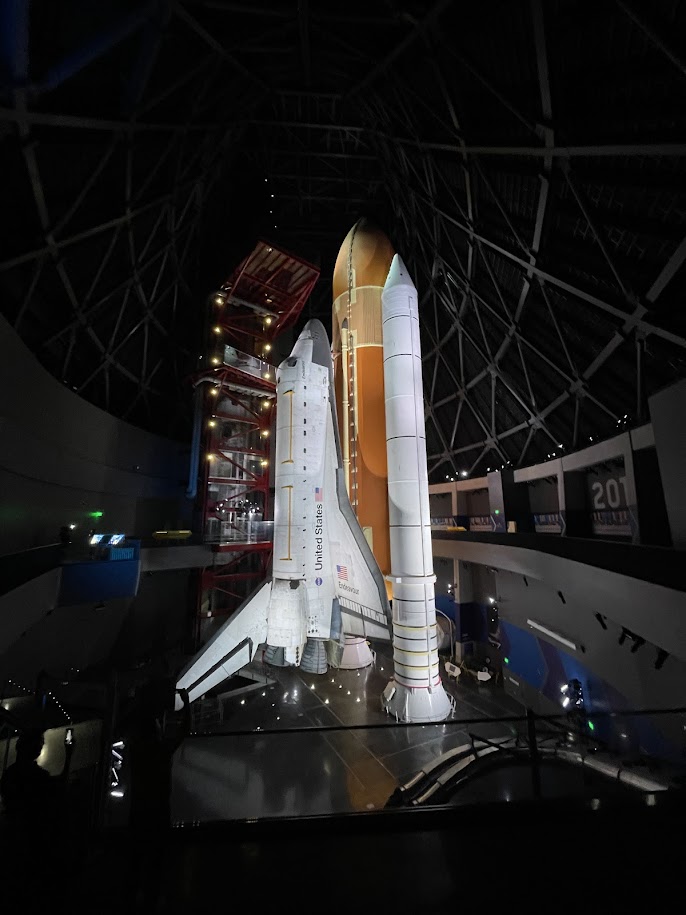
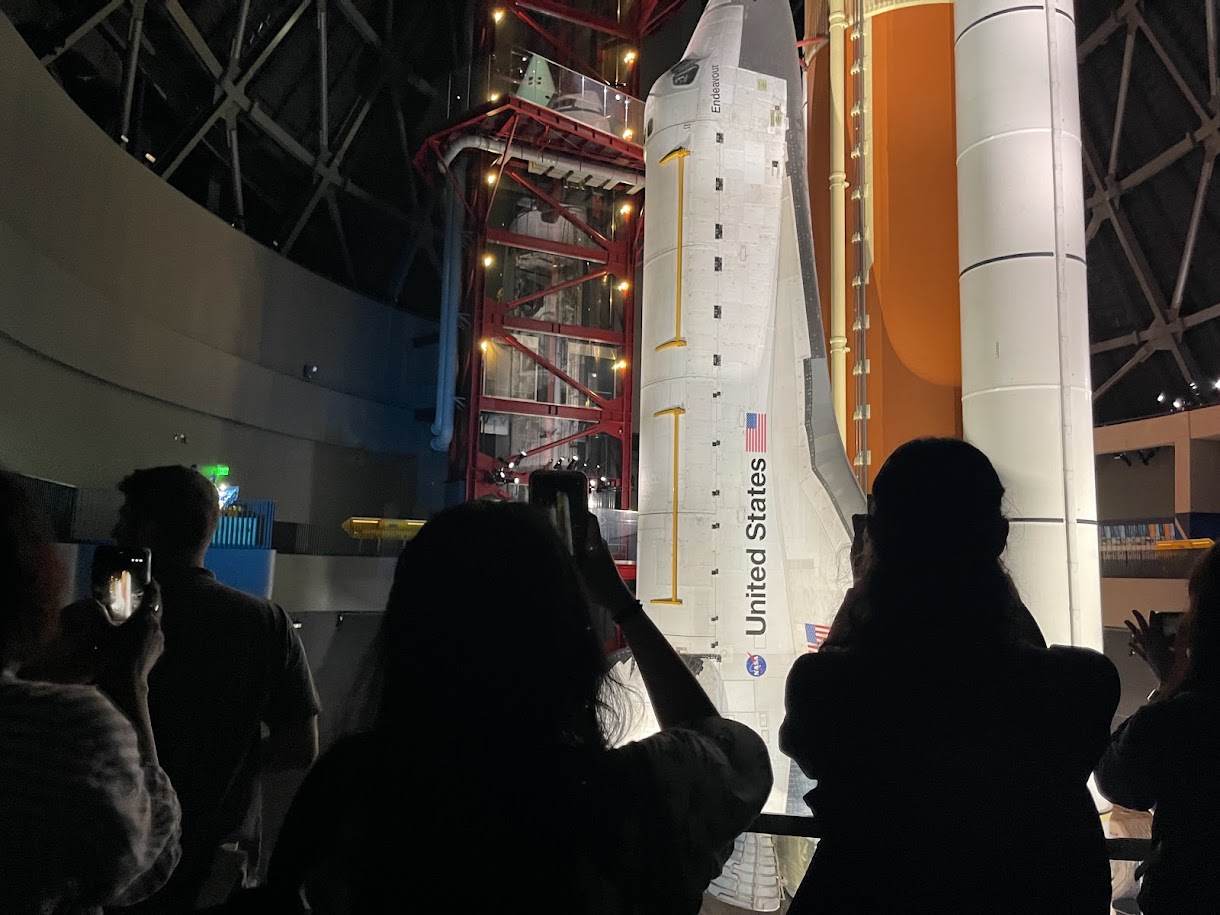
More than two years ago, in January 2024, the Space Shuttle Endeavour was pulled out of its temporary hangar, the California Science Center‘s Samuel Oschin Pavilion, and lowered into the construction site for the new Samuel Oschin Air and Space Center and connected with the external fuel tank ET-94 and a pair of booster rockets to become the only shuttle orbiter displayed in a launch position, and on June 24, 2026, the public was finally given a grand preview of the Endeavour in its now permanent display configuration at the centerpiece of the Air and Space Center’s Samuel Oschin Shuttle Gallery. The event also saw Jeffrey Rudolph, President and CEO of the California Science Center, make the official announcement that the long-anticipated Samuel Oschin Air and Space Center will open to the public on November 13, 2026, giving visitors from both far and wide the ability to experience new interactive exhibits on the science of aerospace technology, with the goal of inspiring future generations to pursue careers in science and engineering.
In addition to Jeffrey Randolph, there were public statements made by Lynda Oschin, Chairperson of the Mr. and Mrs. Oschin Family Foundation, who spoke of the vision of her husband, the late entrepreneur and philanthropist Samuel Oschin, and Holly Mitchell, Los Angeles County Supervisor for the 2nd District, who helped secure the public funding necessary for the completion of this 200,000 square-foot addition that marks Phase III of the multi-decade expansion of the most extensive science museum in California. Also present at the preview event was local astronaut Dr. John D. “Danny” Olivas, Ph.D., who was a crew member on board shuttle missions STS-117 and STS-128.
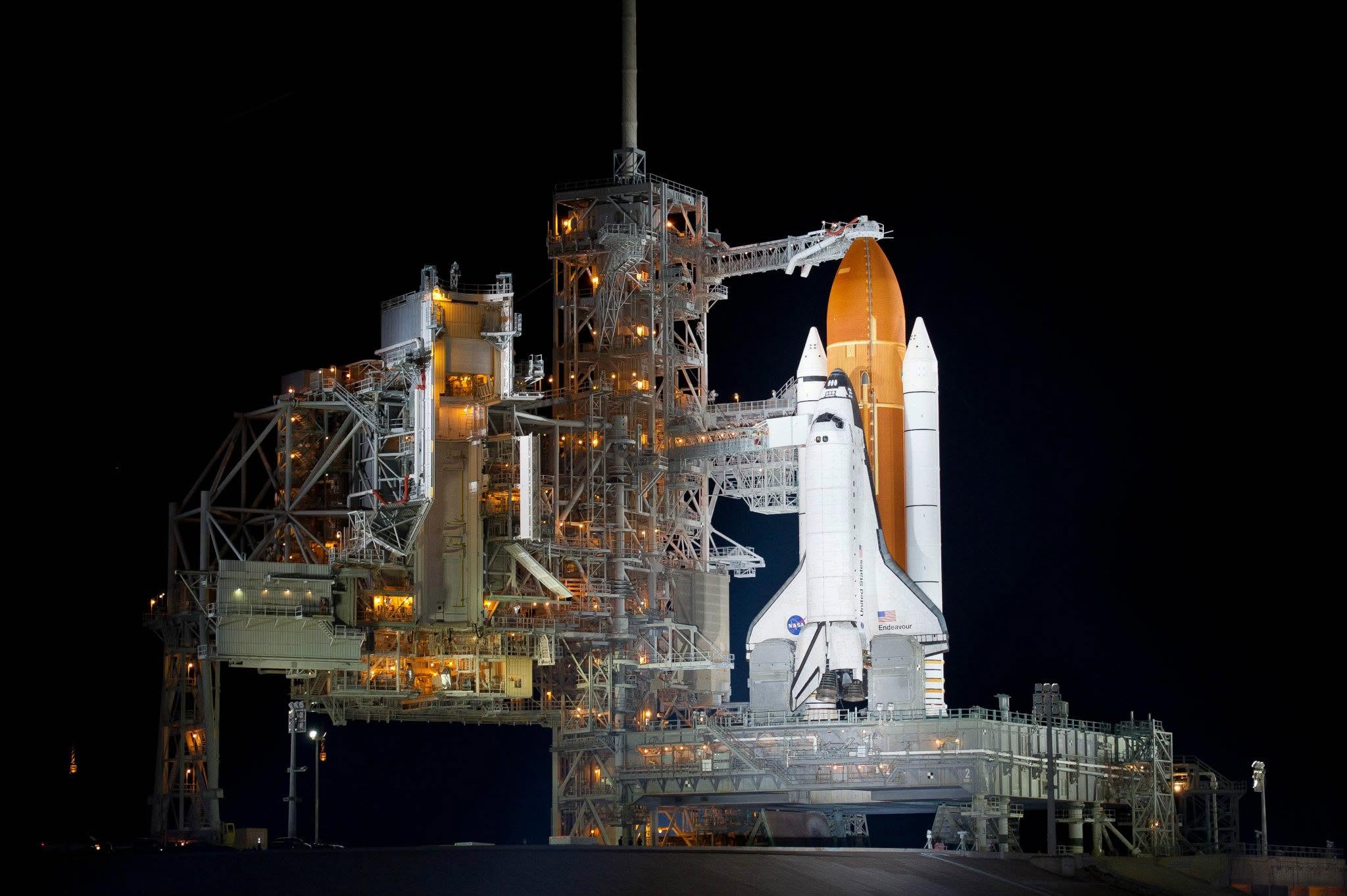
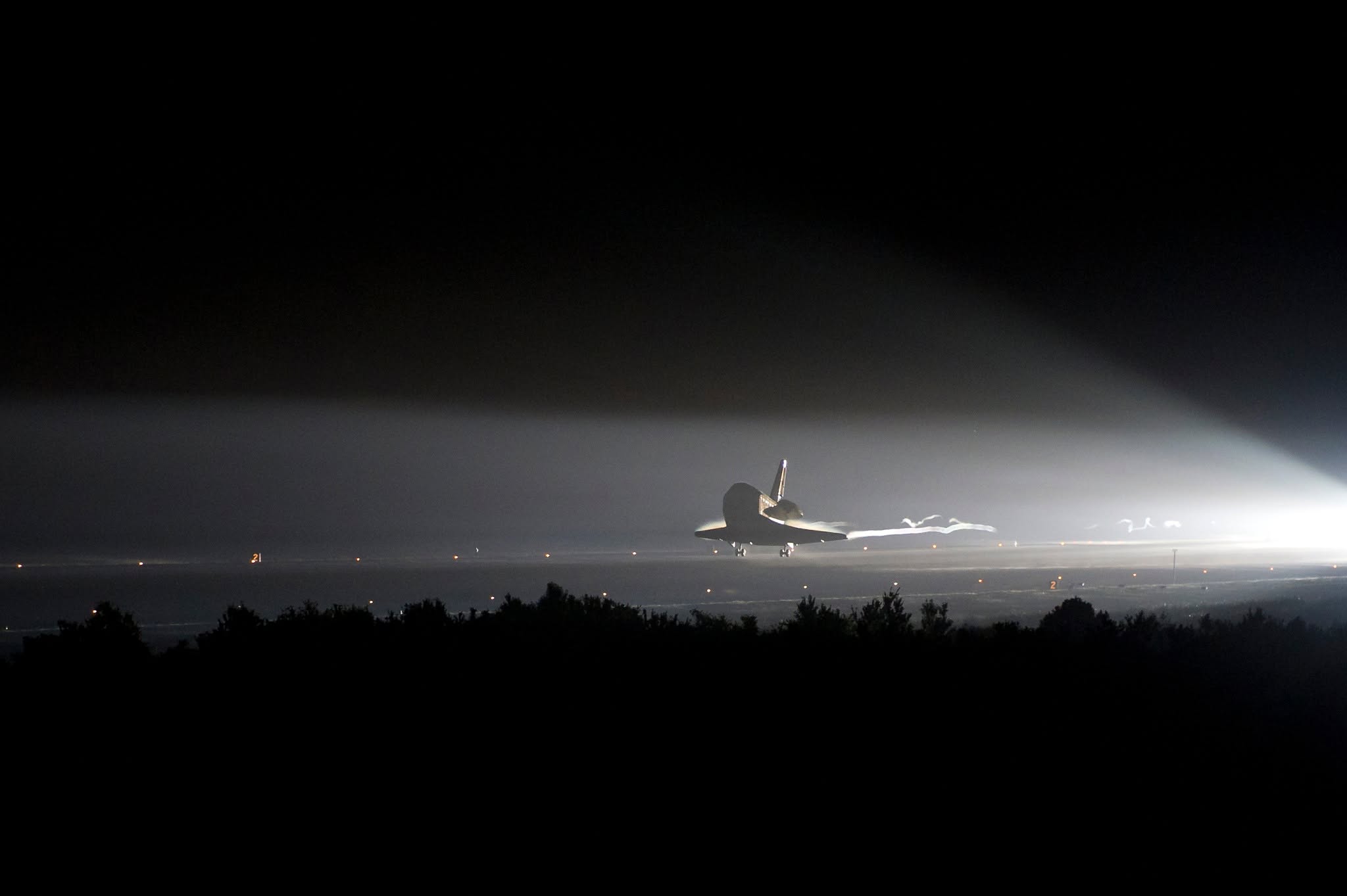
For the Space Shuttle Endeavour (Orbiter Vehicle OV-105), the journey from the stars to the City of Angels has been the stuff of Hollywood movies. Built at Plant 42 by Rockwell International at Palmdale Airport in Los Angeles County using parts from the construction of her sister ships Atlantis and Discovery, OV-105 was the final Space Shuttle assembled and delivered to NASA on May 7, 1991, and was named for the HMS Endeavour, used by Captain James Cook in his first voyage of exploration (1768-1771). From 1992 to 2011, Endeavour made 25 spaceflights, flew with astronauts from around the world with different backgrounds and skills, helped assemble the International Space Station (ISS), and inspired millions of people every time it roared into the heavens from the Kennedy Space Center at Cape Canaveral, Florida, and every then it returned safely to earth.
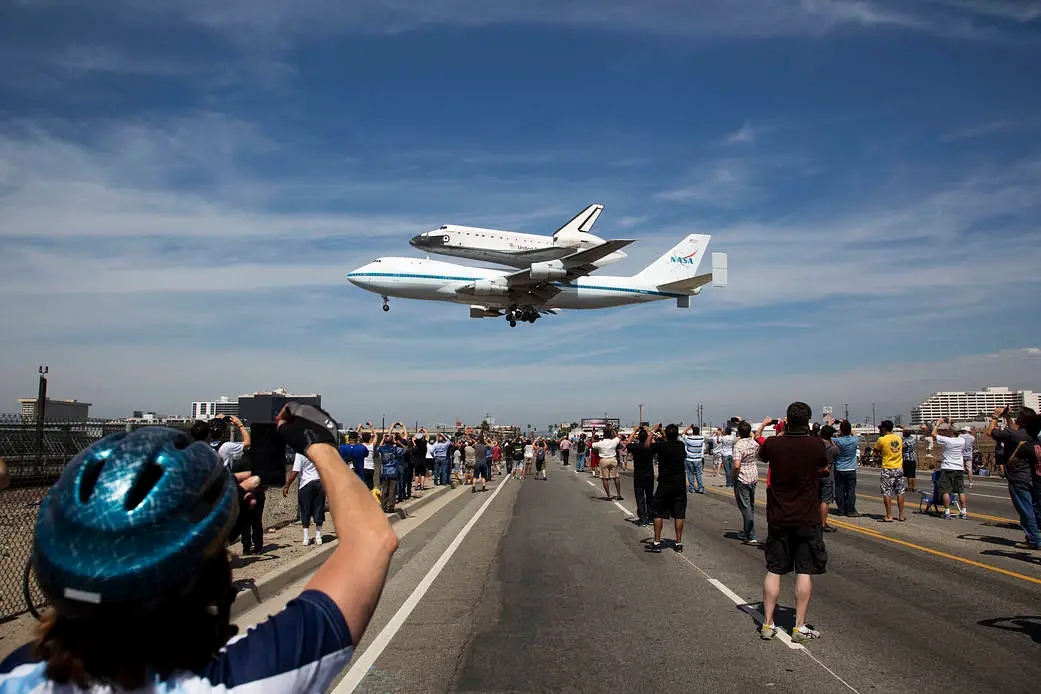
Following the retirement of the Space Shuttle program in 2011, it was decided to send Endeavour to the California Science Center in Los Angeles’ Exposition Park because it was built in Los Angeles County and to ensure that a shuttle orbiter was prominently featured on the U.S. West Coast. On September 19, 2012, Space Shuttle Endeavour began its final journey from the Kennedy Space Center to Los Angeles International Airport on the back of the Boeing 747 Shuttle Carrier N905NA (now displayed at Space Center Houston, Texas with the mockup shuttle Independence), making refueling stops at Ellington Field in Houston and at Edwards AFB. On September 21, Endeavor and Shuttle Carrier N905NA made a tour of prominent California landmarks, from the Golden Gate Bridge in San Francisco to Disneyland in Anaheim, escorted by two NASA F/A-18 Hornet chase planes, and flew over sites in Los Angeles such as the Hollywood sign, Griffith Observatory, Dodger Stadium, the Santa Monica Pier, the Jet Propulsion Laboratory, and the battleship USS Iowa (BB-61), moored in San Pedro, before landing at LAX to much fanfare and being secured in a United Airlines hangar.
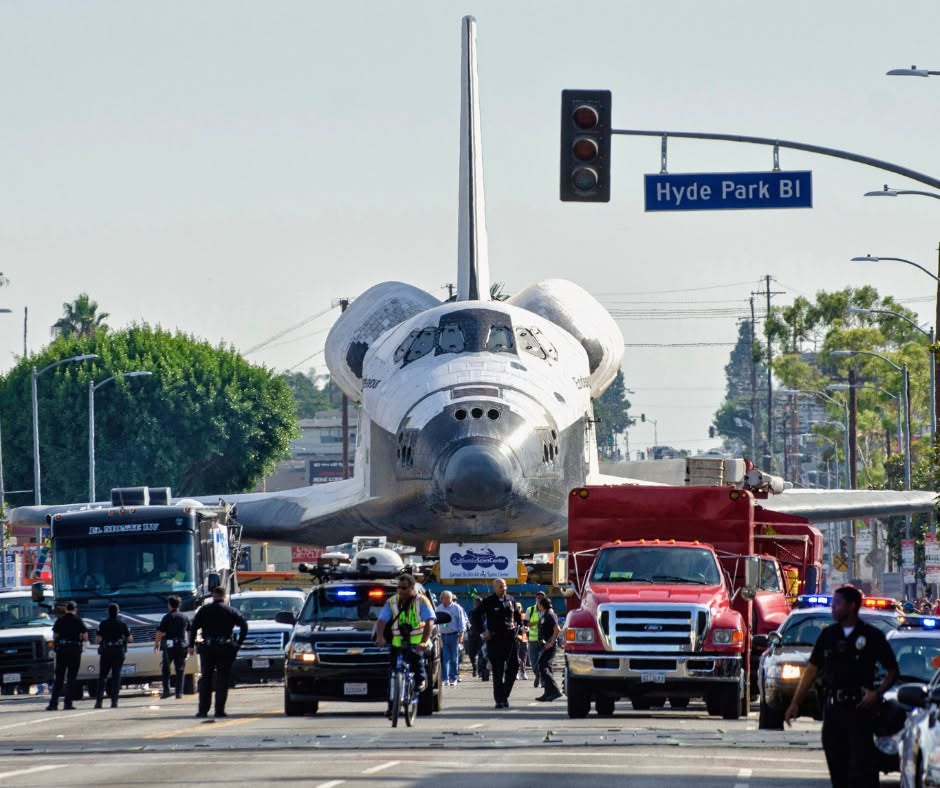
One month after landing in Los Angeles, Endeavour then made an epic, four-day journey through the streets of Los Angeles from Los Angeles International Airport to the California Science Center in Exposition Park from October 11 through October 14. Night and day, millions of Angelenos of all ages and backgrounds lined the streets, clamoring for a glimpse at this once-in-a-lifetime event, with thousands of specialists and local law enforcement officers carefully monitoring the Endeavour as it inched its way through one of the world’s largest cities. Power lines, traffic lights and streetlights were temporarily moved, and trees lining the sidewalks were cut down or trimmed to make way for the shuttle’s wings before Endeavour finally made it to the Science Center, concluding what was referred to as Mission 26: The Big Endeavour.
With the construction of the new Air and Space Center still in the planning process, Endeavour would be displayed from October 2012 to December 2023 in the Samuel Oschin Pavilion, which was to serve as its temporary home until the new Samuel Oschin Air and Space Center was far enough in construction for the shuttle to be moved about 900 feet away into the new Air and Space Center. Outside the Pavilion would sit ET-94, the last remaining flightworthy external tank (ET) built for the Space Shuttle to carry the liquid hydrogen fuel and liquid oxygen oxidizer necessary for the shuttle to launch. ET-94 would have its own epic journey to Los Angeles in 2016, being shipped from the Michoud Assembly Facility in New Orleans, Louisiana by barge on May 12, transited the locks of the Panama Canal, then delivered to the docks of Marina del Rey on May 15, before being towed through the streets of Los Angeles to the California Science Center on May 21, and would be stored outside, adjacent to the Samuel Oschin Pavilion until being brought into the Air and Space Center construction site in January 2024. Meanwhile, a pair of flightworthy Solid Rocket Boosters (SRBs) were kept in storage at Mojave Air and Space Port in Mojave, California, from 2020 until being shipped to downtown Los Angeles in 2023.
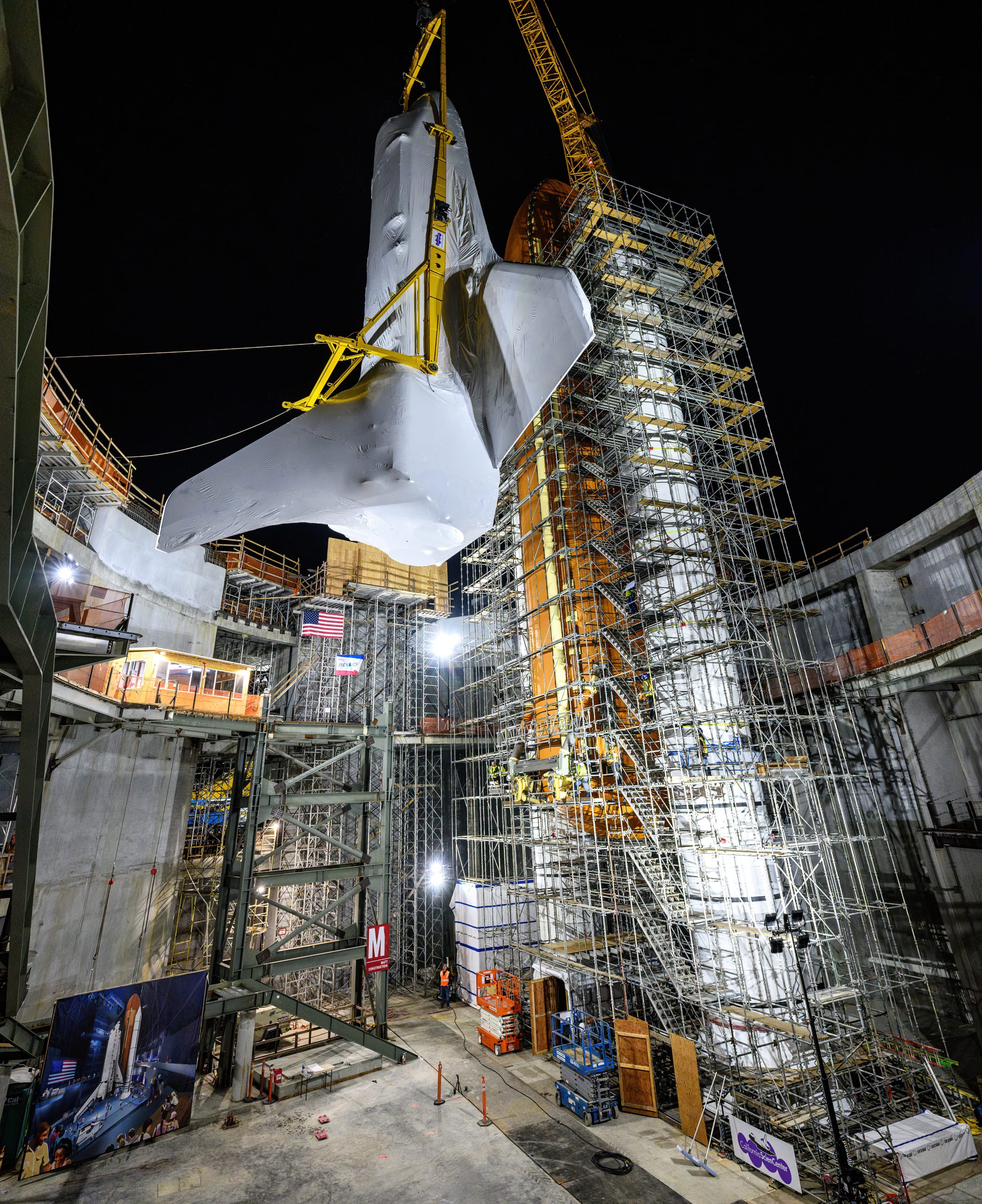
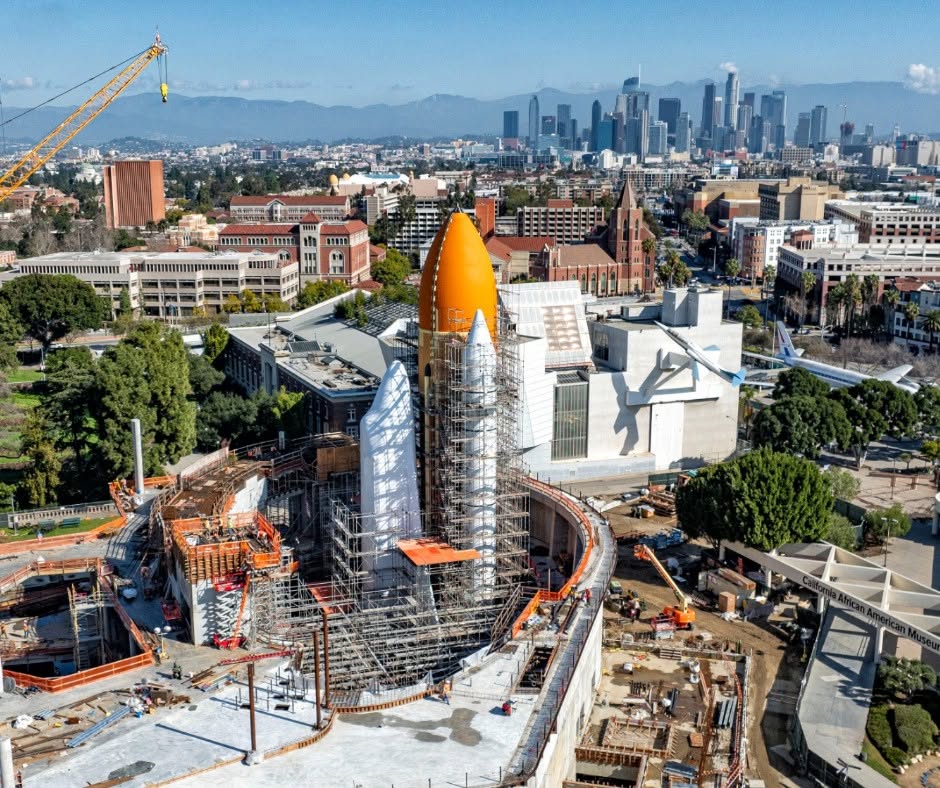
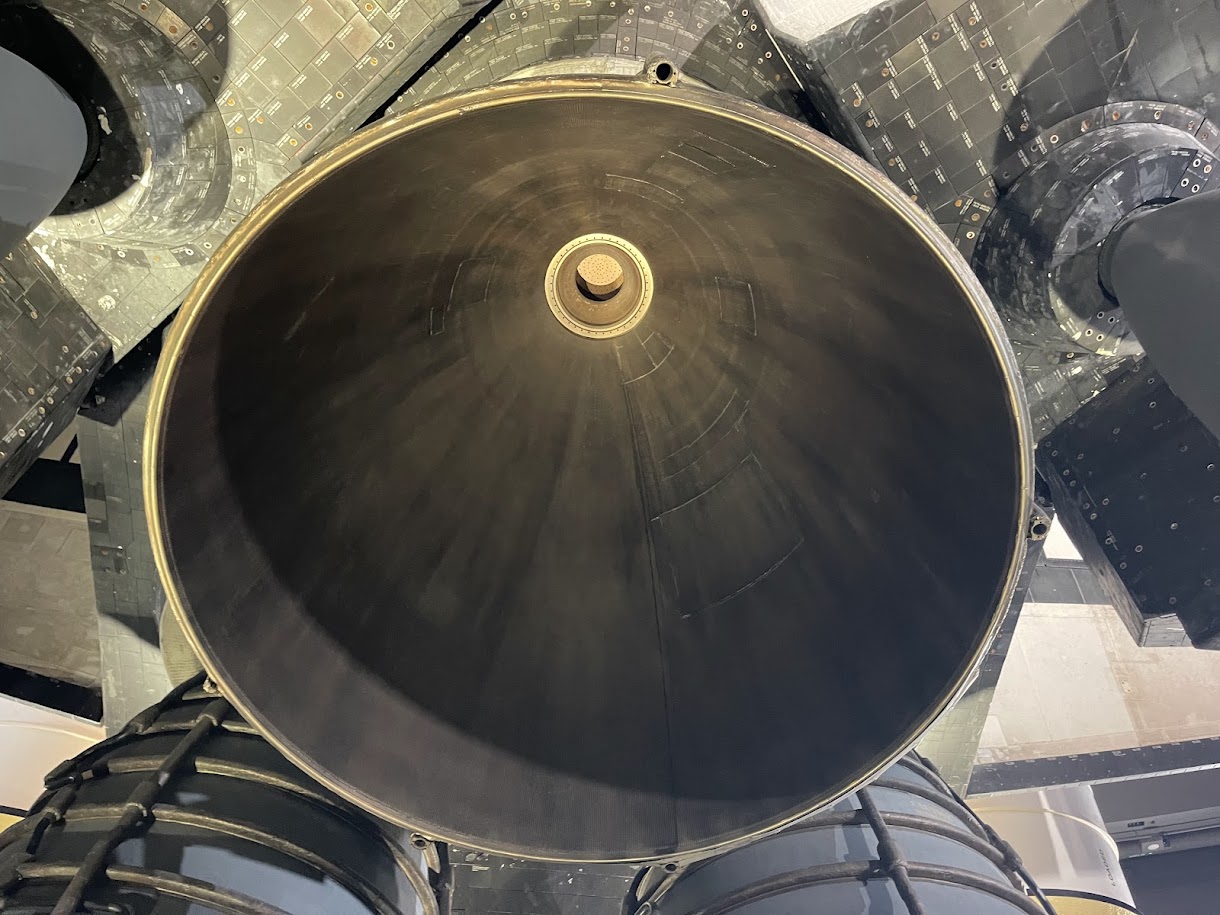
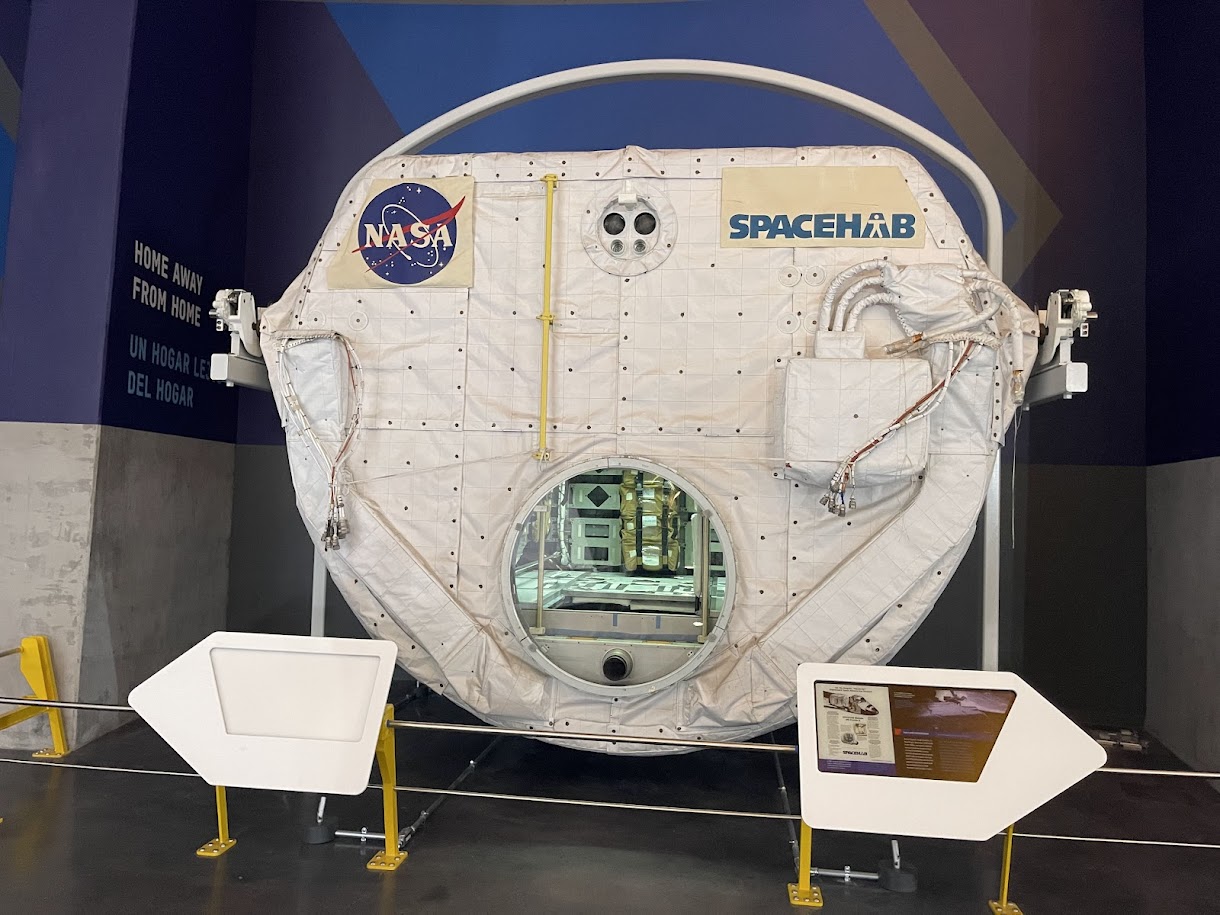
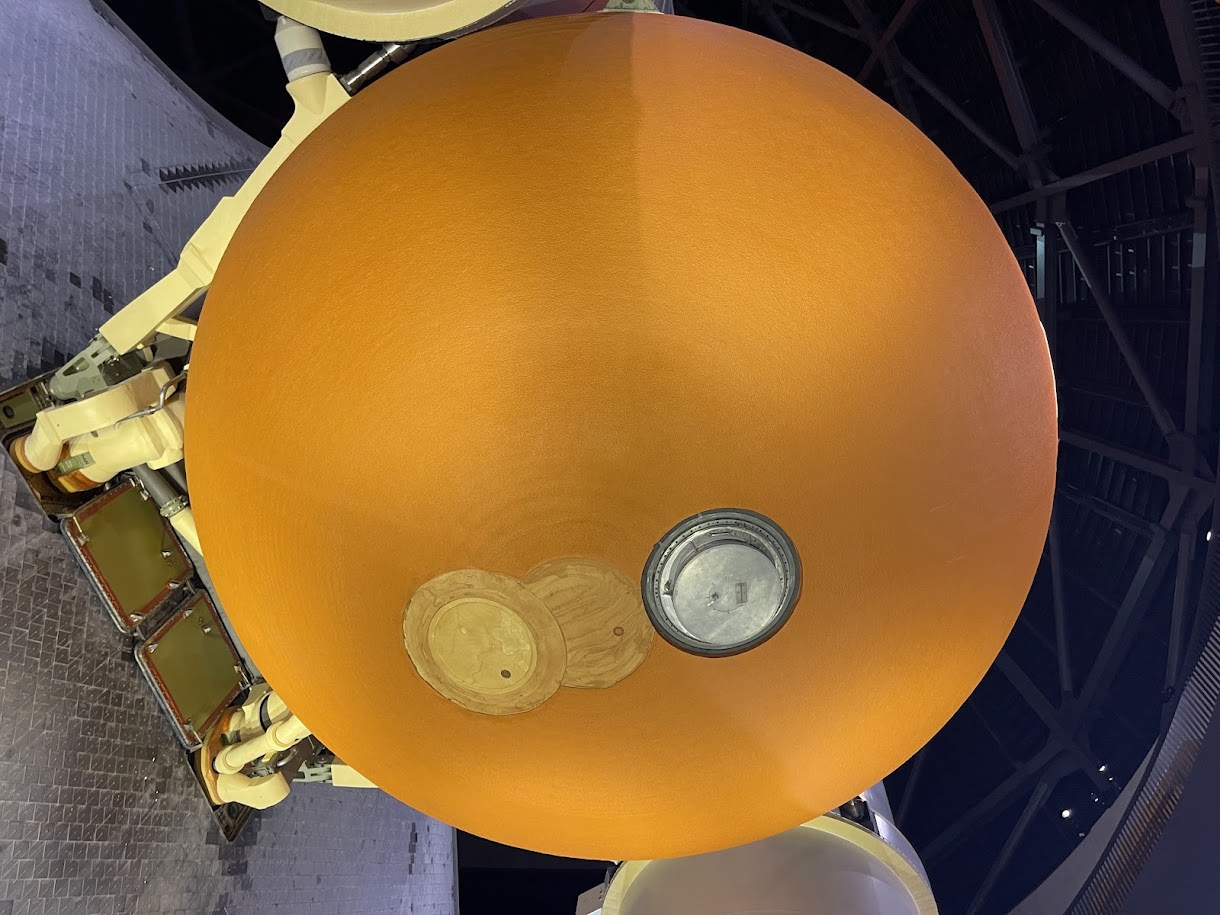
The unveiling of the Space Shuttle Endeavour was an extraordinary sight for all of the attendees. The complete launch module consisting of the shuttle orbiter Endeavour, external tank ET-94, and the two SRBs, is secured it place with eight ten-foot bolts attached to the bottom of the two SRBs to the floor of the Lower Level, and with California being prone to earthquakes, both the shuttle module and the Air and Space Center building are designed to shake to prevent a structural failure. The Shuttle Gallery also allows visitors to experience the Endeavour from all angles, with a lower level that enables visitors to walk directly underneath the orbiter and the external tank, and there is a distinct impression from standing underneath the three RS-25 main engines that propelled the shuttle into orbit. The lower level also provides visitors with access to large modules that would be carried by the shuttle, such as the Space Habitat (or SpaceHab) pressurized module installed in the shuttle’s cargo bay to provide a workstation for the shuttle crew to carry out scientific research without the need for the crew to don their spacesuits, as well as the tires flown on Endeavour’s 25th and final mission, which the museum allows visitors to touch.
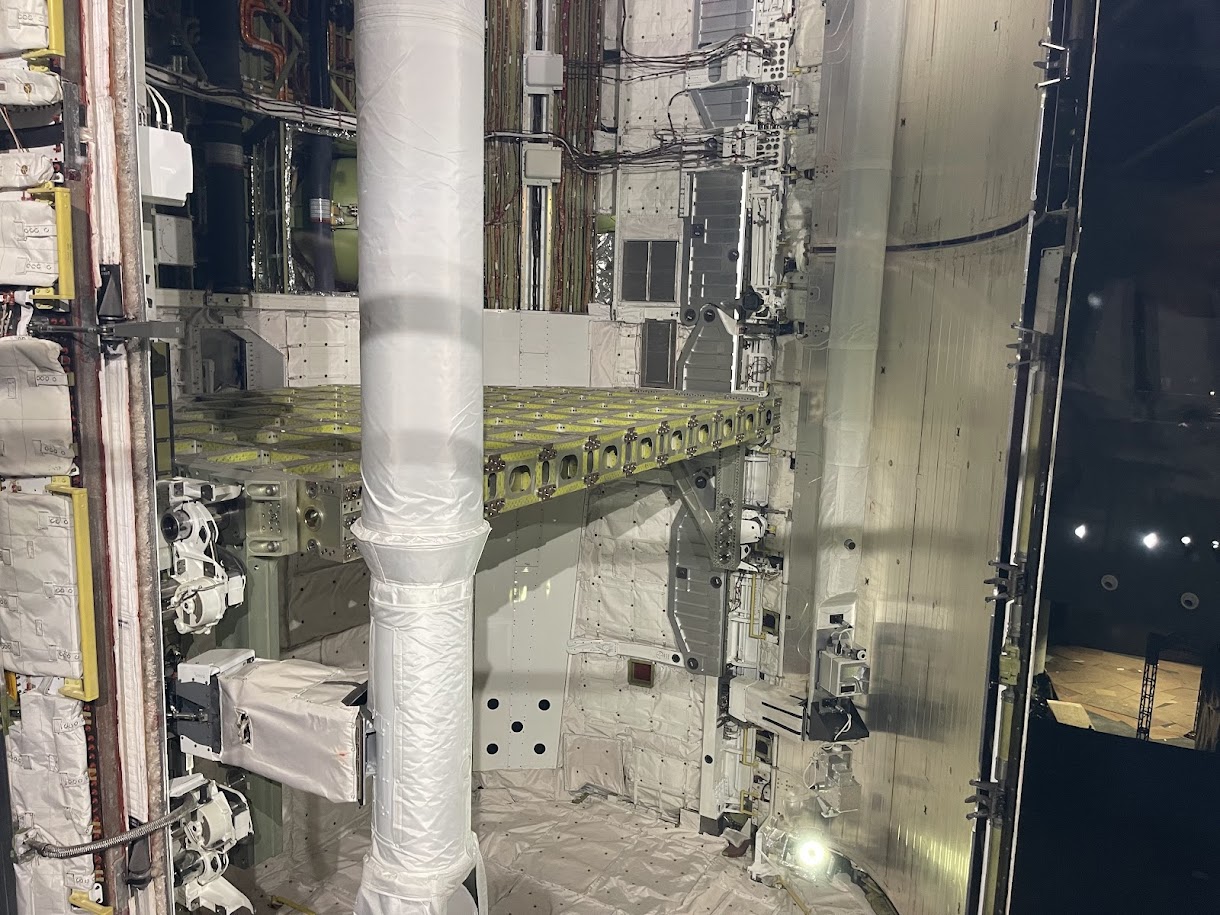
Next there is a mezzanine that forms a ring around the mid-section of the shuttle module, combined with display panels printed in both English and Spanish that will educate visitors on different aspects of the shuttle orbiter, the external tank, and the solid rocket boosters, as well as a timeline of all the Space Shuttle missions flown from 1981 to 2011. There is also a set of metal slides for people to go down from the middle level to the lower one, with these slides designed to curve at a 45-degree angle to imitate the glide slope the shuttle orbiters would use to bleed off speed when making their landing approach. Finally, there is an upper level for visitors to be at eye-level with Endeavour’s cockpit, as well as a glass-bottomed platform placed above the Endeavour’s nose for visitors to look down upon. This upper level is connected to the middle and lower levels by a pair of elevators, which will be ready for the opening date. Besides being in the launch position, OV-105 Endeavour is also displayed with its left cargo bay door open, allowing visitors to inspect the cargo bay itself, complete with the famous Shuttle Remote Manipulator System (SRMS), better known as the Canadarm, crew modules, and a section of the cargo bay’s insulation has been removed to showcase the wiring, plumbing, and cables that run underneath the bay, a vantage point previously visible only to assembly workers and specialists tasked with repairing the orbiter in between missions.
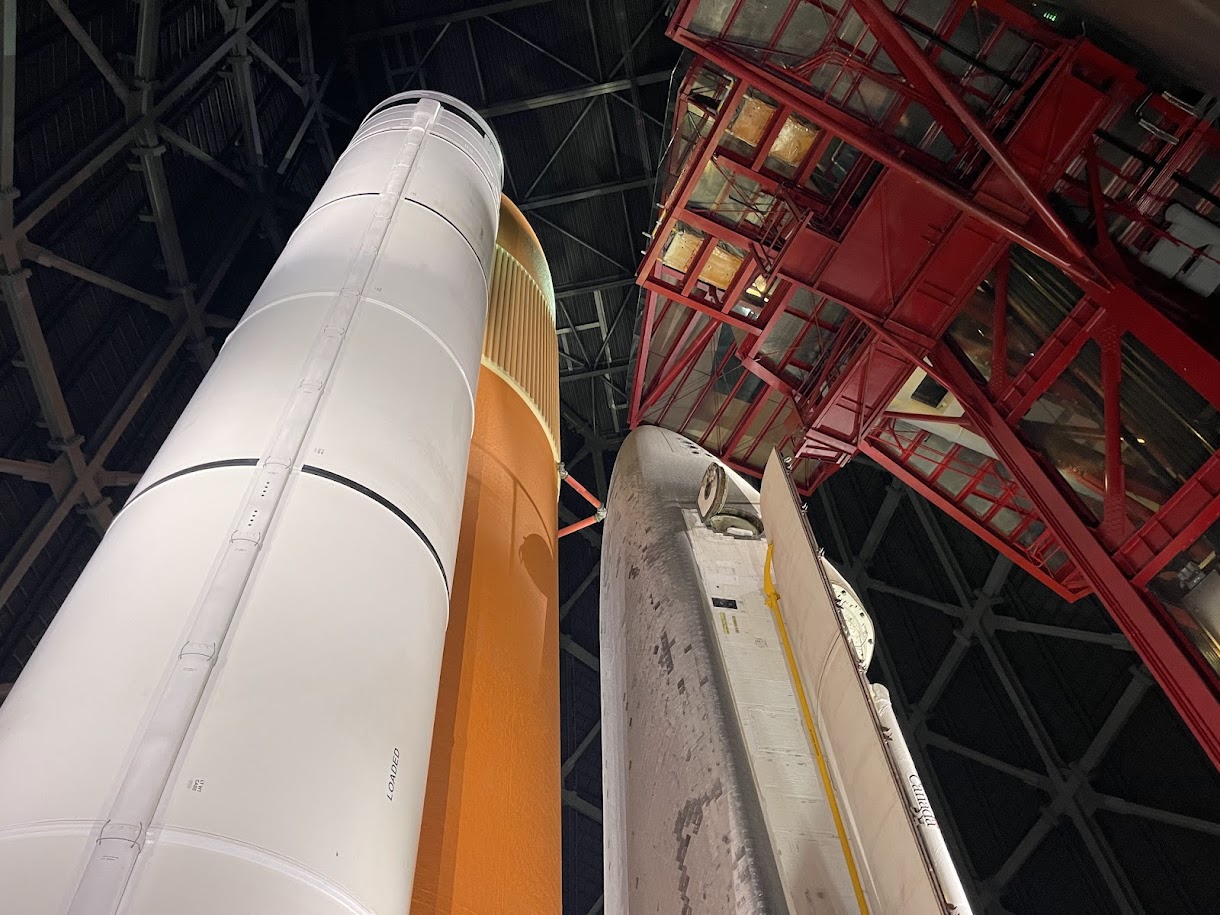
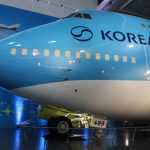
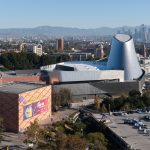
With the official opening of the Samuel Oschin Air and Space Center set for November 13, 2026, the entire expansion to the California Science Center will at last be open to the public, with the new add-on set to feature the Korean Air Aviation Gallery (featured in this article HERE), the Kent Kresa Space Gallery, which features the Apollo-Soyuz Command Module (ASTP), Mercury MR-2, Gemini 11 and SpaceX Dragon capsules, and the Samuel Oschin Shuttle Gallery. Like the rest of the California Science Center, the Air and Space Center will have free admission due to public funding from the state government of California and city government funding from the City of Los Angeles. The tower built to encase the complete shuttle module has also become one of the newest landmarks on downtown Los Angeles’ skyline, being visible off Interstate 110 (I-110) and is set to become one of California’s premier aerospace attractions, and will become a place where people of all backgrounds can come together and appreciate the contributions of the countless people both famous and unsung to the aerospace industry, and perhaps one day, some future astronaut, when asked what inspired them to reach for the stars, may yet answer that it began with a visit to see the Space Shuttle Endeavour.
For more information, visit the California Science Center’s website HERE.