
EAA Aviation Museum Adds Six Aircraft to Its Displays

The EAA Aviation Museum has added six aircraft to its displays, spanning early aviation, ultralight flying, and WWII operations. Highlights include Douglas World Cruiser and Epps Monoplane replicas, John Moody’s Icarus II, and three historic warbirds on loan.

Moreno-Aguiari
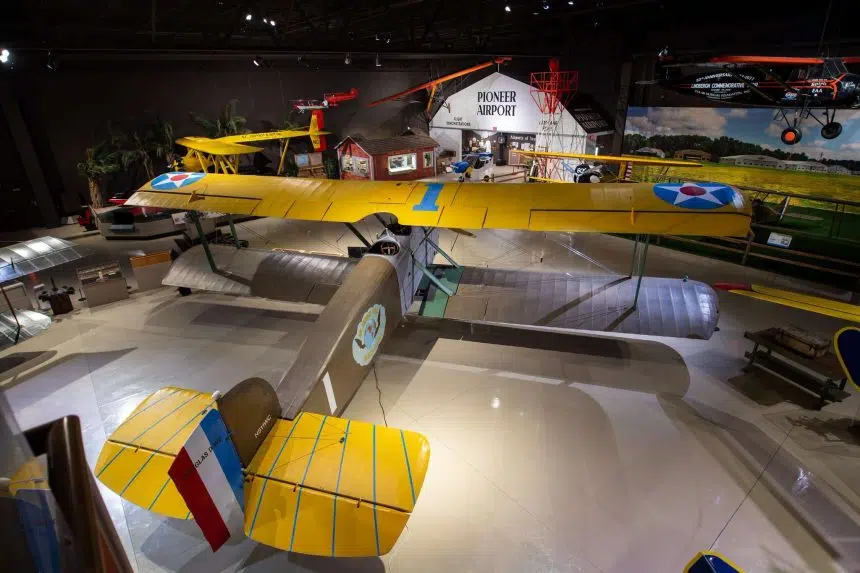
Robert Dempster spent 20 years building this full-scale Douglas World Cruiser replica, his first homebuilt aircraft project. It honors the aircraft and crews that completed the first flight around the world in 1924. (Image credit: EAA)
Barnerstormer Hugault 729x90

The EAA Aviation Museum in Oshkosh, Wisconsin, has added six aircraft to its displays, bringing together stories of early aviation, homebuilding, ultralight flight, and WWII combat operations. The additions include Douglas World Cruiser and Epps Monoplane replicas, John Moody’s Icarus II, a Curtiss P-40 Warhawk, a General Motors FM-2 Wildcat, and a Consolidated PBY-5A Catalina. “The opportunity to be able to feature these marvelous aircraft as a part of our displays adds new stories to our already expansive collection,” said Chris Henry, EAA Aviation Museum director. “It is a testament to how, whether you are a homebuilder, a restorer, or an amateur aviator who dreams of flight, you have a true community at EAA.”
american heritage museums pby 5a catalina goes on display at eaa aviation museum
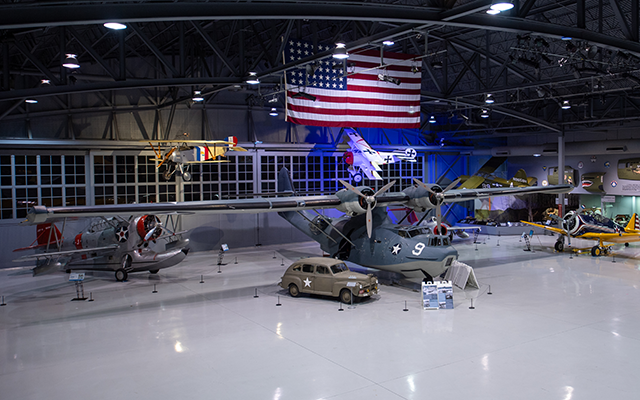
American Heritage Museum’s PBY-5A Catalina now on display at EAA Aviation Museum in Oshkosh, WI (Image credit: EAA)

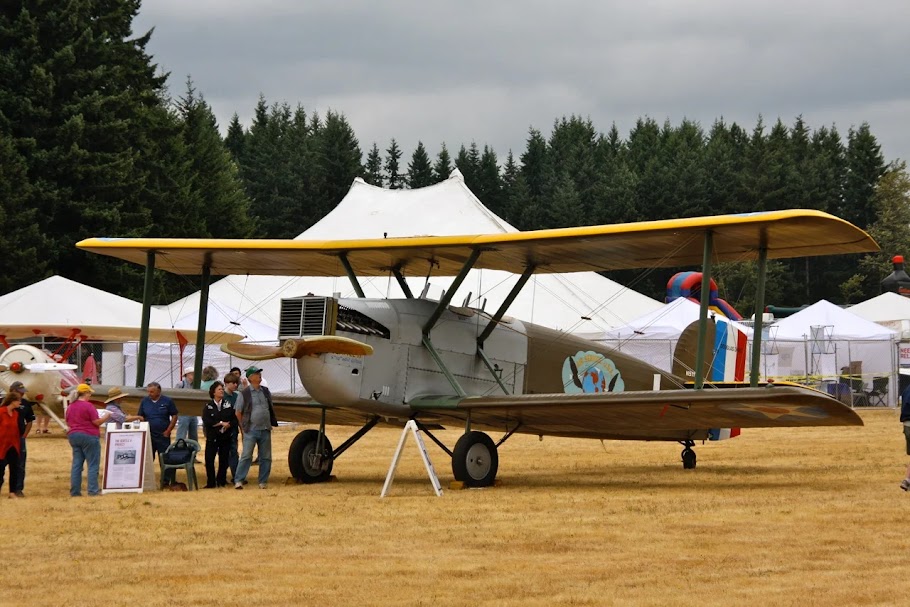
Representing one of aviation’s great long-distance achievements is Robert Dempster’s full-scale Douglas World Cruiser replica. Dempster devoted 20 years to the aircraft, his first homebuilding project, recreating the design used in the first successful flight around the world in 1924. The replica highlights both the original expedition’s accomplishment and the craftsmanship required to bring an aircraft of that era back to life.
img 1457
Douglas World Cruiser replica “Seattle II” N511WC at the 2015 Arlington Fly-In, held at Arlington Municipal Airport, Washington. (Image credit: Seattle World Cruiser Project)

Another addition traces the beginnings of powered ultralight aviation. John Moody first flew his Icarus II from a frozen lake in Long Lake, Wisconsin, on March 15, 1975. Widely regarded as the father of ultralight aviation, Moody helped popularize a form of recreational flying that offered enthusiasts a comparatively simple path into the air. The Michigan Ultralight Association rebuilt the aircraft for donation to EAA.

carus ii created by john moody 1
John Moody, widely regarded as the father of ultralight aviation, first flew his Icarus II from a frozen lake in Long Lake, Wisconsin, on March 15, 1975. The aircraft helped launch the ultralight recreational flying movement and was later rebuilt by the Michigan Ultralight Association for donation to EAA. (Image credit: EAA)

Two fighters on loan from the Frasca Collection expand the museum’s presentation of WWII aviation. The Curtiss P-40 Warhawk represents a type that served Allied air forces across multiple theaters, particularly during the early years of the war. Its association with shark-mouth nose art remains one of the most recognizable images of the conflict.

frasca curtiss p 40 warhawk
The Curtiss P-40 Warhawk served Allied air forces across multiple theaters during WWII, playing a vital role in the conflict’s early years. Its distinctive shark-mouth markings remain among the most recognizable images of wartime aviation. This example is on loan from the Frasca Collection. (Image credit: EAA)

Joining the Warhawk is an FM-2 Wildcat, a later development of Grumman’s F4F manufactured by General Motors. The Wildcat played an essential role in naval aviation during WWII, with its rugged construction and combat effectiveness helping establish its reputation. The General Motors-built variants continued the design’s service as the war progressed.

frasca grumman f4f wildcat
The Wildcat earned its reputation in WWII through rugged construction, protective armor, and effective armament, helping Allied naval aviators counter faster opponents in the Pacific. This example, an FM-2 built by General Motors, represents a later development of Grumman’s F4F design and is on loan from the Frasca Collection. (Image credit: EAA)

The Consolidated PBY-5A Catalina, on loan from the American Heritage Museum and Collings Foundation, brings a particularly significant combat history to the displays. According to EAA, the aircraft and its crews were responsible for three confirmed German U-boat sinkings and severely damaging another. Beyond anti-submarine patrols, the Catalina type also became closely associated with air-sea rescue, using its ability to land on water to recover downed airmen.

consolidated pby 5a catalina on loan from the american heritage museum
Consolidated PBY-5A Catalina: A hunter of German U-boats, with this particular aircraft and its crews responsible for three confirmed U-boat sinkings and severely damaging another. Another key role it filled was in search-and-rescue operations for pilots, as the amphibious Catalina could land on the water near any downed pilot. On loan from the Collings Foundation and American Heritage Museum. (Image credit: EAA)

Completing the six additions is a replica of Ben T. Epps’ 1912 monoplane. A self-taught mechanic who became Georgia’s first aviator, Epps embodied the resourcefulness of early aircraft builders. The replica recreates an open-cockpit, wire-braced monoplane built using basic materials and components, including timber, cotton fabric, bicycle wheels, and a low-powered engine. Together, the six aircraft broaden the museum’s exhibits while highlighting the builders, pilots, restorers, and volunteers who have shaped aviation history. For more information about the EAA Museum, visit www.eaa.org/eaa-museum

Sheperd Paines Iconic B 17G Diorama Finds Permanent Home at EAA Aviation Museum 2 1

(Image credit: EAA/Sheperd Paine)
Barnerstormer Hugault 729x90
Share This Article
Follow:
Born in Milan, Italy, Moreno moved to the U.S. in 1999 to pursue a career as a commercial pilot. His aviation passion began early, inspired by his uncle, an F-104 Starfighter Crew Chief, and his father, a military traffic controller. Childhood adventures included camping outside military bases and watching planes at Aeroporto Linate. In 1999, he relocated to Atlanta, Georgia, to obtain his commercial pilot license, a move that became permanent. With 24 years in the U.S., he now flies full-time for a Part 91 business aviation company in Atlanta. He is actively involved with the Commemorative Air Force, the D-Day Squadron, and other aviation organizations. He enjoys life with his supportive wife and three wonderful children.
Leave a Comment

Leave a Reply

Your email address will not be published. Required fields are marked *