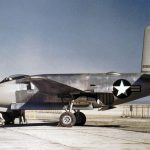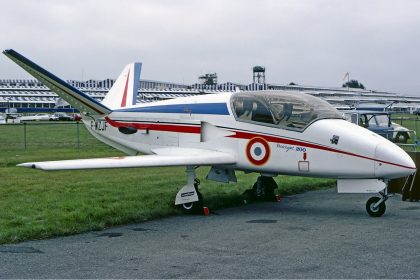
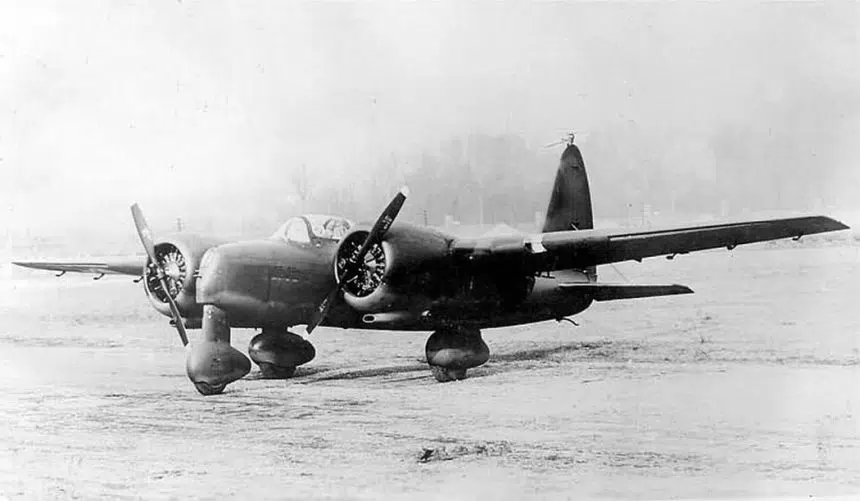


During WWII, Fleetwings developed an unmanned aerial vehicle for the US Army Air Forces, designated the Fleetwings BQ-2. The program began in March 1942 when the US Army Air Forces started developing drones that could be controlled by radio. These drones, often referred to as “aerial torpedoes,” were unmanned and used only once. The drones were designed to deliver a large amount of explosives without putting pilots in danger.
Design of Fleetwings BQ-2

The development of the Fleetwings BQ-2 started on July 10, 1942. Fleetwings was hired to build a single XBQ-2 assault drone powered by two Lycoming XO-435 horizontally opposed piston engines. It had fixed tricycle-configuration landing gear, which could be jettisoned to improve aerodynamics. The Fleetwings BQ-2 could be flown with or without a pilot. It had a single-seat cockpit for ferry and training flights, and during missions, a fairing replaced the cockpit canopy. The Fleetwings BQ-2 was designed to carry a 2,000-pound warhead over a distance of 1,717 miles at a speed of 225 miles per hour. The aircraft would be destroyed upon impact with the target. One BQ-1 would also be built under the same contract.
The Cancellation

The design of the Fleetwings BQ-2 aircraft changed before it was finished. The original XO-435 engines were replaced with two Lycoming R-680 radial engines, and the aircraft was renamed XBQ-2A. The XBQ-2A flew in mid-1943 after tests of a television-based command guidance system using a PQ-12 target drone. However, after flight trials, the design was deemed too costly for regular use, leading to the program’s cancellation in December 1943. The US Army Air Forces couldn’t find success with the air torpedo program in WWII and eventually opted out of it entirely. Other drones were also canceled largely because they were prone to anti-aircraft fire. While the US Army Air Forces ended its program, the US Navy had some success in the Pacific with special drones such as the TDR-1. Read more Grounded Dreams articles HERE.