






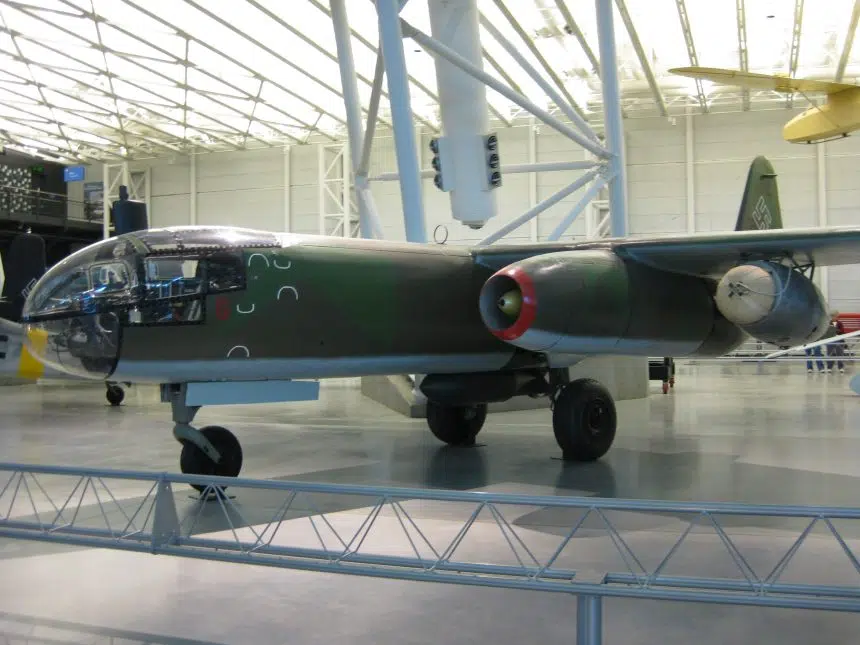

Originally formed as the Warnemünde factory of the Flugzeugbau Friedrichshafen company, which made military aircraft and seaplanes during both World Wars, Arado Flugzeugwerke was a German aircraft manufacturer. After WWI, the company stopped operations due to restrictions on German aviation from the Treaty of Versailles. In 1921, Heinrich Lübbe bought the factory. He had helped Anthony Fokker create the important Stangensteuerung synchronization gear system between 1914 and 1915, and then resumed aircraft production for export. Walter Rethel, who previously worked at Kondor and Fokker, became the head designer. In 1925, the company joined a trading firm founded by industrialist Hugo Stinnes Jr, Arado Handelsgesellschaft, to disguise illegal trade in military equipment. When the Nazi government took control in Germany in 1933, Lübbe took over the company. Shortly before that, Walter Blume, who had previously worked at Albatros, replaced Rethel as chief designer. Arado became known for supplying the Luftwaffe with the Arado Ar 66, a trainer aircraft used throughout WWII. The company also built some of the Luftwaffe’s first fighter planes, such as the Ar 65 and Ar 68.

In 1936, the Reich Aviation Ministry required Lübbe to join the Nazi Party as a sign of loyalty. When he refused, authorities arrested him and forced him to sell the company to the state. The company was renamed Arado Flugzeugwerke GmbH and was managed by Erich Serno and Felix Wagenführ, who had served as officers in WWI. When Germany invaded Poland, starting WWII, two Arado aircraft became important. The Ar 96 was the Luftwaffe’s most widely used trainer, and the Ar 196 was a reconnaissance seaplane used on all larger German warships. However, many of Arado’s other designs were not chosen because stronger competitors had better products. For instance, the Heinkel He 177 was Germany’s only heavy bomber in the war, and Arado was its main subcontractor. Arado’s most famous aircraft during the war was the Ar 234, the first jet-powered bomber. While it arrived too late to change the war’s outcome, it showed the future of aviation. From August 1944 until their liberation in April 1945, 1,012 slave laborers worked at the Arado factory in Freiberg, a sub-camp of the Flossenbürg concentration camp.

The first group of workers arrived on a train with 249 prisoners. Most of the prisoners were Polish Jewish women and girls sent to Freiberg from Auschwitz. Arado made different versions and parts for the Focke-Wulf Fw 190. However, following the defeat of Nazi Germany at the end of WWII in 1945, the company closed down. The Ar 96 was produced in Czechoslovakia for many years after the war and was known as the C.2B. Arado produced many aircraft, including sports planes, trainers, civilian planes, fighters, reconnaissance planes, bombers, transport planes, and seaplanes. Some of its aircraft designs included the Arado L 1 and L II sports planes; the Ar 64, Ar 65, Ar 68, and Ar 76 fighters; the Ar 66, Ar 96, and Ar 396 trainers; and the Ar 95 and Ar 196 seaplanes. It also created the Ar 232 transport. Among its more famous wartime planes were the Ar 234 Blitz jet bomber, the Ar 240 heavy fighter, the Ar 340 medium bomber, and the Ar 440 heavy fighter. The company also worked on many experimental and proposed aircraft as part of the RLM’s wartime programs, including projects like the E.240, E.300, E.340, E.377, E.381, E.500, E.555, E.580, and E.625, along with the Arado Ar Projekt II jet fighter.


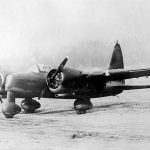







I’ve always felt that the Arado Ar-234 had tremendous potential that wasn’t really exploited by them, I recall Capt. Eric “Winkle” Brown’s review of it’s flight envelope was quite complementary… It could have become a real asset for the Luftwaffe ~