
In December 1940, the United States Navy started studying a proposed “glider bomb” that would be a low-cost, unpowered aircraft and controlled from another airplane. The aim was to bomb targets behind enemy lines with the minimum exposure of pilots to enemy defenses. The glider bomb, or “Glomb,” would be towed to the target area by a standard carrier-based aircraft. Once the glider was released, a TV camera in the nose would steer it. This camera would send signals to a pilot in the towing aircraft, who would use radio control to steer the Glomb to its target. After the Navy’s initial review, the service decided to further develop the Glomb. In April 1941, the project was officially approved by the Bureau of Aeronautics. The first trials of the Glomb concept used modified gliders for remote-controlled flight. These tests showed promise, leading to industry requests for designs.
Design of Taylorcraft LBT
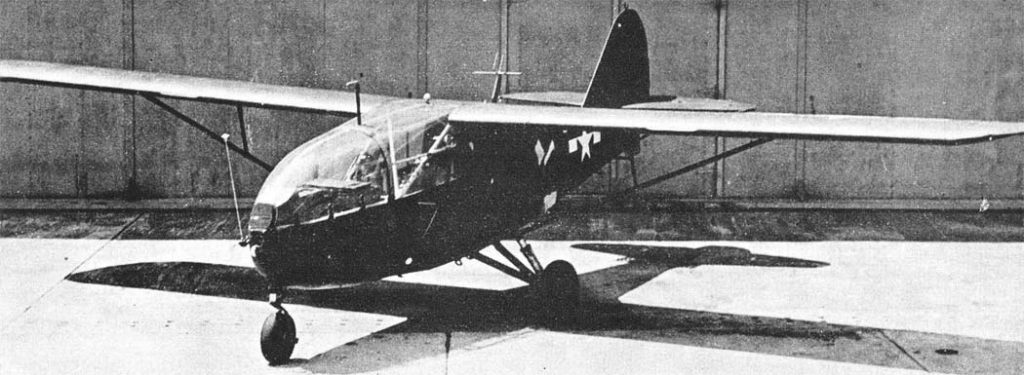
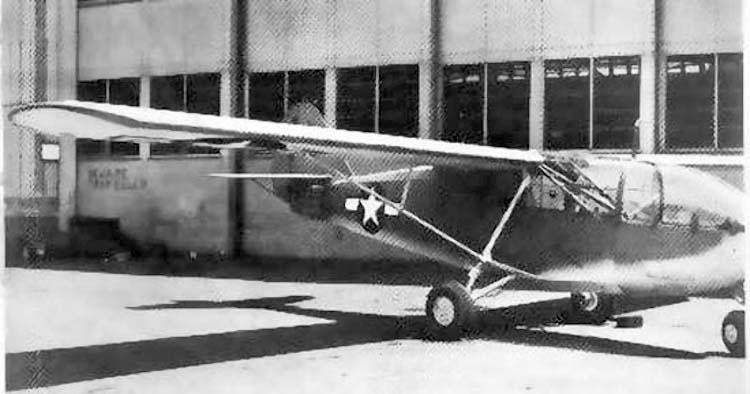
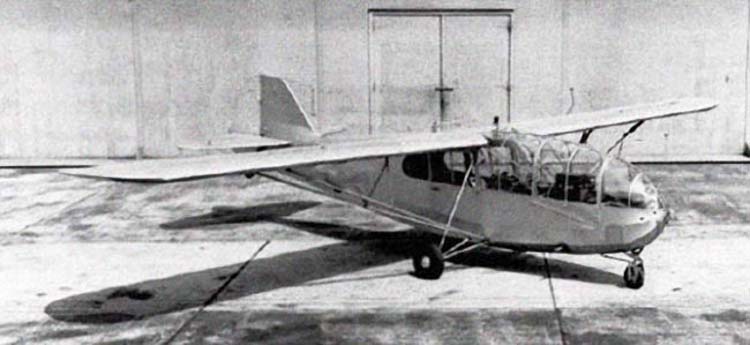
The US Navy awarded contracts to three companies, Pratt-Read, Piper Aircraft, and Taylorcraft, to develop the “Glomb” aircraft. The Taylorcraft design, called Taylorcraft LBT by the Navy, was based on the company’s LNT-1 training glider. Two XLNT-1s had been converted to remote control and tested in the early Glomb trials. The LBT-1 had a high, strut-braced wing and tricycle landing gear. It was designed to carry a 2,000-pound bomb. The aircraft included a TV-and-radio remote guidance system and also had a cockpit, allowing a pilot on board to fly it during training and evaluation flights. It was 25.2 feet long, with a wingspan of 35 feet and a wing area of 181 square feet. Its gross weight was 3,930 pounds. The maximum speed of the Taylorcraft LBT was envisioned at 314 mph in a dive, with a cruise speed of 240 mph. The Navy started testing the Taylorcraft LBT in April 1944. It subsequently ordered 100 of each type of Glomb. However, by October 1944, early tests showed that the glider bomb did not perform well and was a disadvantage.
The Cancellation
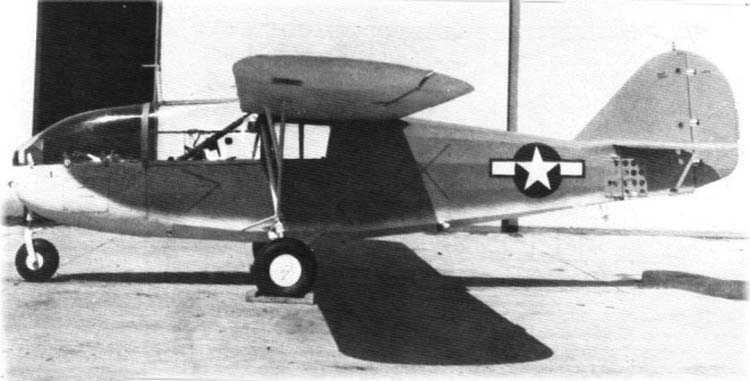
However, the Piper LBP-1 and Pratt-Read LBE-1 proved to be better alternatives, but not for long. In 1944, the program was scaled back because of problems with the guidance system and the difficulties of generating electricity to power the glider’s systems. The Taylorcraft LBT was canceled in October after only 25 aircraft had been built. Orders for the LBE and LBP were lowered first to 85 aircraft in November 1944, then to 35 each in February 1945. Issues with landing operations led to the cancellation of the LBP in June 1945. On August 14, a review of the project led to the termination of the LBE, the last model, with only four aircraft delivered. Hence, the project continued during the war and produced several prototype aircraft. Technical problems prevented any of the Glombs from entering service, and the program ended with the war. Read more Grounded Dreams articles HERE.