
In the 1930s, the Japanese Army needed a new fighter to replace the existing Kawasaki Ki-10 biplane. In mid-1935, Kawasaki, Mitsubishi, and Nakajima were asked to build competing prototypes. Mitsubishi was busy improving the A5M fighter and getting the G3M bomber ready for production for the Imperial Japanese Navy. Because of this, the company didn’t have enough design resources to create a new fighter from scratch. Instead, it submitted an earlier design, the Ki-18, with some minor changes. The Ki-18 had been a good fighter, and its earlier rejection was based on principles, not quality.
Design of Mitsubishi Ki-33

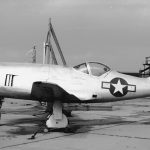
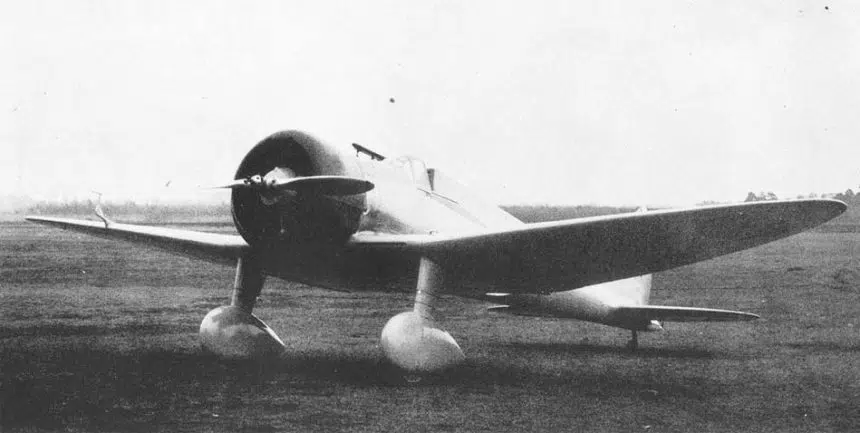
The modified design was designated the Mitsubishi Ki-33. It used a Nakajima Ha-1-Ko engine that produced 744 hp at an altitude of 12,100 feet. The design included an aft-sliding canopy, a raised aft fuselage deck, and modified vertical tail surfaces. The Mitsubishi Ki-33 prototypes were completed in early summer 1936. The single-seat aircraft was 24.9 feet long, 10.6 feet high, with a wingspan of 36.1 feet and a wing area of 192 square feet. The empty weight was 2,496 pounds and the maximum takeoff weight was 3,223 pounds.
The Cancellation

The maximum speed of the Mitsubishi Ki-33 was estimated at 295 mph at 9,800 feet. The aircraft could be armed with two fixed, forward-firing 7.7 mm Type 89 machine guns. Service tests from November 1936 to spring 1937 showed that the Kawasaki Ki-28 was the fastest of the three aircraft. However, the Nakajima Ki-27 was much more maneuverable. Based on this performance, the Imperial Japanese Army Air Force chose the Nakajima Ki-27 and canceled the Mitsubishi Ki-33. Read more Grounded Dreams articles HERE.