






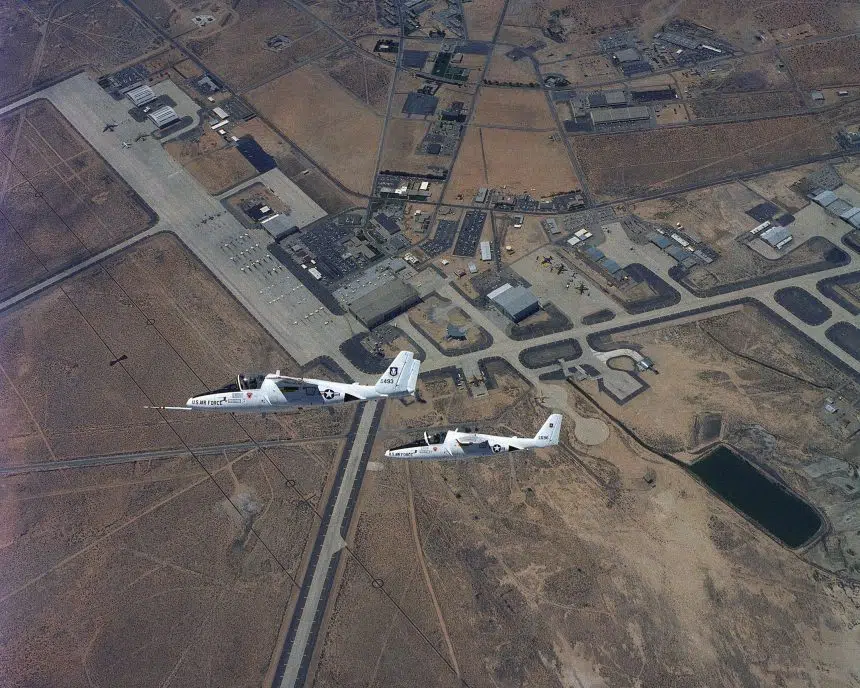

In 1981, the United States Air Force started its Next Generation Trainer program to replace the Cessna T-37 Tweet. The requirement was for a twin-engine aircraft with side-by-side seating for a trainee pilot and an instructor, similar to the layout of the T-37. Unlike the T-37, the new aircraft would have a pressurized cockpit and ejection seats. The reason for the pressurization was to enable training at higher altitudes, in anticipation of increased general aviation traffic. It would reduce restrictions for new pilots. Fairchild-Republic, General Dynamics, North American Rockwell, and Vought received contracts to develop design concepts, while Cessna was asked to explore improvements to the T-37. Fairchild-Republic proposed a shoulder-winged monoplane with a twin tail, powered by two Garrett F109 turbofan engines. To test the design of the proposed aircraft and understand how it would handle in flight, Fairchild Republic hired Ames Industries in Bohemia, New York, to create a 62% scale model that could fly. Burt Rutan’s Rutan Aircraft Factory in Mojave, California, was hired to conduct the flight tests, with test pilot Dick Rutan flying the plane. The scale model was called the Model 73 NGT and first flew on September 10, 1981.
Design of Fairchild T-46

One important requirement was that the Fairchild T-46 could enter a spin but could also recover easily from it. This capability was successfully demonstrated with the Model 73 NGT. Fairchild won the design competition for the Fairchild T-46 on July 2, 1982. The US Air Force then ordered two prototypes, had options for 54 more aircraft, and planned to build a total of 650 T-46s by 1991. The two-seat aircraft was 29.6 feet long, 9.11 feet high, with a wingspan of 38.7 feet and a wing area of 160.9 square feet. The empty weight was 5,275 pounds, and the maximum takeoff weight was 6,962 pounds. It was powered by two Garrett F109-GA-100 turbofan engines, each producing 1,330 lbf of thrust. The maximum speed of the Fairchild T-46 was estimated at 457 mph at 25,000 feet, with a cruise speed of 383 mph at 45,000 feet, a range of 1,370 miles, and a service ceiling of 46,500 feet. The aircraft made its first flight on October 15, 1985, which was six months later than planned. Development costs increased significantly, with the expected price per unit rising from $1.5 million in 1982 to $3 million by February 1985. The 1985 Gramm–Rudman–Hollings Balanced Budget Act required the US government to cut spending to reduce the national debt.
The Cancellation
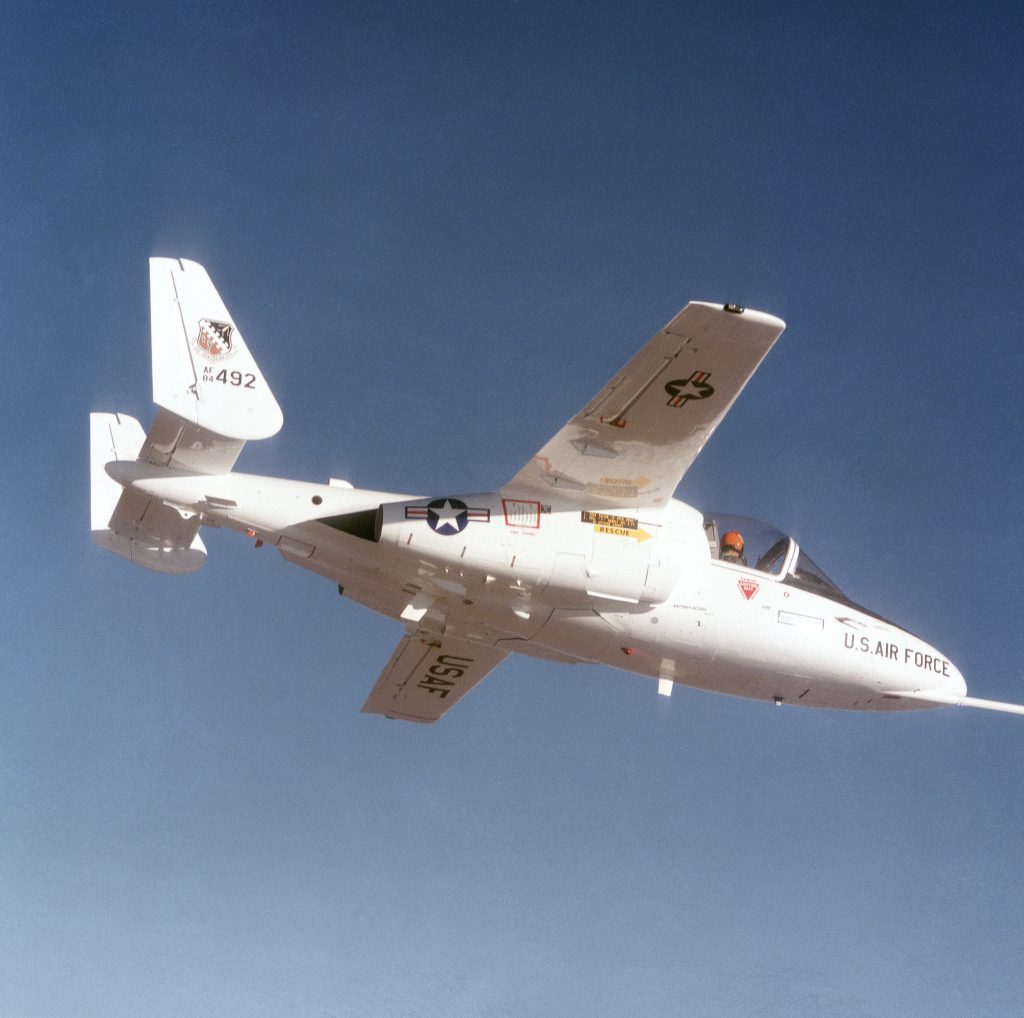
Although testing showed no major problems, Secretary of the Air Force Russell A. Rourke canceled the purchase of the Fairchild T-46 but allowed some development to continue. Efforts in Congress to revive the program led to delays in the 1987 budget. An amendment to the 1987 Appropriations Bill was passed, prohibiting spending on the T-46 until its performance was evaluated against the T-37 and other training aircraft. The U.S. Air Force canceled the Fairchild T-46 program in March 1986. The loss of the program later contributed to Fairchild Republic’s decision to close its Farmingdale, New York, facility in 1987. The aircraft had a side-by-side seating layout and a twin tail, similar to the A-10. It included ejection seats, pressurization, and two turbofan engines. In the Grounded Dreams series, if it had gone into full production, the NGT program planned to build 650 aircraft by 1992, and there was also a possibility of selling it overseas, particularly for light ground attack and training. Read more Grounded Dreams articles HERE.










We have the Cockpit Procedure Trainer for the T-46. It is made from actual T-46 components. A unique bit of history!