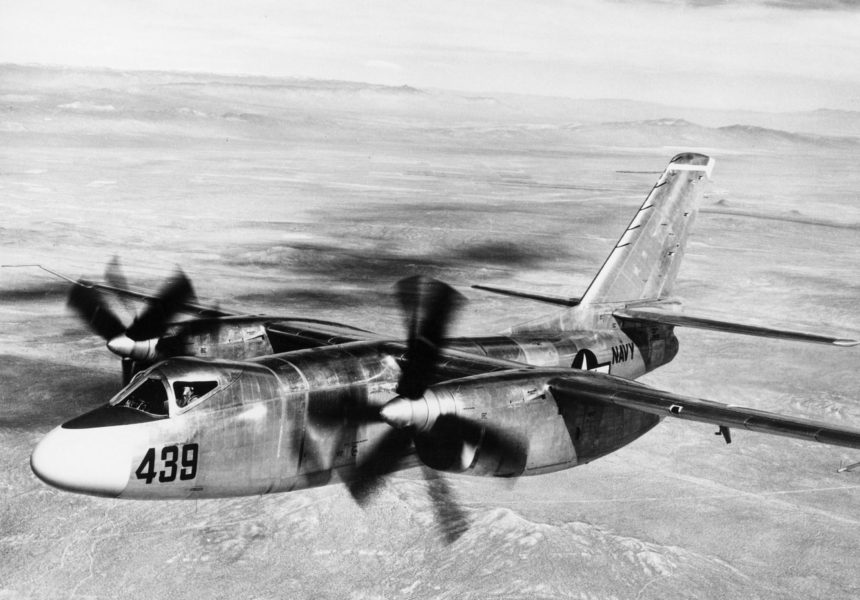

In the late 1940s, North American Aviation initiated design work on a carrier-based attack aircraft based on its medium bomber, the AJ Savage. Designated the North American XA2J Super Savage, the aircraft was intended to be a turboprop version of the AJ Savage. Initially proposed in December 1947, it was a simple modification of the Savage, using many of its parts. However, the design evolved over time to improve performance and better suit aircraft carriers. Manufacturing of two North American XA2J Super Savage prototypes began on October 1, 1948, but engine problems delayed the first flight.
Design of North American XA2J Super Savage
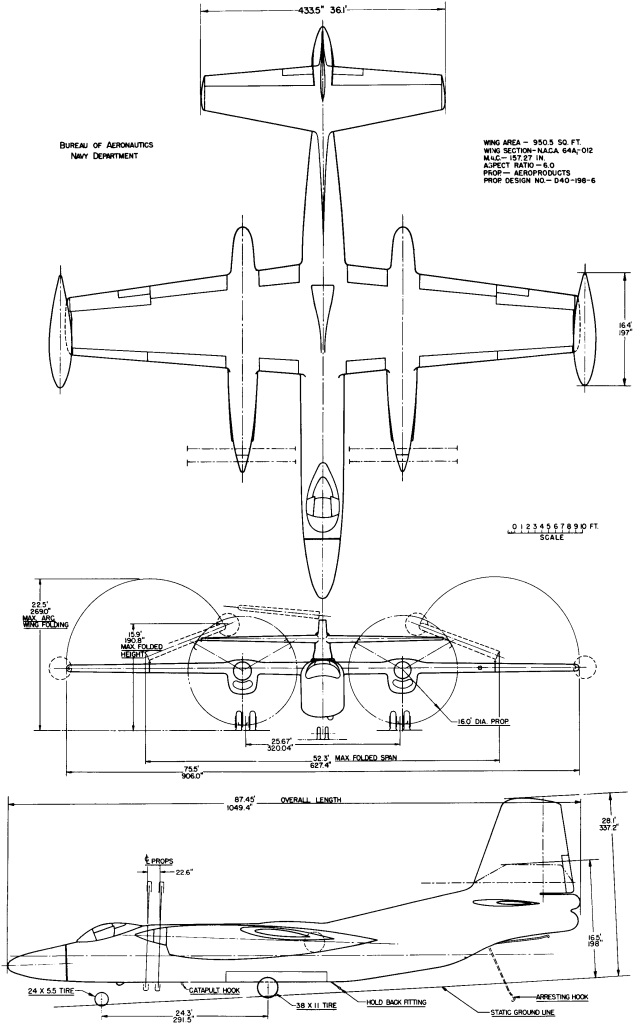
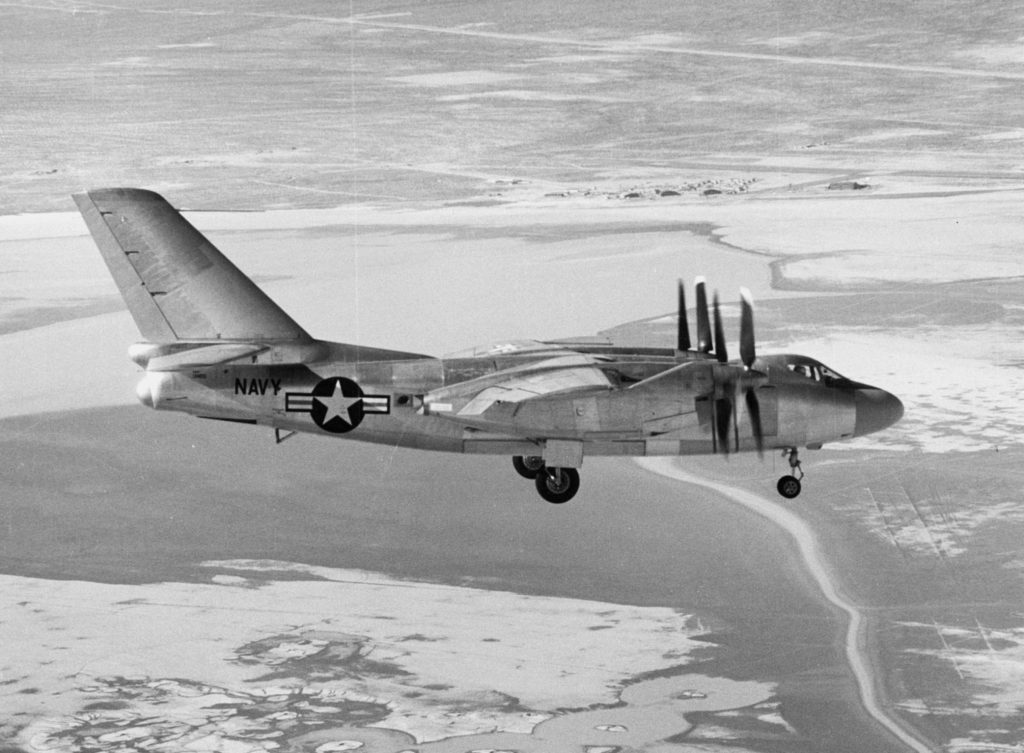
The North American XA2J Super Savage flew for the first time on January 4, 1952. With a crew of three, including a pilot, co-pilot/bombardier, and gunner, the North American XA2J Super Savage was 70.3 feet long, 24.2 feet high, with a wingspan of 71.6 feet and a wing area of 836 square feet. The empty weight of the aircraft was 35,350 pounds, the gross weight was 46,890 pounds, and the maximum takeoff weight was 61,200 pounds. It was powered by two Allison T40-A-6 turboprop engines, each producing 5,035 horsepower. The maximum speed of the aircraft was envisioned at 451 mph, with a range of 2,180 miles, a service ceiling of 37,500 feet, and a rate of climb of 6,820 feet per minute. The aircraft could be armed with two 20 mm cannons in the tail and 10,500 pounds of bombs, carried in a bomb bay in the center fuselage. The North American XA2J Super Savage was made entirely of metal and used tricycle landing gear. It had a straight wing positioned high on the body, with a drooping leading edge and large flaps at the back.
The Cancellation
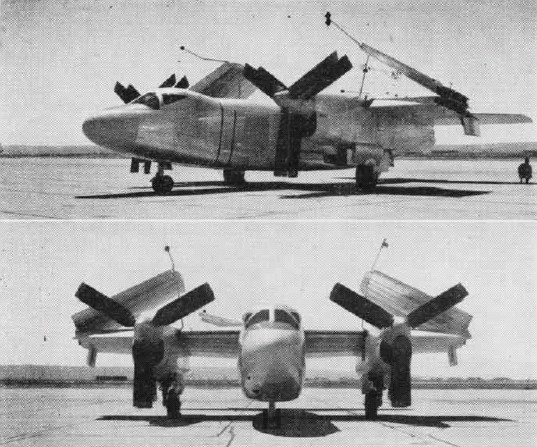
To fit onto a carrier, the aircraft’s wings and tail could fold down using hydraulic power. The aircraft competing against the North American XA2J Super Savage was the Douglas XA3D. The XA3D prototypes, which began flying in October 1952, performed much better than the XA2J. The XA2J project failed mainly due to the lengthy development and poor reliability of the Allison T40 engines. The T40 engine had an ambitious design, featuring two power sections. To help with its development, the T38 was created, which used a single power section along with an extension shaft and gearbox. However, both engines and the gearbox proved unreliable. After several problems with the engines, the XA2J project was canceled, and the second prototype was never flown. The T40 engine was also tested in other aircraft and led to the failure of aircraft such as the Douglas XA2D-1 Skyshark, Convair XP5Y-1 and R3Y Tradewind, Convair XFY-1 Pogo, Lockheed XFV-1, Republic XF-84H Thunderscreech, and so on. In the Grounded Dreams series, the North American XA2J Super Savage was not a bad aircraft, but its engine choice made it suffer. Read more Grounded Dreams articles HERE.