
(Image credit: VAN)
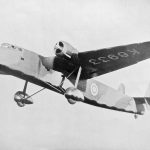
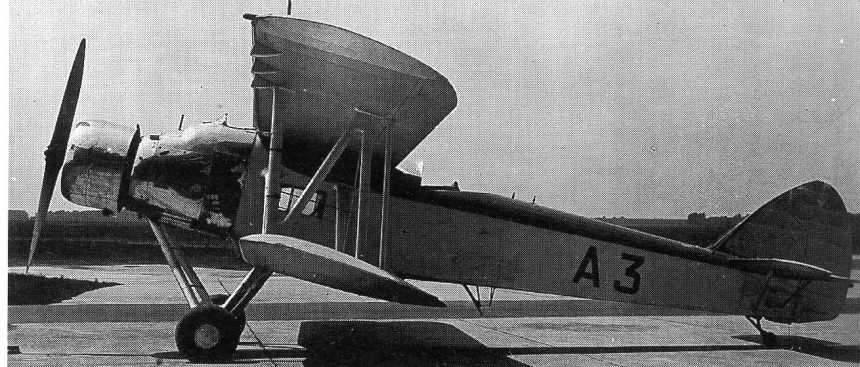
On this day in aviation history, 92 years ago (February 26, 1934), the first flight of the Armstrong Whitworth A.W.19 took place. A two/three-seat single-engine biplane, the A.W.19 was developed by Armstrong Whitworth as a general-purpose military aircraft to serve the needs of the British Air Ministry. In July 1931, Air Ministry Specification G.4/31 was issued, which sought to replace the Westland Wapiti. The Wapiti had been serving as a multi-role aircraft, responsible for light bombing, dive-bombing, torpedo bombing, and reconnaissance during day and night. This specification order drew the attention of a dozen British aviation manufacturers and resulted in 30 designs being submitted.
Of the numerous design submissions, only three would be awarded a prototype contract, and Armstrong Whitworth was not one of them. The company elected to instead submit their design as a “private venture” machine. Armstrong’s A.W.19 had a square-section fuselage made of steel tubes, which was covered with aluminum at the front, and canvas-covered at the back. The upswept, constant chord wings arranged in mild stagger consisted of rolled-steel strip spars and aluminum alloy ribs covered by fabric. The fixed main landing gear was split to allow for a torpedo to be mounted between them. Between the front and rear cockpits was a cabin, which housed the observer/navigator. The front cockpit pilot’s position sat just forward of the top wing, while the rear gunner sat well aft of the rear wing.
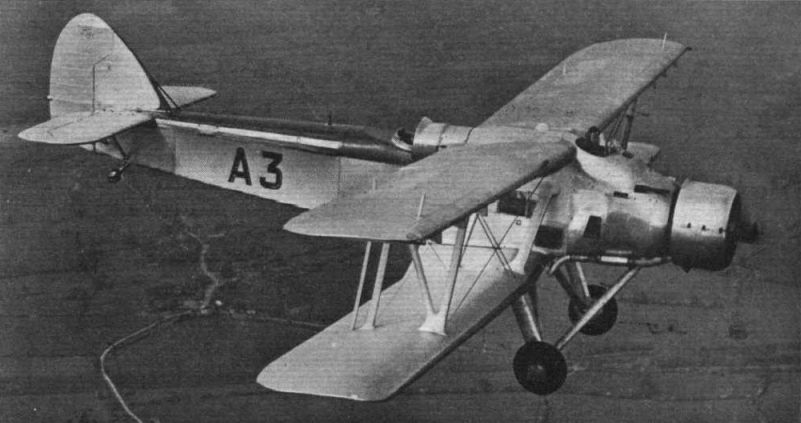
After the A.W.19’s first flight, the aircraft’s 810-horsepower Armstrong Siddeley Tiger IV 14-cylinder radial engine proved to be prone to overheating. The Air Ministry did purchase the A.W.19 prototype in 1935; no further production orders followed. The Air Ministry did order 150 competing Vickers Type 253s, which were powered by the more reliable Bristol Pegasus engine. However, the Air Ministry was beginning to lean towards a preference for monoplanes, and they would modify this order for 96 Vickers Wellesleys. The A.W.19 continued to serve as a test bed for Tiger engines until June of 1940.
The Armstrong Whitworth A.W.19 was 42 feet 2 inches long and had a wingspan of 49 feet 8 inches. The empty weight was 4,398 pounds, while the max gross was established at 19,290. The A.W.19 had a maximum airspeed of 163 mph and a service ceiling of 21,000 feet. Armament came in the form of a 0.303-inch machine gun firing through the propeller, and another ring-mounted Lewis Gun in the rear cockpit. Additionally, a single 2,000-pound torpedo or 1,000-pound bomb could be mounted under the fuselage, plus another 1,000 pounds of bombs on underwing racks.