





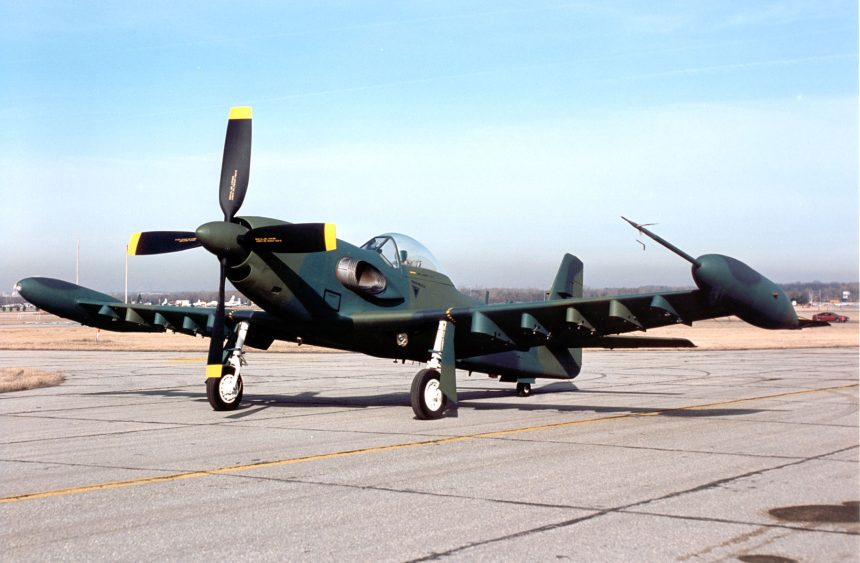

On this day in aviation history, 55 years ago (April 29, 1971), the first flight of the Piper PA-48 Enforcer took place. The PA-48 was a light close-air-support aircraft built by Piper in the 1970s. Piper developed the Enforcer as a turboprop-powered furtherance of the North American P-51 Mustang. Originally, the concept of the Enforcer was the idea of David Lindsay, the owner of Cavalier Aircraft. Lindsay began developing the aircraft from the Cavalier Mustang in response to the United States Air Force PAVE COIN program. Cavalier was unable to mass-produce the Enforcer due to limitations in manufacturing capacity, so the concept was sold to Piper in 1970.
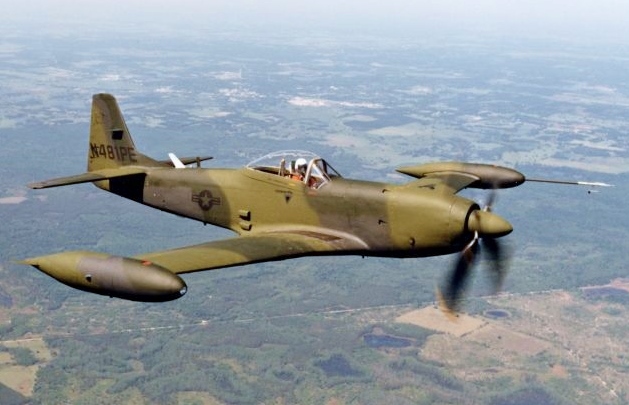
When Cavalier was developing the Enforcer, a Rolls-Royce Dart 510 turboprop was mated to a Mustang II airframe. Called the Turbo Mustang III, the aircraft benefited from a significant increase in performance. The Cavalier PAVE COIN concept also saw an increase in payload and a decrease in maintenance costs. Cavalier equipped the Turbo Mustang III with Bristol ceramic armor to protect the engine, airframe, and pilot. Although Cavalier tried mightily to sell the aircraft to the USAF, neither the US military nor any foreign operators showed interest. Cavalier renamed the Turbo Mustang III as the Enforcer to attract potential buyers with great production capacity. Piper bought the aircraft, but David Lindsay would continue to help develop the Enforcer alongside Piper’s engineering team.
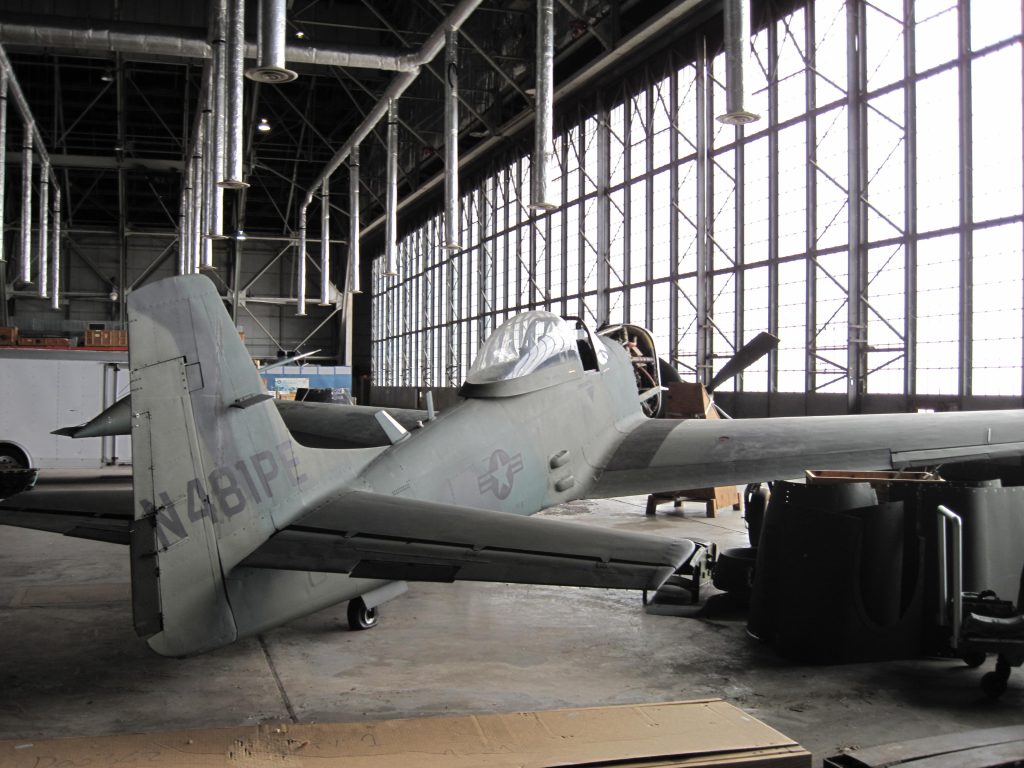
Piper leased a Lycoming T55-L-9 engine from the USAF and fit it to the Enforcer. The aircraft was flown for over 200 hours, and other prototypes were manufactured shortly after. Piper and Lindsay fought hard for Congress to urge the Air Force to purchase the Enforcer. In 1979, the defense bill allocated $11.9 million to Piper for two new prototypes. The aircraft was never placed in the US Air Force inventory, so it retained the Piper designation of PA-48. When the first two PA-48s were completed, the airframes shared less than 10% of their structure with the original P-51. The Enforcer was larger and longer than the Mustang, essentially a completely new aircraft.
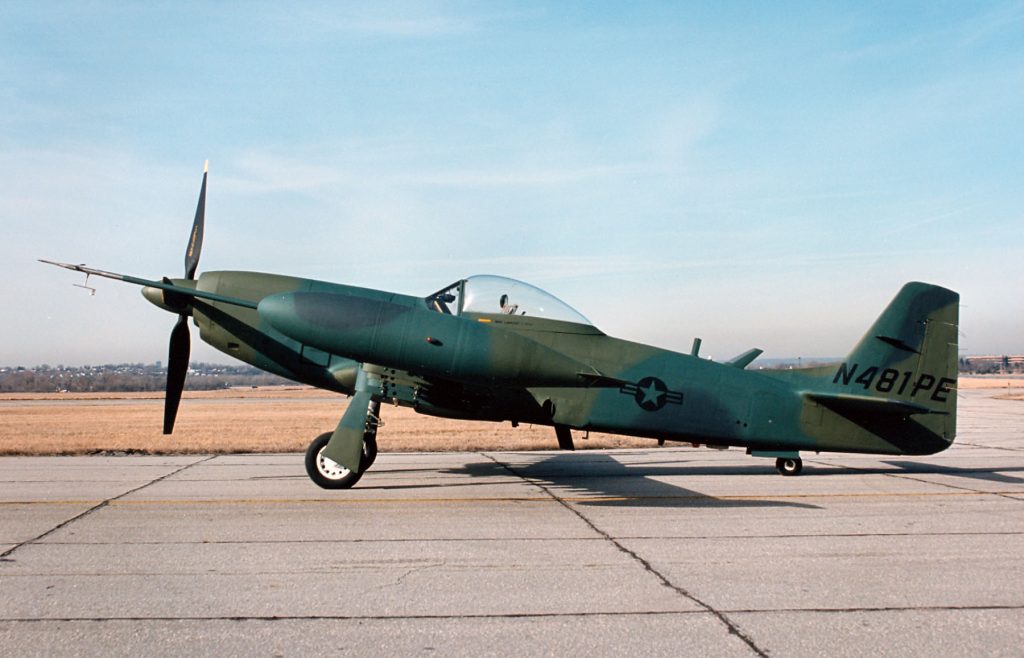
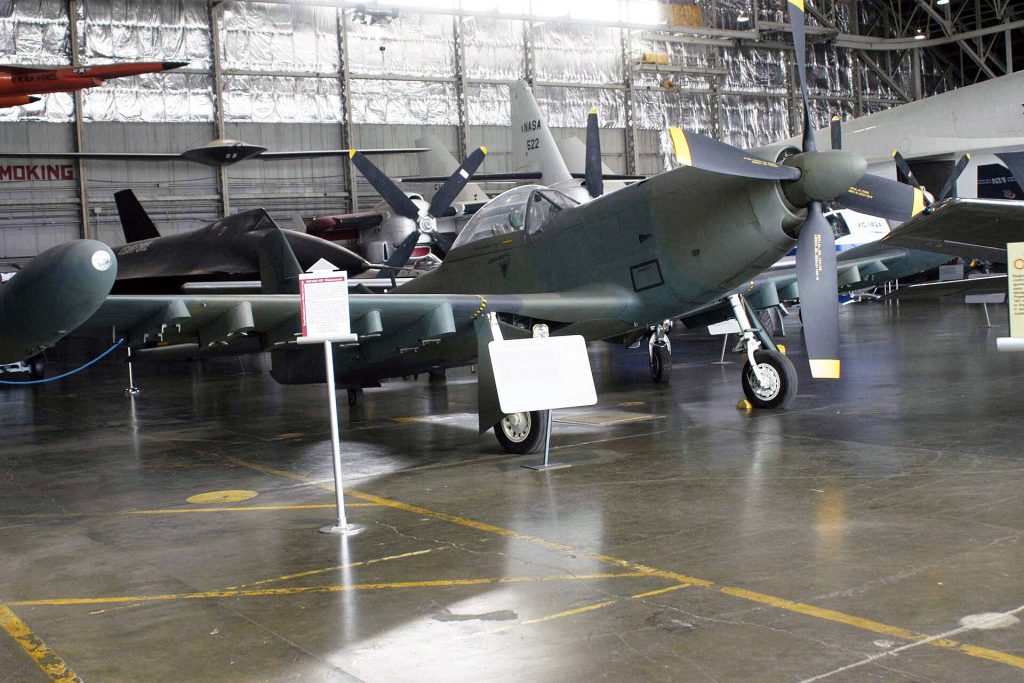
The Piper PA-48 was powered by a Lycoming YT55-L-9 turboprop engine that provided 2,445 shaft horsepower. The Enforcer could cruise at 253 mph and attain a maximum airspeed of 345 mph (Vne, 402). A combat range of 460 nautical miles and a 2,500-foot-per-minute rate of climb made the PA-48 an excellent candidate for the PAVE COIN role. The Enforcer had ten under-wing hardpoints, with a capacity of 5,680 pounds. The two PA-48s were tested in 1983 and 1984 by the USAF, and though they performed as required, the Air Force decided not to purchase the aircraft. Two of the four Enforcers built still survive today. N481PE is on display at the Pima Air & Space Museum, and N482PE resides at the Air Force Flight Test Museum at Edwards Air Force Base.





Unfortunately for our ground troops, the US ayafoyce very conceitedly believes that close air support is beneath their dignity, hence their continued effort to retire the A10 and replace it with the cost prohibitive and shoehorned-into-an-objective F35A, when the PA48 would more likely perform the desperately needed task at a fraction of the cost. Pity the ground-pounders, as well as the US taxpayer….
The PA-48 was also noisy as hell while in flight and could be heard by the enemy from several miles away, allowing the enemy to either withdraw or set up a more formidable defense against it…
Lobbyists from the big manufacturers dissuaded things like this. There was lots of old airframes lying around and if small time engineers could make cheap improvements on them, it would cut into Boeing, Lockheed Martin, Grumman, and others profits.