
In 1925, Edward E. Porterfield founded American Eagle Aircraft Corporation in Kansas. The company was incorporated in Delaware in September 1928. Porterfield was operating a flying school at Fairfax Airport near Kansas City. He used Jennies and Lincoln Standard biplane trainers, but he wanted a better trainer aircraft. Porterfield spoke with several aeronautical engineers and began producing light, single-engine, two-seat, high-wing and biplane aircraft. In July 1929, the company bought the Wallace Aircraft Company. By June 1930, J. Carroll Cone and his assistant Joseph A. Young joined the company as vice president of sales. In late 1929, the global stock market crashed, which hurt sales of non-essential items like sport airplanes. Despite this, American Eagle continued to build airplanes until 1931.

Early that year, Porterfield’s company declared bankruptcy and halted production. On May 14, 1931, the Lincoln Aircraft Company from Lincoln, Nebraska, bought the company’s assets and formed the American Eagle-Lincoln Aircraft Corporation. To avoid future competition if he started his own aircraft manufacturing business, Porterfield agreed to work as a sales representative for the new company for two months. After his contract ended, Porterfield left the company in July 1931. He later started the Porterfield Aircraft Corporation and died of a heart attack in 1948. Victor Roos, who was already the president of the Lincoln Aircraft Company, continued as president of the American Eagle-Lincoln Aircraft Corporation. The new company focused mainly on making the Eaglet, but the Great Depression soon ended this effort. Despite this, the company looked into building a new factory in Florida.

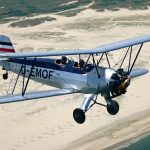
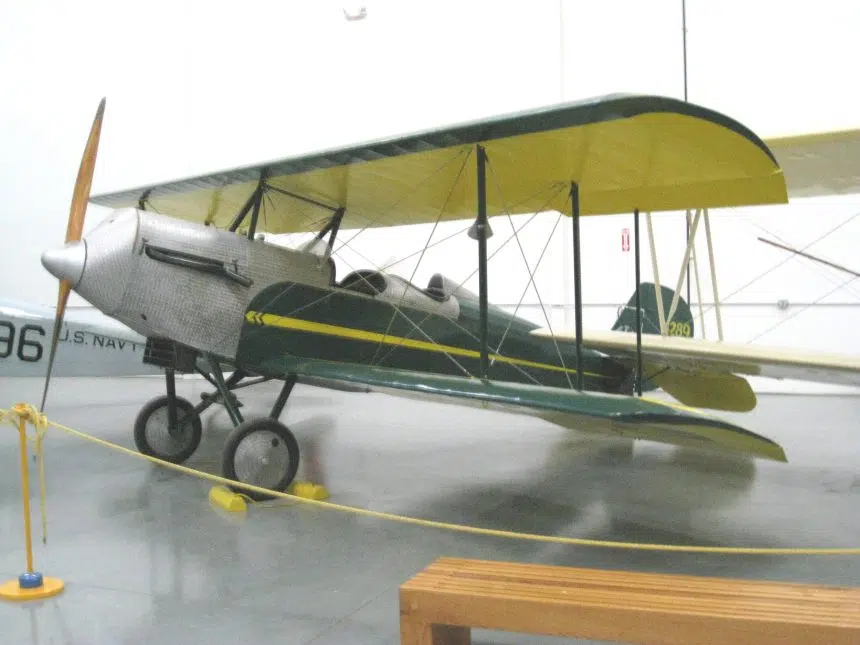
In its six years of operation, the American Eagle company, including its time with Lincoln, made over 700 airplanes. During the Depression, it was the third-largest aircraft manufacturer in the world. The American Eagle Aircraft Corporation made many light aircraft in the 1920s and early 1930s. Some of its well-known models include the A-101, a single-engine open-cockpit biplane introduced in 1926, and the A-129, another open-cockpit biplane with over 400 units produced starting in 1929. It also created the A-139 and A-201, with 24 and 44 units made, respectively, along with the A-229 and A-251 Phaeton, all single-engine, open-cockpit biplanes. The company shifted towards enclosed designs with the A-329 and A-330, both single-engine cabin monoplanes. The A-429 had a small production run of just two open-cockpit biplanes, and the A-430 was a two-unit cabin monoplane. The company also looked into larger twin-engine models, such as the A-529, which was never produced, and the A-629, of which only one twin-engine monoplane was built. The Eaglet family started with the A-230 Eaglet in 1930 and included the A-231, A-31, B-31, and B-32 variants, all single-engine open-cockpit monoplanes. Later models included the D-430, with one or two aircraft produced, and the E-430, of which five units were built, both single-engine cabin monoplanes.