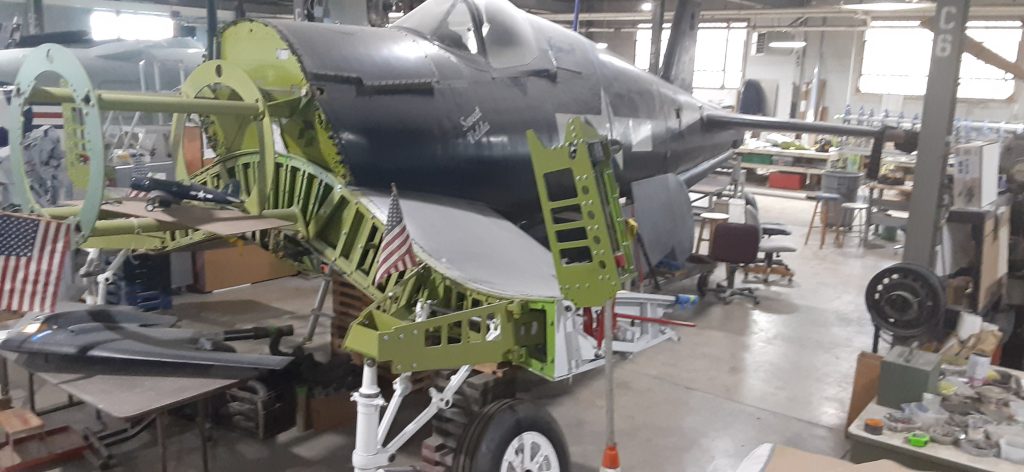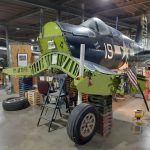
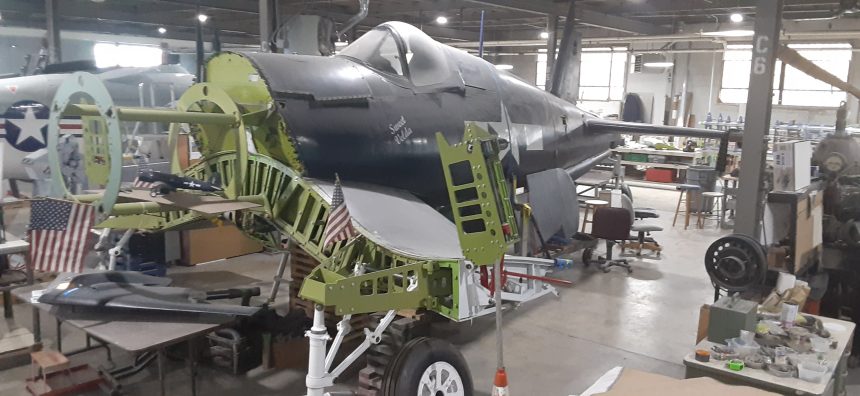

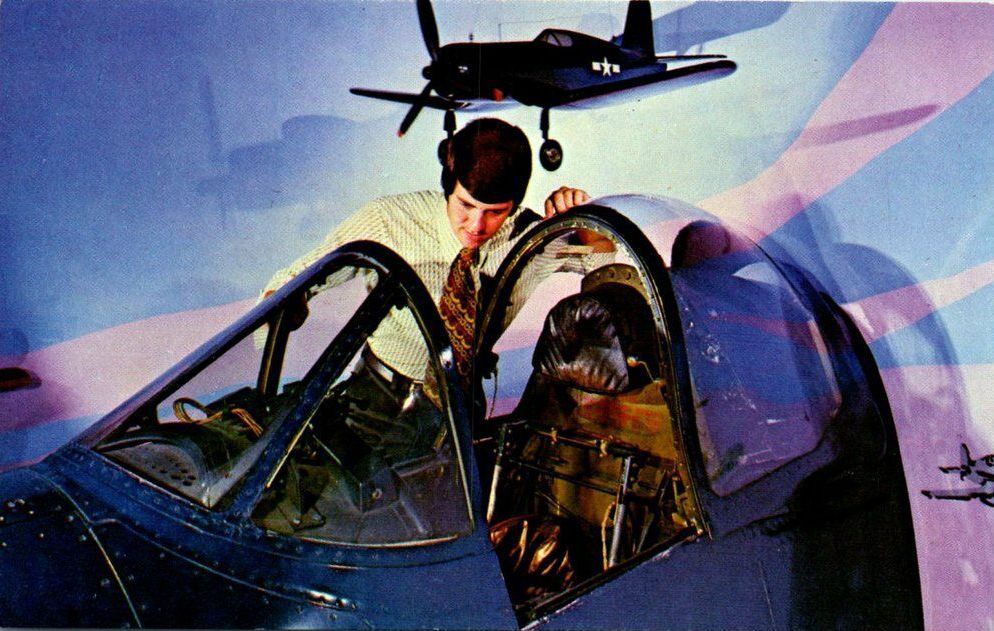
This update features insights from Dave Pawski, a volunteer at the MAPS Air Museum and the restoration lead on the museum’s FG-1D Corsair (BuNo 76671). The aircraft, once displayed for more than fifty years at Goodyear’s “World of Rubber” museum in Akron, Ohio, has been undergoing a long-term restoration effort since the facility’s closure in August 2009. What survives today represents the remains of that aircraft, now steadily being returned to form. Our previous article tells the full story of this airplane.
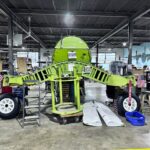
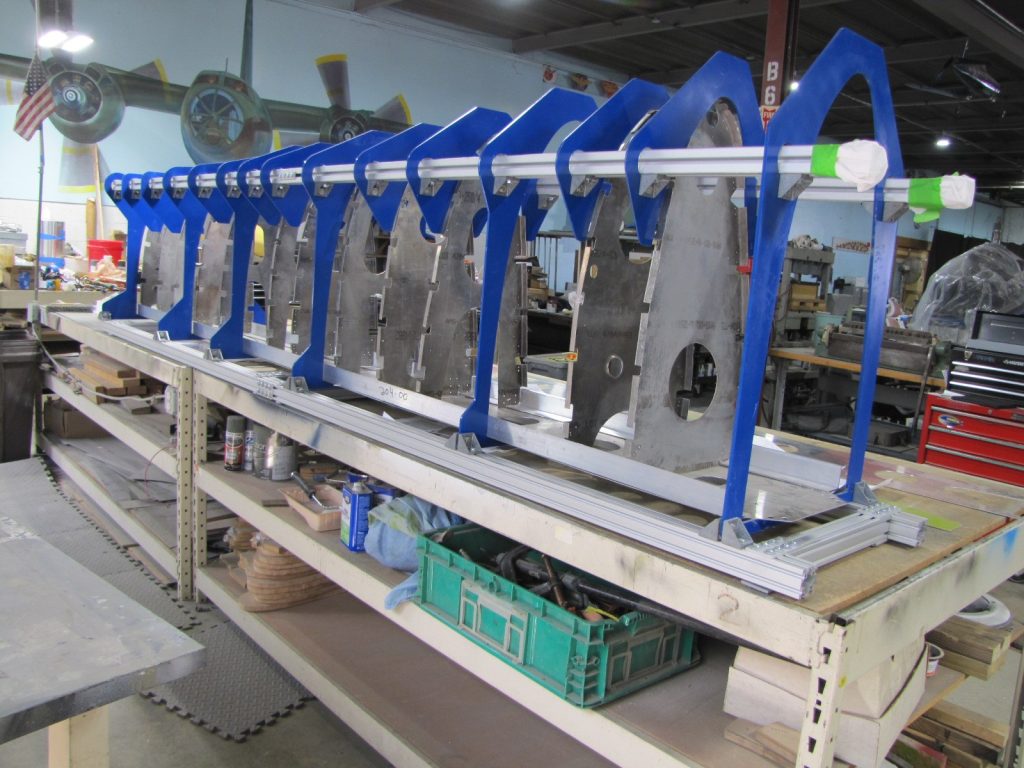
Progress on the Corsair slowed during the latter part of last year while Pawski was away from the museum for several months. Work has since resumed, with activity focused across multiple areas, including the outer wing panels, control surfaces, and landing gear assemblies. Current efforts are centered on the left outer wing panel, specifically the leading edge structure. To support this work, Pawski constructed a dedicated fixture using an 80/20 extruded aluminum base fitted with plasma-cut steel cradles. These components are designed to accurately position the leading edge ribs while stringers are fitted and secured with brackets.
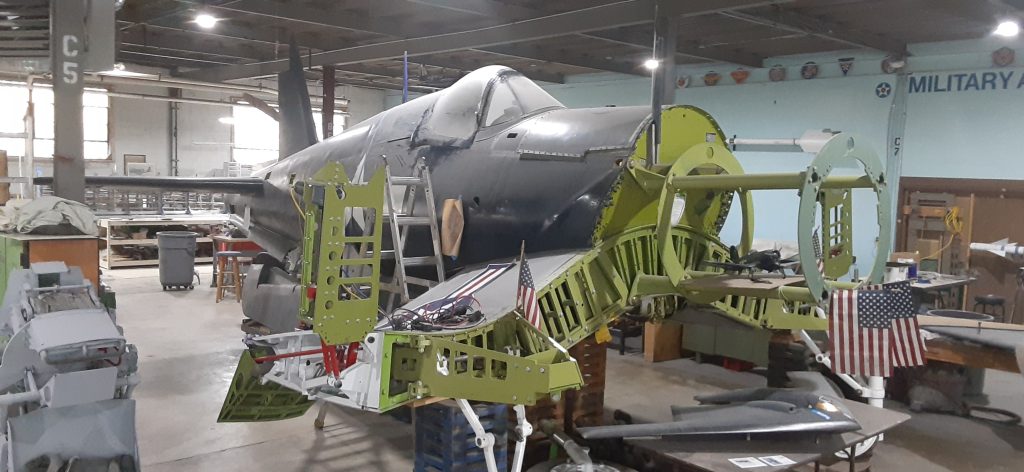
“Alignment is critical in this area,” Pawski explained. “If anything is even slightly out of position, it becomes immediately noticeable. That’s why I opted to build a metal fixture.” While previous fixtures used throughout the project were primarily constructed from wood—valued for its low cost and ease of use—Pawski noted that achieving the required precision often proved time-consuming. “We used wooden fixtures on sections of the fuselage behind the cockpit, and while we got good results, it took a lot of effort to correct small imperfections. With the wing, it made sense to invest in a more rigid setup.”
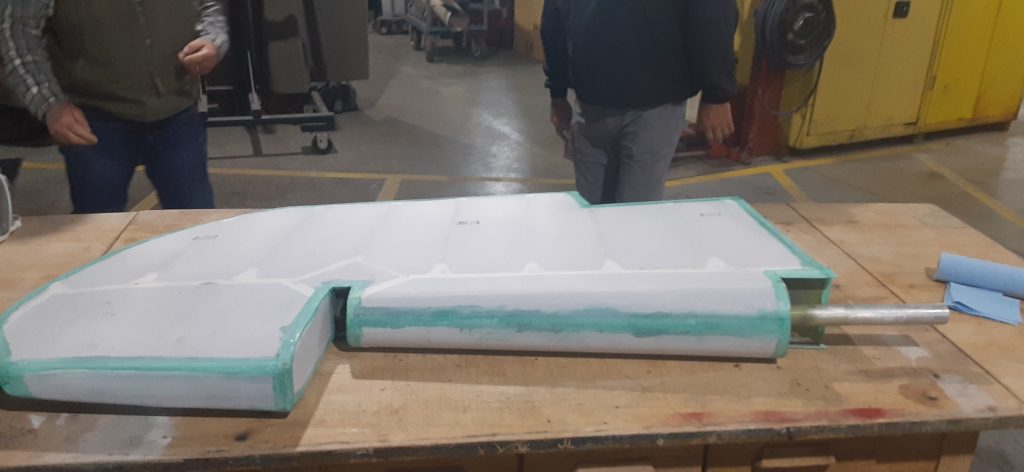
Fabric work on the rudder and elevators was completed toward the end of September using the Stewart Systems process, a water-based covering system that eliminates the need for hazardous chemicals. The team reported positive results with the system, which is FAA-approved and offers greater flexibility during application. “It’s a very forgiving system compared to more traditional methods,” Pawski said. “It gives you more time to work the fabric into place, which is helpful, especially with a volunteer team. We also prefer to avoid exposing our members to harsh chemicals whenever possible.”
Work has also progressed on the landing gear. Assembly of the left main gear is underway, with the upper strut and drag links now fitted and aligning well. The right upper strut, which had previously been cut from another airframe, required replacement of its upper fitting. A suitable component was sourced with assistance from Chuck Wahl of Vultures Row Aviation and has since been machined and prepared for welding.
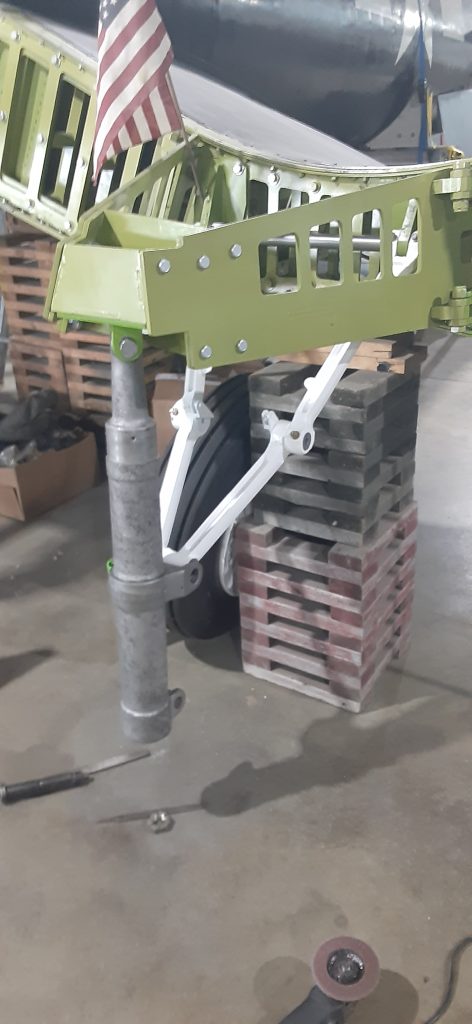
Additional components, including the gear scissors and several smaller fittings, are currently being fabricated. Although the team had initially hoped to have the aircraft sitting on its landing gear by the end of 2025, that milestone has been delayed. However, all necessary components are now on hand and progressing toward completion. Attention has also turned to the wing flaps, including the pilot step incorporated into the right inboard flap on later FG-1D aircraft. Structural framing for this feature is now underway.
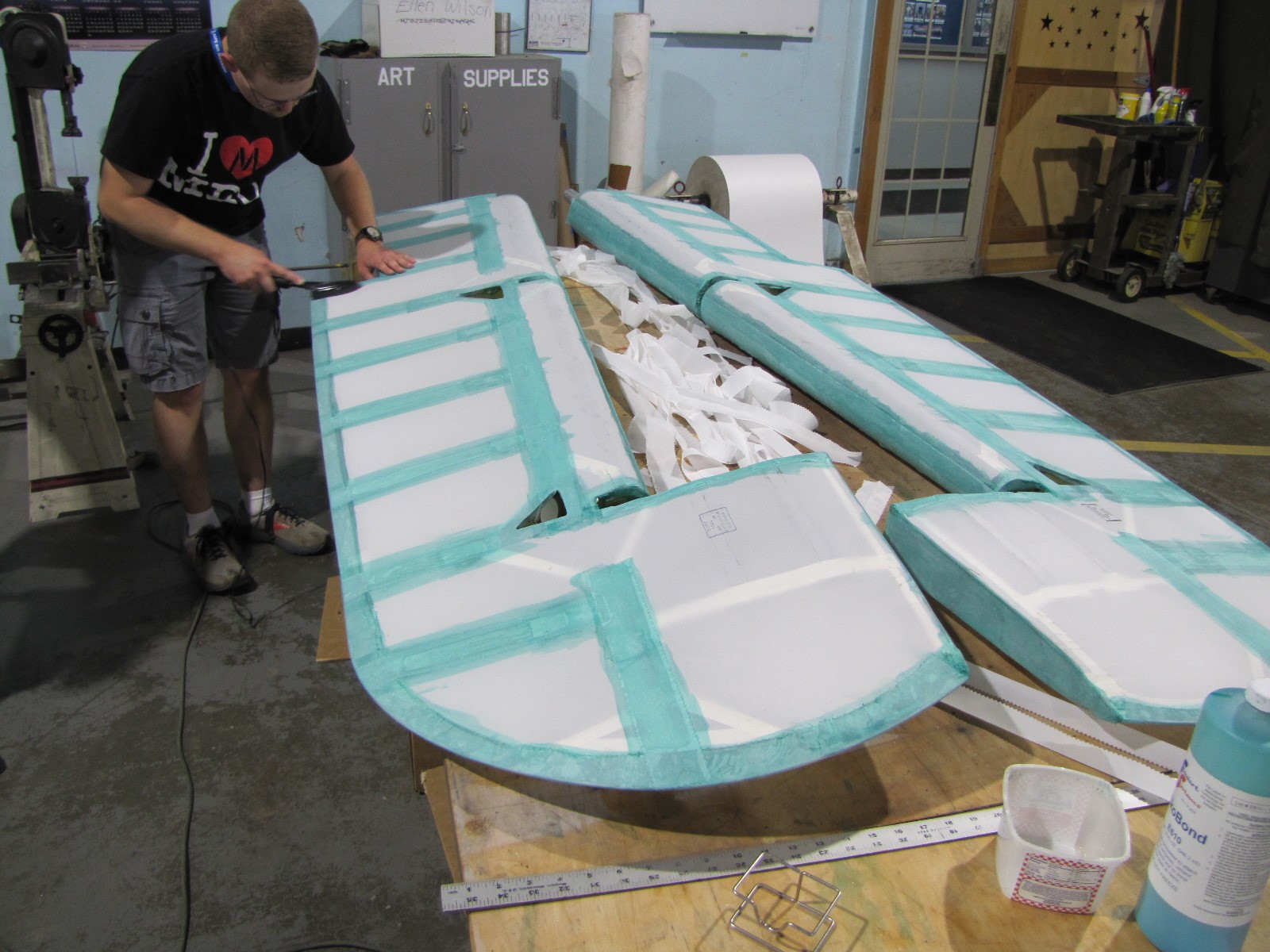
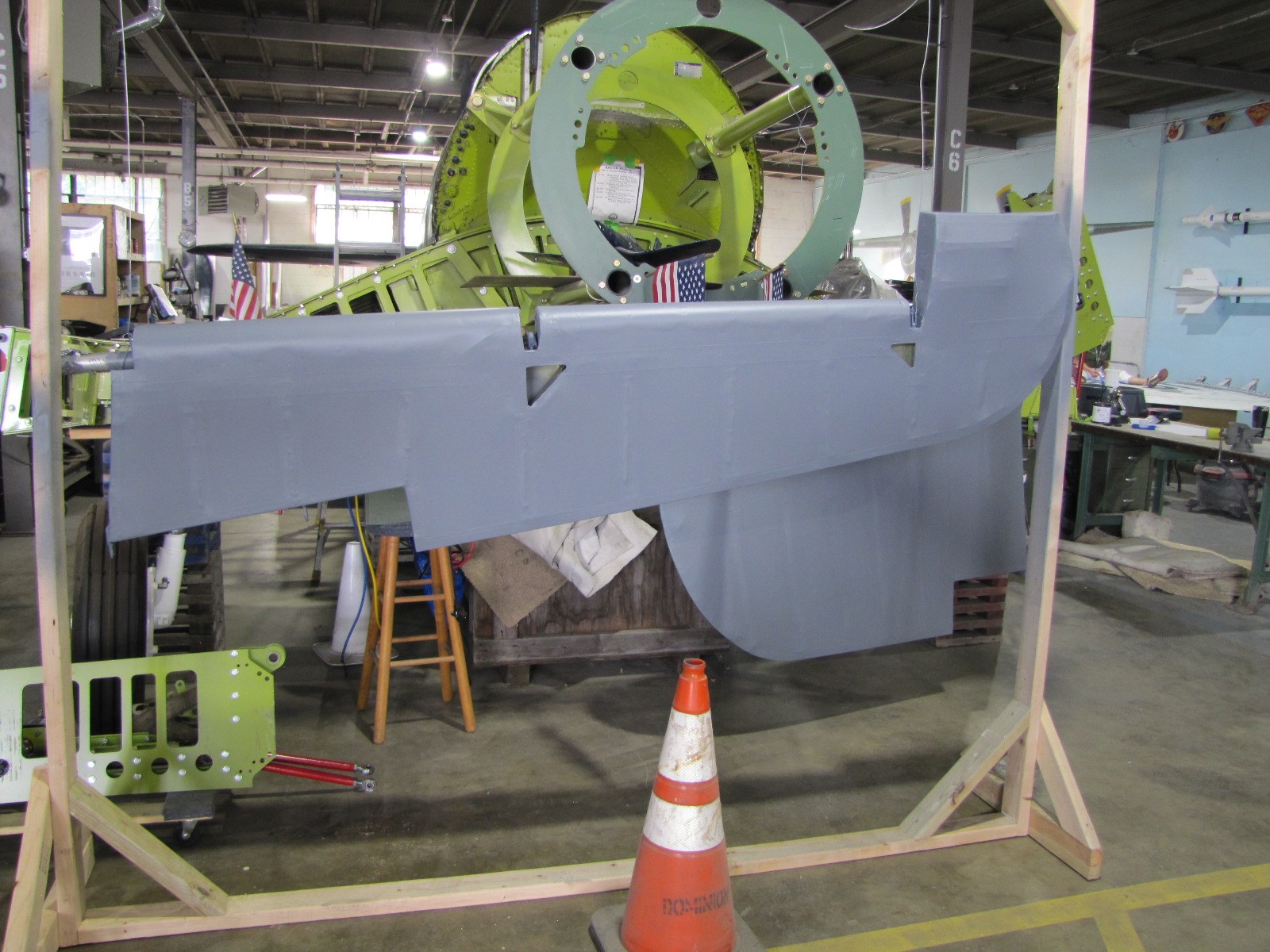
On the engineering side, Pawski is working to design the trailing edge ribs for the outer wing panels. This task has proven particularly challenging due to the absence of original lofting drawings, which would normally define the wing’s precise contours.
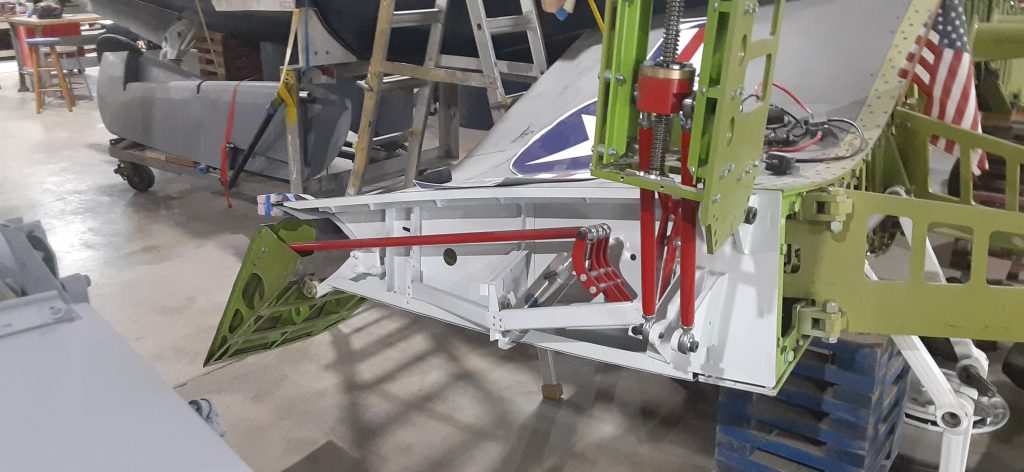
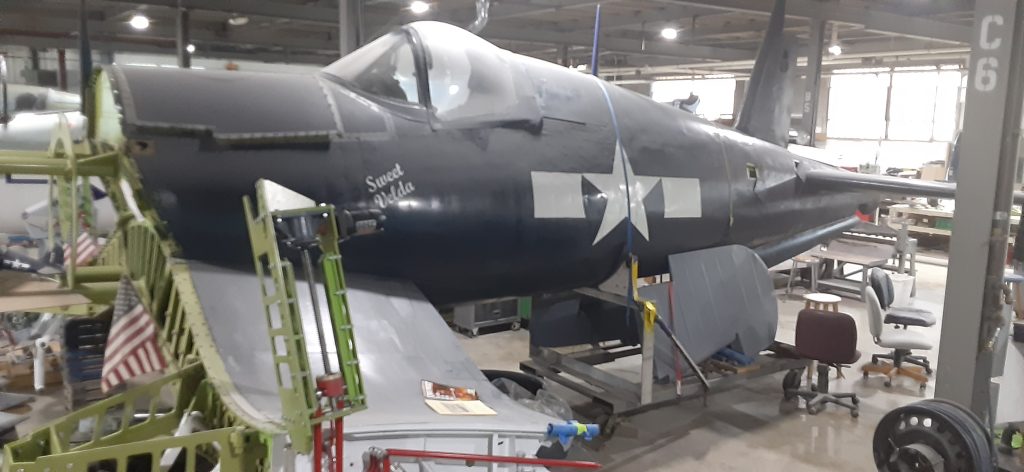
“There’s no surviving lofting drawing for these panels,” Pawski noted. “I even checked with contacts at the Smithsonian, and they weren’t able to locate one. So I’m reconstructing the profiles from scanned drawings and scaling them as needed. It’s a tedious process, but it’s moving forward.” Despite these challenges, steady progress continues on the MAPS Air Museum’s Corsair restoration. As more components are completed and assemblies brought together, the project continues to move closer to its long-term goal of restoring this historically significant aircraft. For more information about the MAPS Air Museum, visit www.mapsairmuseum.org.