






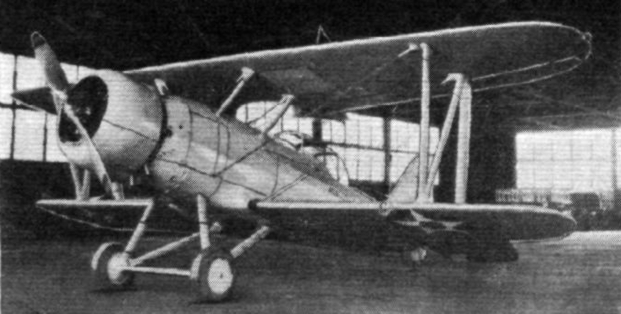


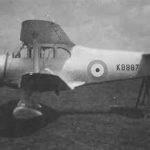
During the interwar period, the US Navy needed a two-seat fighter biplane. As a result, Douglas Aircraft Company developed an aircraft which it named the Douglas XFD. The aircraft was designed for the United States Navy as a fighter aircraft that could operate from aircraft carriers. It featured traditional fixed landing gear and a biplane wing design. It had a front-mounted engine to drive a two-bladed propeller. The fixed main landing gear supported the front of the aircraft, and a single tail wheel at the back kept it nose-up when stationary due to its tail-dragger design. The Douglas XFD was built mainly from metal, with fabric covering the skin.
Design of Douglas XFD
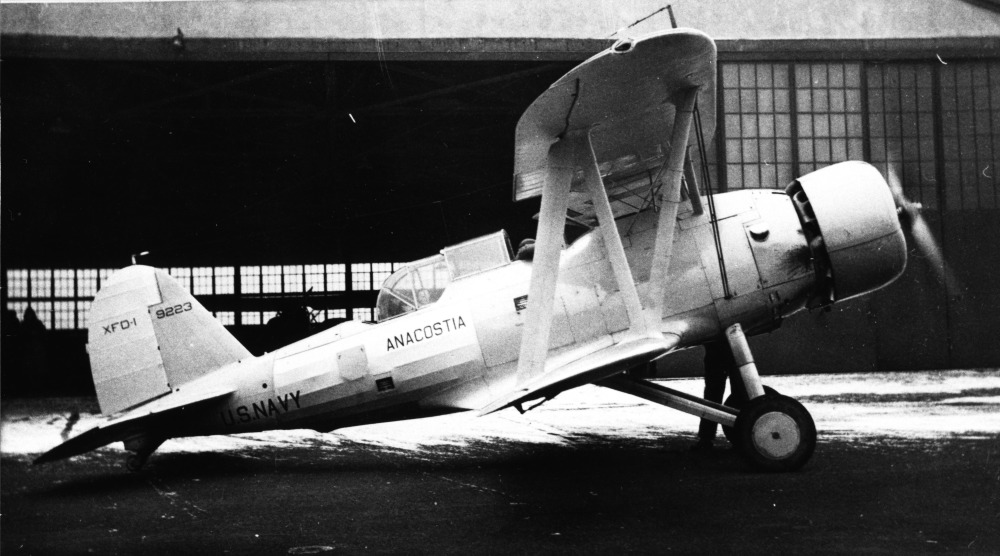
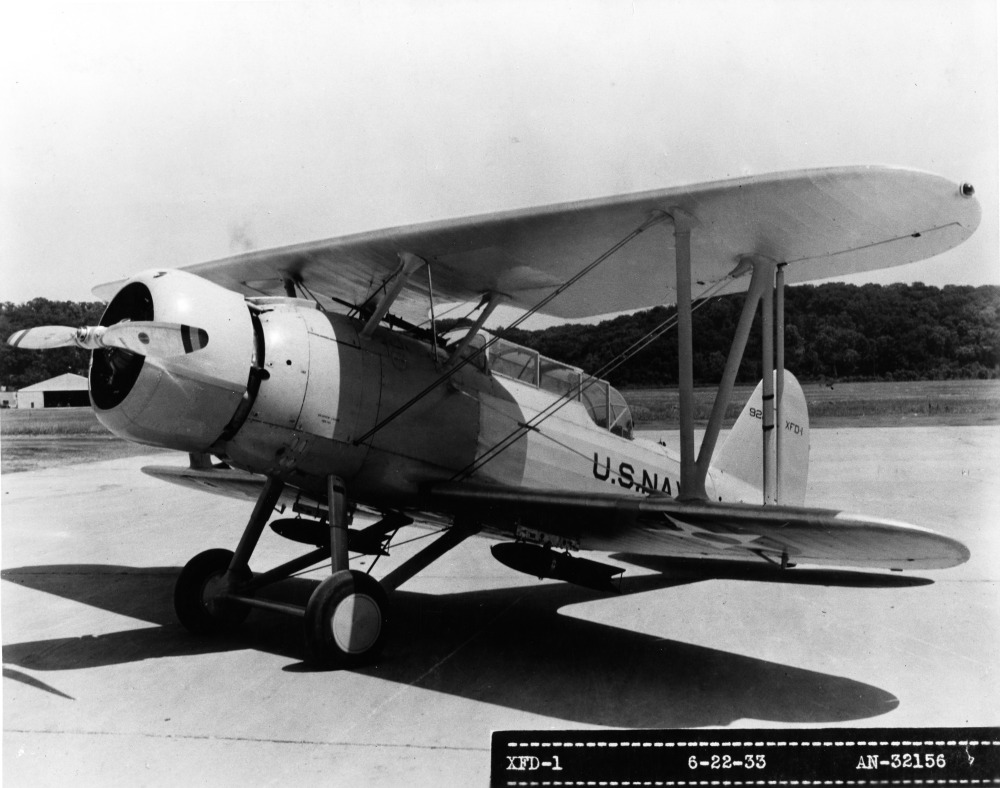
The Douglas XFD was designed to meet US Navy Specification No. 113. Under the specification, the Navy ordered three designs, including the Curtiss XF12C, the Vought XF3U, and the proposed Douglas XFD. Douglas designed the XFD with an armament setup that included two 0.30 caliber machine guns. One gun was fixed and pointed forward, controlled by the pilot, and the other gun was in the back and could be moved by the second crew member. The plane could carry up to 500 pounds of bombs on the outside. Douglas engineers chose the Pratt & Whitney R-1535-64 “Twin Wasp Junior” 14-cylinder, air-cooled radial piston engine producing 700 horsepower to power the aircraft. The engine drove a two-bladed propeller at the front.
The Cancellation
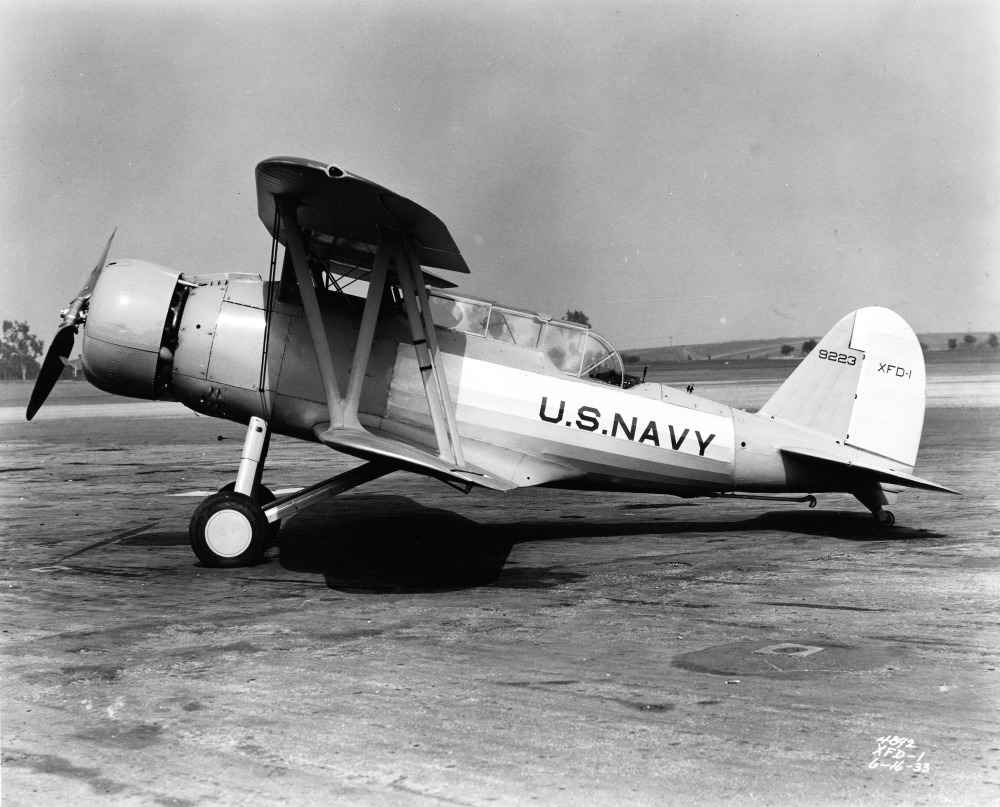
The Douglas XFD was 25.4 feet long, 11.1 feet high, with a wingspan of 31.6 feet. Its empty weight was 3,227 pounds, and the maximum takeoff weight was 4,672 pounds. The Douglas XFD was envisioned to reach a maximum speed of 208 mph, with a cruise speed of 170 mph, and a range of 576 miles. It could reach a maximum altitude of 23,700 feet, and a rate of climb of 1,670 feet per minute. Douglas first flew the XFD-1 prototype in January 1933. By June, the aircraft had been delivered to Naval Air Station Anacostia for formal tests. Testing continued until the middle to late part of 1934. By then, the US Navy had decided not to pursue twin-pilot fighters and lost interest in the XFD and its competitor from Vought. As a result, the Douglas XFD program ended completely. Meanwhile, the Curtiss XF12C was developed into the SBC “Helldiver” scout bomber, with 257 units produced, operating until 1943. In the Grounded Dreams series, despite its strong performance, the XFD was one of the last efforts before WWII to create a two-seat fighter for the US Navy that could operate from aircraft carriers. Read more Grounded Dreams stories HERE.







“…the XFD was one of the last efforts before WWII to create a two-seat fighter jet for the US Navy that could operate from aircraft carriers.”
There’s a bit of a mix-up with what type of aircraft this was. Not a jet , but that would’ve been cool and exceedingly rare.
Hello, Dr. Akula. Thanks for your comment. I have amended the article.