






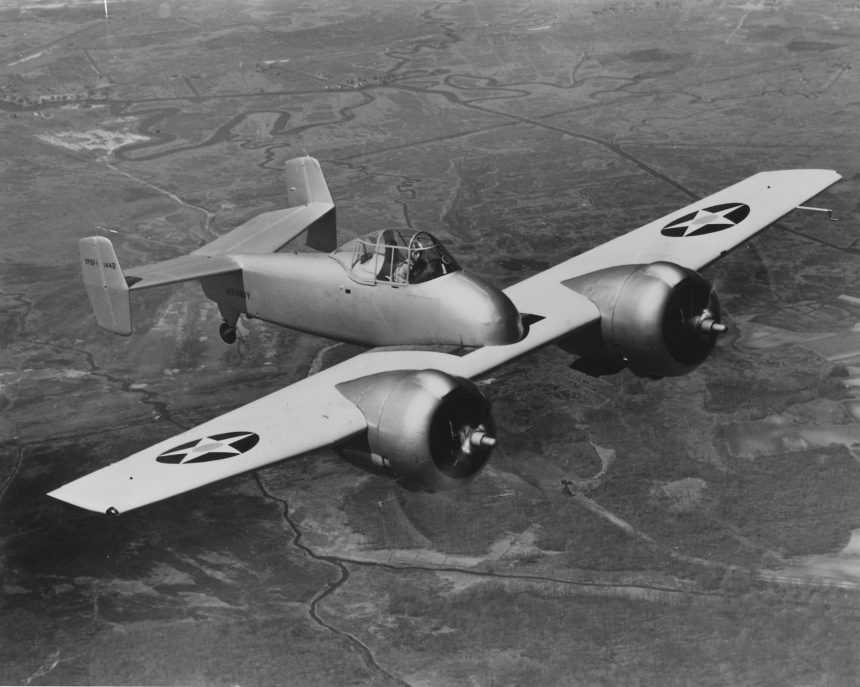

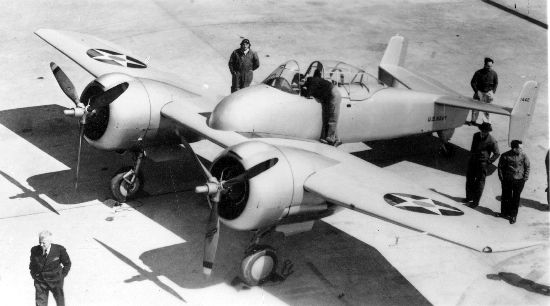
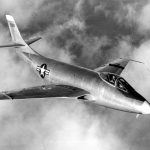
In 1938, Grumman Aircraft Engineering Corporation proposed a new twin-engine shipboard fighter aircraft to the US Navy. The aircraft was different from any other fighter considered before. It was designed to be lightweight, with a maximum takeoff weight of under 10,000 pounds, and the design promised high speed and a good climbing rate. The United States Navy ordered a prototype from Grumman on June 30, 1938, which was designated as Grumman XF5F Skyrocket. The Grumman XF5F Skyrocket was a low-wing airplane with a short body that started behind the front edge of the wing. It had a twin tail system with a noticeable upward angle on the horizontal stabilizer. Both the main landing gear and the tail wheel could be fully retracted.
Design of Grumman XF5F Skyrocket
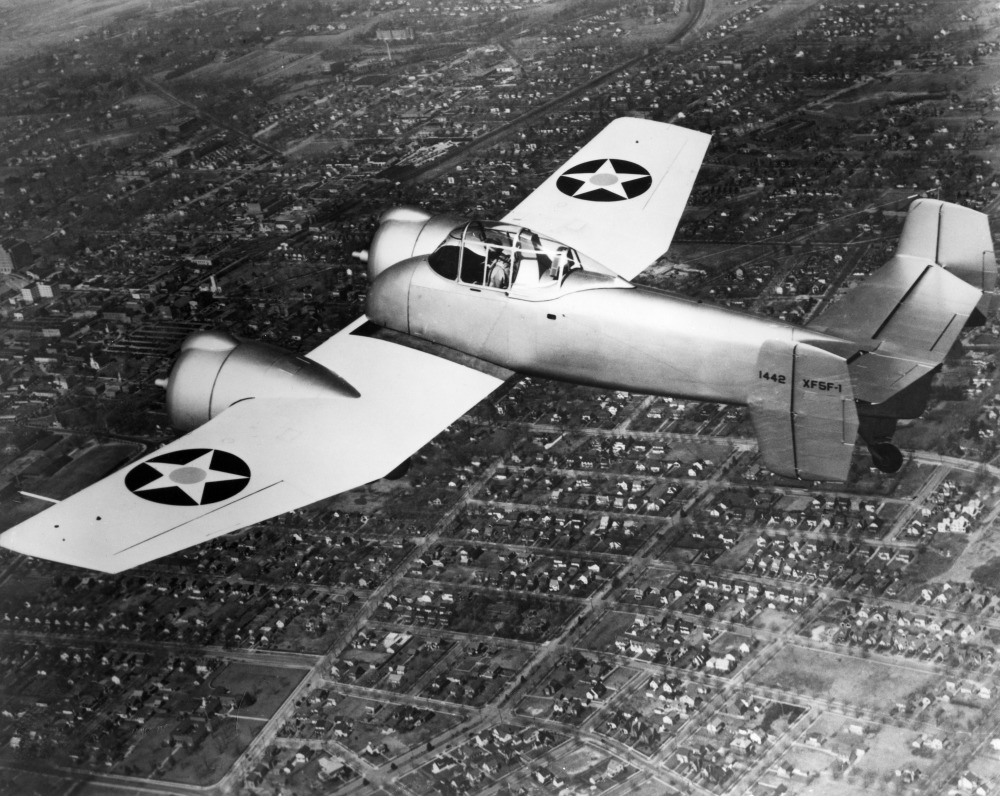
The single-seat Grumman XF5F Skyrocket was 28.9 feet long, 11.4 feet high, with a wingspan of 42 feet and a wing area of 303.5 square feet. The empty weight was 8,107 pounds, the gross weight was 10,138 pounds, and the maximum takeoff weight was 10,900 pounds. The aircraft was powered by two Wright XR-1820-40/42 Cyclone nine-cylinder radial air-cooled engines, each producing 1,200 horsepower. The maximum speed of the aircraft was envisioned at 383 mph at sea level, with a range of 1,200 miles, a service ceiling of 33,000 feet, and a rate of climb of 4,000 feet per minute. It could be armed with four 12.7 mm machine guns and two 165-pound bombs. The aircraft first flew on April 1, 1940. It suffered from engine cooling problems on its first flights, leading to changes in the oil cooling ducts. Other changes to the prototype were a lowered cockpit canopy, the replacement of the cannon by four 12.7 mm machine guns, redesigned engine nacelles and propeller spinners, and a lengthened fuselage in front of the wing. These changes were finished on July 15, 1941. Testing by Grumman test pilot “Connie” Converse showed that the Grumman XF5F Skyrocket had good flying qualities overall. The counter-rotating props helped to reduce torque during takeoff. The plane performed well with one engine, but the rudder forces were high when flying in that mode. Spin recovery was effective, but it required unusually strong elevator effort to recover. All aerobatic maneuvers were easy to perform, and visibility forward was excellent.
The Cancellation
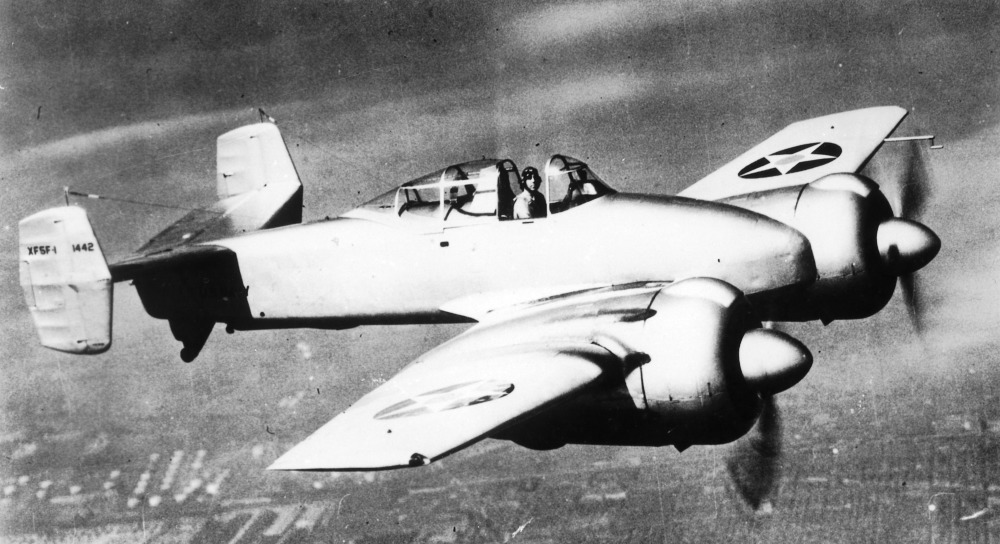
In 1941, Navy pilots tested the Grumman XF5F Skyrocket against several aircraft, including the Supermarine Spitfire, Hawker Hurricane, Curtiss P-40 Warhawk, Bell P-39 Airacobra, Bell XFL Airabonita, Vought XF4U Corsair, Grumman F4F Wildcat, and Brewster F2A Buffalo. LCDR Crommelin, who led the test, wrote in a 1985 letter to George Skurla, the president of Grumman, that he remembered testing the XF5F against the XF4U to see which could climb to 10,000 feet faster. He pulled away from the Corsair and thought it might have engine trouble. The Grumman XF5F Skyrocket was the perfect carrier pilot’s aircraft, with the counter-rotating propellers canceling out torque and no large engine blocking the view of the landing signal officer, he added. “The analysis of all the data definitely favored the F5F, and the Spitfire came in a distant second.” ADM Towers told him that the problems with getting spare parts and other issues had made it difficult to build the twin-engine fighter, so the Bureau had decided to go with the Wildcat for mass production. Further flight tests showed that additional changes were needed, and these tests were not finished until January 15, 1942. Meanwhile, Grumman began working on a new twin-engine shipboard fighter called the XF7F-1. Testing with the XF5F-1 helped support the development of this new design. The prototype continued to be tested, but it had various landing gear issues. It was removed as an active aircraft after it belly-landed on December 11, 1944. In the Grounded Dreams series, the Grumman XF5F Skyrocket was a good aircraft, in fact, better than most at its time, but delays in testing and spare parts caused it to fade away. Read more Grounded Dreams stories HERE.
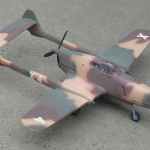








This was the plane used in the DC comic Blackhawk!