






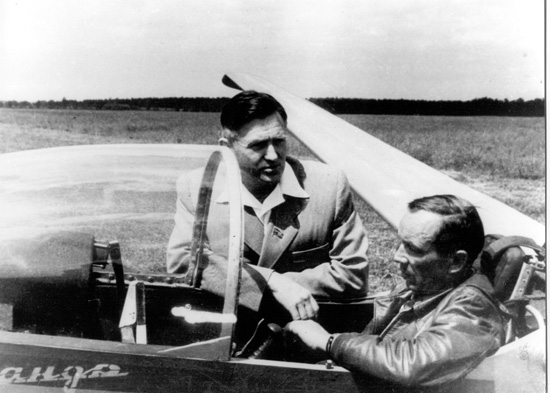

A Soviet aircraft designer helped shape the USSR’s military and civilian aviation with flying machines that remained in service for decades and concepts that are still useful. The designer was Oleg Antonov, the founder of the design bureau that would become Antonov, and he created aircraft such as the An-2 and An-12. Antonov was born on February 7, 1906, in Troitsy in the Moscow Governorate of the Russian Empire. Antonov loved aviation from an early age and spent much of his leisure time at the local airfield. When he was 13 years old, Antonov and his friends created the “Aviation Enthusiasts Club” and later joined the “Organization of Friends of the Air Force.” Then he designed the glider OKA-1 “Pigeon”, which took part in a competition in Moscow. Oleg Antonov won first prize, which was a flight on a Junkers 12 aircraft. In 1930, Antonov graduated from the Kalinin Polytechnical Institute in Leningrad. He then became the chief designer at the Moscow Glider Factory in 1931. Over the next eight years, he designed 30 gliders, including the Standard-1, Standard-2, OKA-6, and the large “City of Lenin” glider. Since all pilots in the Soviet Union had to start their training in gliders, Oleg Antonov was able to produce up to 8,000 gliders each year. In 1938, after an instructor defected to the West by using a glider, the Soviet government changed its mind about glider training. They banned gliding as a sport and closed the Moscow Glider Factory.
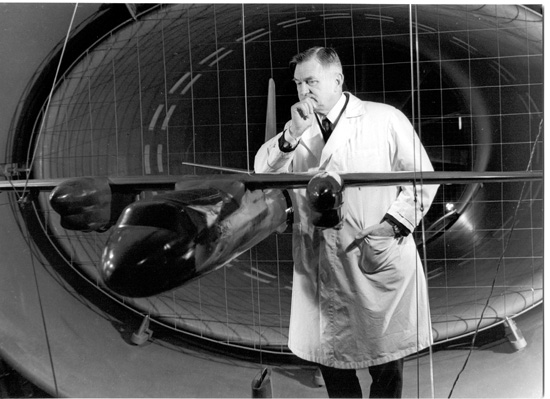
After the glider factory closed in 1938, he tried to enroll at the Zhukovsky Air Academy but was unsuccessful. In 1940, Oleg Antonov began working at Yakovlev’s Sportsplane Factory. There, in June 1940, he received two aircraft from Germany and was assigned to prepare the German Fi 156 Storch for licensed production in Kaunas. Oleg Antonov was also responsible for designing an ambulance version of the aircraft. Antonov then became the chief designer at the Yakovlev Design Bureau. In 1940, he started a new aircraft design bureau in Leningrad. When Germany invaded, the plant closed, and Antonov had to work on the A-7 glider instead. Later, the factory was reorganized to produce A-7 gliders. During WWII, the A-7 was used to supply Soviet partisans behind the front lines. Antonov also worked on the Antonov A-40, a biplane glider meant to carry tanks, but this project did not succeed. In total, about 450 A-7s were made during the war. In 1943, Oleg Antonov returned to the Yakovlev design bureau as Yakovlev’s first deputy designer. He was in charge of the Yak-3 and oversaw production in Novosibirsk. He devoted much of his time and effort to improving the Yak series, which became one of the most-produced fighter aircraft types of WWII. After the war, Oleg Antonov asked Yakovlev if he could work on his own. He wanted to lead Yakovlev’s subsidiary design office at the aircraft factory in Novosibirsk.
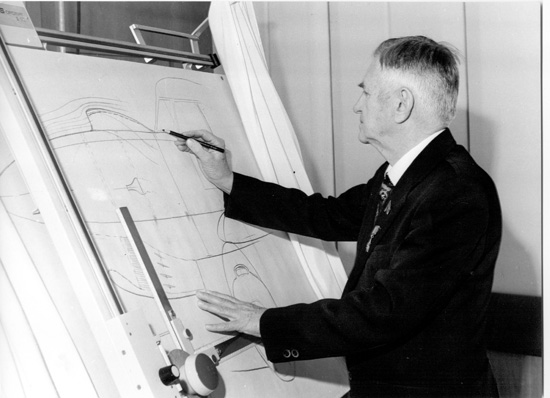
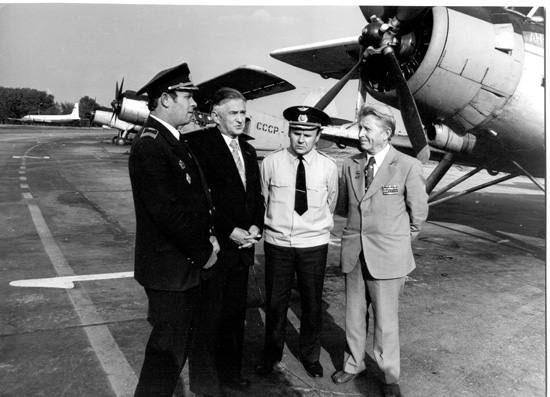
On May 31, 1946, Oleg Antonov became the head of this new facility, which later became the Antonov Research and Design Bureau. This bureau was eventually moved to Kyiv, Ukraine. In September 1946, Antonov took on another role as the director of the Siberian R&D Institute for Aeronautics while still managing the design bureau. The first design from the Antonov Bureau was the SKh-1, later well-known as the An-2. It was an agricultural aircraft created to replace the Polikarpov Po-2, which was widely used for farming and utility purposes. Antonov designed a large metal biplane with an enclosed cockpit and space for 12 passengers. Under Oleg Antonov’s leadership, a series of important transport aircraft were developed. Antonov aircraft, identified with the prefix An-, include the rugged An-2 biplane, the An-28 reconnaissance aircraft, and the large An-124 Ruslan strategic airlifter. The An-12 quad-turboprop and its variations became the main military transport for the Soviet Union from 1959 onward. Less known but still significant are the An-24, An-26, An-30, and An-32 aircraft. These twin-turboprop planes are used mainly for domestic flights and short-haul service within the former Soviet Union and its influenced regions. Antonov also led the development of the mid-range An-72 and An-74 jet airplanes.
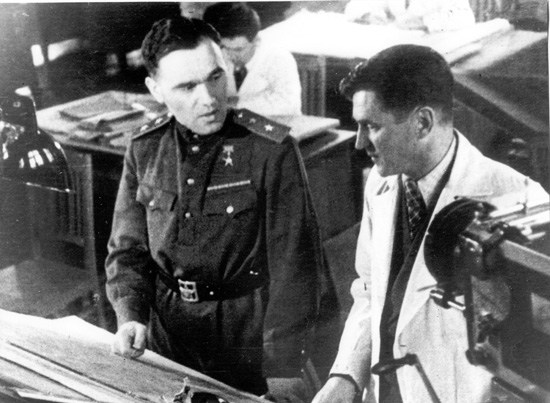
The An-124 Ruslan, the world’s largest production aircraft, first flew in 1982. Its specialized version, the An-225 Mriya, which could carry extra-heavy cargo, began development under Antonov’s guidance but did not fly until 1989, after his death. In November 2004, the An-225 was recognized by the Fédération Aéronautique Internationale in the Guinness Book of Records for holding 240 records. Some of Antonov’s designs are also built in other countries, like the Shaanxi Y-8. In 1965, Oleg Antonov signed a petition to support Soviet dissident Ivan Dziuba. Oleg Antonov died on April 4, 1984, in Kyiv and was buried in Baikove Cemetery. As one of the Pioneers of Aeronautical Engineering, Oleg Antonov was recognized as a Doctor of Science and became an Academician of Ukraine in 1968. Oleg Antonov was named Hero of Socialist Labor in 1966 and served as a member of the Supreme Soviet of the USSR for three terms. His awards include the State Award of the USSR in 1952 and the Lenin Award in 1962. He also received three Orders of Lenin and the Order of the October Revolution. A street in the Solomyanka neighborhood of Kyiv is named after him. In 1999, Oleg Antonov was inducted into the International Air & Space Hall of Fame. In 2006, the National Bank of Ukraine minted a commemorative coin in his honor, and Russia issued an additional silver coin for his centenary. Read more stories like this HERE.











The AN-28 IS NOT A reconnaissance aircraft, instead, it’s a small, short range intra-theatre airlift aircraft, and the AN-72 is a medium range airlifter w8th good short field capability, and its AN-74 derivative is optimized for operations in polar regions. Now, the AN-225 was destroyed four years ago, at the start of the Russo-Ukrane War, so the title of world’s largest aircraft reverted to the AN-124.