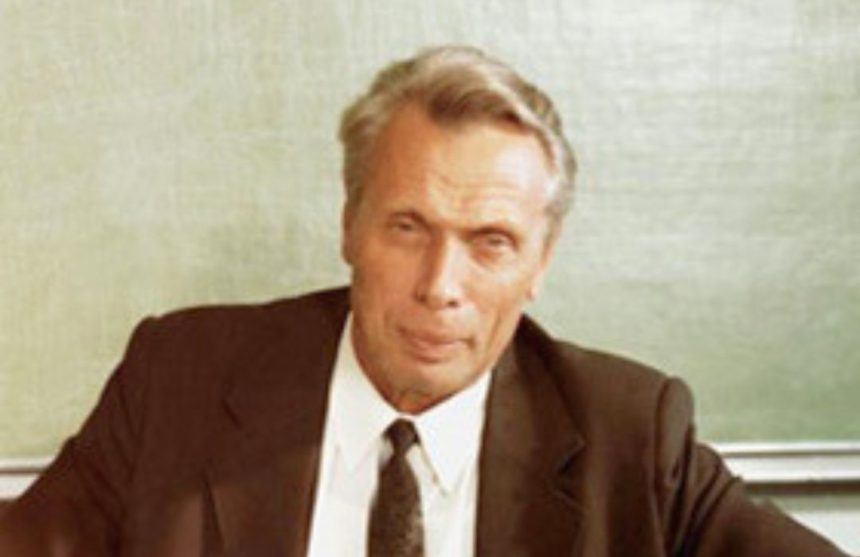

In the middle of the 20th century, a prominent engineer achieved many things for the Soviet military aviation sector. He designed vehicles that changed watercraft, especially hydrofoil ships, and was well known for developing ground-effect vehicles. He was Rostislav Alexeyev, born on December 18, 1916, in the Russian Empire. In 1935, he began a shipbuilding course at the Gorky Industrial Institute. Alexeyev graduated on October 1, 1941, after defending his thesis on hydrofoils, and became an engineer-shipbuilder. He started working at the Red Sormovo shipbuilding factory. However, after the Soviet Union entered WWII following the German invasion earlier that year, the factory began producing tanks for the war instead of ships. Alexeyev started as a foreman in tank production. In 1942, the Soviet Navy assigned him to develop hydrofoils for military use. Although his designs were not completed by the end of WWII in 1945, the Soviet government remained interested and planned to build 340 hydrofoil vessels by the late 1940s. Rostislav Alexeyev continued working on hydrofoils and became the chief designer at Raketa, the first passenger hydrofoil built in the Soviet Union, with production beginning in 1957. The Raketa was shown at the International Festival of Youth and Students in Moscow that same year, increasing interest in hydrofoils. Alexeyev was the chief designer for many passenger hydrofoil models produced at Red Sormovo, including the Meteor, Kometa, Sputnik, Burevestnik, and Sunrise.
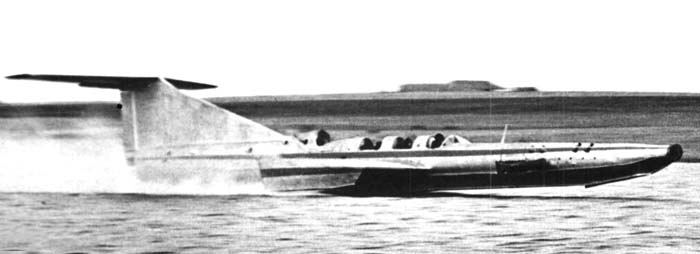
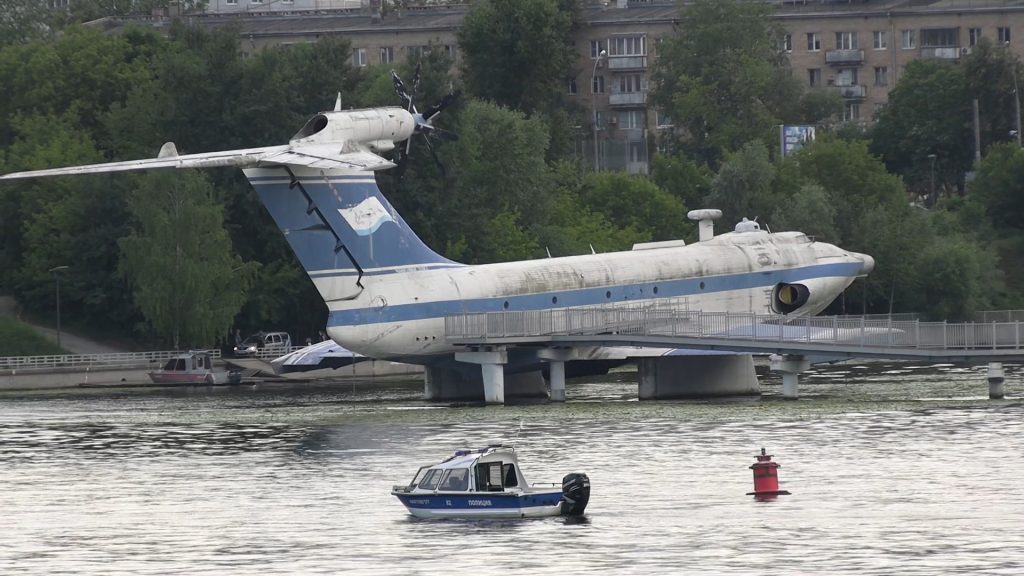
In 1962, Rostislav Alexeyev started working at the Central Hydrofoil Design Bureau, which was secretly developing ground-effect vehicles known as ekranoplans. During the 1950s, the Soviet Union became very interested in these vehicles, while the rest of the world largely ignored them. Ground-effect vehicles operate like aircraft but fly just a few meters above flat surfaces, especially water. Therefore, the Soviet government officially acknowledged them as ships. The Central Hydrofoil Design Bureau was developing a large ekranoplan that would utilize the “Wing In Ground” (WIG) effect. Rostislav Alexeyev became involved in the project due to his expertise in hydrofoils. In just two years of development, they produced the Korabl Maket (KM), also known as the Caspian Sea Monster. Alexeyev was the chief designer, and V. Efimov was the lead engineer. When the KM’s prototype was finished in 1966, it was the largest and heaviest aircraft in the world. However, since it was a secret project, this fact was not known to the public. The KM had eight Dobrynin VD-7 turbojets in the front and two at the tail for extra takeoff thrust. It was built in the Red Sormovo factory in Gorky and then quietly shipped down the Volga River to Kaspiysk. There, it would test in the Caspian Sea with Soviet Navy pilots. On its maiden flight on October 16, 1966, Rostislav Alexeyev himself co-piloted the KM. The KM was initially seen as a useful vehicle for military and rescue workers, but its design caused many problems. Progress slowed, so Alexeyev began developing other ekranoplan projects.
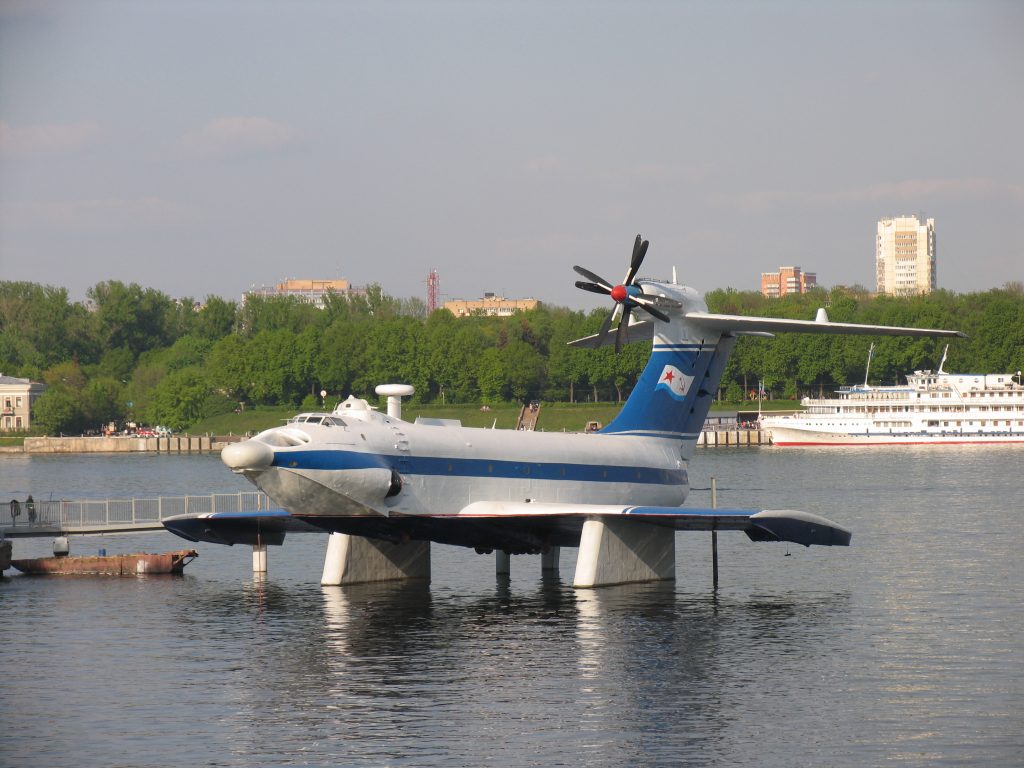
The most important project was the A-90 Orlyonok, which first flew in 1972 and entered service with the Soviet Navy in 1979. The Orlyonok saw little use as a military transport vehicle, and three of the five units built remained in active service until 1993. On January 14, 1980, Rostislav Alexeyev was wounded in a plane crash while testing a new ekranoplan, which was set to be presented at the 1980 Summer Olympics in Moscow. The vehicle lost lift and crashed into the water at high speed. After the accident, Alexeyev was removed from his role as chief designer at the Central Hydrofoil Design Bureau. He was hospitalized three days later and died on February 9, 1980, after undergoing two operations. The KM crashed in 1980, shortly after Rostislav Alexeyev died, due to pilot error, and the project was canceled. However, it became the basis for the Lun-class ekranoplan. After the Soviet Union collapsed, the development of ekranoplans almost completely stopped. Still, details of Alexeyev’s work became public and attracted considerable interest. He is now often seen as the father of ground-effect vehicles. Alexeyev won many important awards during his career. He received the Stalin Prize, second degree, in 1951, the Lenin Prize in 1962, and the USSR State Prize in 1984. Rostislav Alexeyev also received the Order of the October Revolution, the Order of the Badge of Honor, and was recognized as an Honored Inventor of the RSFSR. As one of the pioneers of aeronautical engineering, Rostislav Alexeyev didn’t just build hydrofoils or ground-effect vehicles; he left a legacy for the Soviet Union and gave it an image of an advanced state. Read more such articles HERE.