
By Randy Malmstrom
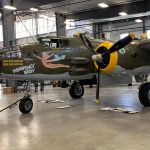
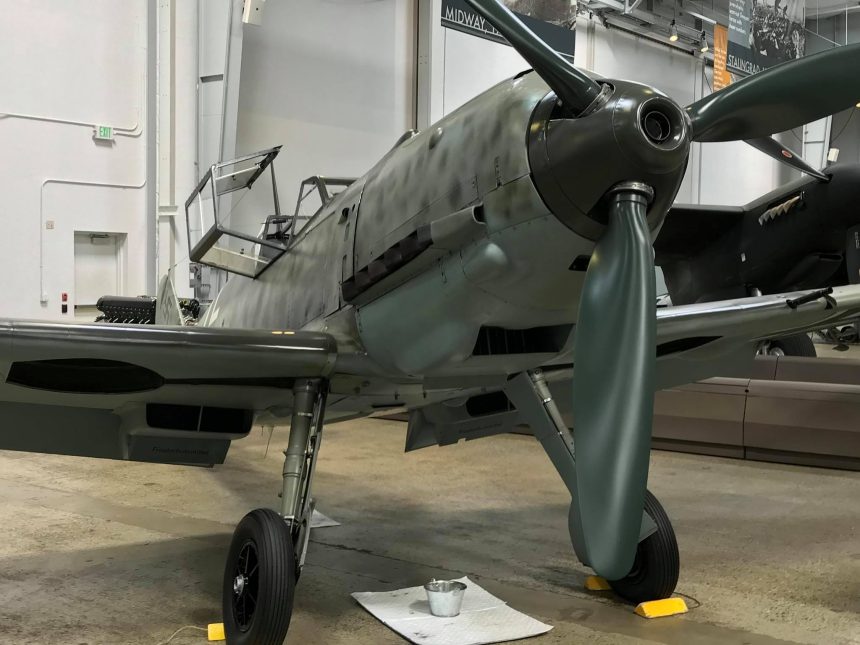
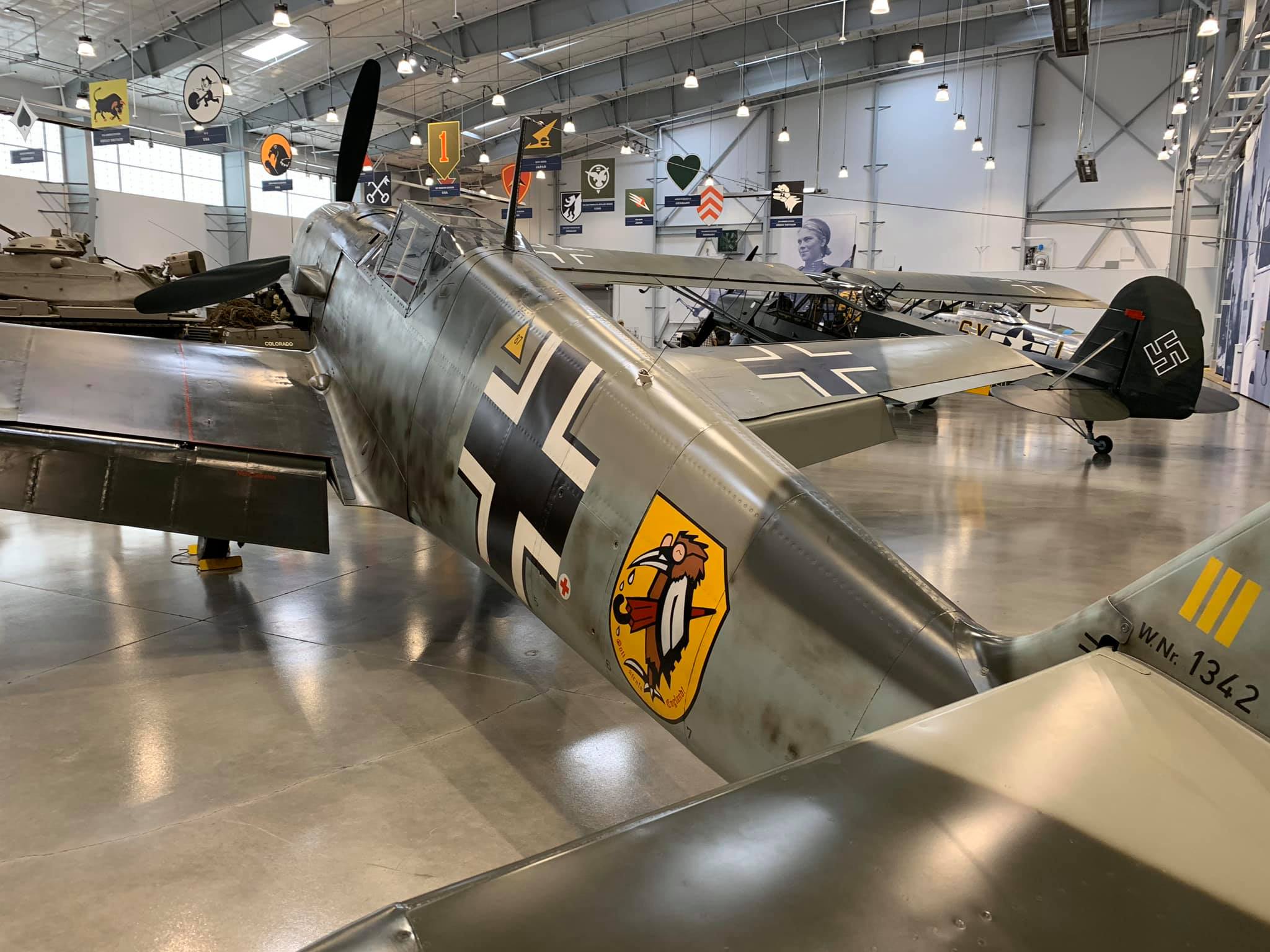
Messerschmitt Bf-109E-3 Emil, N342FH. This particular aircraft is a rebuild of Wk.-Nr. 1342 that was manufactured at the Erla Maschinenwerke GmbH factory at Leipzig as part of a block of 484 aircraft (the factory used slave laborers later in the war after 1943, and from records I have seen, about one third of the 109s built between 1937-45 were produced by Erla plants in Mochau and Leipzig-Heiterblick). This aircraft went into action in October 1939 and was flown by Feldwebel Eduard Hemmerling of 6./JG 51 (in 1942, JG 51 adopted the name “Mölders” in honor of former Geschwaderkommodore Oberstleutnant Werner “Vati” (Papa) Mölders). The artwork on the fuselage is a Verschnupfte Rabe (translates to “little runny nosed raven” and which emblem originated with 2./JG 71, the “Chamberlain-Staffel,” but without an inscription) with the phrase “Gott Strafe England” (translates to “God Punish England”), considered a mocking of Sir Neville Chamberlain (British Prime Minister until May 10, 1940).

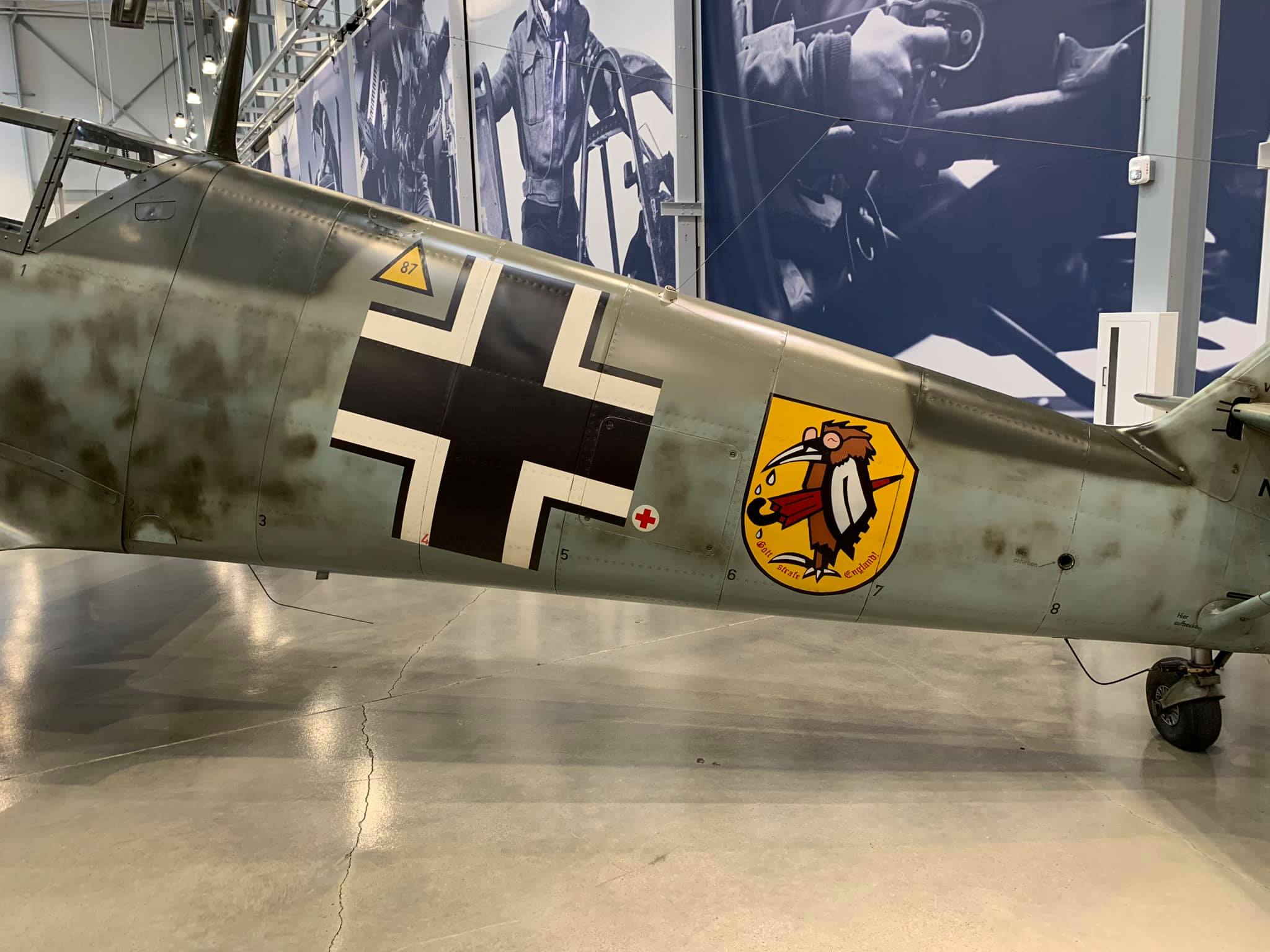
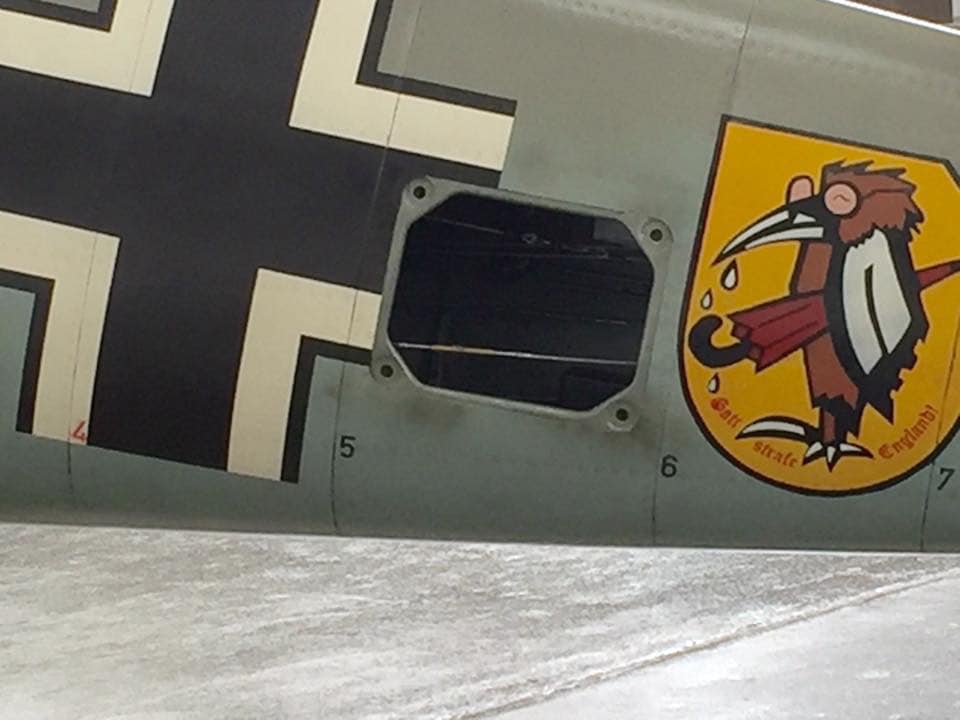
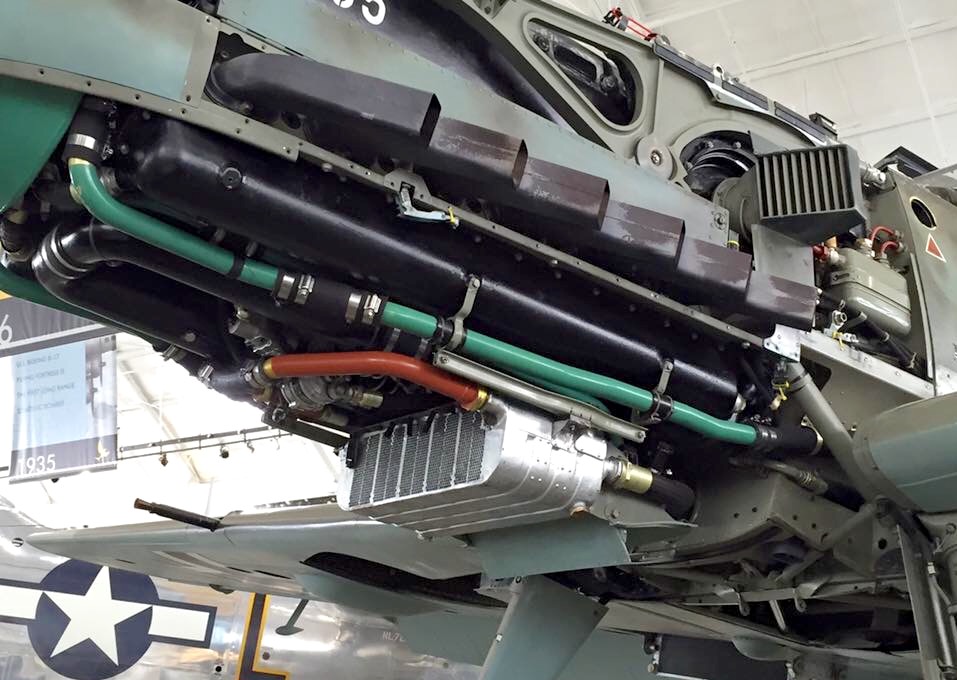
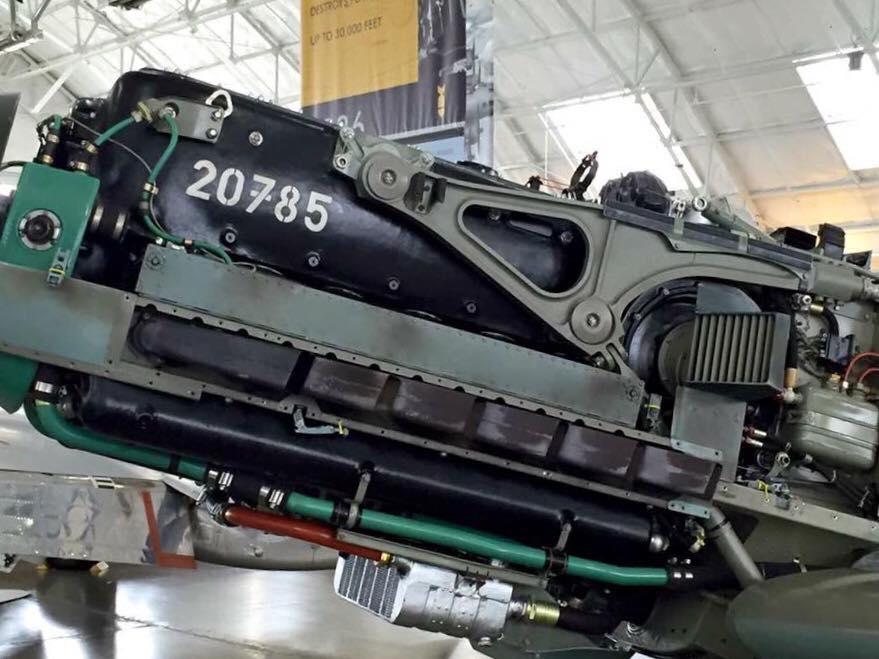
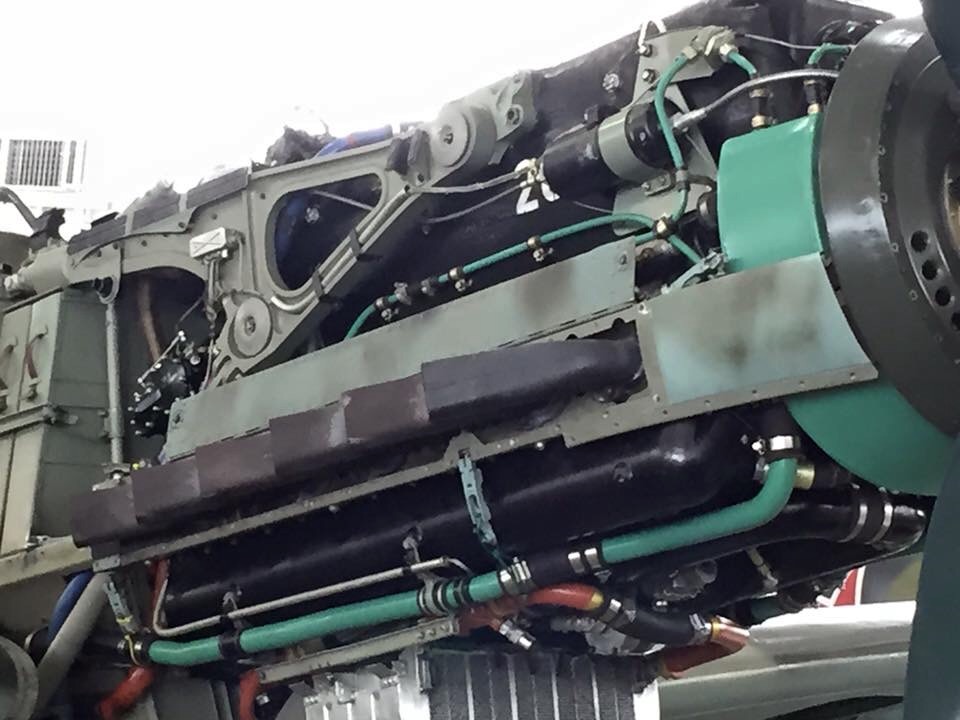
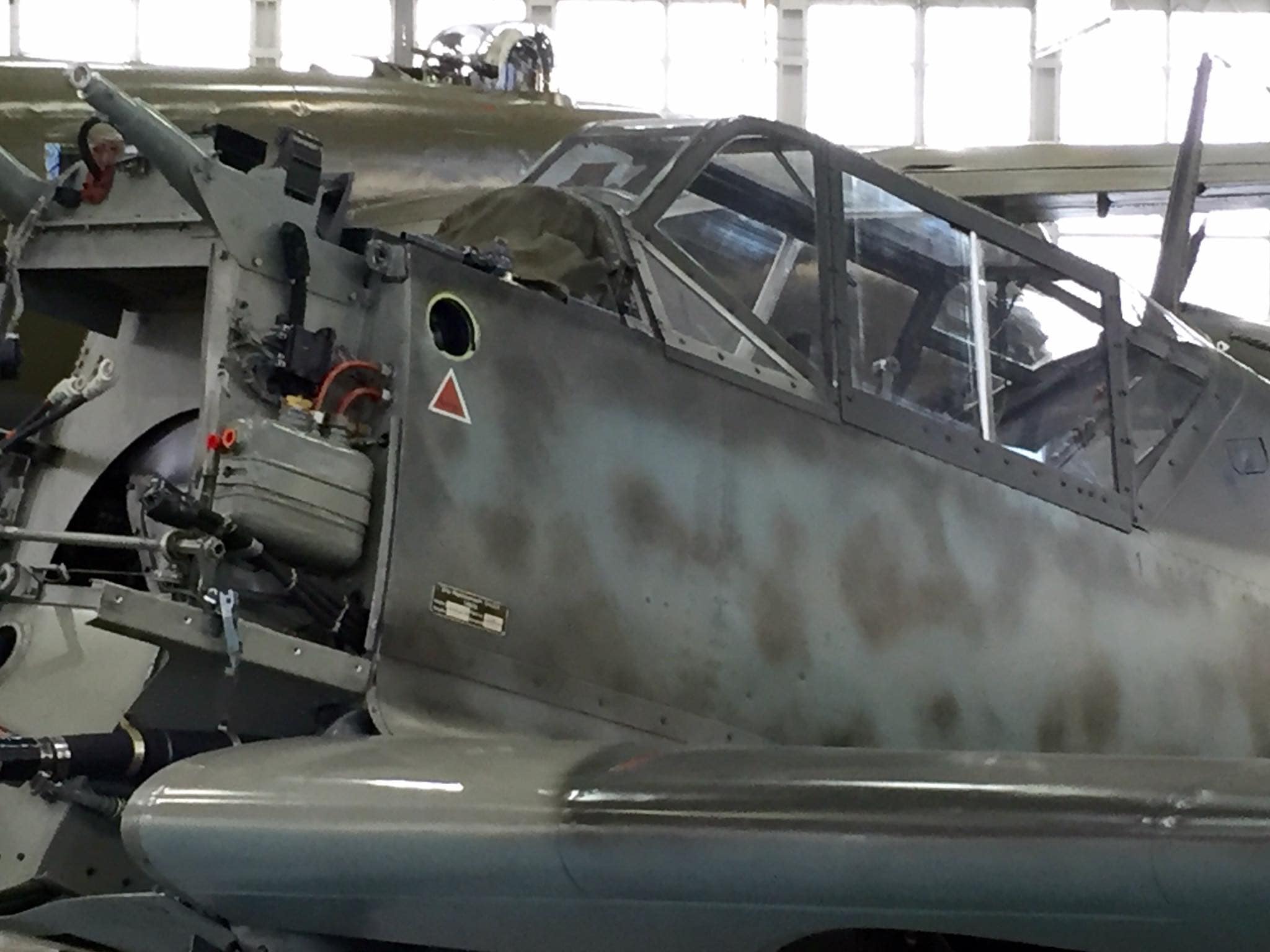
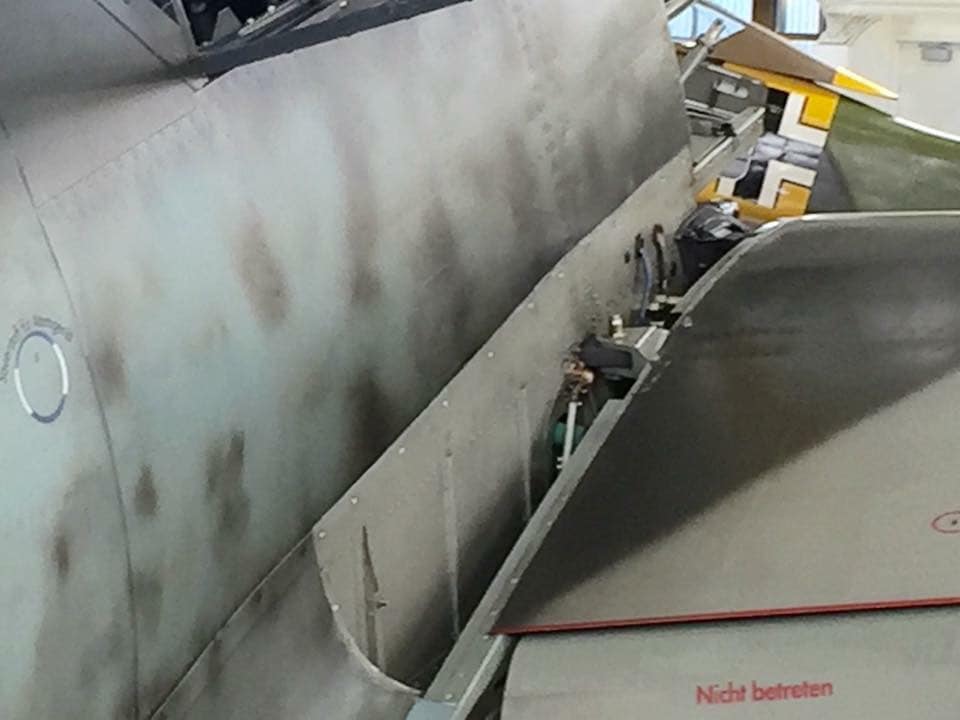
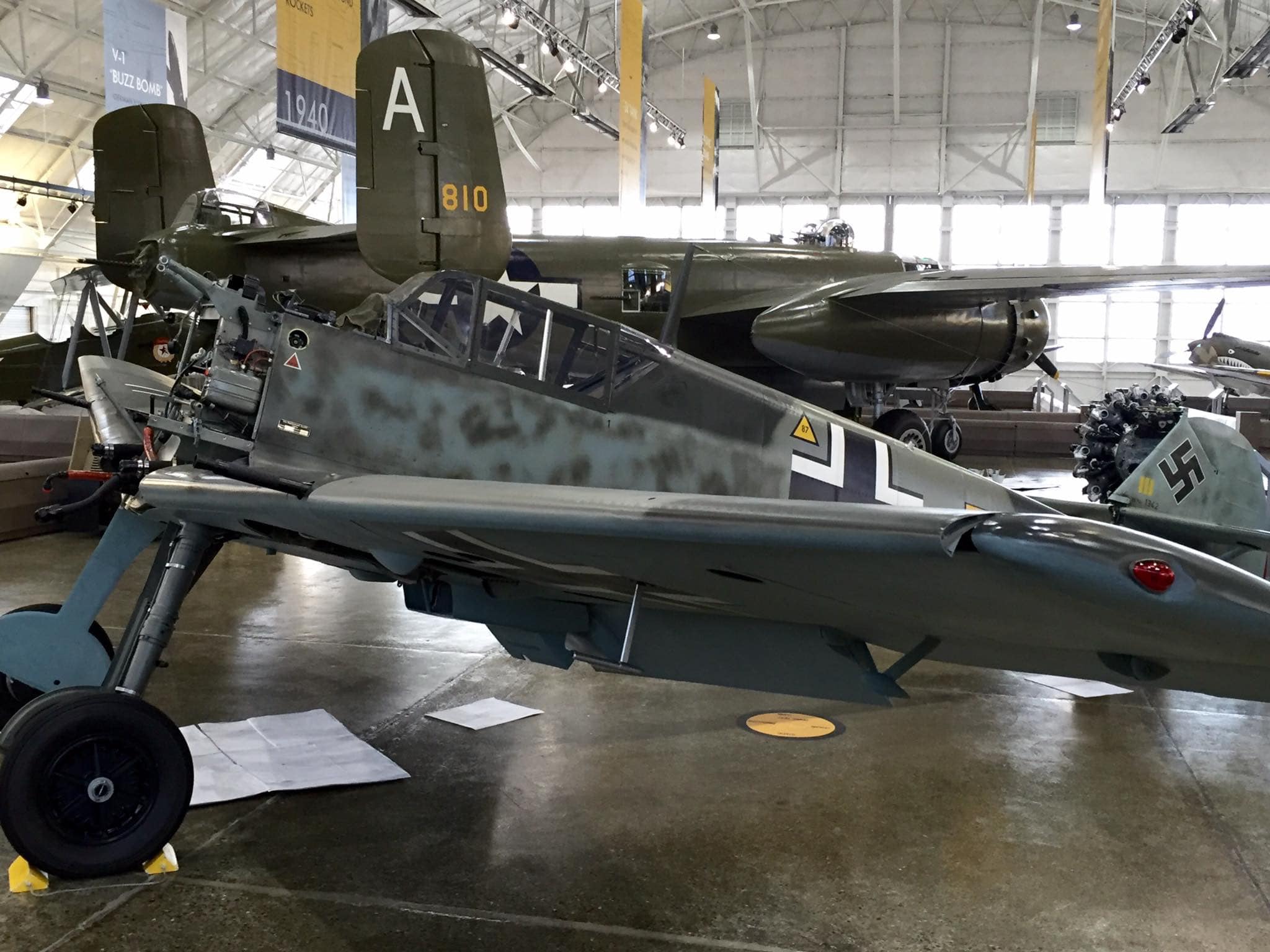

Hemmerling’s aircraft was hit near Dover on July 29, 1940, while escorting about 48 Junkers Ju-87 “Stuka” dive-bombers. He turned back toward France but crashed somewhere off Cap Blanc-Nez, France. Hemmerling died several days later of his injuries. Cap Blanc-Nez was where JG 51 was based at the time and is across the English Channel from Dover in the Pas-de-Calais département, and not far from Dunkerque, which had just been evacuated by the Allies in late May and early June 1940. It was not until 1988 that his aircraft was found largely buried in the sand by a Frenchman walking on a beach by Cap Blanc Nez near Calais.

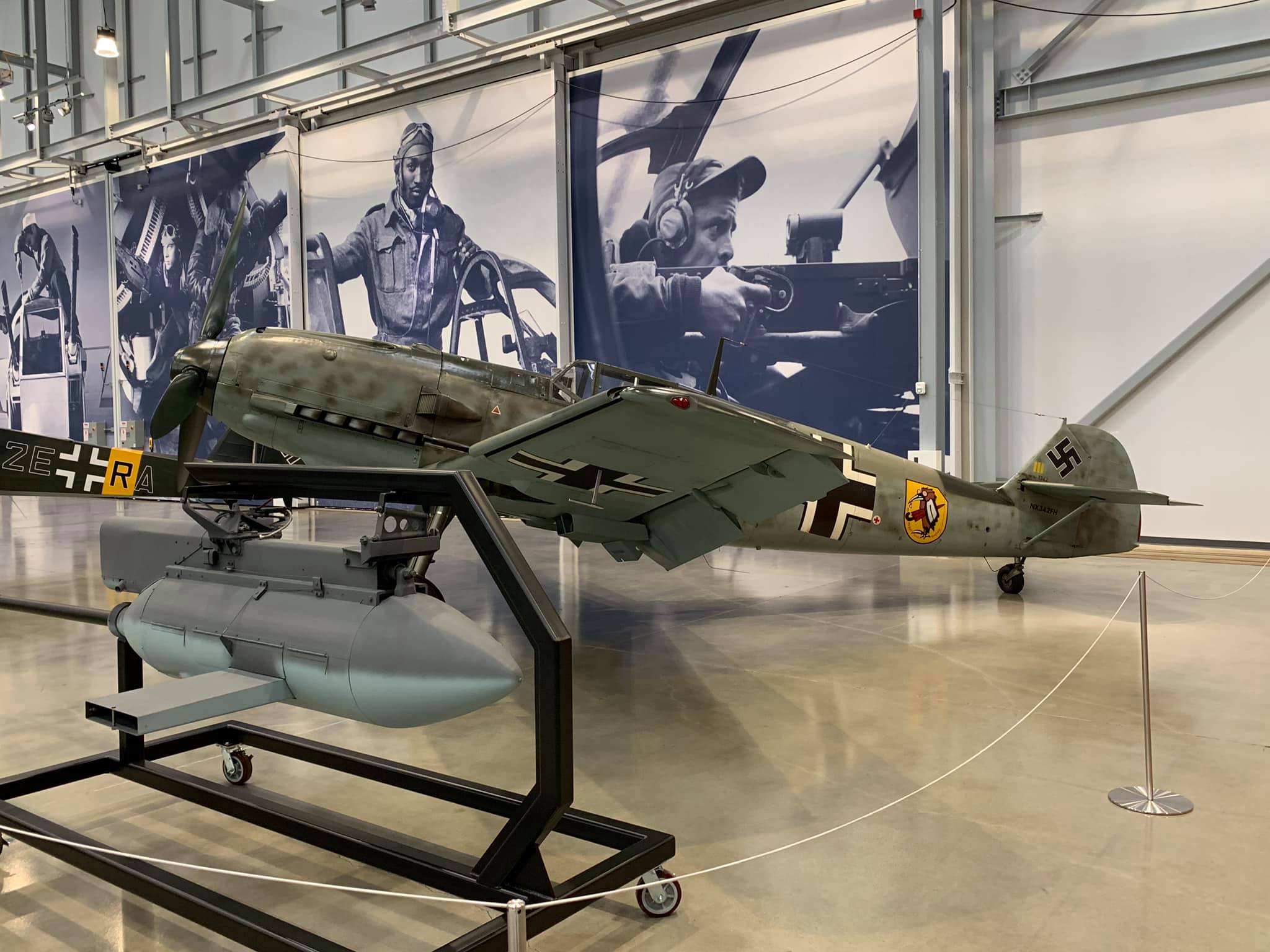
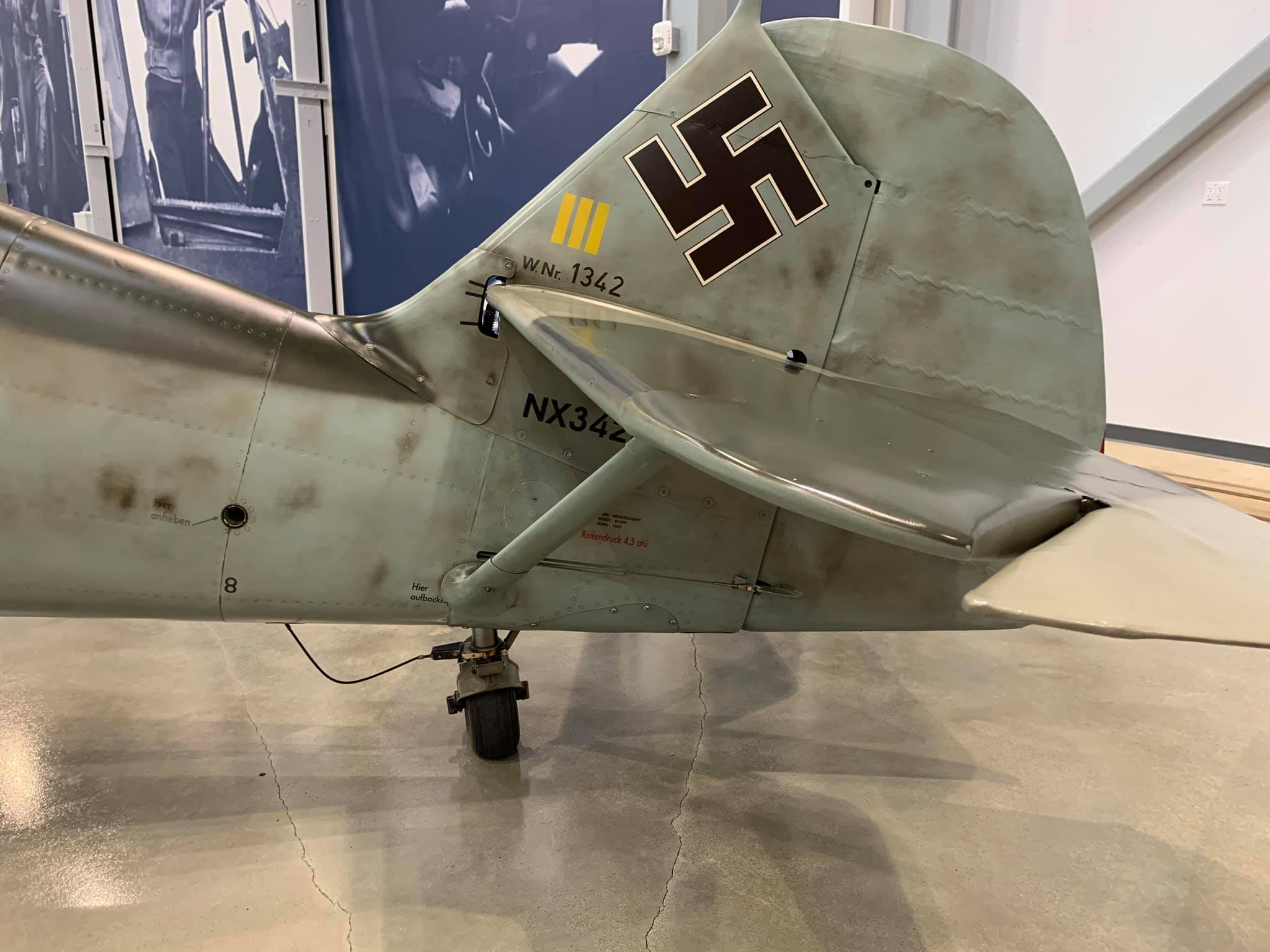
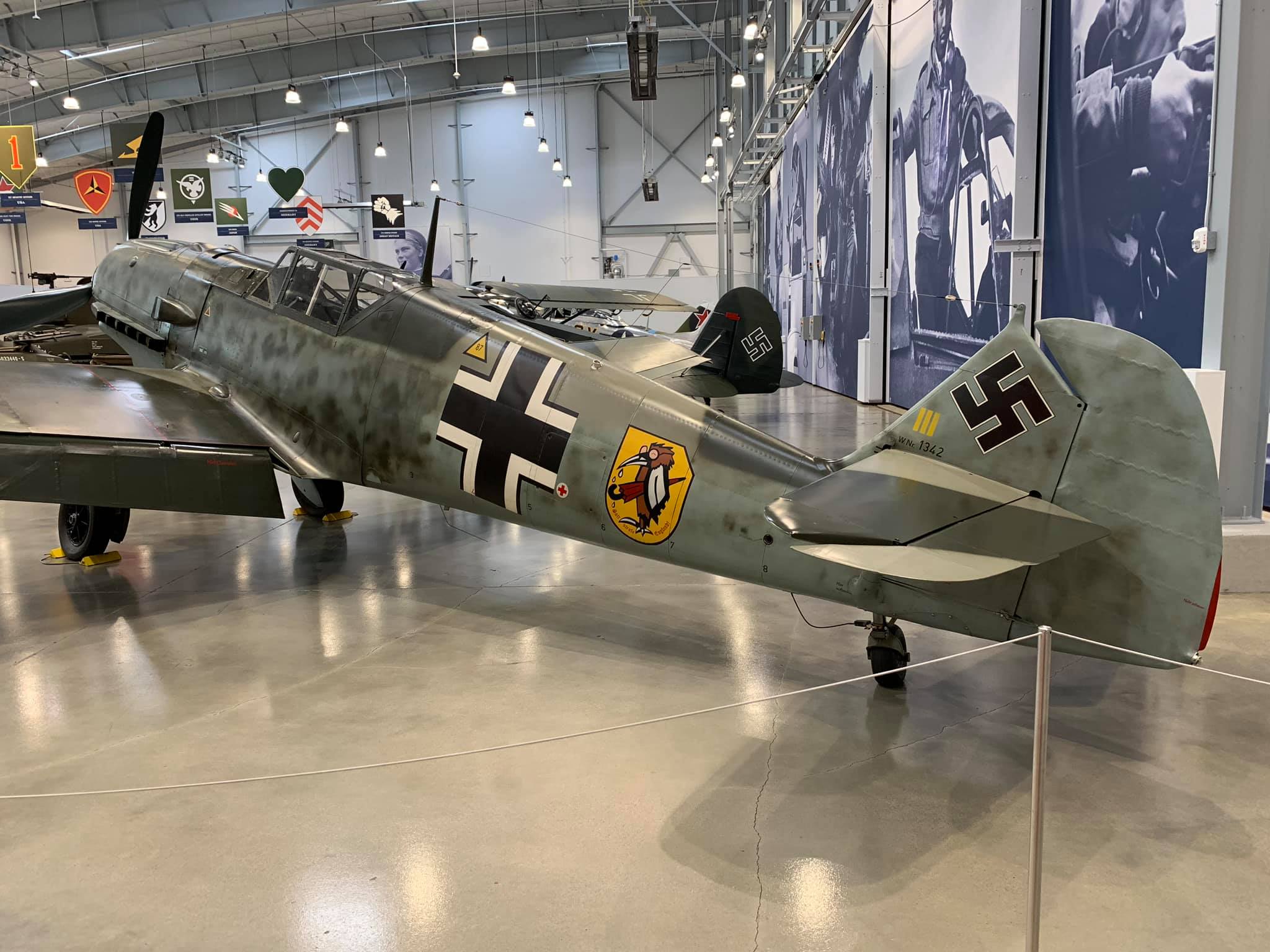
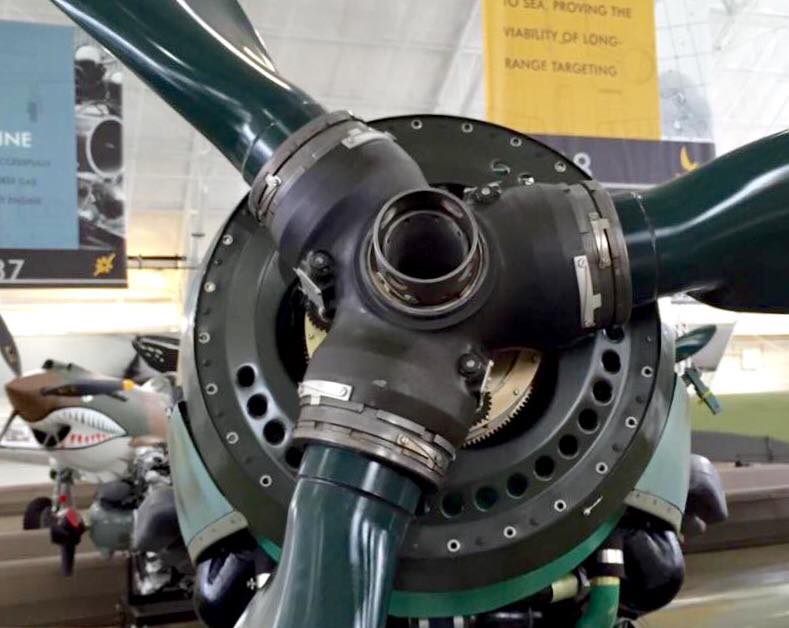
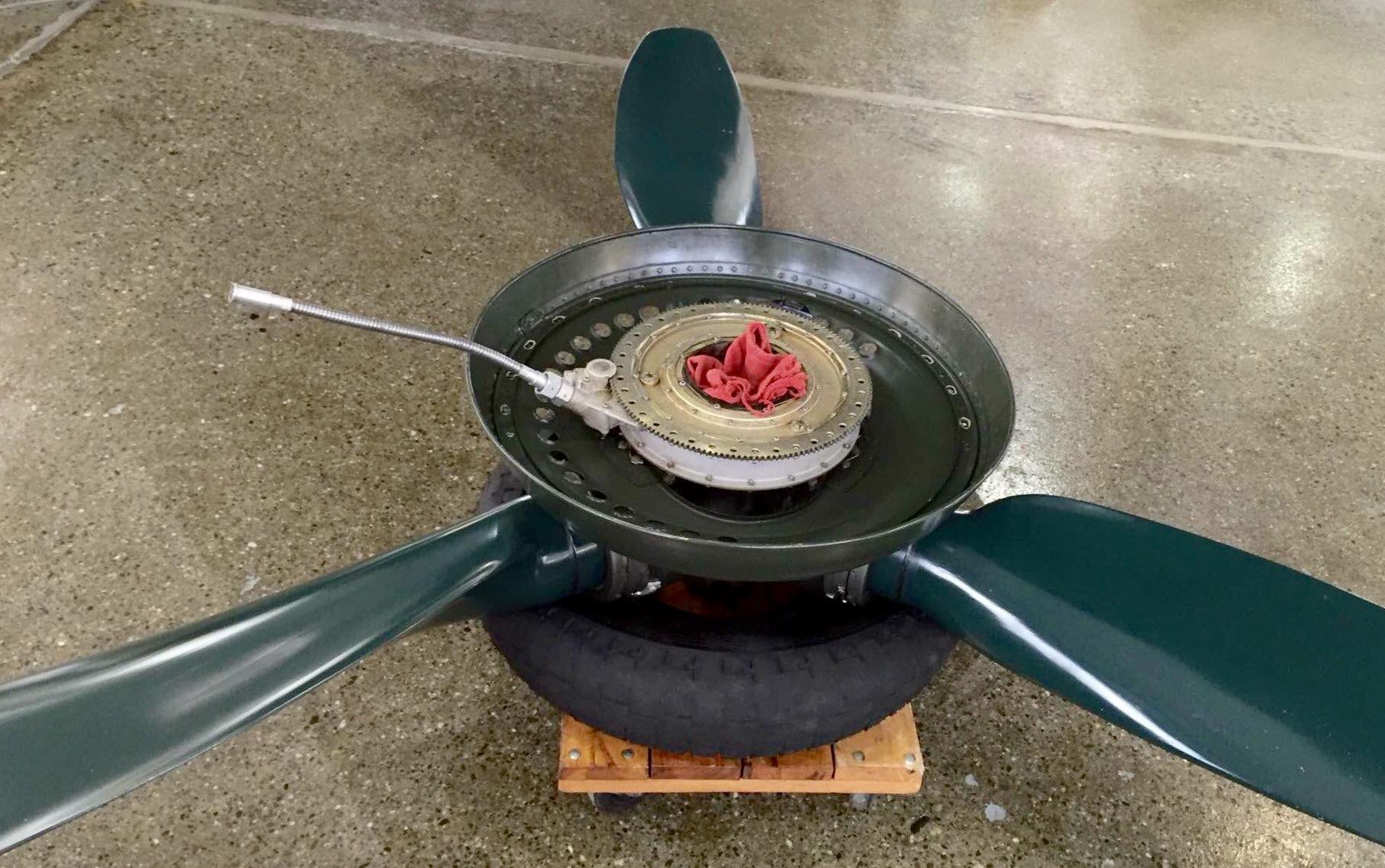
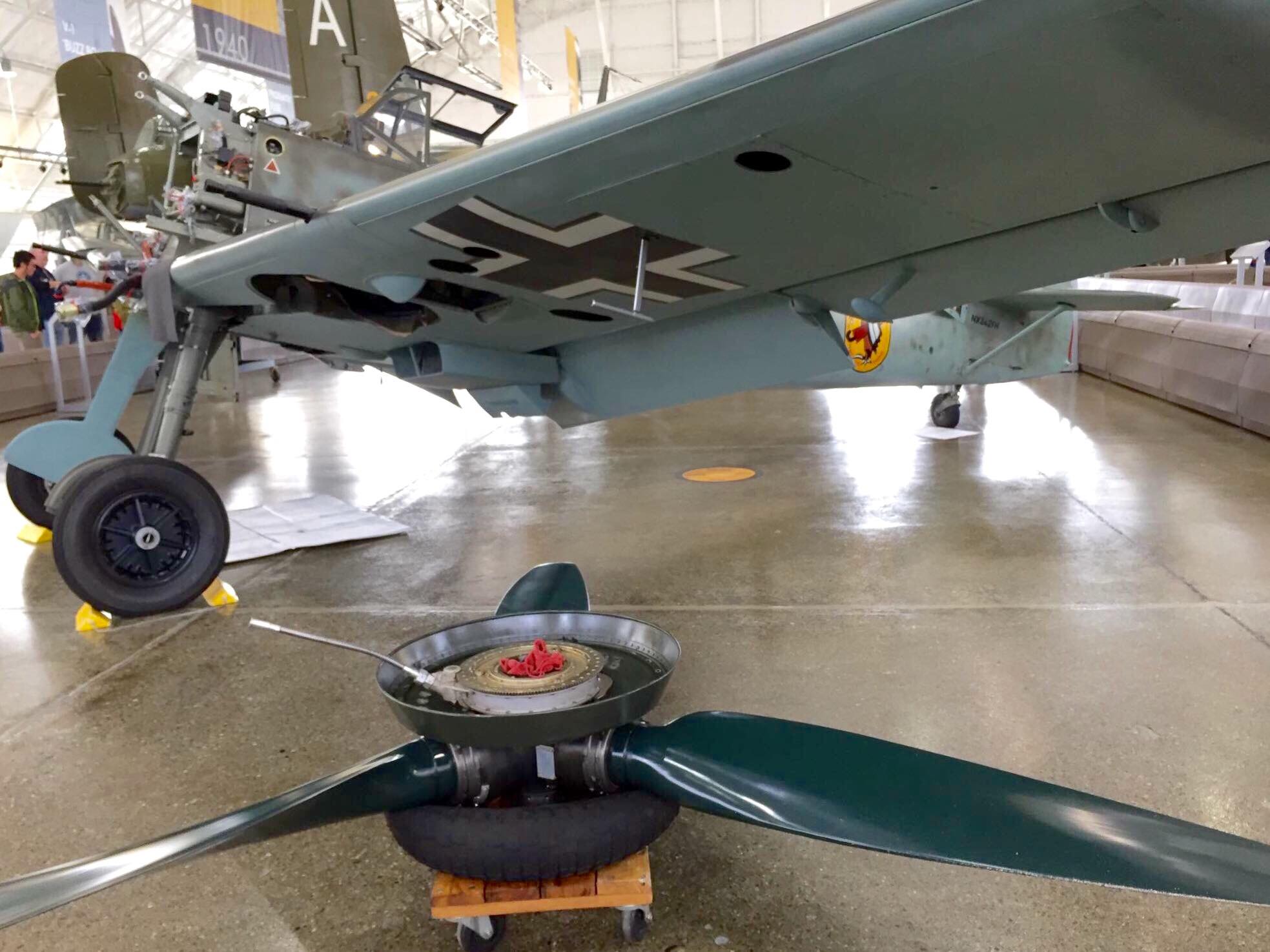
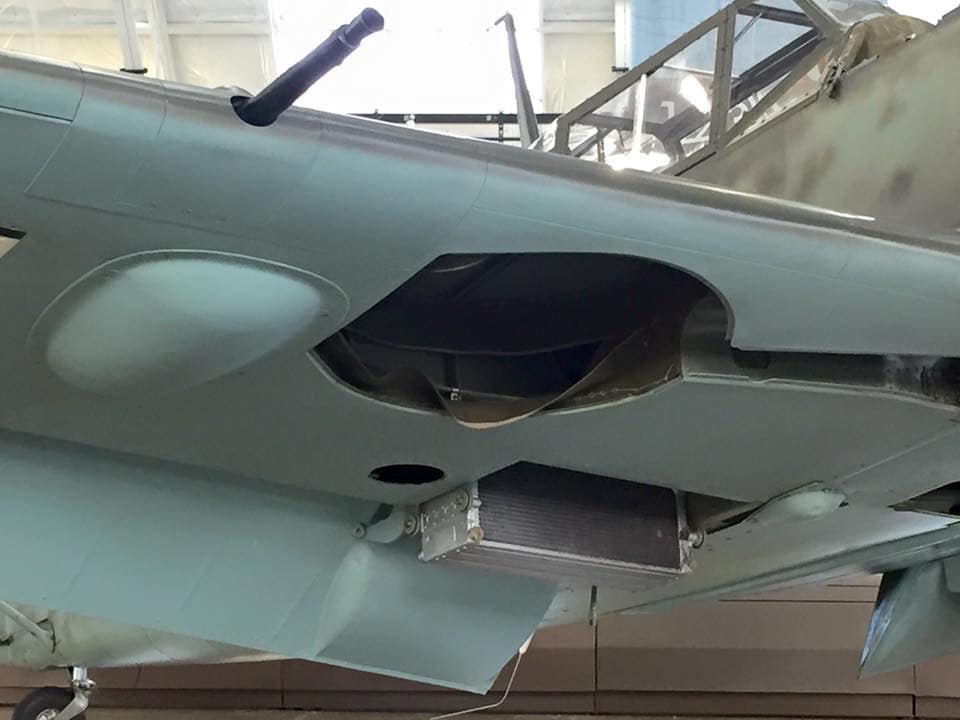
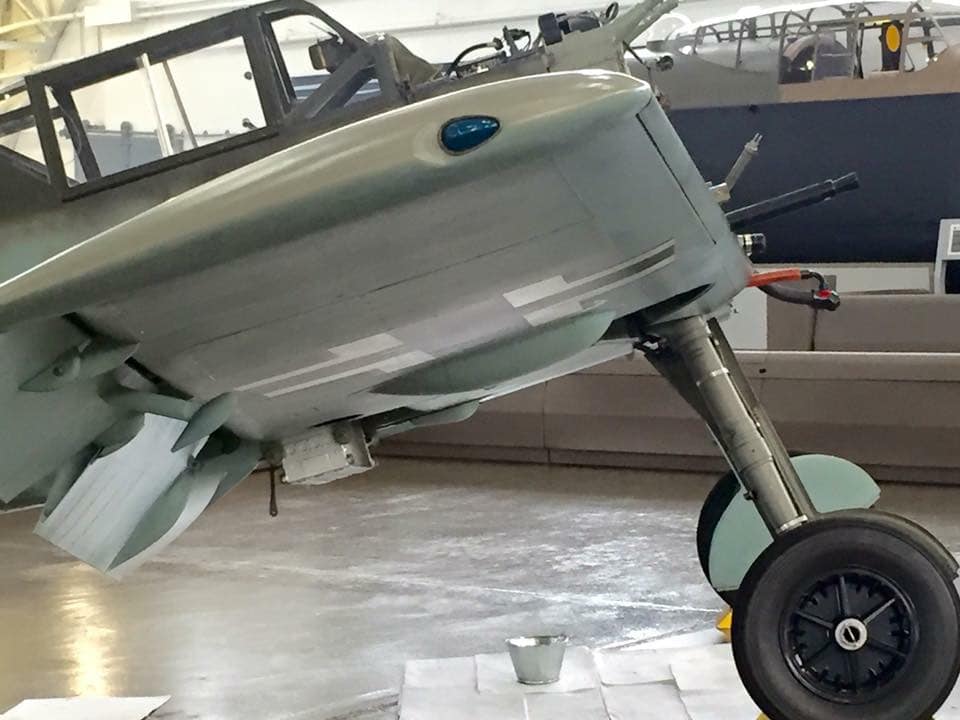
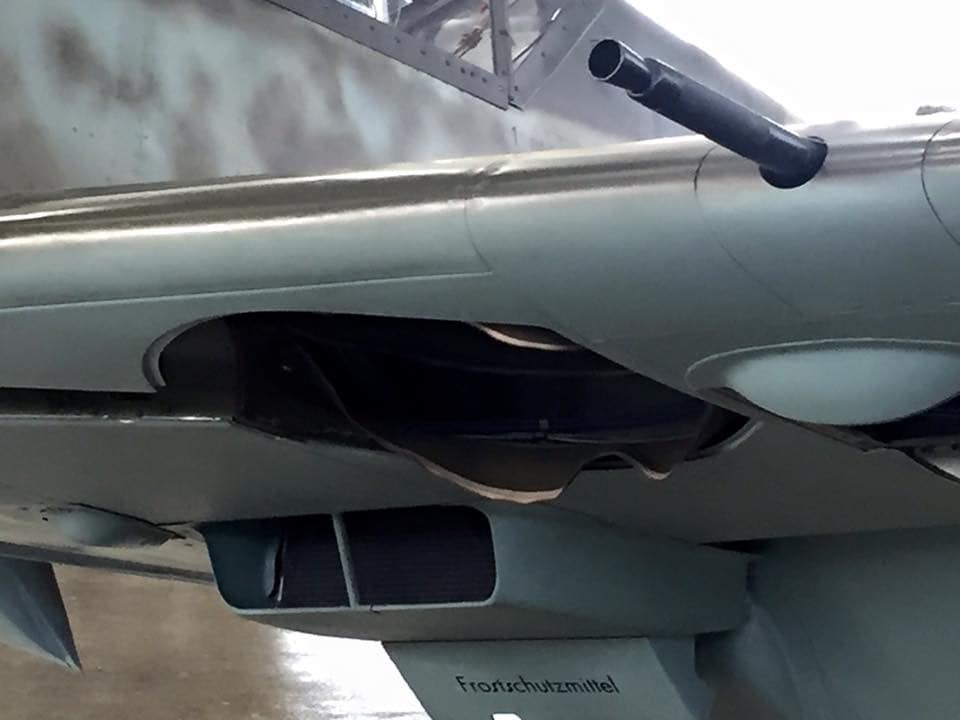

Christiaan Vanhee, European warbird enthusiast and wreck-chaser, was the first owner of the wreck and indicated to me directly that there was little that was left of the airframe, but what was salvageable was used to make this aircraft by Charleston Aviation Services in Essex, and is mated with a Daimler-Benz DB-601 engine restored by Mike Nixon at Vintage V-12’s Inc. in Tehachapi, California. After completion, Steve Hinton was the first to fly it on March 22, 2008. It was owned by Alpine Deer Group of Wanaka, New Zealand, before being acquired by Paul Allen’s Vulcan Warbirds Inc. for Flying Heritage & Combat Armor Museum on Paine Field in Everett, Washington (FHCAM). My photos – with a number courtesy of Roy Stafford, many thanks – and YouTube flight videos at FHCAM, except for this first one.

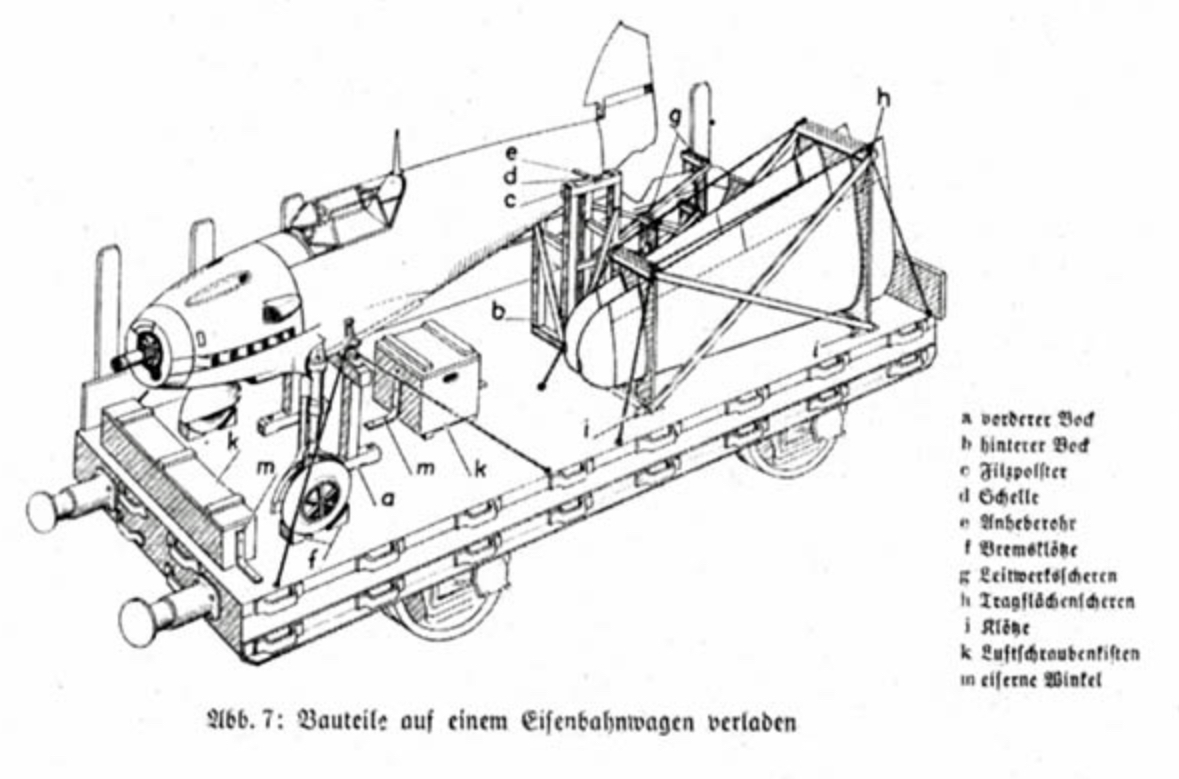
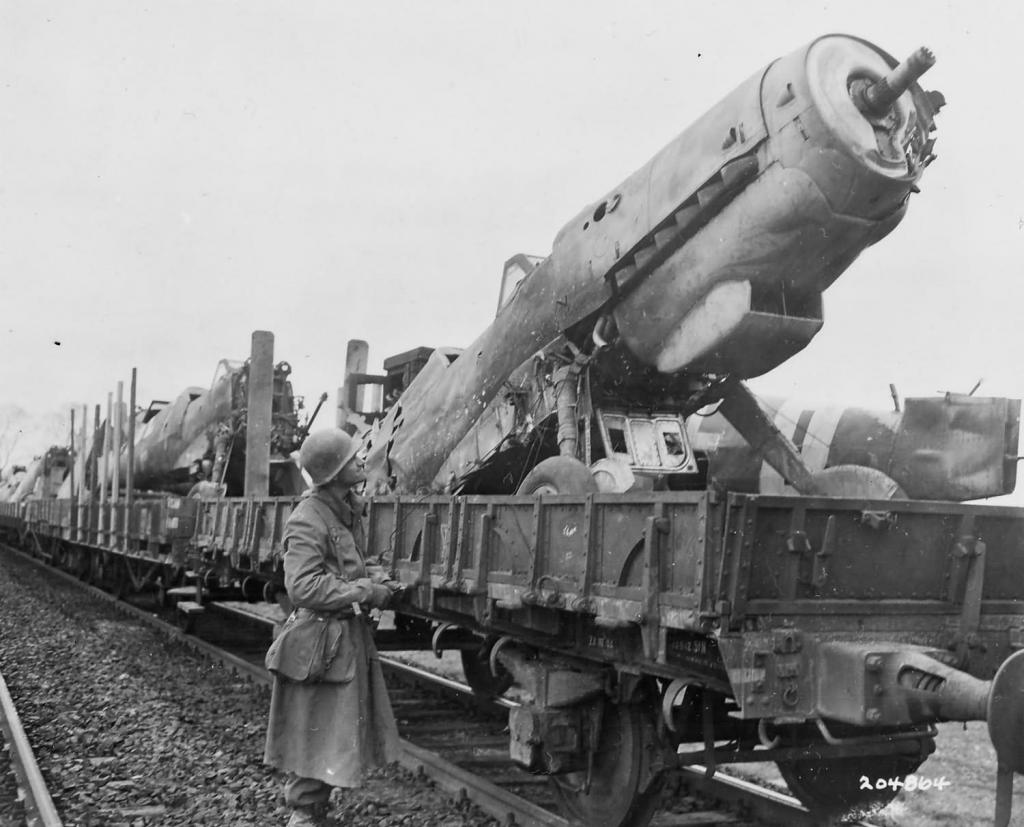
During its production run, the Bf-109 was also built by Erla, Arado, Focke-Wulf and Fieseler. I have read that they were referred to as “Messer” not only in short form but also as the German word for knife. Powerplant: a Daimler-Benz DB 601-Aa V-12 liquid-cooled inverted 1,100-hp engine. I understand the landing gear was NOT attached to the fuselage by a forging of electron magnesium alloy at the firewall aft of the engine mount and was cast. The wings could be removed without any additional supports for the fuselage for ease of maintenance, and for ease of rail transport if need be (see photo and diagram). Because of the narrow fuselage, the gear struts are splayed outwards. The wheels are mounted “crooked” at about a 25-degree camber and, as a result, tend to turn inwards, making them roll straight.
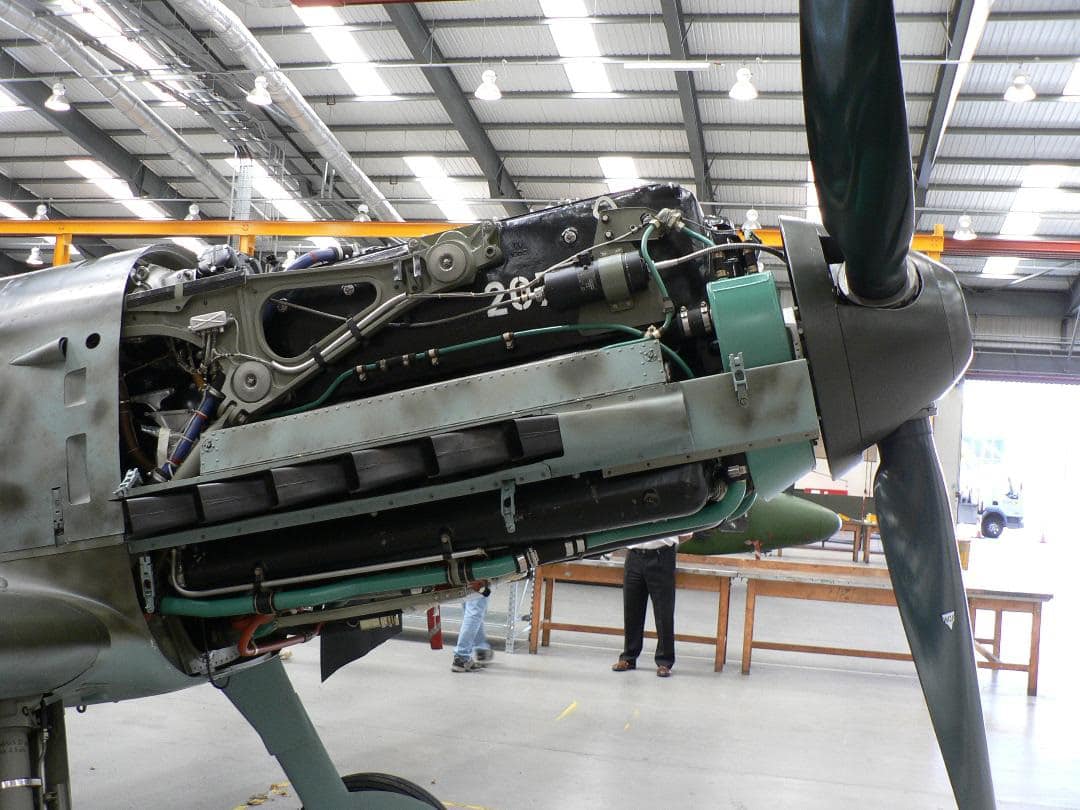
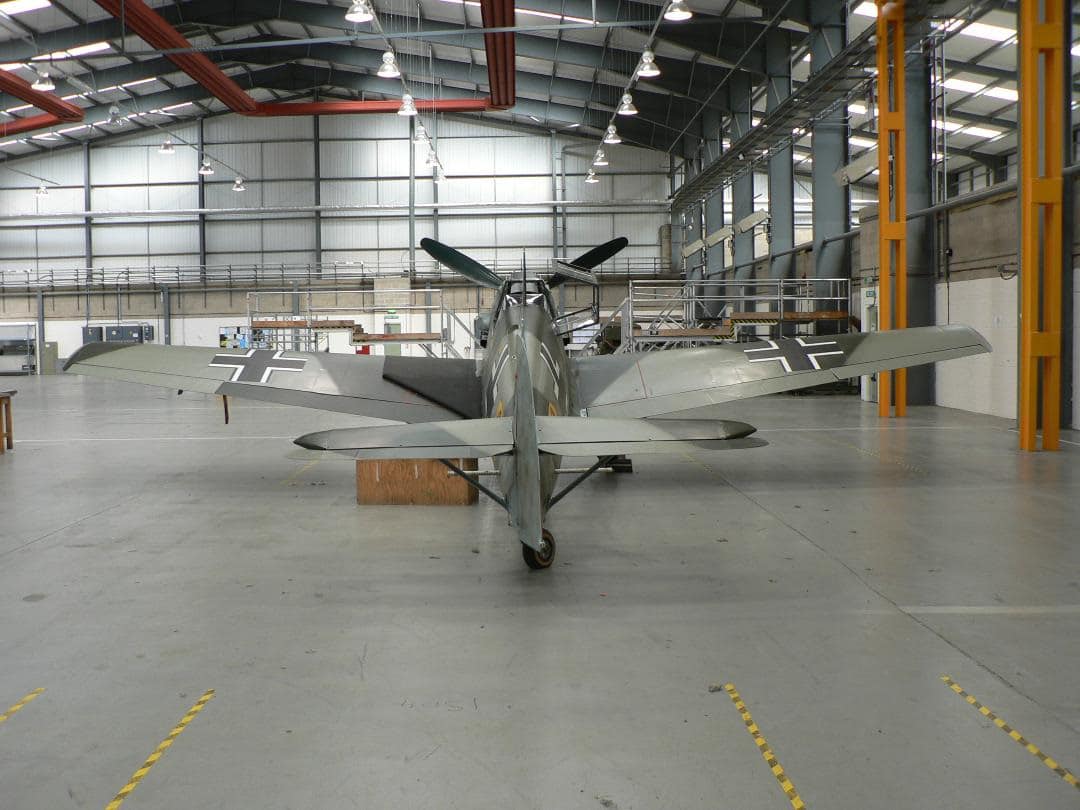
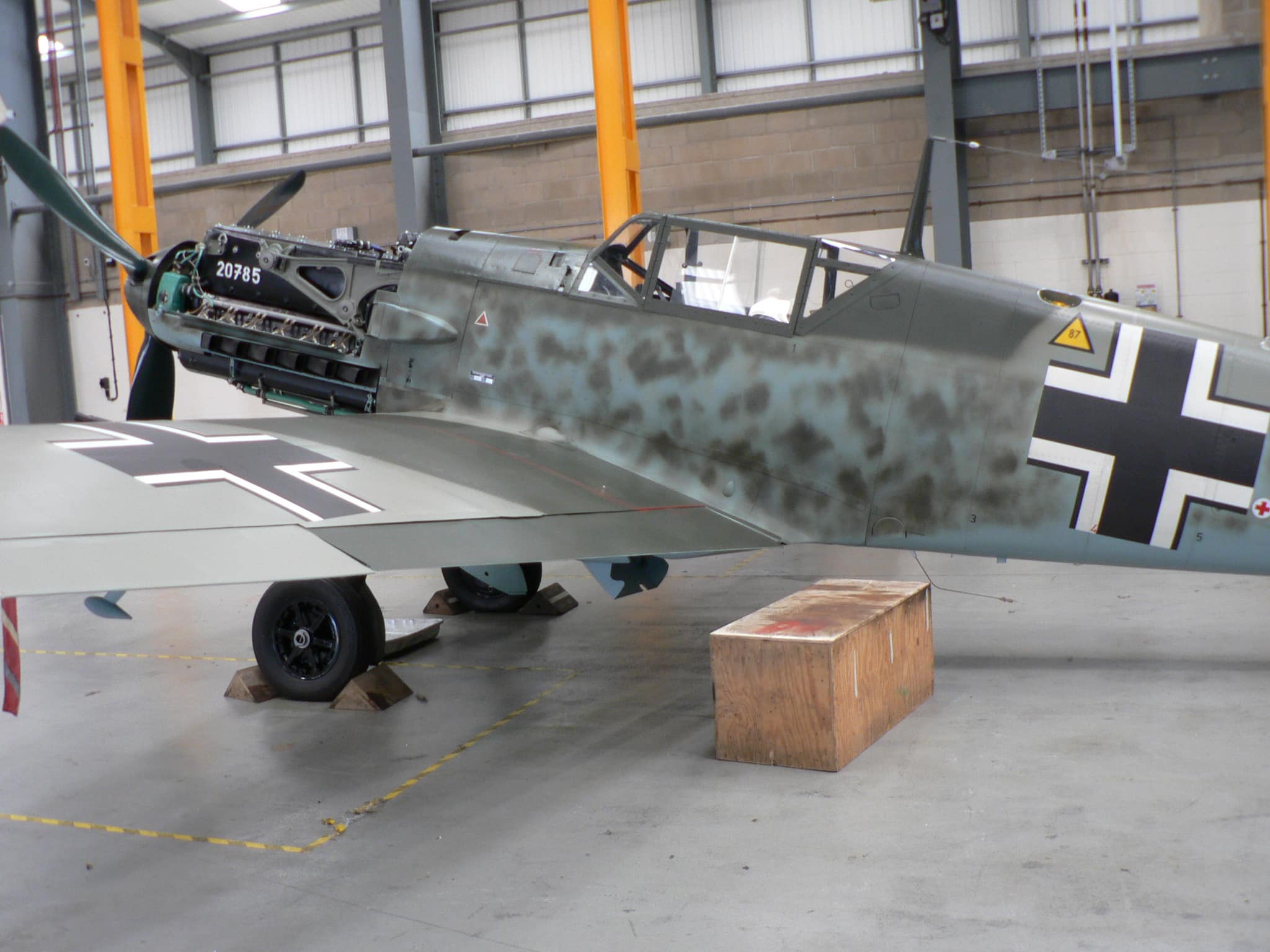
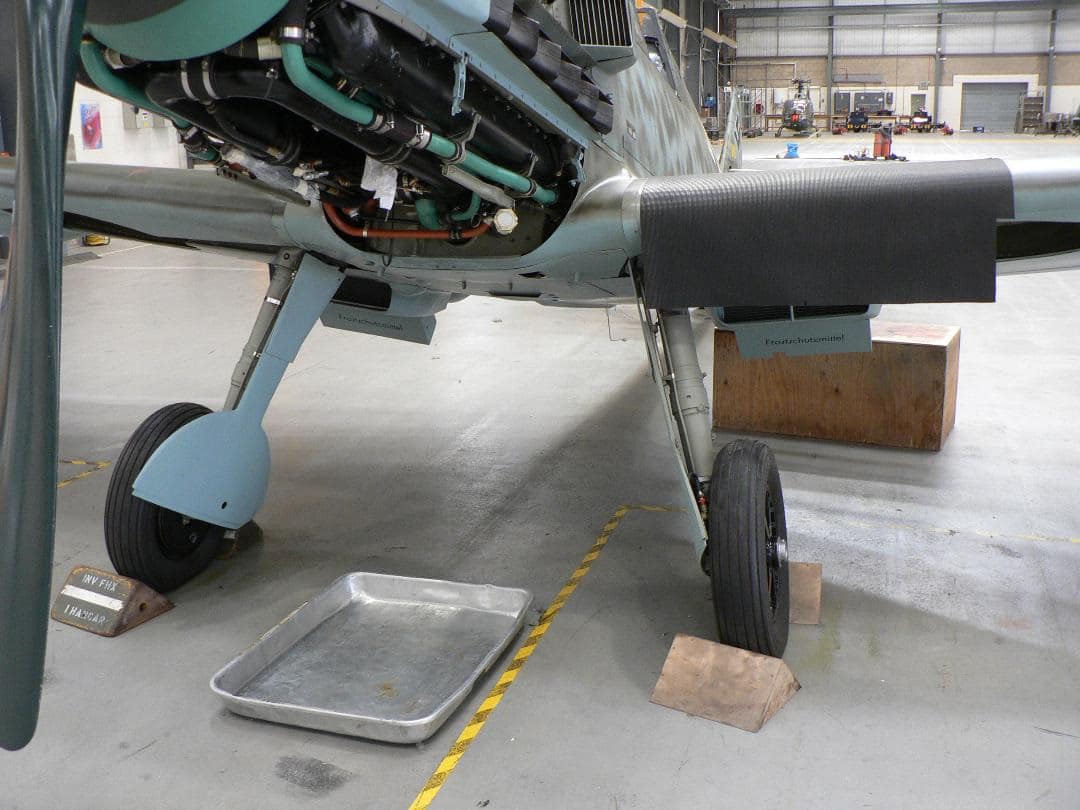
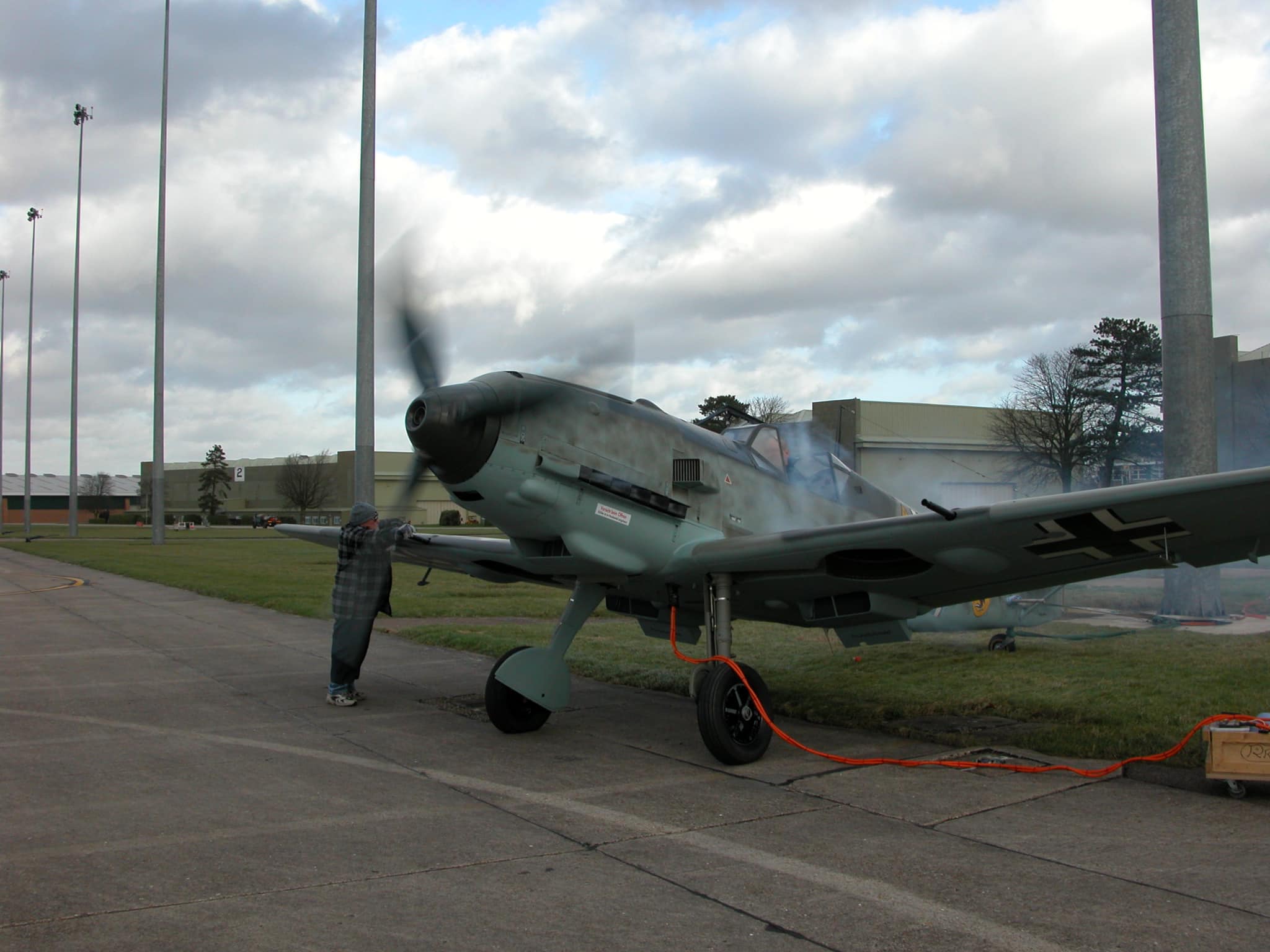
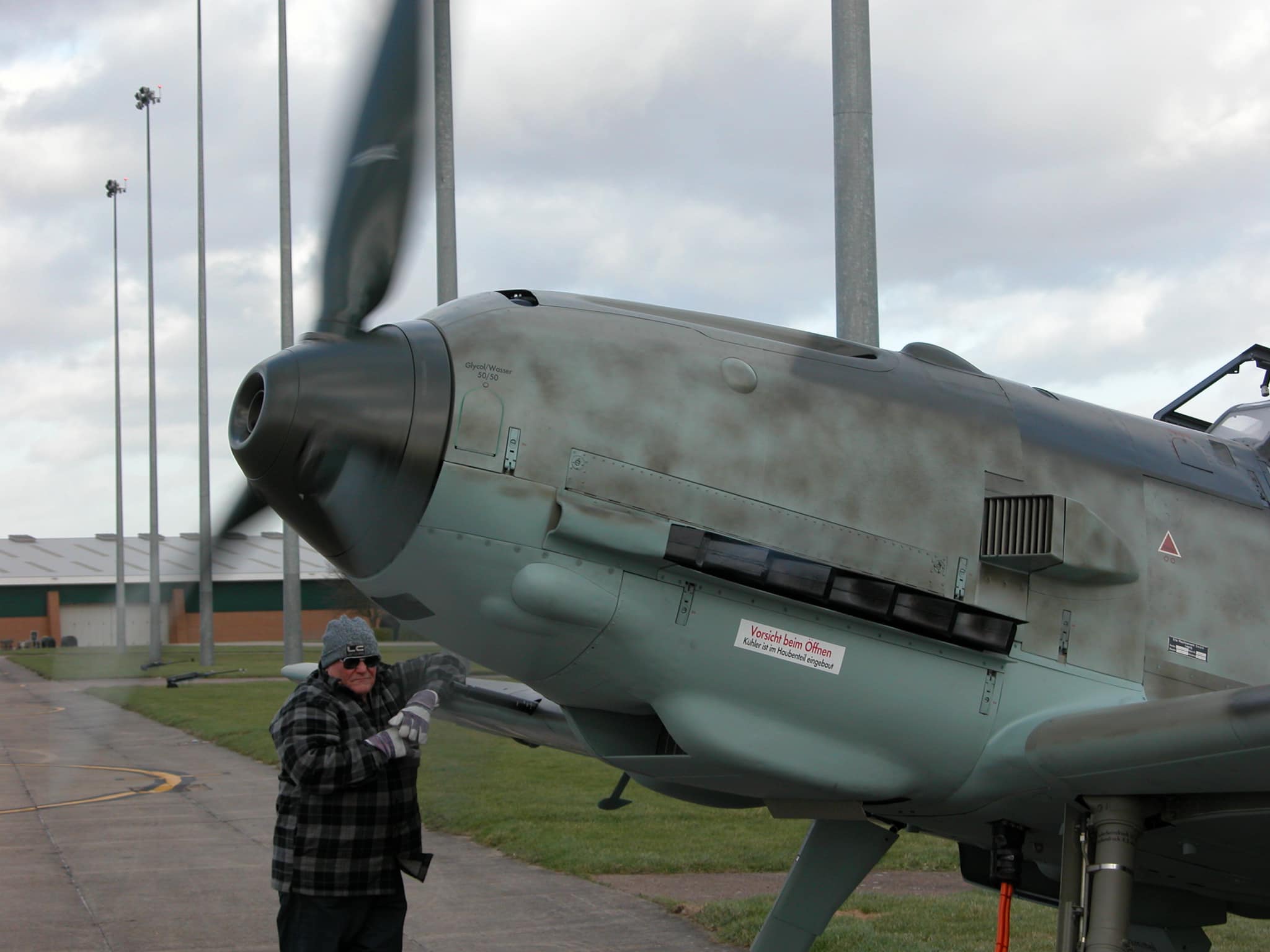
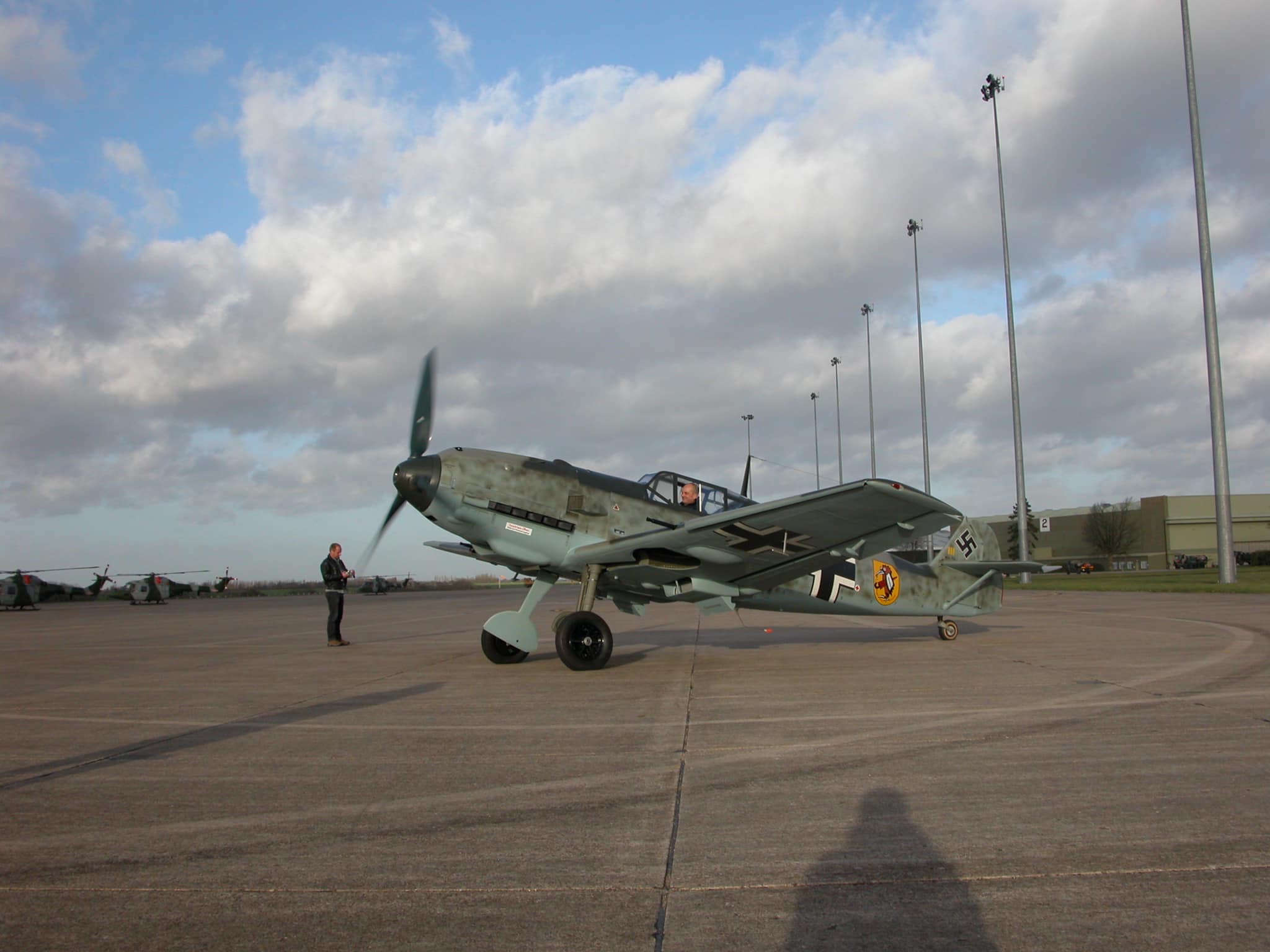

Because of the torque created by the engine, the left landing gear strut is given increased pressure (equivalent to 100 PSI), so when parked, the aircraft does not have a level stance. The wheel wells are lined with canvas, and there are no inner wheel well doors since the wings of the aircraft were not fitted with a mechanism for a clamshell arrangement. The pilot must set the propeller pitch to give the rpm desired for any condition of flight. There is a pitch indicator in the cockpit (it looks a bit like a clock face) which was connected to the electric motor which altered the propeller pitch, which could be set anywhere between 22.5 degrees and 90 degrees (fully feathered).

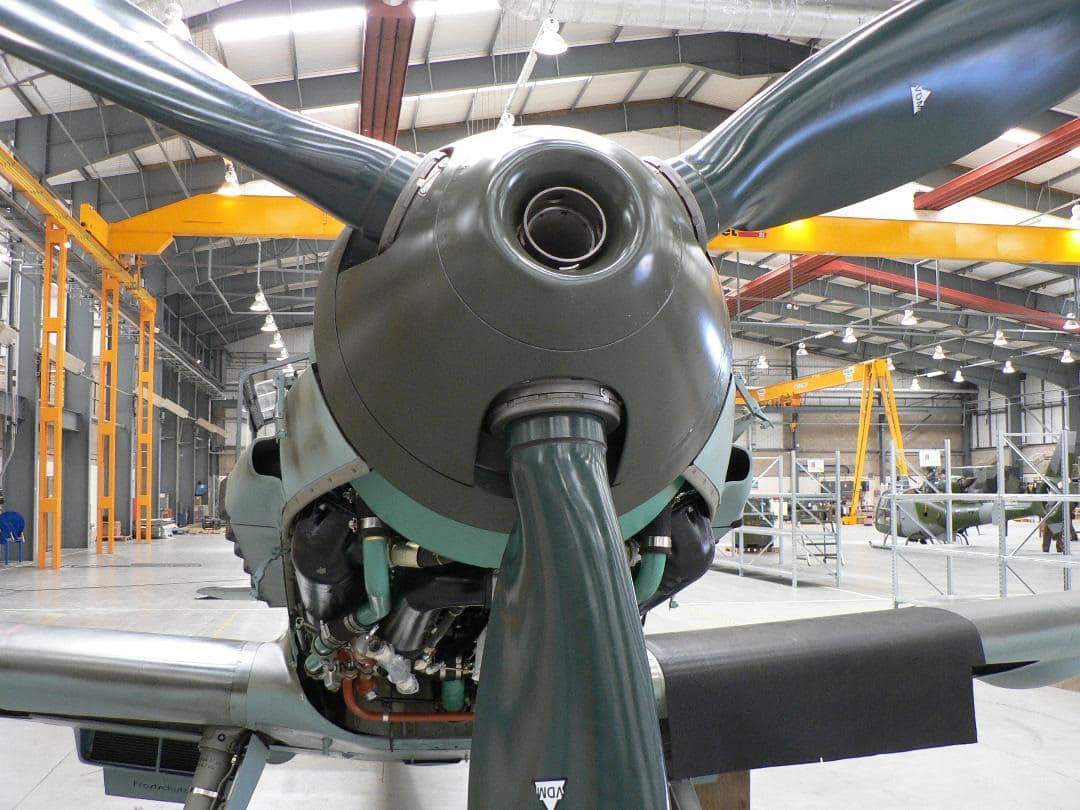
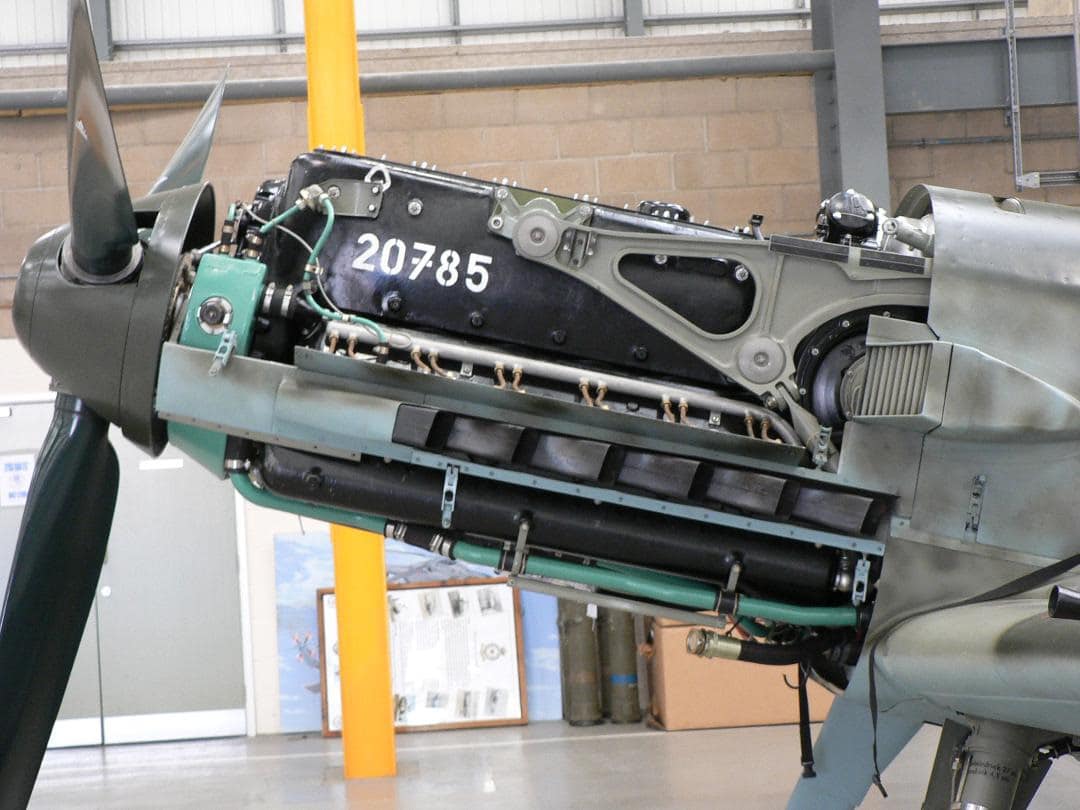
Armed with two 7.92 mm machine guns atop the cowling and a 20 mm MG FF cannon in each wing. It also had an additional 20 mm MG FF autocannon that was mounted through a sealed tube between the engine’s cylinder banks. The reduction gear offset the propeller shaft away from the crankshaft so the tube for the cannon sits down in the inverted-V of the cylinder banks. The cannon barrel fit the entire length of the engine block to a point just past the propeller spinner. I understand that this cannon was not popular with pilots because it produced massive vibration, which caused jamming and inaccuracy, so it was often removed in the field.
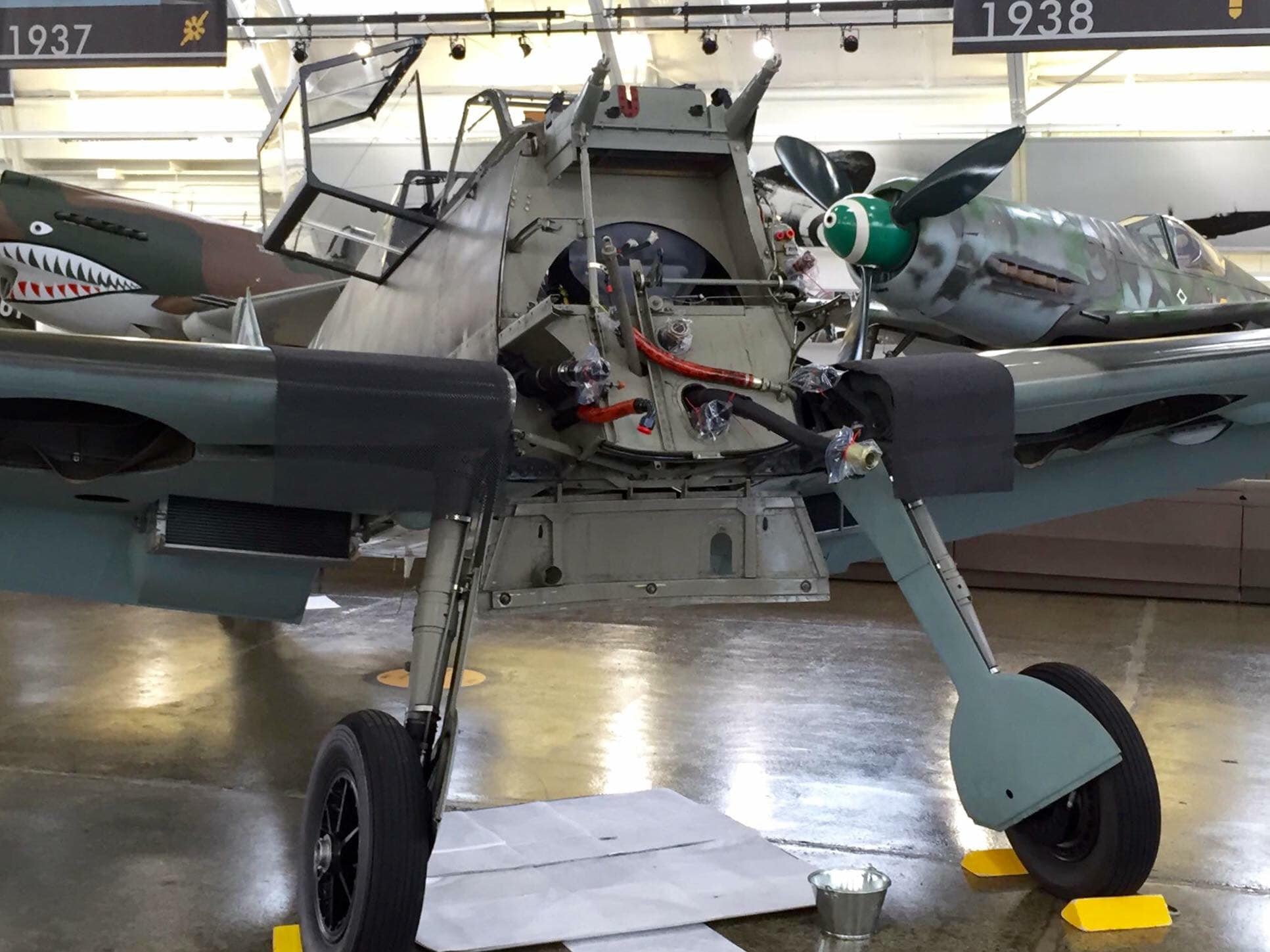
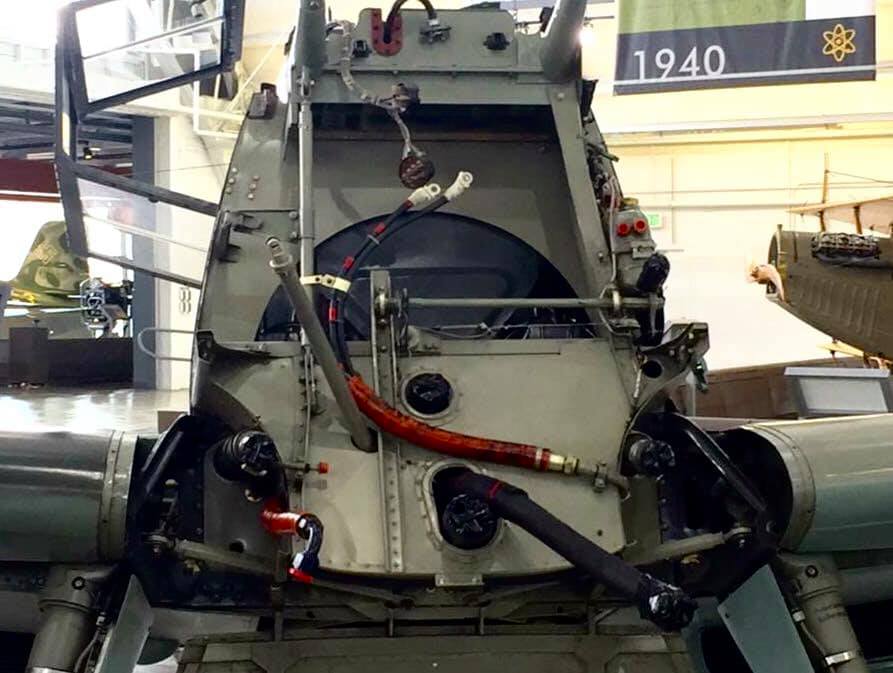
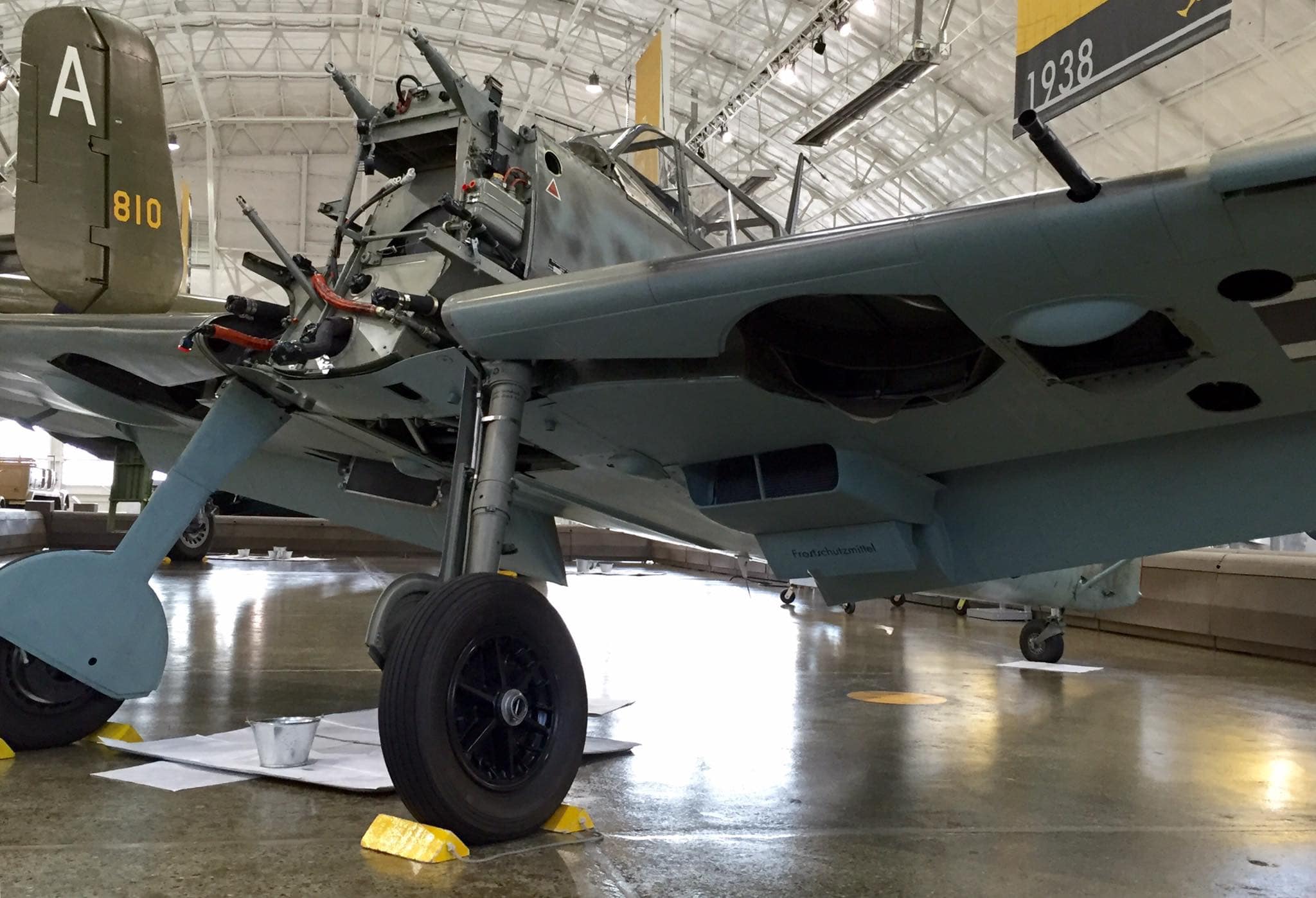
The movable slats on the leading edges of the wings on the E and F variants were operated by a swing-arm parallelogram mechanism (as opposed to the roller-track mechanism in the later G variants) and extended at lower speeds for improved handling, and the ailerons drooped when the flaps were lowered, increasing flap area (versus fixed “slots” on the Fieseler “Storch,” for example). This aircraft is fitted with a variable incidence tail unit (rather than trim tabs) that was operated by a wheel in the cockpit and connected by chains and sprockets to the screw jack just forward of the tail fin; you can see the screw jack in a few of these photos. Warbird Walk-around: Messerschmitt Bf 109 E-3 (Emil)

 About the author: Randy Malmstrom grew up in a family steeped in aviation culture. His father, Bob, was still a cadet in training with the USAAF at the end of WWII but did serve in Germany during the U.S. occupation in the immediate post-war period, where he had the opportunity to fly a wide variety of types that flew in WWII. After returning to the States, Bob became a multi-engine aircraft sales manager and, as such, flew a wide variety of aircraft; Randy frequently accompanied him on these flights. Furthermore, Randy’s cousin, Einar Axel Malmstrom, flew P-47 Thunderbolts with the 356th FG from RAF Martlesham Heath. He was commanding this unit at the time he was shot down over France on April 24th, 1944, and spent the rest of the war as a prisoner of war. Following his repatriation at war’s end, Einar continued his military service, attaining the rank of Colonel. He was serving as Deputy Wing Commander of the 407th Strategic Fighter Wing at Great Falls AFB, MT, at the time of his death in a T-33 training accident on August 21, 1954. The base was renamed in his honor in October 1955 and continues to serve in the present USAF as home to the 341st Missile Wing. Randy’s innate interest in history in general, and aviation history in particular, plus his educational background and passion for WWII warbirds, led him down his current path of capturing detailed aircraft walk-around photos and in-depth airframe histories, recording a precise description of a particular aircraft in all aspects.