







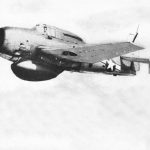
A US Navy squadron, called Attack Squadron 55 (VA-55), operated for three decades, starting in WWII, to become one of the Navy’s longest-serving attack squadrons after the war. Originally formed as Torpedo Squadron 5 (VT-5) on February 15, 1943, it was created using personnel from VS-30, VT-5, and VF-1. The squadron started with torpedo bombers and later used the Skyraider and A-4 Skyhawk for its attack missions. Known as the Torpcats and later as the Warhorses, it first served in the Pacific Theater flying the Grumman TBF Avenger in combat. VT-5 left Norfolk, Virginia, on the USS Yorktown in July 1943, traveling to the Pacific through the Panama Canal. The squadron’s first combat mission was on August 31, when it raided Marcus Island. A month later, VT-5’s Avengers also attacked Wake Island. In November and December 1943, the squadron supported operations at Makin and Tarawa and struck targets at Kwajalein in the Marshall Islands. VT-5 continued its operations during the Gilbert and Marshall Islands campaign in early 1944, targeting Japanese positions across the Central Pacific. On February 16-17, 1944, the squadron attacked the Japanese stronghold at Truk. It later targeted areas in the Marianas and Saipan before taking part in major strikes against Palau from March 30 to April 1.
The Palau operation was the first time the squadron’s TBF Avengers used torpedoes in combat. During this operation, two VT-5 aircraft mistakenly thought the American submarine USS Tunny was a Japanese destroyer and dropped two 2,000-pound bombs. One bomb landed near the submarine, causing minor damage. VT-5 continued its Pacific missions, attacking Wake Island and Hollandia in New Guinea to support General Douglas MacArthur’s forces. On April 30, the squadron faced a major loss when its leader, Lieutenant Commander Dick Upson, did not return from a search-and-rescue mission. After nearly 10 months of combat, VT-5 returned to the United States in May 1944 and reformed. In February 1945, the squadron returned to the Pacific aboard the USS Franklin for its second combat tour. Unfortunately, this tour ended abruptly due to a major attack on the aircraft carrier. On March 19, 1945, as Franklin was getting ready to launch planes for an attack on Kobe, Japan, it was hit by two Japanese bombs. The blasts caused fires and explosions throughout the ship, destroying all of VT-5’s aircraft on the flight and hangar decks. The attack resulted in the deaths of 724 men and injured another 265. Among those who died was VT-5’s commanding officer, Lieutenant Commander Allan C. Edmands. The remaining squadron personnel were moved from Franklin and sent back to the United States.
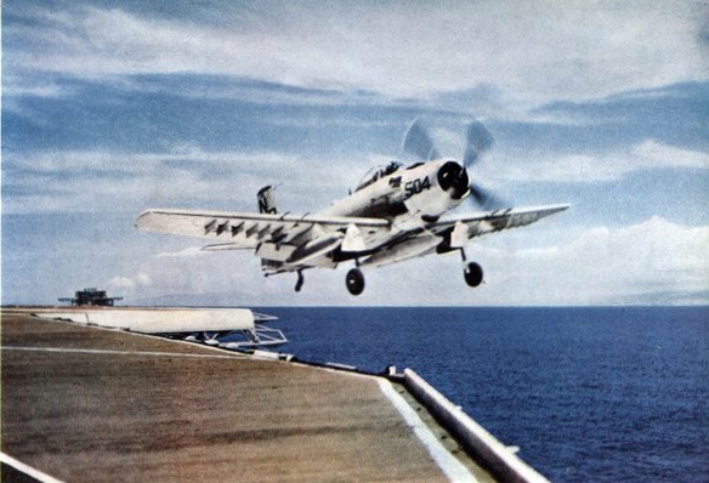
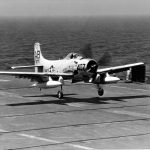
After WWII, VT-5, a Navy squadron, went through several changes as the Navy reorganized its aviation units. On November 15, 1946, it became Attack Squadron 6A (VA-6A) and later received its final name, Attack Squadron 55, on August 16, 1948. The squadron also changed its nickname. It was called the Torpcats from 1943 to 1955, but from 1955 onward, it became known as the Warhorses. The squadron’s insignia changed several times and ended up as a unique winged seahorse. The name change came along with a big shift in aircraft as well. The piston-powered TBF Avenger was replaced by the Douglas AD-4 Skyraider, bringing a new powerful single-engine attack aircraft to the squadron. Attack Squadron 55 played an important role in the Korean War and in naval aviation history. On July 3, 1950, the squadron’s AD-4 Skyraiders launched some of the first combat strikes by carrier-based aircraft against North Korean forces. They targeted airfields, supply routes, and transport facilities near Pyongyang. It marked the first time the AD Skyraider was used in combat, and it would become a key attack aircraft for the Navy. Attack Squadron 55 continued its operations as United Nations forces got ready for the Battle of Inchon. On September 12, the squadron began its strikes against targets around Inchon and Seoul, followed by attacks to support the amphibious landings on September 15.
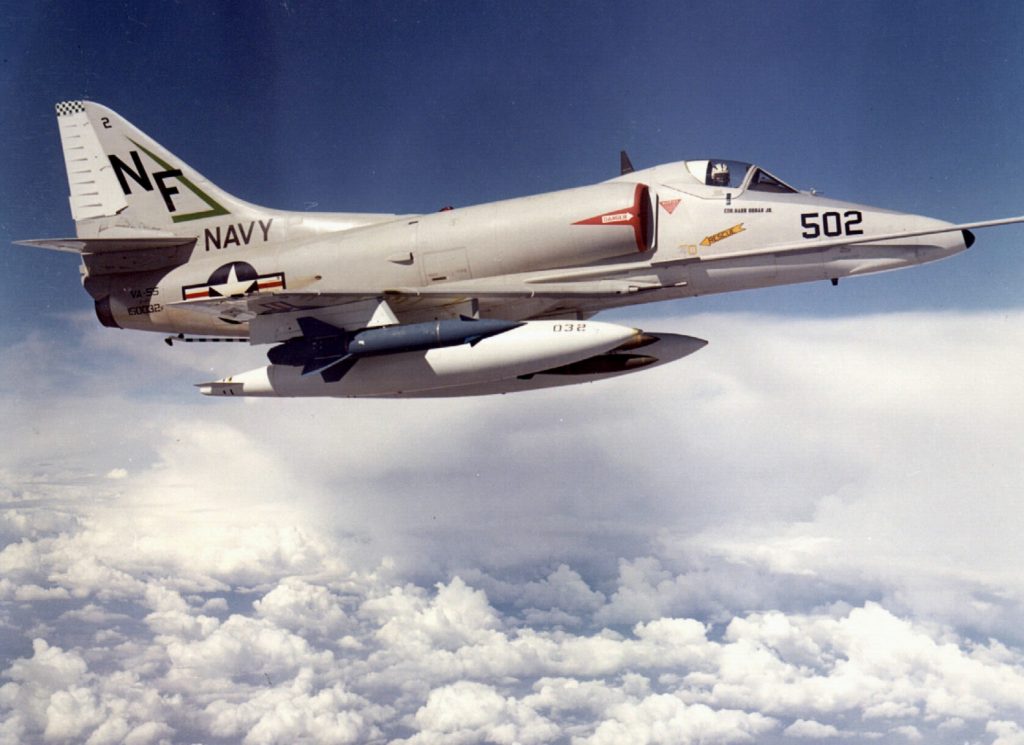
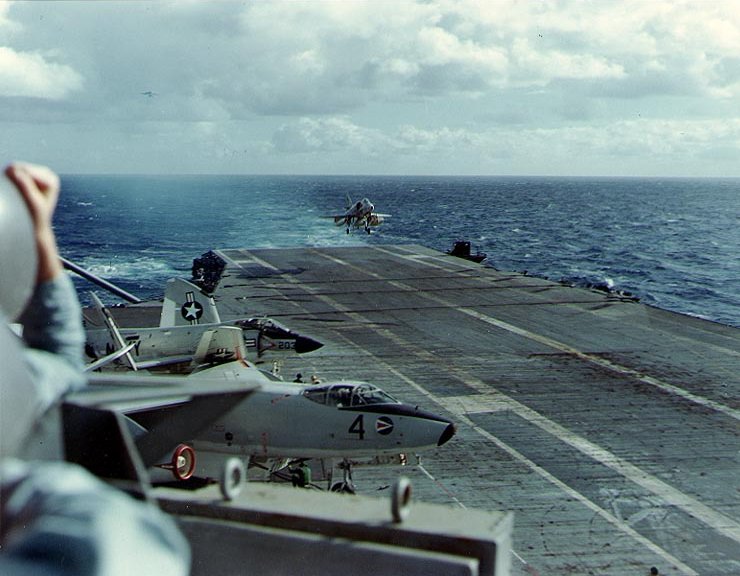
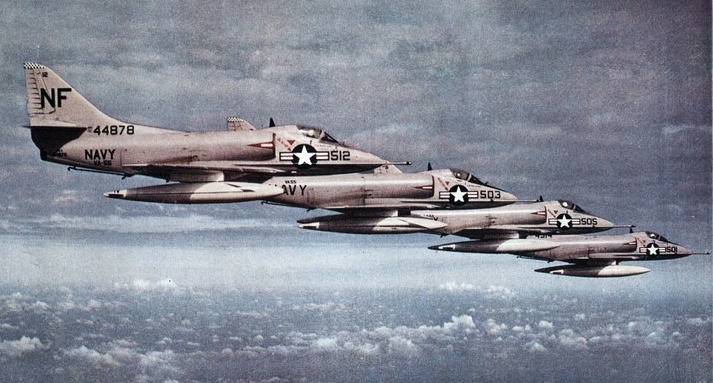
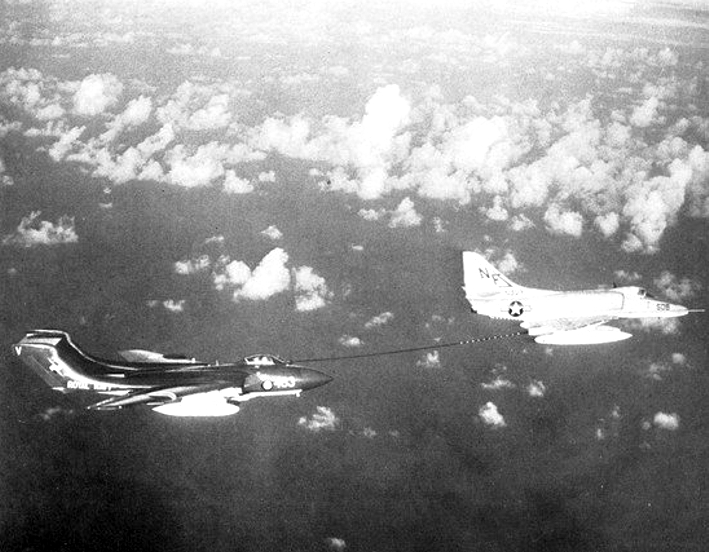
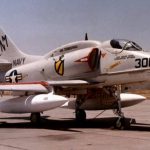
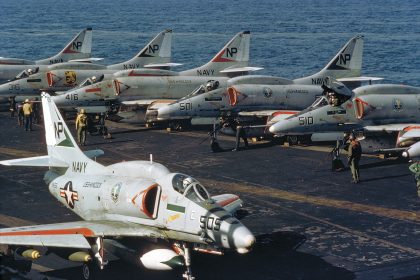
In May 1951, the squadron deployed on the USS Princeton with Air Group 19 and returned to combat in Korea. The Warhorses continued their operations in the Western Pacific after the Korean War. In 1954, they onboarded the USS Essex while the carrier was sent to operate off Vietnam during the Viet Minh offensive against the French at Dien Bien Phu. They also operated around Taiwan during times of increased tension in 1957 and 1958, including the Second Taiwan Strait Crisis. Attack Squadron 55 began its service during the Vietnam War as naval aviation shifted to jets. The squadron flew the Douglas A-4 Skyhawk and took part in expanding operations in Southeast Asia. In 1962, VA-55 worked with the British carrier HMS Victorious. The next year, USS Ticonderoga, which carried Attack Squadron 55, was sent to the South China Sea due to conflict in Laos. In 1964, the squadron joined special Yankee Team operations over Laos and South Vietnam. On August 2 and 4, its aircraft supported USS Maddox and USS Turner Joy during their patrols off North Vietnam. On August 5, 1964, Attack Squadron 55’s A-4 Skyhawks took part in Operation Pierce Arrow. It was a series of US airstrikes against North Vietnam in response to the Gulf of Tonkin incidents. The squadron helped attack the Vinh oil-storage facility and reportedly destroyed most of it.
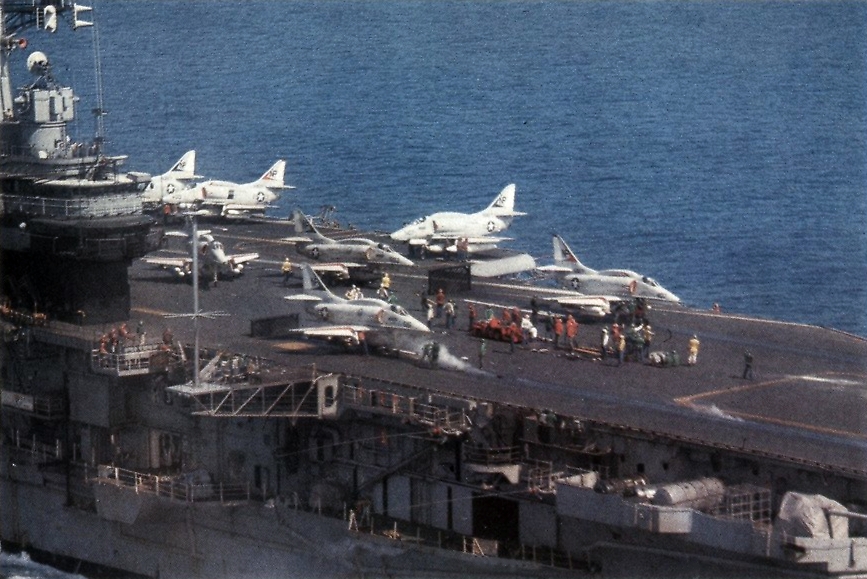
Throughout the 1960s, the Warhorses continued to fly combat missions over Southeast Asia. On June 3, 1966, Commander M. J. Chewning, the squadron leader, was hit by shrapnel during a mission over North Vietnam. The injury disabled his left arm, but he finished the attack and landed his plane on the carrier using one hand. He received the Silver Star and Purple Heart for his bravery. Lieutenant Commander Theodore F. Kopfman was a pilot in Attack Squadron 55. He was shot down over North Vietnam on June 15, 1966, and was captured. He was released and returned to the United States in 1973. As the Vietnam War grew more intense, Attack Squadron 55 continued its operations. In April 1972, the squadron took part in Operation Freedom Train, which targeted military locations and supply routes in North Vietnam and supported South Vietnamese troops. In May, the Warhorses joined the early phase of Operation Linebacker, a major air campaign by the US against North Vietnam. In June 1973, VA-55 carried out missions to help clear mines from North Vietnamese waters during Operation End Sweep. Later that year, the squadron was aboard USS Hancock when the Yom Kippur War began. The situation forced the carrier to leave Yankee Station and deploy in the Arabian Sea and Gulf of Aden. After over 30 years of service, Attack Squadron 55 was disestablished on December 12, 1975. The squadron’s history began with TBF Avenger missions in WWII, continued with Skyraider battles in Korea, and included A-4 Skyhawk strikes in Vietnam.




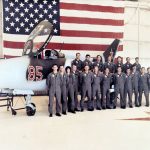

I Ron Puckett was a member of Va-55. 1958-1960. I made two deployments with Va-55. First on USS Bennington second on USS TICONDEROGA.. ON TICONDEROGA EE HAD A4-DS.
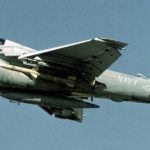
This article omitted a huge history of VA55 when it was an A-6 Intruder squadron! The squadron participated in the US Navy strikes in Libya in the late ’80’s as well as participating in Desert Shield just before the squadron was disestabliahed.