
Attack Squadron 23 (VA-23), also known as the Black Knights, was established in December 1949 as Reserve Fighter Squadron 653 (VF-653) at Naval Air Station Akron, Ohio. It was led by Lieutenant Commander Cook Cleland, a famous naval pilot who won the Thompson Trophy air races in 1947 and 1949. The squadron started with the FG-1D Goodyear Corsair and was called to active duty on February 1, 1951, as the Korean War escalated. It then moved to Naval Air Station Alameda, California, and switched to the Vought F4U-4 Corsair. The squadron deployed on USS Valley Forge for its first combat mission to Korea. On December 11, 1951, it conducted its first combat strikes, beginning a long history of operations throughout the Korean War, the Cold War, and the Vietnam War. On February 4, 1953, it was renamed Fighter Squadron 151 (VF-151) as it began using the Grumman F9F-2 Panther jet fighter. During its second combat deployment on the USS Boxer, it conducted numerous strike missions against North Korean targets. From May to July 1953, the squadron completed 120 strike missions, firing thousands of cannon rounds, rockets, and bombs, while facing heavy damage from enemy anti-aircraft fire. Lieutenant (jg) Jack William Ingram Jr. was killed when his Panther was hit by anti-aircraft fire. The next day, Ensign Thomas Ledford died in a catapult accident on the USS Boxer, becoming one of the last US naval aviators to lose his life during the Korean War.
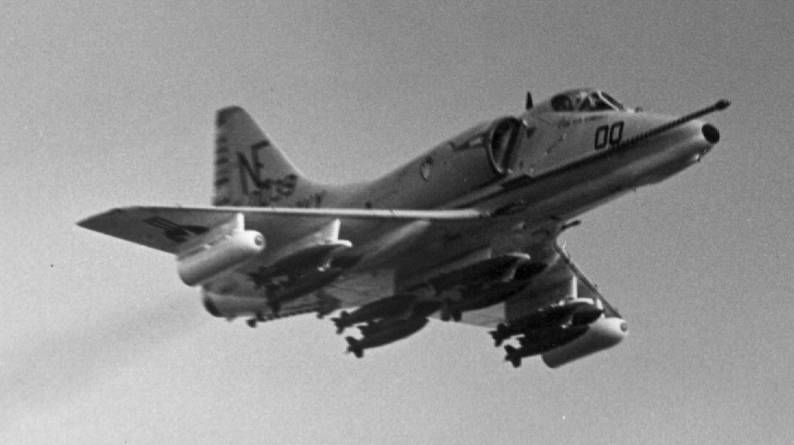
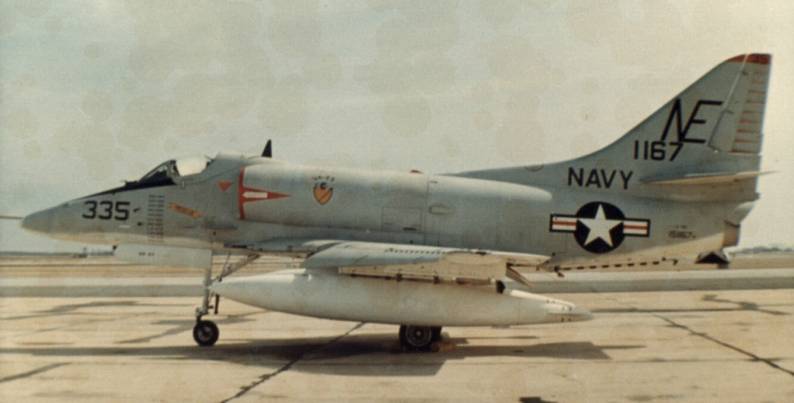
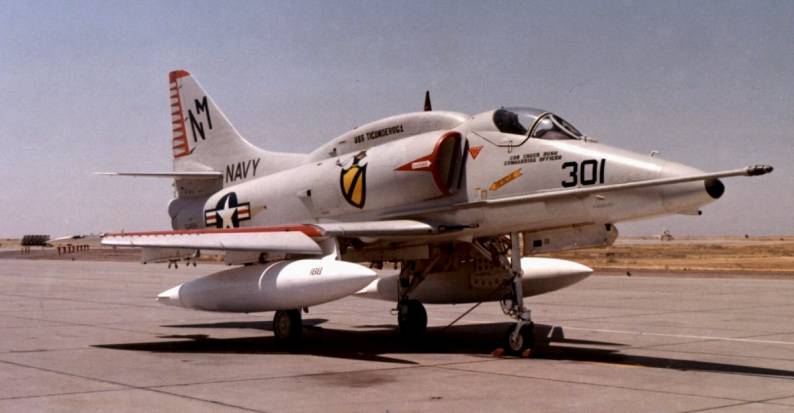
After the Korean War, the squadron continued to serve in the Western Pacific. During the 1955 Tachen Islands crisis, the squadron helped evacuate Chinese Nationalist forces after Communist China bombarded them. That same year, it switched to the Vought F7U-3M Cutlass aircraft and was renamed Attack Squadron 151 (VA-151) on February 7, 1956. Later in 1956, the squadron deployed on the USS Lexington and started replacing the Cutlass with the Grumman F9F-8 Cougar. In 1957, it transitioned again and began using the North American FJ-4B Fury. On February 23, 1959, the squadron was officially named Attack Squadron 23. It started with the FJ-4B Fury but quickly moved on to the Douglas A4D-2 Skyhawk, which would play a major role in its operations. While training to use the new attack jet, the Black Knights faced dangers during their peacetime exercises. In September 1960, Lieutenant (jg) Arthur Winterbottom died during a low-level bombing drill in Fallon, Nevada, when his aircraft crashed into a steel target while dropping napalm. The squadron’s carrier attack skills were honed with more accidents, a reflection of the demanding world of naval aviation, even in peacetime. In the early 1960s, Attack Squadron 23 made several deployments aboard the USS Midway before transferring to Naval Air Station Lemoore, California. The squadron was the first in the world to operate the A-4E Skyhawk, a new version that increased its attack capability.
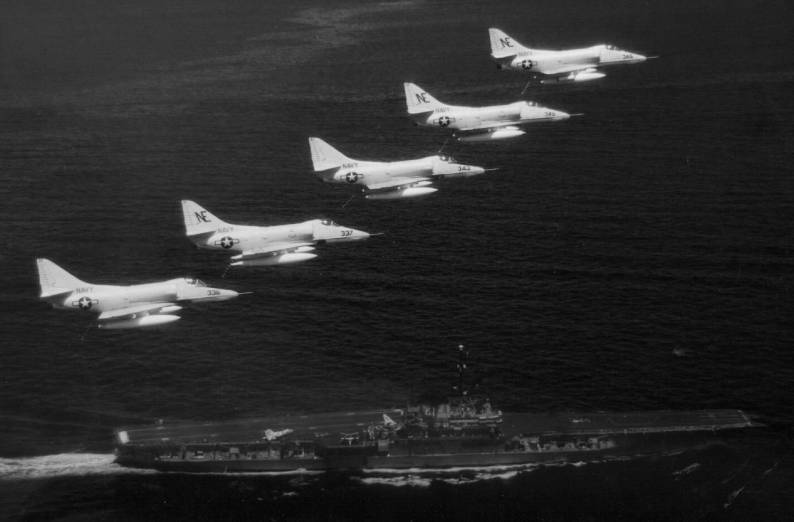
During this period, Attack Squadron 23 faced many challenges. It lost aircraft during carrier operations, training flights, and due to engine failures. In 1962, Commander George Morwood Veling was lost when his plane crashed shortly after takeoff from the USS Midway. These tragedies did not deter the Black Knights as they continued to hone their carrier strike tactics and maintain a high level of readiness during the tense days of the Cold War in the Pacific. The squadron entered the Vietnam War in 1965 on its first combat mission on board the USS Midway, returning to battle after the Korean War. Attack Squadron 23 was the first squadron to employ the AGM-45 Shrike anti-radiation missile in combat, illustrating the Navy’s focus on disrupting enemy radar and air defenses. However, Lieutenant (jg) David Marion Christian died when his Skyhawk was hit by anti-aircraft fire. Lieutenant (jg) D.H. Brown Jr. was shot down by a North Vietnamese missile, and Lieutenant (jg) McKamey was captured after ejecting over North Vietnam. Other pilots managed to survive being shot down or ejecting from their planes, but several aircraft were lost during missions over heavily defended targets. Attack Squadron 23 completed a second deployment to Vietnam on the USS Coral Sea from 1966 to 1967. The squadron faced attacks from anti-aircraft guns and surface-to-air missiles. Lieutenant M.S. Confer was killed when a missile destroyed his Skyhawk, Lieutenant M.P. Cronin survived ejection but was captured as a prisoner of war, and Lieutenant Daniel Hagan Moran flew his damaged aircraft back toward the coast but died shortly after ejecting near a rescue ship.
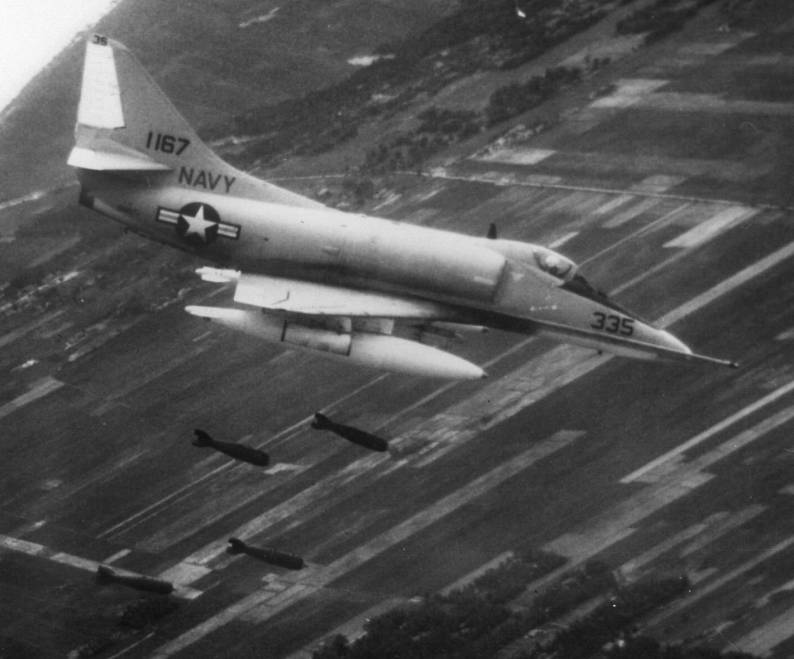
Despite these losses, the Attack Squadron 23 kept a busy schedule, continuing strike missions against key targets in North Vietnam. The Black Knights returned to Vietnam for two more combat missions. During their 1967–68 deployment on the USS Ticonderoga, they flew operations over North Vietnam and later moved to the Sea of Japan after North Korea captured the USS Pueblo. The Attack Squadron 23 also supported Marines during the siege of Khe Sanh, which was an important deployment because the squadron had no combat losses. However, Lieutenant Commander Lawrence D. Gosen was killed in a carrier launch accident. Their final Vietnam deployment was on the USS Oriskany in 1969. During this time, Lieutenant Stanley “Tiny” Smiley was killed when his Skyhawk was shot down over Laos. Another pilot, Lieutenant Ronald Machens, managed to eject safely after an engine fire during refueling and was rescued. After its last combat operations, Attack Squadron 23 continued to fly regularly until it officially disbanded on April 1, 1970. The squadron, known as the Black Knights and with roots tracing back to VF-653, served for nearly twenty years and was part of both the Korean and Vietnam Wars.