
(Image credit: VAN)
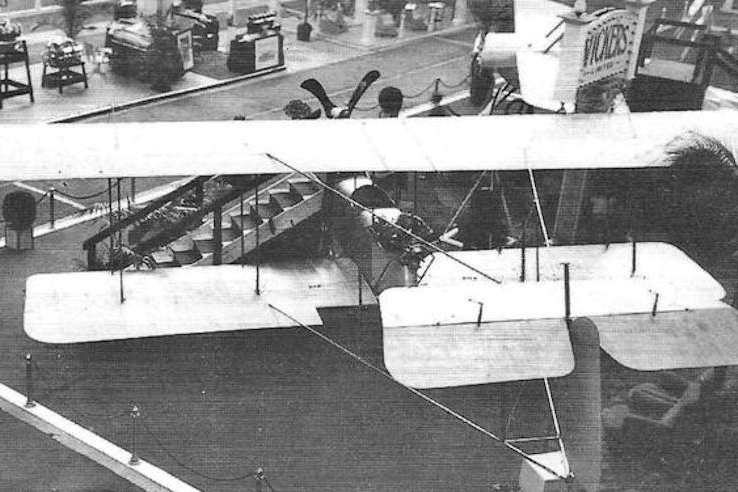
On this day in aviation history, 113 years ago (February 13, 1913), the first public display of a purpose-built warplane took place. The second British Air Show, in London, was the scene for this significant event. The aircraft that debuted to the public was a Vickers E.F.B.1 Destroyer, the world’s first airplane designed specifically to carry a gun. Vickers, Sons and Maxim designed and manufactured this one-of-a-kind purpose-built warplane. The Destroyer’s development was born from a British Admiralty requirement for an aircraft to be primarily used in an offensive role. This was the first British aircraft that would be designed for a military-first role and thus the first to be armed.
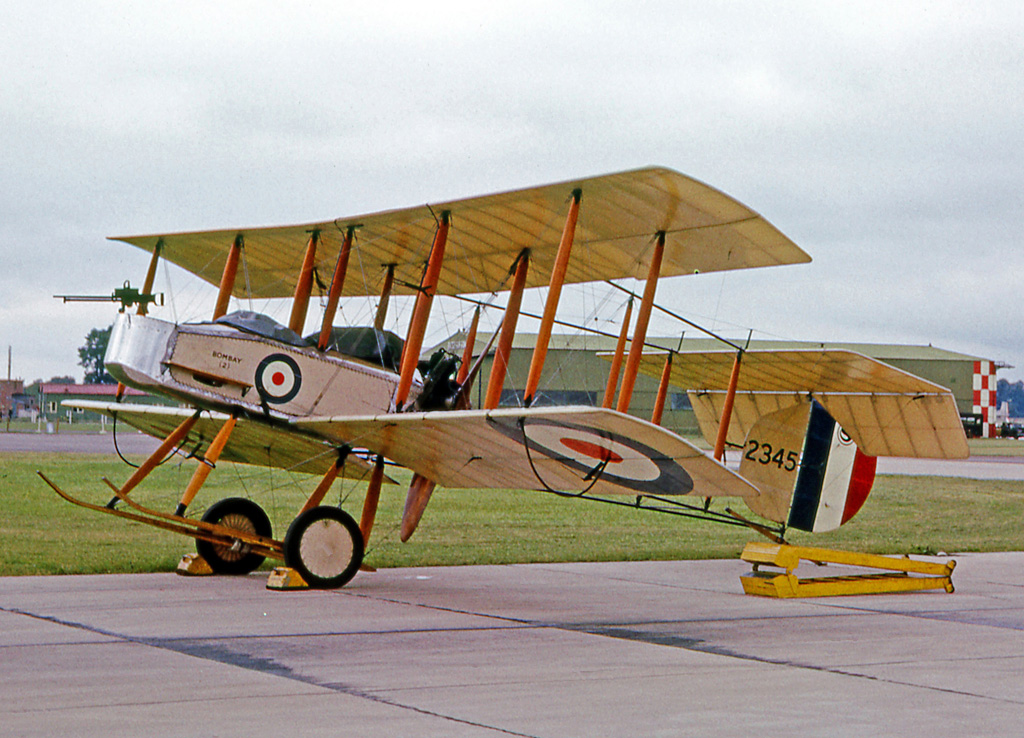
Vickers, Sons and Maxim designed a pusher biplane with staggered wings of unequal spans. The tailplane of the E.F.B.1 was mounted on booms behind the wings. Those flying the Destroyer sat in a nacelle above the lower wing, the engine aft of them. The pusher design was a result of the requirement for a forward-firing gun. In the days before the invention of the interrupter gear, keeping the propeller out of the machine gun’s firing path was a must, and the pusher design satisfied this requirement. The Destroyer’s tail booms and spars were made of metal, as was the nacelle. Lateral control of the E.F.B.1 was achieved via wing-warping, a popular method of control for early aircraft.
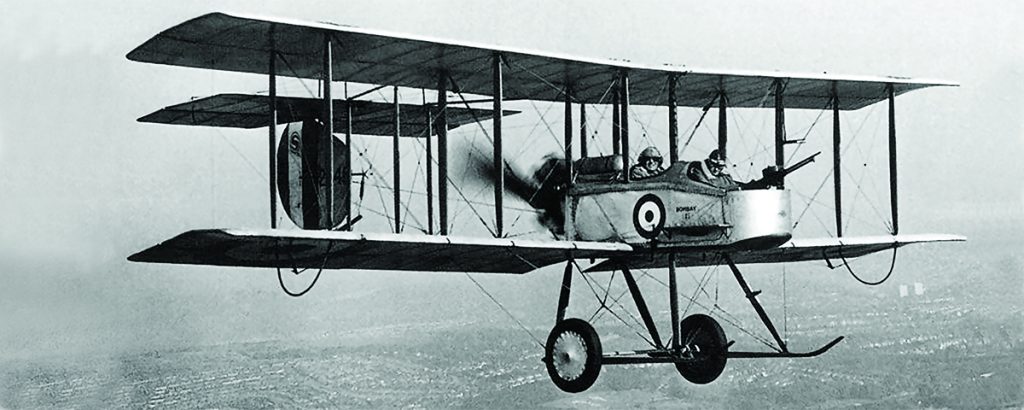
The Vickers E.F.B.1 had a crew of two and was powered by an 80-horsepower Wolseley Type B V-8 engine, featuring water-cooled valves. The Wolseley V-8 swung a 4-bladed Vickers-Levasseur propeller, which together pushed the Destroyer to a maximum airspeed of 70 mph. The endurance of the E.F.B.1 was claimed to be 4.5 hours, and the aircraft had a 450-foot-per-minute rate of climb. The first armed aircraft carried a 0.303-inch Vickers-Maxim belt-fed machine gun. Shortly after the Destroyer’s public debut, the sole fighting aeroplane suffered a crash. Nevertheless, the E.F.B.1 showed proof of concept, leading to further warplane developments in the years to follow. Additionally, the public exhibition of the Destroyer opened the door to aerial events that highlight military aircraft, leading to the warbird-focused airshows we enjoy today.