
Today in Aviation History: Apollo 7 Launches NASA’s First Crewed Apollo Mission

Fifty-seven years ago today, NASA launched Apollo 7—the first successful crewed mission of the Apollo program. Commanded by Wally Schirra, with Donn Eisele and Walt Cunningham, the 10-day flight tested key spacecraft systems in Earth orbit, proving the design that would soon carry astronauts to the Moon.

Austin Hancock
Austin Hancock
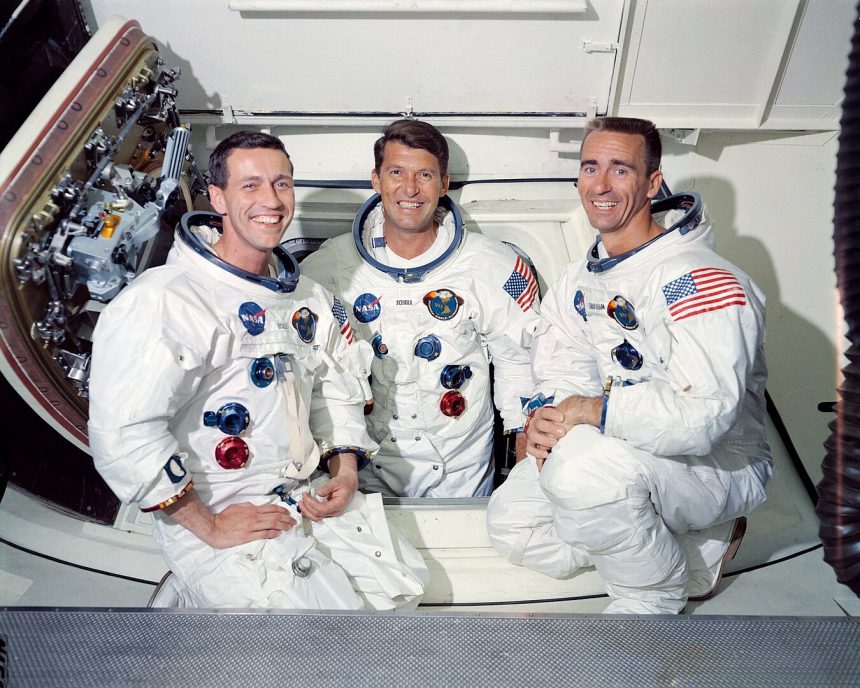
The prime crew of the first manned Apollo space mission from left to right are: Command Module pilot, Don F. Eisele, Commander, Walter M. Schirra Jr. and Lunar Module pilot, Walter Cunningham. Image via NASA
Barnerstormer Hugault 729x90
VAN Today in Aviation History Banner

On this day in aviation and space history, 57 years ago (October 10, 1968), NASA launched Apollo 7—the first successful crewed mission of the Apollo program. At precisely 15:02:45 UTC, a Saturn IB rocket (AS-205) lifted off from Launch Complex 34 at Cape Kennedy Air Force Station, Florida. The crew consisted of Mission Commander Capt. Walter “Wally” Schirra (U.S. Navy), Command Module Pilot Maj. Donn F. Eisele (U.S. Air Force), and Lunar Module Pilot Maj. R. Walter Cunningham (U.S. Marine Corps). Their mission marked a crucial step toward landing humans on the Moon.
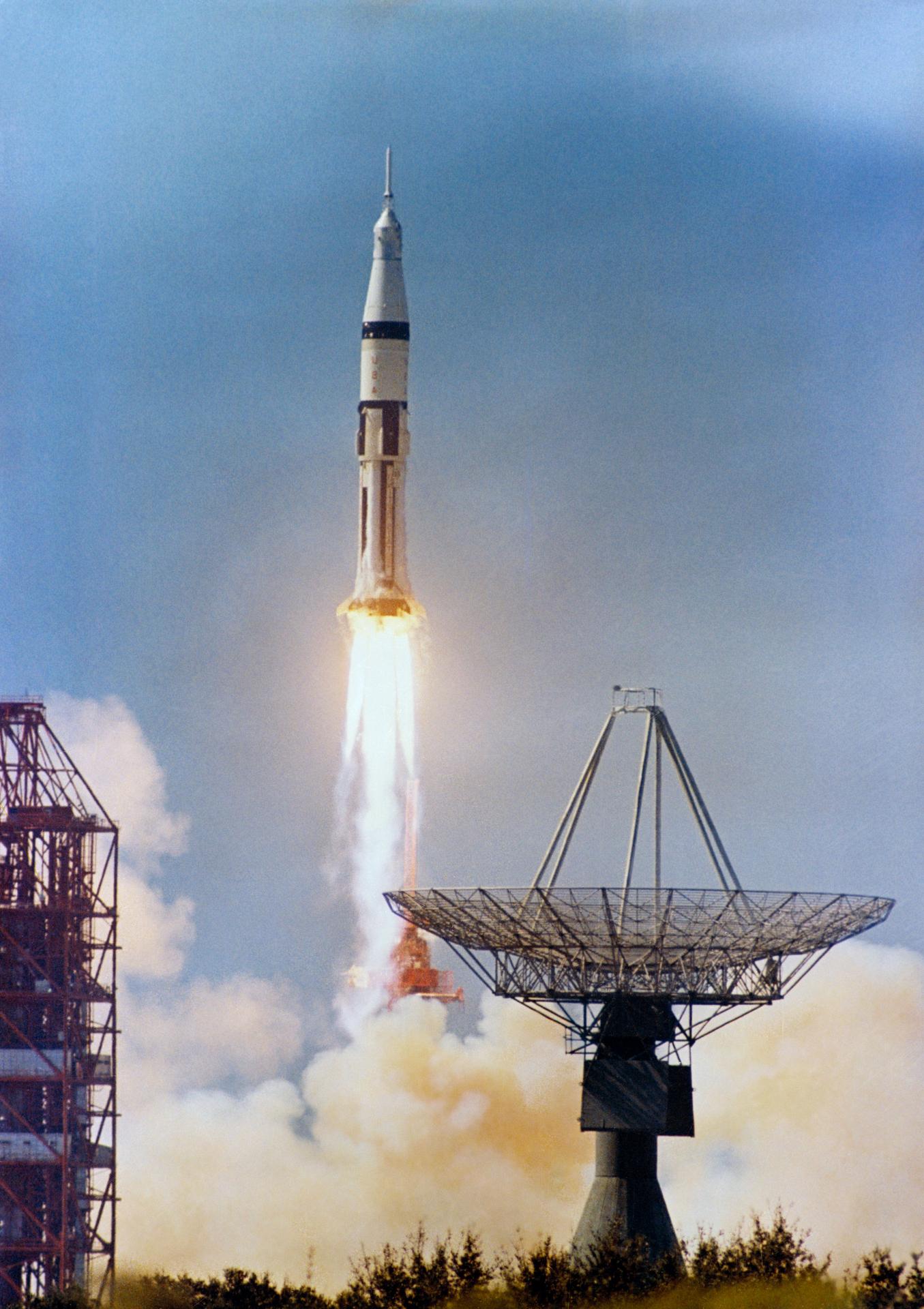
APOLLO VII – CREW – LAUNCH – KSC
he Apollo 7/Saturn IB space vehicle is launched from the Kennedy Space Center’s Launch Complex 34 at 11:03 a.m. (EDT), Oct. 11, 1968. Apollo 7 (Spacecraft 101/Saturn 205) is the first of several manned flights aimed at qualifying the spacecraft for the half-million-mile round trip to the moon. Aboard the Apollo spacecraft are astronauts Walter M. Schirra Jr., commander; Donn F. Eisele, command module pilot; and Walter Cunningham, lunar module pilot. (Tracking antenna on left and pad service structure on right). NASA image

Apollo 7’s primary objective was to conduct a full demonstration of the Apollo spacecraft systems in Earth orbit—especially the Service Propulsion System (SPS). The SPS used an Aerojet AJ10-137 rocket engine, manufactured by Aerojet General Corporation in Azusa, California. This engine, fueled by Aerozine 50 and nitrogen tetroxide, produced 20,500 pounds of thrust and was designed for 750 seconds of total burn time, with the capability of up to 50 restarts during a mission. The SPS would later be used for major orbital maneuvers on lunar missions.

Apollo 7 Crew Trains to Test Technology for Missions to the Moon
This Aug. 5 1968 image was taken aboard the MV Retriever in the Gulf of Mexico, where the Apollo 7 crew, Walter Schirra, Walter Cunningham and Donn Eisele practiced water egress procedures in preparation for the October 1968 mission. NASA Image

The Apollo Command Module (CM) was built by North American Aviation—renowned for legendary aircraft such as the P-51 Mustang and F-86 Sabre. The Block II version flown on Apollo 7 (CSM-101) incorporated extensive safety and design improvements following the tragic Apollo 1 fire. The spacecraft was designed to sustain a three-person crew for missions lasting up to two weeks.
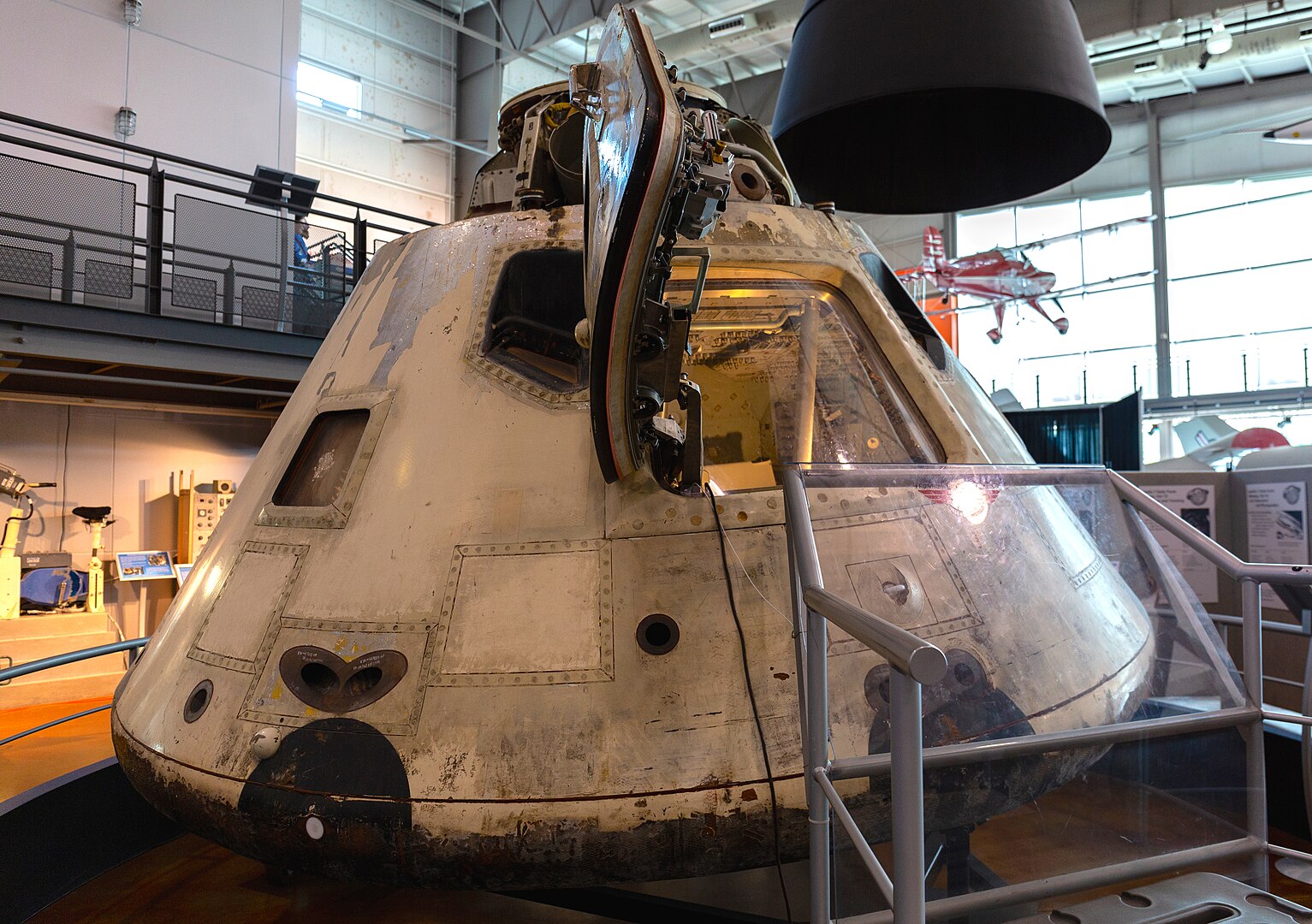
1533px Apollo 7 Command Module Museum
The Apollo 7 Command Module on display at the Frontiers of Flight Museum in Dallas, Texas. Image via Wikipedia

The Saturn IB launch vehicle was assembled by Chrysler. Its first stage (S-IB) was powered by eight Rocketdyne H-1 engines burning RP-1 and liquid oxygen, generating a combined 1.6 million pounds of thrust for approximately 150 seconds. The upper stage (S-IVB), built by Douglas Aircraft, featured a single Rocketdyne J-2 engine fueled by liquid hydrogen and liquid oxygen, producing 200,000 pounds of thrust with a burn duration of roughly 480 seconds.
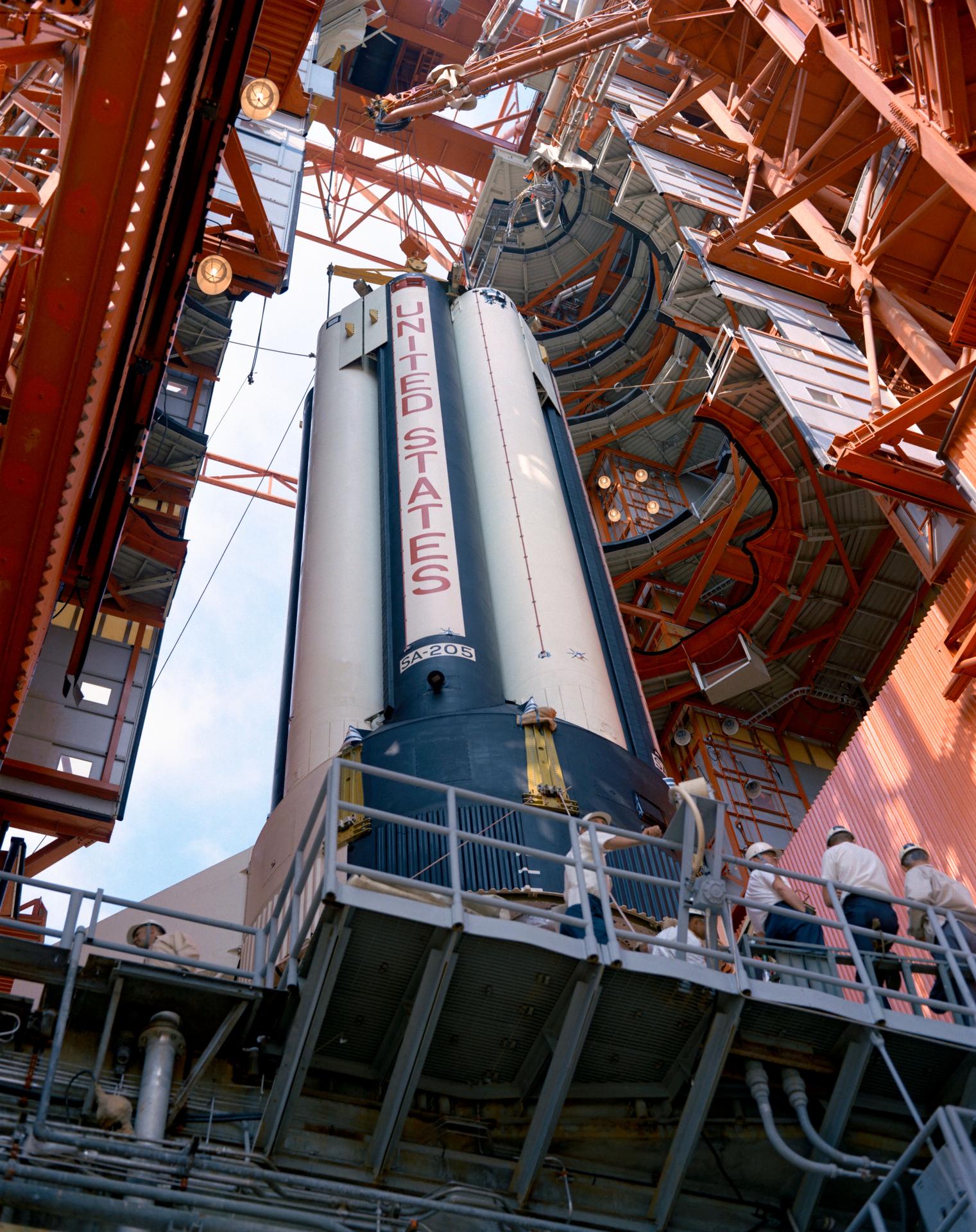
Prelaunch – Apollo VII Erection of First Stage – KSC
Low angle view at the Kennedy Space Center’s Pad 34 showing the erection of the first stage of the Saturn 205 launch vehicle. The two-stage Saturn IB will be the launch vehicle for the first unmanned Apollo space mission, Apollo 7 (Spacecraft 101/Saturn 205). NASA image

Apollo 7 remained in space for 10 days, 20 hours, 9 minutes, and 3 seconds, completing 163 orbits of Earth. The mission concluded on October 22, 1968, with splashdown in the Atlantic Ocean approximately 230 miles south-southwest of Bermuda. The crew and capsule were recovered by the aircraft carrier USS Essex (CVS-9). The success of Apollo 7 proved the spacecraft’s readiness for crewed lunar missions, paving the way for Apollo 8’s historic journey around the Moon and, ultimately, the first lunar landing less than a year later.
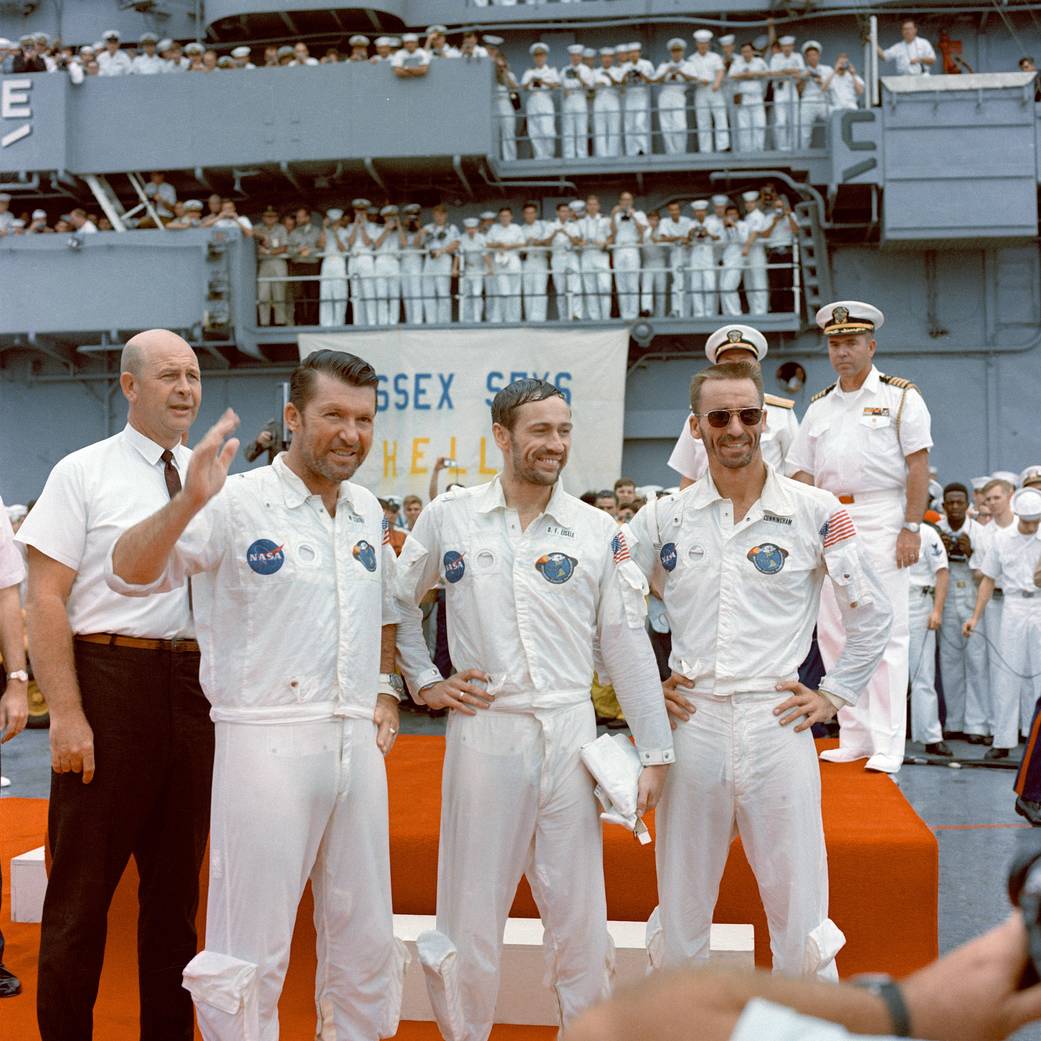

the Apollo 7 crew is welcomed aboard the USS Essex
On Oct. 22, 1968, the Apollo 7 crew is welcomed aboard the USS Essex, the mission’s prime recovery ship. This was the first Apollo splashdown and, therefore, the first three person ‘landing’ for NASA. Left to right are astronauts Walter M. Schirra Jr., commander; Donn F. Eisele, command module pilot; and Walter Cunningham, lunar module pilot. NASA image
Barnerstormer Hugault 729x90
Share This Article
Commercial Pilot, CFI, and Museum Entrepreneur, with a subject focus on WWII Aviation. I am dedicated to building flight experience so I can fly WWII Fighters, such as the P-51 Mustang, for museums and airshows, and in the USAF Heritage Flight. I lead and run the Pennington Flight Memorial, to honor local MIA Tuskegee Airman F/O Leland “Sticky” Pennington.