

(Image credit: VAN)
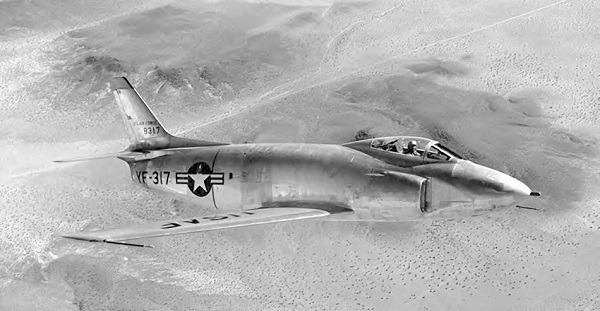
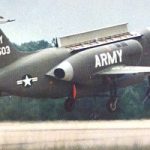
On this day in aviation history, 76 years ago (January 24, 1950), the North American YF-93 flew for the first time. The YF-93 was a further development by North American of their successful F-86 Sabre fighter. The design originated as the NA-157, the result of a study by North American that sought to create a designated penetration fighter. This specialized fighter was essentially a long-range version of the F-86A. The NA-157 would be larger, and have a greater fuel capacity: 1,961 gallons internally and two 200-gallon drop tanks. This new F-86 variant would also have an increased overall range of over 2,000 nautical miles.
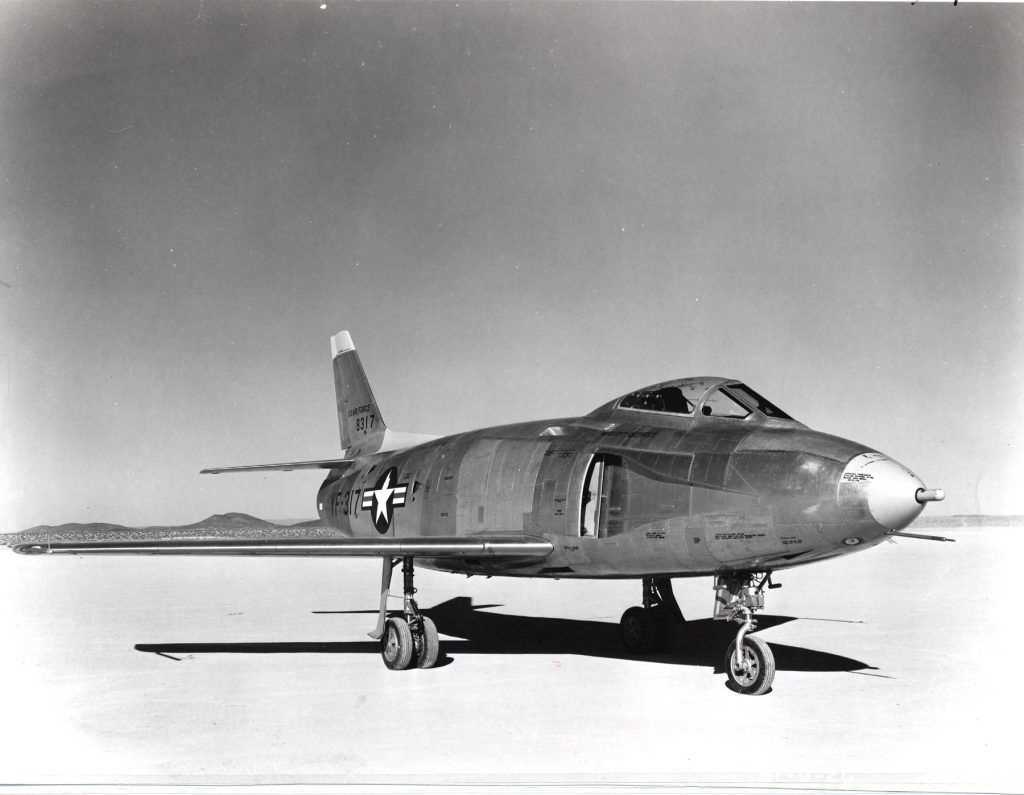
The fighter that resulted from the NA-157 study was initially designated as the F-86C. The F-86C was intended to compete with the McDonnell XF-88 Voodoo and Lockheed XF-90 to meet the United States Air Force’s penetration fighter requirements as a bomber-escort. The larger size and weight of the F-86C required dual-wheel main landing gear, an increased wing-area, and a more powerful engine. The USAF ordered two NA-157 prototypes and ultimately redesignated the aircraft as the YF-93A, considering how vastly different the fighter was from the original F-86 design.
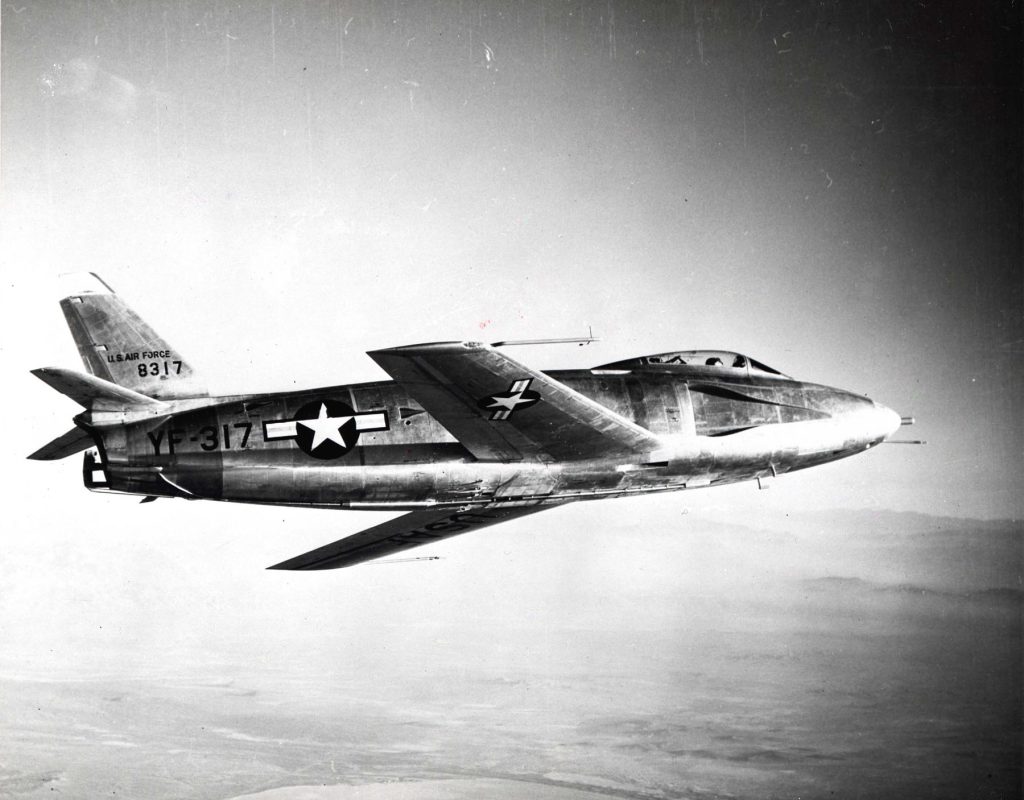
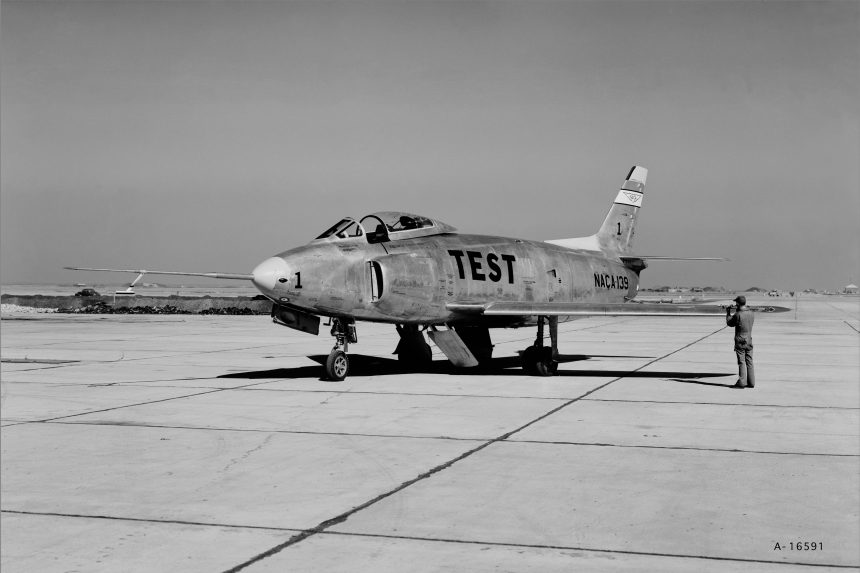
In 1949, the USAF canceled the YF-93A’s production order. The Air Force’s priorities had shifted to flight testing the Boeing B-47 Stratojet, a bomber that would not require fighter escort. Nevertheless, North American continued to build the two prototypes and flight test them internally. The YF-93 participated in a fly-off against the XF-88 and XF-90, which the Voodoo ultimately won. The YF-93s were eventually given to the National Advisory Committee for Aeronautics (NACA) for further testing. It was revealed that the fighter’s air ducts were inefficient at high angles of attack, causing a restriction of air flow to the engines.
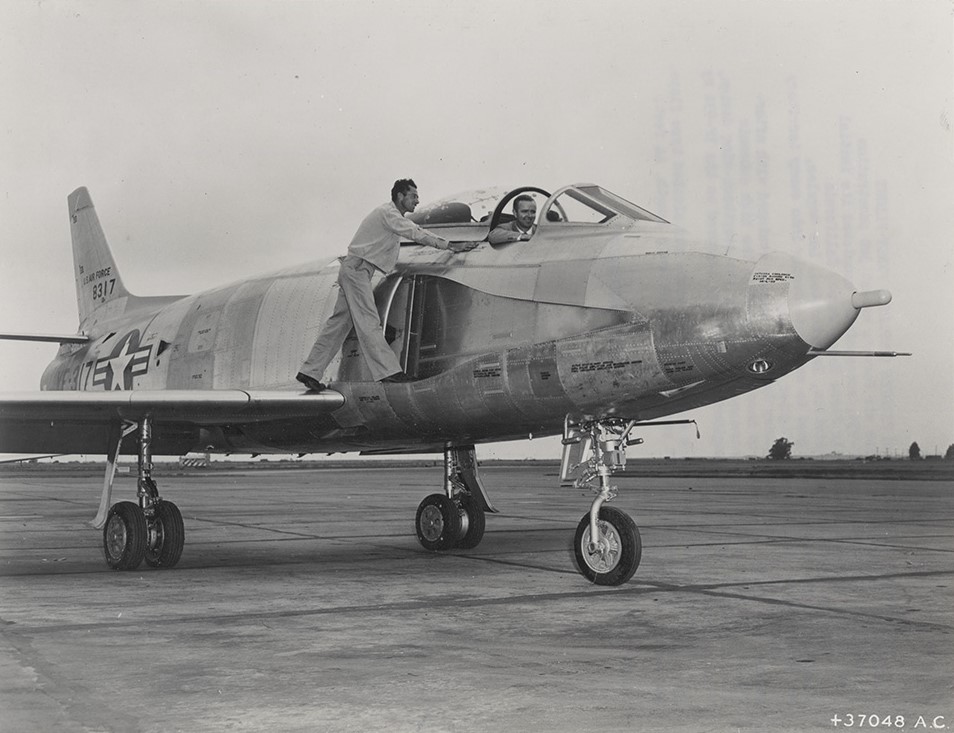
The North American YF-93A was powered by a Pratt & Whitney J48-P-6 turbojet engine that produced 6,000 pounds of thrust dry and 8,750 with afterburner engaged. The aircraft could attain a maximum airspeed of 708 mph at sea level and could cruise at 534 mph. The YF-93A had a range of 1,709 nautical miles, a service ceiling of 46,800 feet, and a 11,960 foot-per-minute rate of climb. Had the YF-93 entered service, the fighter would have been armed with six 20 millimeter M24 cannons.