






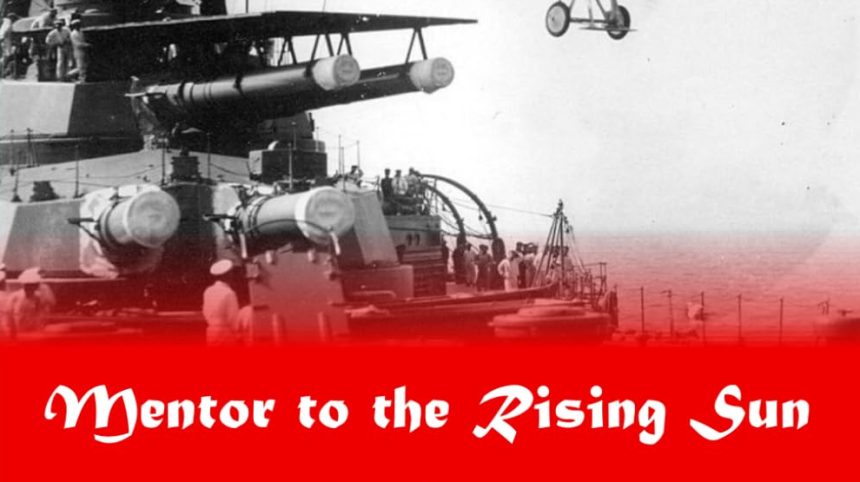

Mentor to the Rising Sun: Britain’s role in founding Japan’s Naval Air Service by Dick Wise, reviewed by Joe May, available on Amazon.
Author Dick Wise more than surpasses his previous work, Selling Wings to the Dragon: The Saga of Britain’s Aviation Trade with China, with his newly published Mentor to the Rising Sun, which traces the history of Imperial Japan from an agricultural nation to decidedly becoming an industrialized one, with the best in naval aviation and all in less than a generation’s time. Mentor to the Rising Sun also traces Imperial Japan’s arc into a nation with the aim of being the premier power in Asia, shedding Asia from Western colonization. At what cost? And how? And why? Wise’s insight and the technical know-how explain these inextricably linked, as well as complicated, answers with brilliance and ease. Mentor to the Rising Sun is not a detailed recitation of history, as Wise brings the drama, the international intrigue, the loads of money, the skullduggery, and the wild promises brought to a developing nation intent on becoming not only a first world nation but the absolute ruling power of Asia. The Imperial Japanese Navy had to develop a professional naval air service with aircraft on the leading edge of the day’s aeronautical technology, with fighters, torpedo attack aircraft, and flying boats—including submarine-based floatplanes. Mentor to the Rising Sun tells the story of how Japan became the dominant naval air power in the western Pacific Ocean from start to finish. It is a story rich in technology and a story of many colorful individuals. Wise begins with how Imperial Japan was a benign ally (his term, and a correct one, as he details) of the West during WWI, then subsequently transforming into an enemy during WWII. A complex story, but Wise writes in an easy, conversational, and comfortable way. It is a history he tells exceedingly well, and enjoyably so.
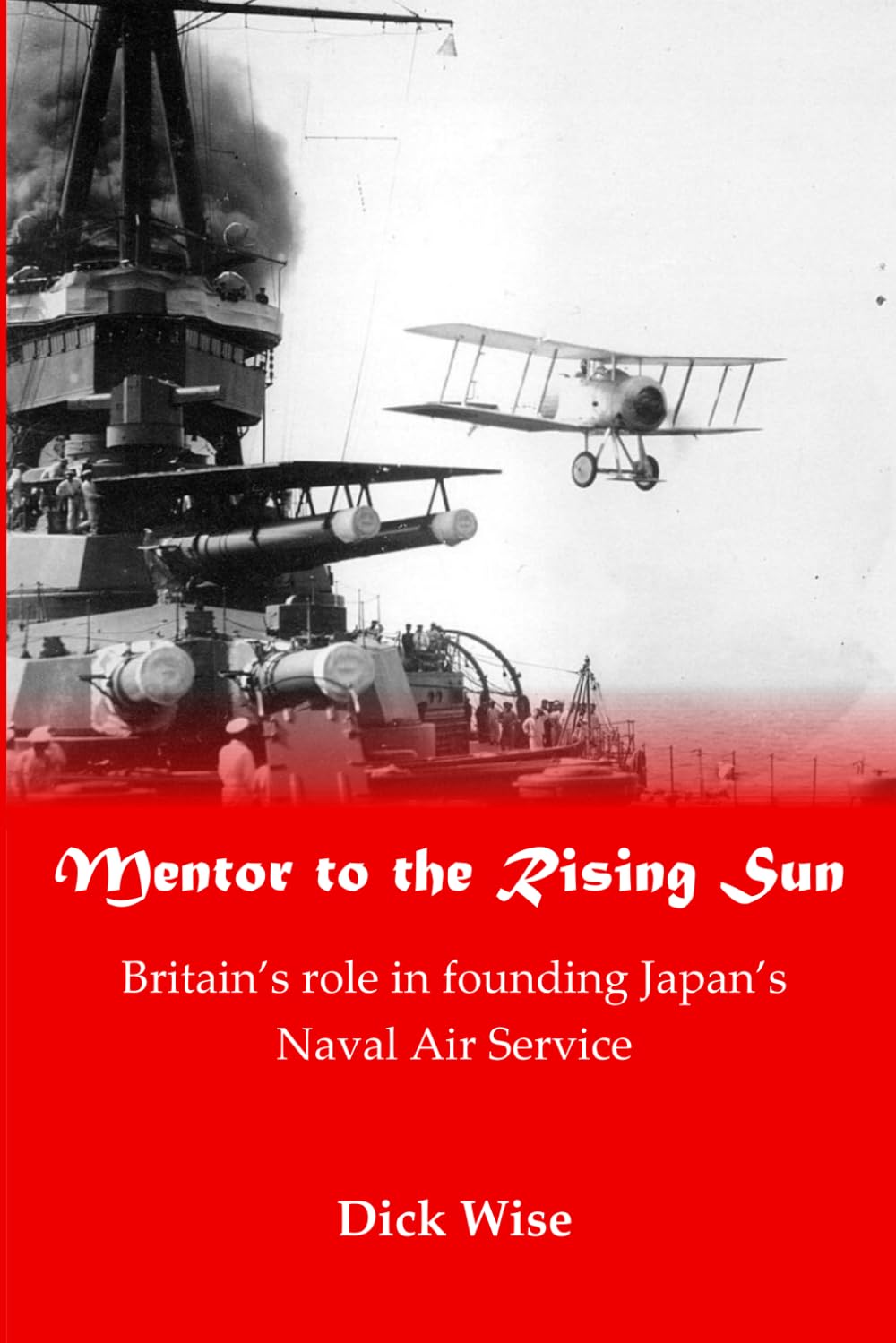
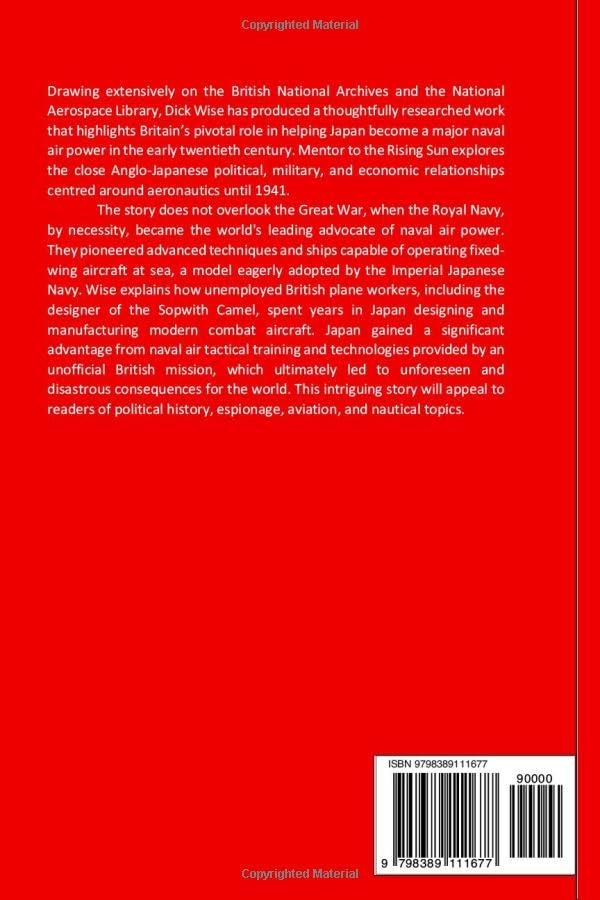
Most authors on this subject necessarily emphasize Great Britain’s contributions through the 1930s with technical expertise, aircraft, and personnel, with Lord Sempill prominently aiding and assisting Imperial Japan throughout this period and longer. Sempill’s story is an incredible one for many reasons, including not being charged with treason for national security reasons as well as political stability. Wise tells of Sempill in personal detail best. Readers also learn of shameless self-promoter Samuel Cody, the slippery Frederick Rutland (every country’s security force that caught him turned him), and even the unabashed William Greene (coerced Imperial Japan to save him from bankruptcy!). Naturally, Wise includes Japanese historical figures such as Yamamoto Isoroku as well in a comprehensive understanding of how and why this history unfolded. His writing is objective, as are his assessments. He names Japan’s leaders who were pro-Western through their demise and later the usurpation of Japan’s civil monarchy by Imperial Japan’s military. Remarkably, Wise tells Imperial Japan’s march to war against the West in 1941 as early as 1920!
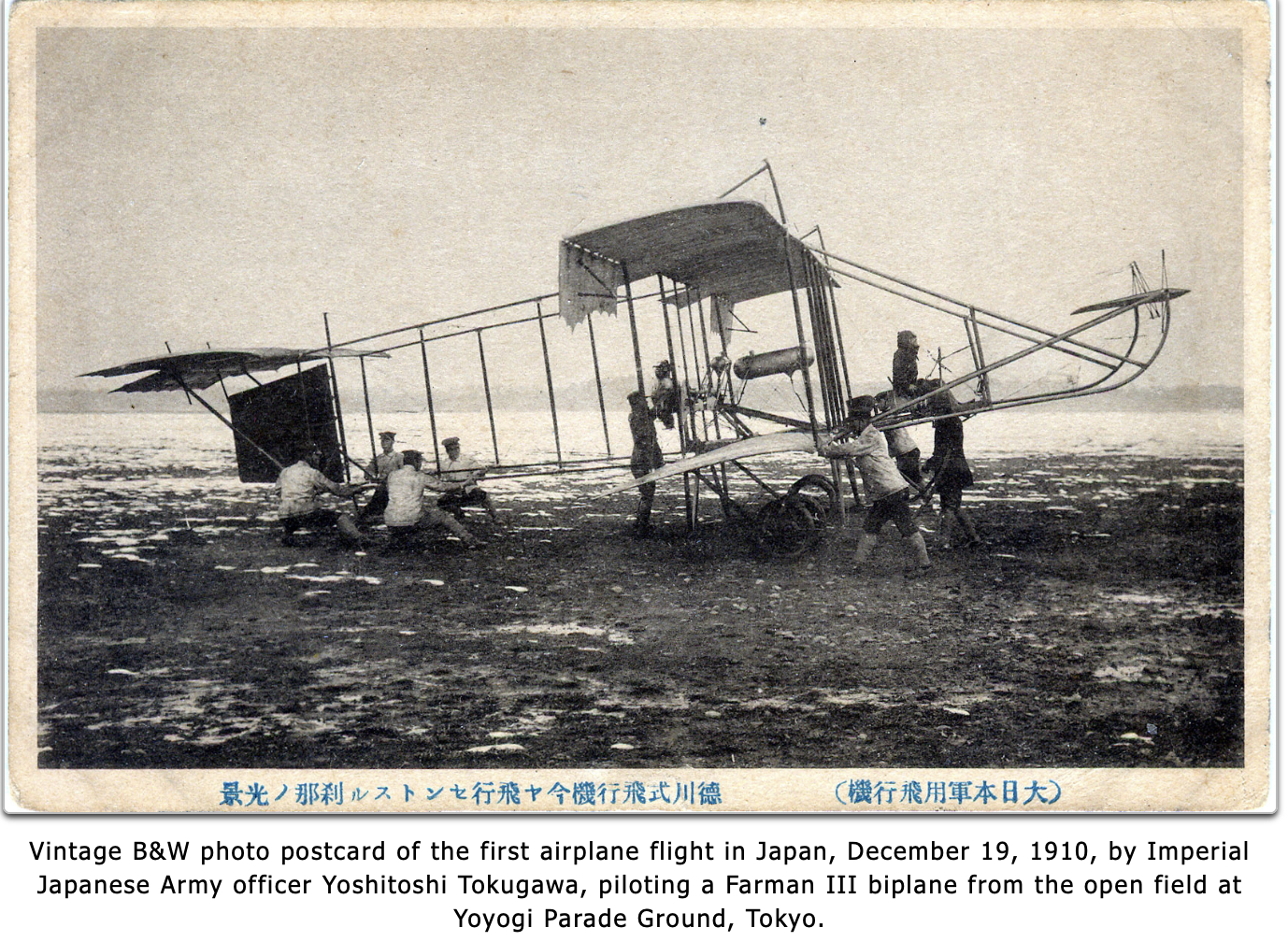
(Image credit: Open source)
But what of Imperial Japan’s rise from aeronautical infancy to leading authority in naval aviation—and in a mere few decades? Japan’s economy catastrophically collapsed with the end of WWI—so how did Japan cope, especially with the Western world denying immigration from Japan? Aside from Japan’s military taking over its civilian monarchy, what influence did racism have? Wise navigates these waters with accuracy and dexterity but always with objectivity. Coinciding with Japan’s economic woes was Great Britain’s need to prop up a failing economy by exporting knowledge and talent. It is to Great Britain’s credit that, as Imperial Japan increasingly moved to direct confrontation with the West, she increasingly left Imperial Japan’s employ—just as Great Britain was the only world power involved in WWII to defend an invaded country prior to being directly attacked. Of course, Great Britain was replaced by competing countries, also on economic hard times, though with perhaps less vision.
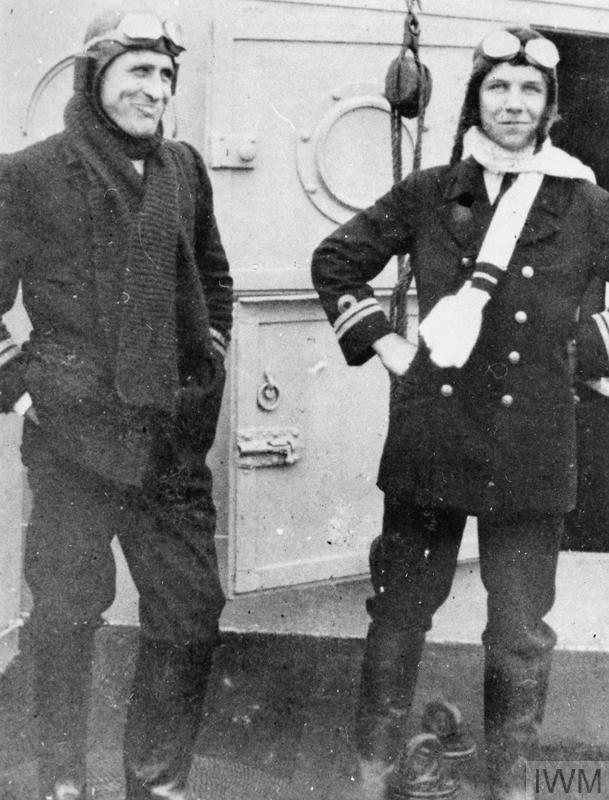
Wise excels in aviation history as a former aviation executive with experience in the UK as well as Asia. Most authors would stipulate that Japan opened its wallet and imported talent, along with a name or two, but this is not Wise’s style. His research brings the complete story of the contributions by Great Britain as well as other countries like the USA, Denmark, Germany, and France. As he shows, Great Britain was the primary player in the 1920s through the mid-1930s. Civilian as well as Royal Navy personnel traveled to Japan to train, educate, set up manufacturing, as well as suss out Imperial Japan’s military aviation progress. Names are named, companies and their aircraft specified, personality influences well described. Japan used its position as a neutral, prior to attacking Pearl Harbor in late 1941, to observe the Royal Navy’s carrier aviation, especially torpedo attack aircraft, then traveled to Italy’s Taranto to observe the results of the Royal Navy’s carrier-borne precedent-setting aerial torpedo attack on the Regia Marina (Royal Italian Navy) there while the Regia Marina was “safely” in port. A little-known or expounded-upon occurrence, but one the author notes to illustrate Japan’s long-term planning behavior. Thirteen months later, Imperial Japan’s naval aviation arm would show the world it was the best at this type of attack, with faster torpedo aircraft and better aerial torpedo performance, both of which could only be envied by opposing naval aviation.
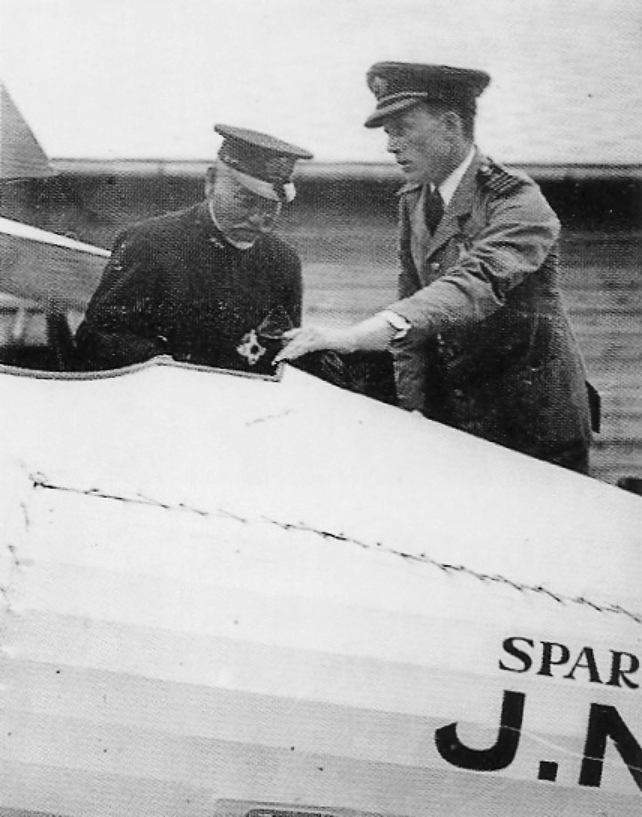
Great Britain’s hubris is evident from the outset during the period covered by Mentor to the Rising Sun, though it was not the only Western country to underestimate Japan’s capabilities or misinterpret Japan’s intentions back in the day. Wise, naturally, gets to the nitty-gritty of Kawanishi, Mitsubishi, and Nakajima at first, building foreign designs under international license, the military government purchase of new designs from other countries, and delivering them directly to Japan’s manufacturers. He also details how, as Japan’s military was invading China and gearing up for an inevitable clash with the West, colonial rule was liberated by simply copying designs (doing away with licensing legalities) and evolving the home aeronautical industry to be tailored to the Japanese military’s specifications. Intriguingly, as well, is the author’s description of Japan’s espionage efforts, the counterespionage efforts by other countries, spies getting caught and escaping retribution in the most surprising ways. Wise investigated the specifics and tells the context of their situations. Context such as financial, with money amounts mentioned (and in today’s equivalent value, which is refreshing to read), as well as political, such as understanding why some of Britain’s aristocracy defensively leaned into fascism during the 1930s.
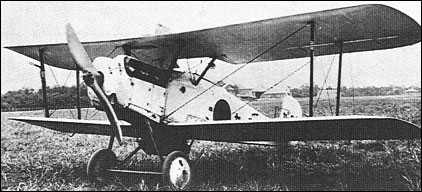
Mentor to the Rising Sun is a captivating description of Imperial Japan becoming the world leader in naval aviation for a time. Readers will also enjoy Wise’s enlightened understanding of how Imperial Japan reshaped itself and its population of tens of millions from rural to urban, from being agriculturally centered to an urbanized industrial giant, from an invaded island to an invading nation. Major personalities involved and how numbers came to be are fascinating to learn of, as is the intrigue and competition among nations which would bring on Japan’s rapid naval aviation ascendancy over their own by the late 1930s. Mentor to the Rising Sun’s cost is less than that of a single lunch—it would be the best buy one could make on any day and is easily worth 2½ times its asking. Wise fully describes the unfolding of this captivating history and captures the effects of many human influences behind it all. A tale told from just prior to the beginning of Imperial Japan’s naval aviation ascent to its apogee at the onset of WWII. Mentor to the Rising Sun belongs on aviation history bookshelves as well as those emphasizing international relations as they relate to diplomacy and business spaces.
| Paperback
Publisher: Janus Transatlantic Publishing (2026) Size: 9” x 6” Index: ✔︎ Bibliography: ✔︎ Notes: ✔︎ (endnotes) Photos: ✔︎ Cost: $12 ISBN: 979-8389111677 Page Count: 339 Available on Amazon |


















Thanks for the review and bringing this title to my awareness, this is a little covered topic of Japan between the world wars.