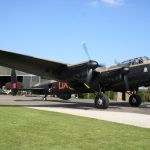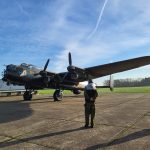
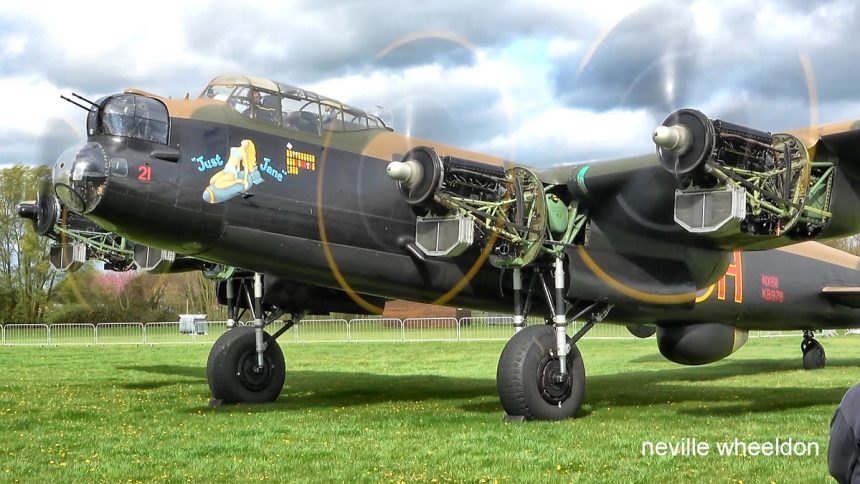

The Avro Lancaster B.VII NX611, widely known as “Just Jane,” is undergoing a full restoration to airworthy condition at the Lincolnshire Aviation Heritage Centre (LAHC) in East Kirkby, Lincolnshire, England. The restoration project has made significant progress under the guidance of project leader Andrew Patton, who recently provided an update on the team’s ongoing work.
This month, the rear-mid fuselage of French Lancaster NX664 was fitted to the rear fuselage jig, with preparations underway to adapt the jig for the longer rear-mid fuselage section. The development marks the beginning of an especially busy period in the structures bay, where work continues on multiple NX611 components, including the port wing and trailing edge, port and starboard horizontal tailplanes, nose section, and NX664 rear-mid fuselage.
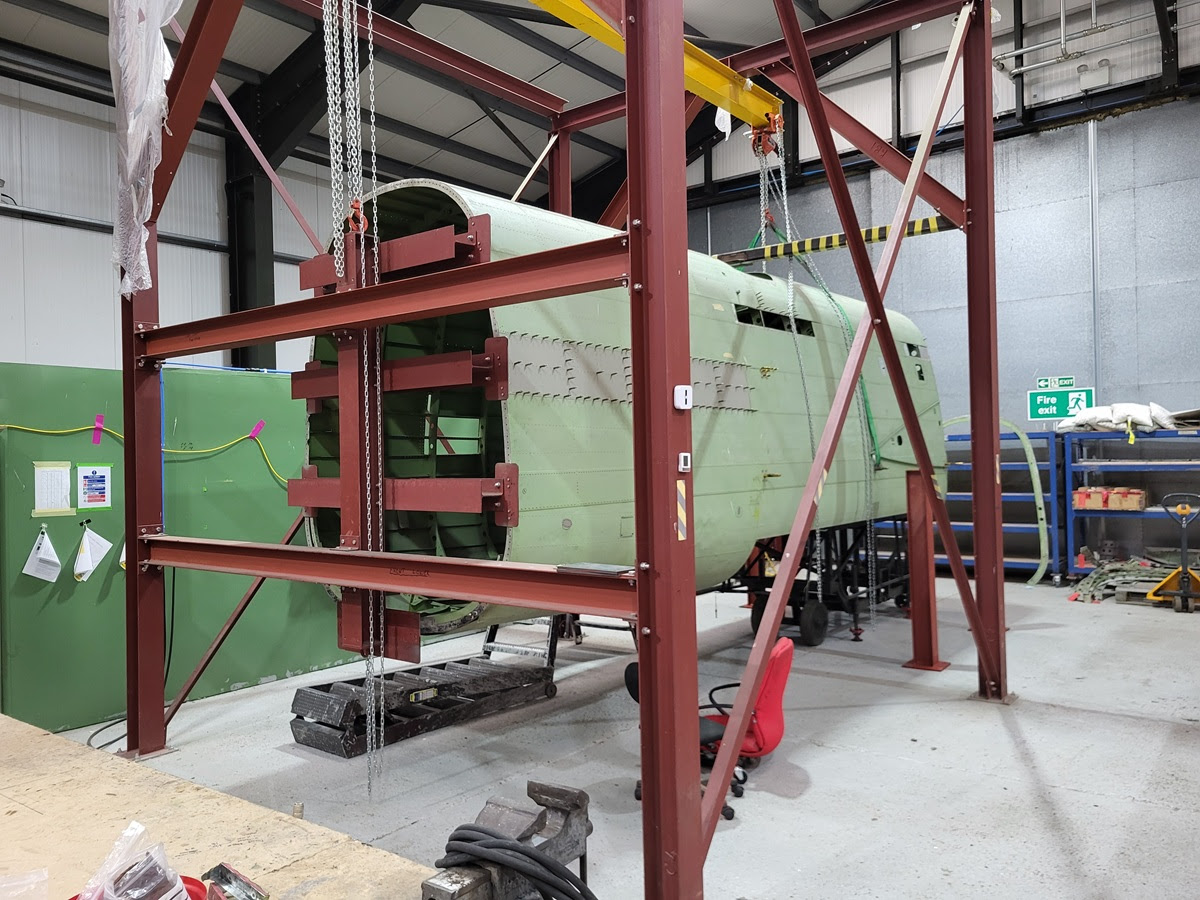
The rear-mid fuselage jig is being constructed from the existing rear fuselage jig, with additional components to accommodate the slightly longer fuselage. This modification involves creating a third set of “goal post” structures and a supporting set of legs. The jig’s primary function is to hold the fuselage in a precise, fixed position, ensuring that each structural component is rebuilt to the correct shape and alignment. The rear-mid fuselage will be secured at fore and aft transport joints and along the main longerons, which already feature integrated jig points.
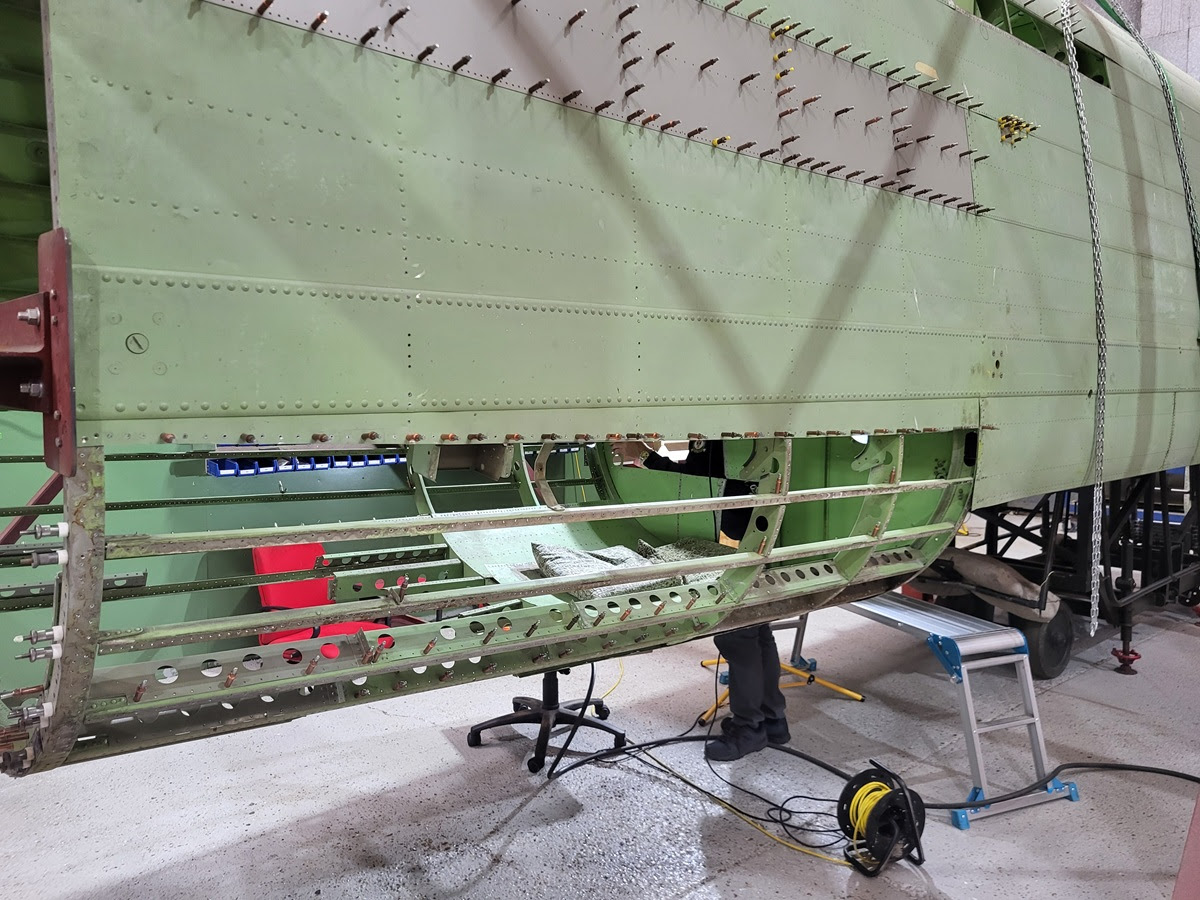
With the rear-mid fuselage secured, the team has commenced repair work on this section. Having previously surveyed the fuselage while it awaited its turn in the jig, the team was able to identify areas of concern in advance. Restoration efforts are focused on the section just forward of the rear transport joint, where the H2S cupola and mounting ring were previously installed but are now missing due to extensive damage. Earlier repairs by a French team used custom-made formers and intercostals to fill the H2S gap; however, these components did not meet airworthy standards and are now being replaced with compliant structures.
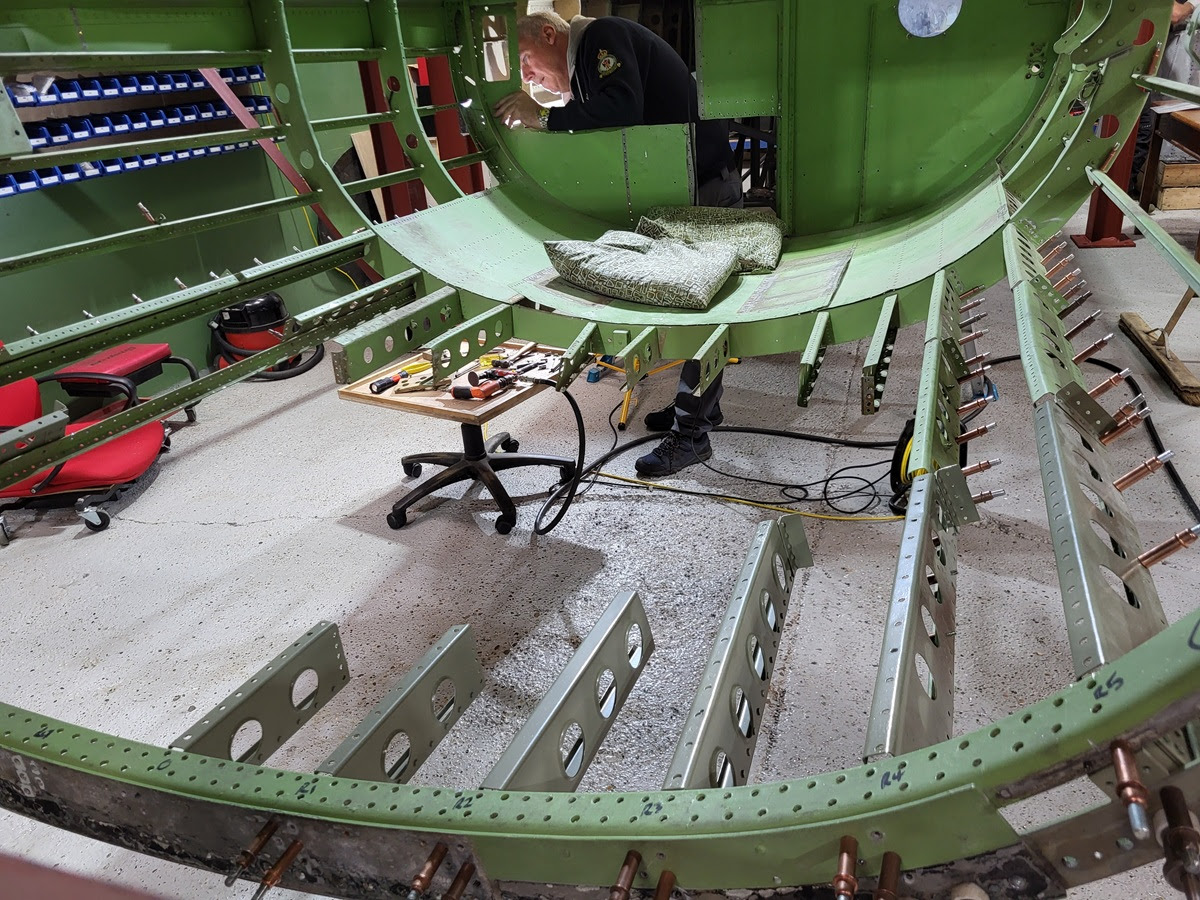
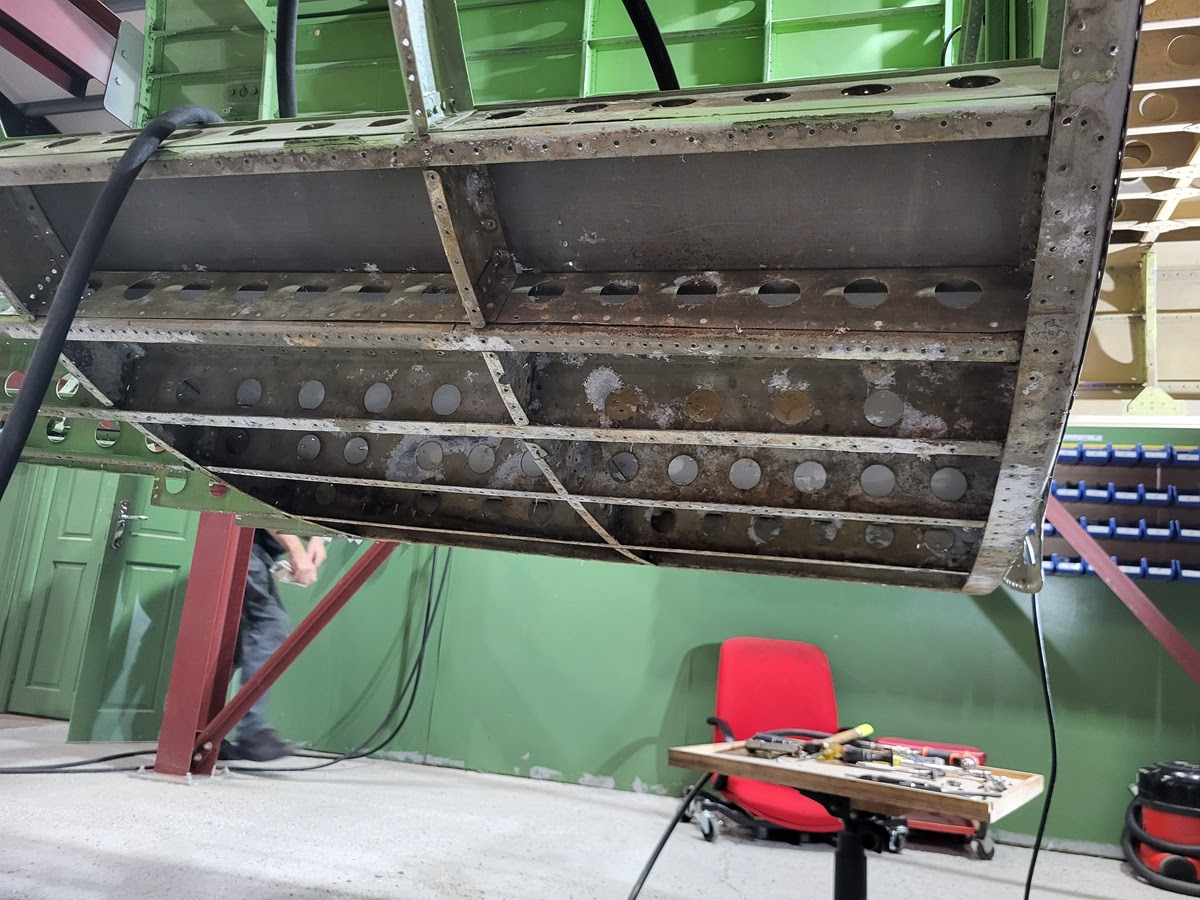
Ahead of this area, a double-skinned void—unexposed since the aircraft’s original production—has revealed significant corrosion in the intercostals, which will require careful blasting and repair. Meanwhile, the rear bulkhead of the bomb bay, which marks the beginning of the bomb bay floor structure, is being addressed. The bulkhead has undergone prior modifications and will serve as a template for producing a replacement.
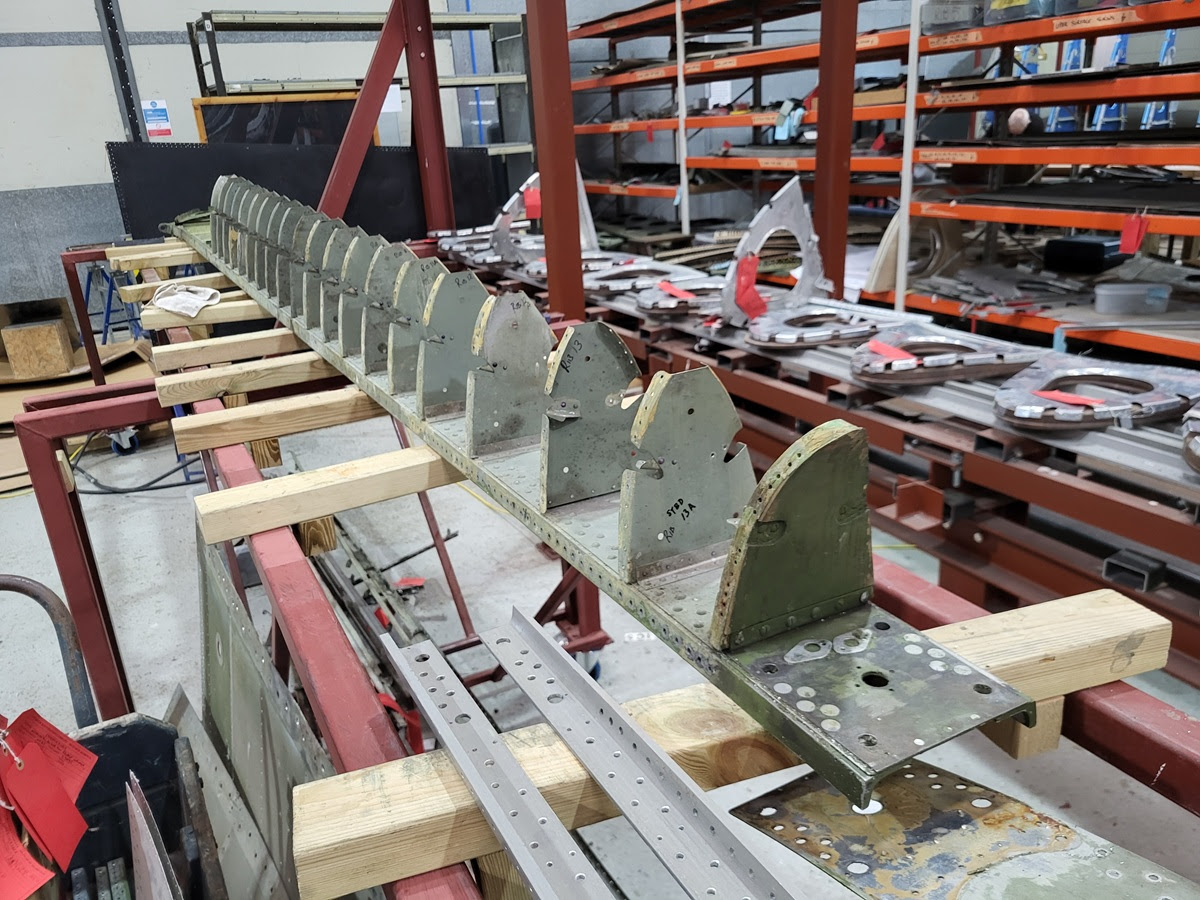
Josh, a new addition to the team, has been disassembling the port and starboard tailplane forward spars to assess and replace spar booms and leading-edge ribs as required. After completing the spars, Josh, who also serves as the Centre’s in-house welder and fabricator, contributed to completing the rear-mid fuselage jig. Tailplanes, which function as smaller wings, are constructed similarly to the main wings, with spar booms and webs forming the structural framework and ribs spanning between. The front spar booms feature a bend that creates the tailplane’s slight sweep toward the tail fins. Work has also progressed on NX611’s front turret. New Perspex has arrived, and team member Ade has begun trimming and drilling the sections to fit the turret cupola, with completion anticipated within a month.
The Centre has also received the port wing leading-edge rib formers, ready for rib production. These forms were created using CAD drawings based on the original ribs and cut from Jabroc, a dense and durable material ideal for tooling. Each former consists of two parts, allowing aluminium sheets to be clamped and shaped around them. The GoFundMe Wings Fund campaign has now raised over £84,276 of its £500,000 target, helping to cover the costs of jigs and aluminium. Contributions continue to support the restoration of Just Jane, with donors contributing £50 or more receiving a special Wings Fund badge. For more information about the Lincolnshire Aviation Heritage Centre, visit www.lincsaviation.co.uk