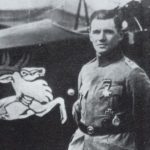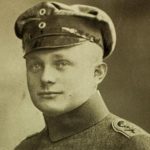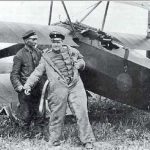
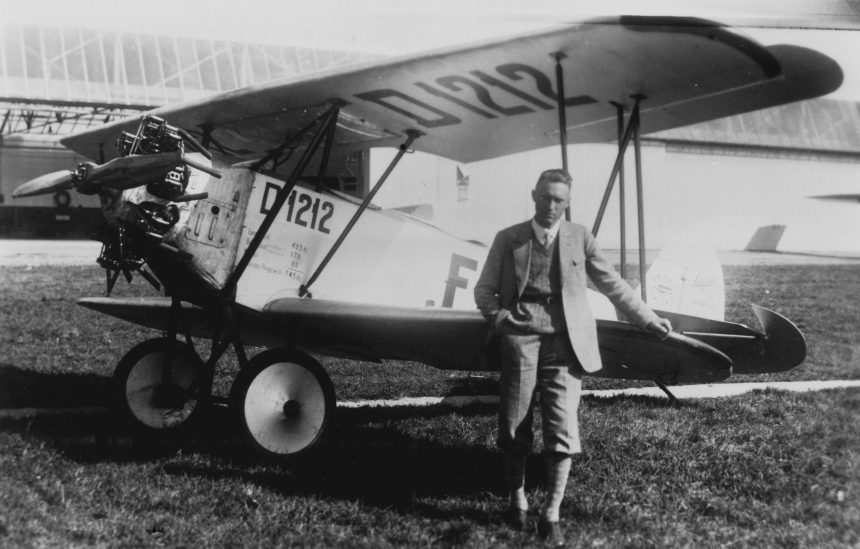

Not many aces who served in WWI went on to become aircraft developers after the war. But Gerhard Fieseler, born on April 15, 1896, in Bonn, was different. In WWI, Fieseler joined the German Air Service in 1915. He crashed during training and spent several months recovering in the hospital until February 1916. As a two-seater pilot, he joined FA(A) 243 in October 1916, and then moved to FA 41. In May 1917, after training on single-seater planes, he was transferred to Jasta 25, where he served on the Macedonian front. His first victory came on August 20, 1917, when he shot down a Nieuport 17, which was his sole victory of the year. After scoring one victory each in January, April, and June, Gerhard Fieseler became an ace on July 5. He scored three more victories in July, followed by five in August, and six in September to end his WWI at a personal score of 19. He was commissioned in October 1918 and was the top German fighter ace on the Eastern Front who survived WWI. He was awarded the Iron Cross, first and second class, and the Golden Military Merit Cross.
Postwar Life of Gerhard Fieseler
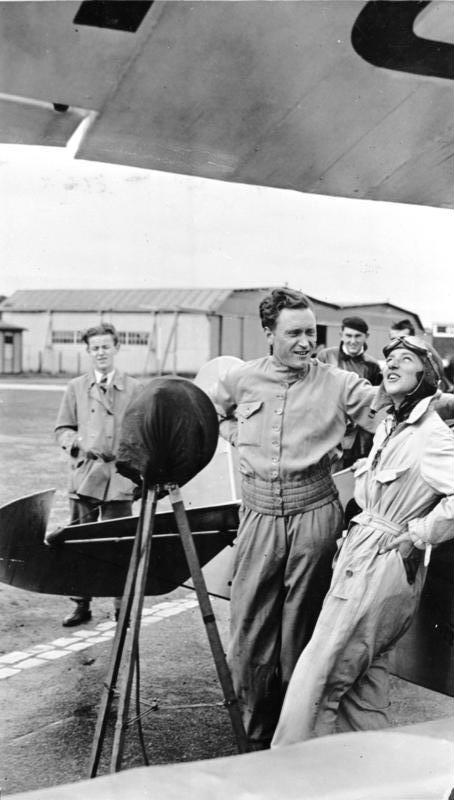
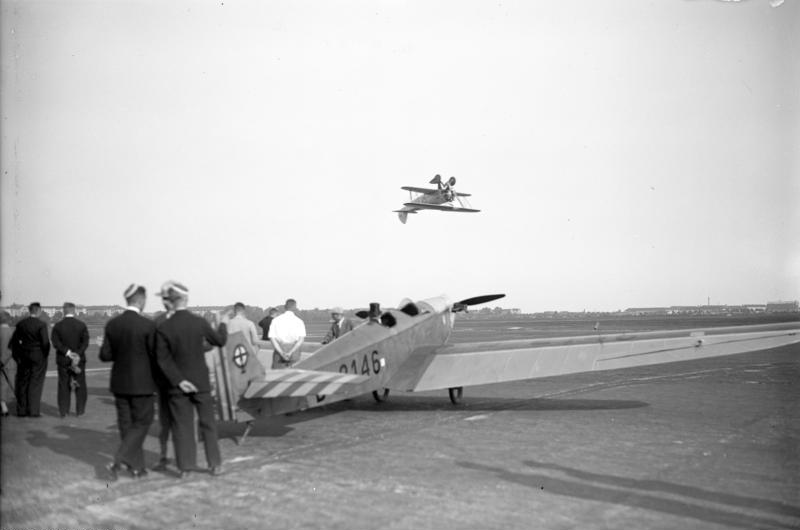
After the war, Gerhard Fieseler returned to printing but still wanted to fly again. In 1926, he shut down his print shop in Eschweiler and became a flight instructor for the Raab-Katzenstein aircraft company in Kassel. In 1927, he did a daring routine in Zurich and started charging higher fees for his appearances. While working at Raab-Katzenstein in 1928, he designed his own stunt plane, the Fieseler F1, also known as the Raab-Katzenstein RK-26 Tigerschwalbe. A Swedish company, AB Svenska Järnvägverkstäderna (ASJ), bought the design and built 25 of these planes for the Swedish Air Force in the early 1930s. In 1930, Raab-Katzenstein went bankrupt, and Gerhard Fieseler decided to start his own business. He used money he had saved from his aerobatic performances to buy the Segelflugzeugbau Kassel sailplane factory, which he renamed Fieseler Flugzeugbau. While he continued to build sailplanes, starting in 1932, he began designing and manufacturing his own sport aircraft.
Legacy and Death
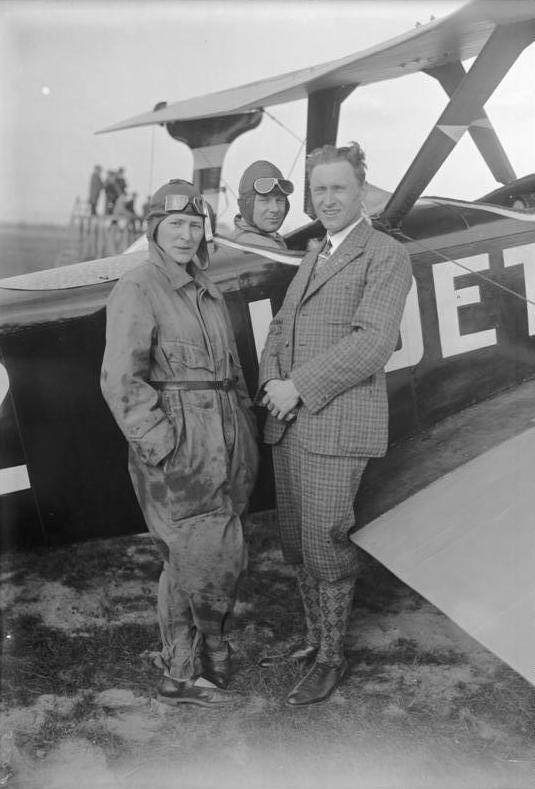
In 1934, Gerhard Fieseler won the first World Aerobatic Championship in France while flying a biplane made by his own company. The next year, Fieseler began producing trainer and fighter aircraft for the newly formed Luftwaffe under license. The following year, his firm achieved real success by winning a design contract for a short-takeoff-and-landing (STOL) liaison and observation plane. He defeated entries from Messerschmitt and Siebel, and his firm then produced the Fieseler Fi 156 Storch. In 1939, Fieseler’s company changed its name to Gerhard Fieseler Werke and kept making aircraft throughout WWII. After WWII, Gerhard Fieseler spent some time in US custody. Once he was released, he reopened part of his factory and worked for several years building automotive parts. He also wrote an autobiography called “Meine Bahn am Himmel” (My Road in the Sky). Fieseler passed away in Kassel at the age of 91. The aerobatic maneuver named “Fieseler” is named after him. In the Aces series, Gerhard Fieseler was not just an excellent ace but also a good aircraft designer. His post-WWI period of designing planes also puts him among the pioneers of aeronautical engineering. Read stories about more Aces HERE.