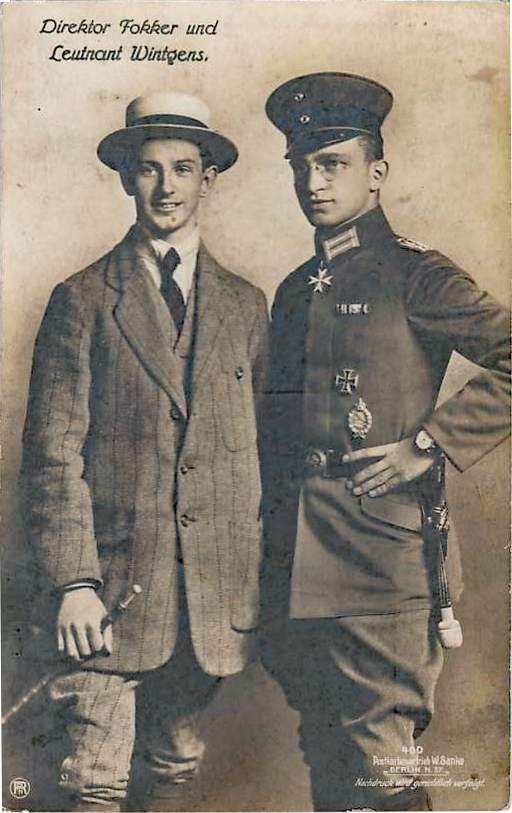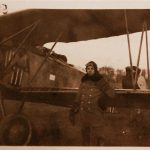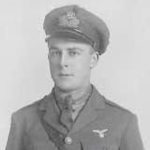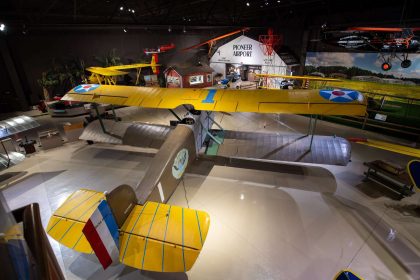
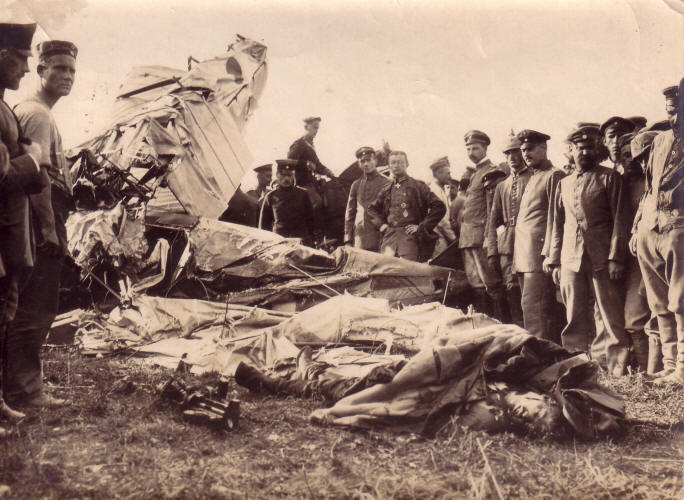

There were many flying aces during WWI, but Kurt Wintgens was the first to score an aerial victory using synchronized guns. Born on August 1, 1894, in Neustadt, Oberschlesien, German Empire, Wintgens was attending military school when WWI started. Still, Kurt Wintgens was sent as a lieutenant on the Eastern Front, where he was awarded the Iron Cross, 2nd Class. After transferring to the German Air Service, Wintgens started as an observer before training to become a pilot at the Fokker school in Schwerin in early 1915. He learned from Leutnant Otto Parschau, who was developing an armed version of the Fokker A.III. Kurt Wintgens asked to fly the Fokker type that had a synchronized machine gun. He was one of the first to fly the Fokker Eindecker, conducting solo missions with two-seater observation aircraft units, starting with Bavarian Feldflieger Abteilung 6b. The Fokker Eindecker fighter planes were deployed in the summer of 1915, with each unit usually consisting of six two-seat aircraft.
Ace Journey of Kurt Wintgens
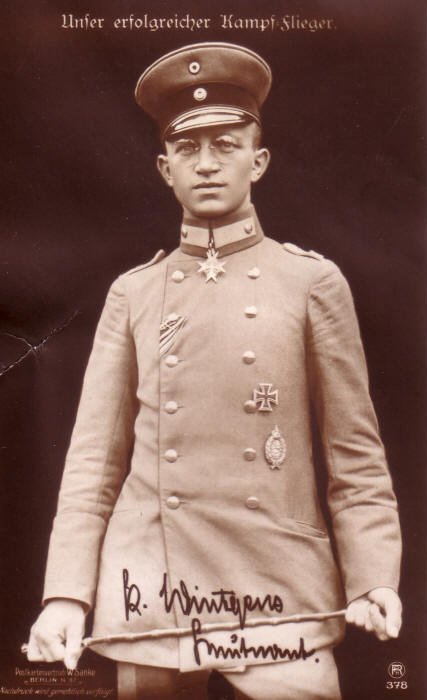
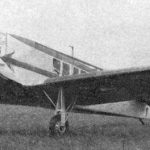
Kurt Wintgens was the first fighter pilot to shoot down an aircraft using a synchronized gun. On July 1, 1915, Leutnant Wintgens flew a Fokker M.5K/MG Eindecker and attacked a Morane-Saulnier Type L “Parasol” two-seater, piloted by Capitaine Paul du Peuty, near Lunéville. The French aircraft was armed only with a carbine, while Wintgens had the advantage of a forward-firing Parabellum MG 14 machine gun. Despite being wounded, du Peuty and his observer managed to land their aircraft safely after taking damage from Wintgens’ fire. Because du Peuty landed in Allied territory, Wintgens did not receive credit for an official victory. Three days later, Kurt Wintgens shot down another “Parasol” under similar conditions, but it also went unconfirmed. Two weeks after his first success, Wintgens was posted to Feld Flieger Abteilung 48 in Mulhouse, an area in northeastern France straddling a disputed border with Alsace. This area was taken by Germany in 1871. On July 15, Wintgens achieved his first official aerial victory while flying his E.5/15 Eindecker. He shot down a Morane Parasol, marking the first official victory for an Eindecker pilot and the first confirmed win using a synchronized machine gun. Wintgens’ victory was also the first for his unit and earned him the Iron Cross, First Class. After that, Kurt Wintgens had a long bout of influenza that prevented him from flying. He did not score again until May 20, 1916, when he destroyed a two-seater Nieuport aircraft while flying for FFA 6. The next day, he downed a Caudron G.IV.
The Death
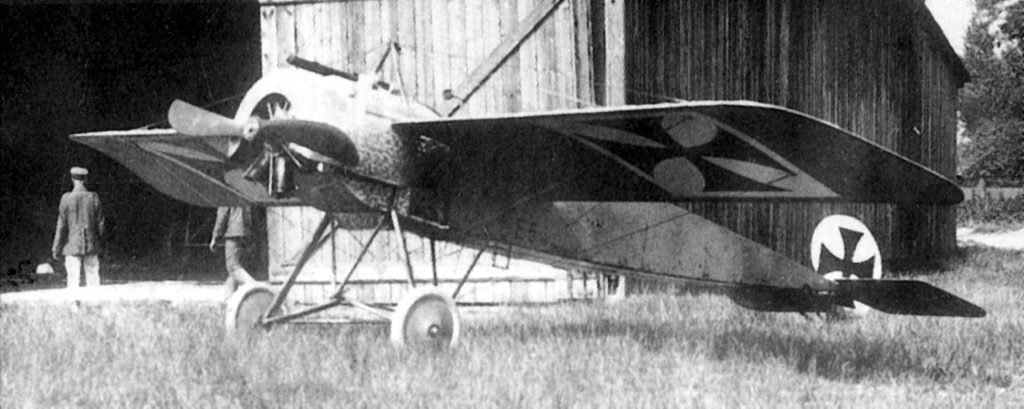
On June 24, 1916, Kurt Wintgens achieved his seventh confirmed victory. On July 1, 1916, Wintgens became the fourth airman to receive the ‘Blue Max.’ He continued to score victories throughout the summer and into the autumn. Although his fellow pilots upgraded their planes, he kept flying the Fokker E.IV. Hans-Joachim Buddecke, another German flying ace, noted that Kurt Wintgens signaled to his squadron members by blipping the Fokker’s rotary engine, indicating they had won a flight. By September, Wintgens was the third-ranking Eindecker ace, with about 14 victories in the Fokker monoplane. On September 25, Kurt Wintgens flew his E.IV on a patrol with his friend Walter Höhndorf. They responded to help a two-seater flown by Josef Veltjens that was under attack from French scouts. Wintgens, by then, had shot down at least 19 aircraft, with claims going as high as 22 when including probable victories and forced landings. However, he was killed in action near Villers-Carbonnel, likely by French ace Alfred Heurteaux, who was flying one of the early SPAD S.VII fighters. Höhndorf returned to base and reported that Wintgens’ plane broke apart from “explosive bullets.” Two days later, Wintgens was buried in a French graveyard that also held the body of his fellow pilot, Otto Parschau. In the Aces series, Kurt Wintgens was a brave ace who loved his flying machine. Read stories about more Aces HERE.